Color recognition Grade 2 Adding up to 50 Worksheets
3 filtered results
-
From - To
Introduce second graders to vibrant and engaging math practice with our "Color Recognition Grade 2 Adding up to 50 Worksheets." These skillfully designed worksheets blend the fundamental math concept of addition with the exciting task of color identification. Each worksheet offers visual stimulants, helping kids master adding up to 50 while enhancing their color recognition skills. Perfect for classroom activities or at-home learning, these resources provide a fun and educational way for children to improve both their math and observation abilities. Help your students develop confidence and a love for learning through our versatile and visually appealing worksheets.
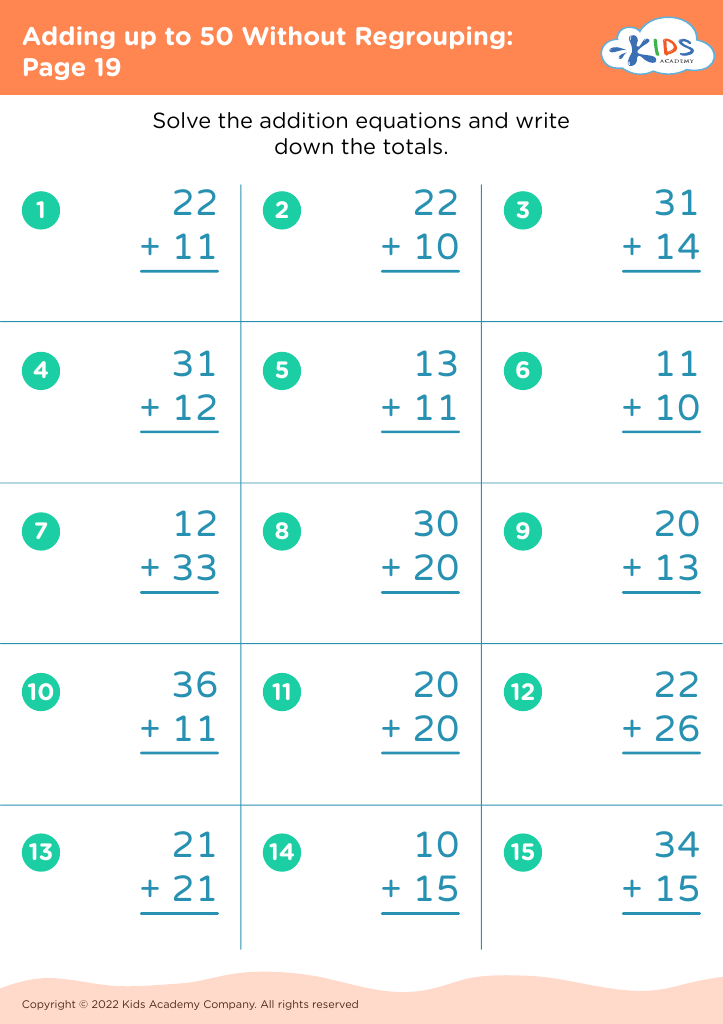
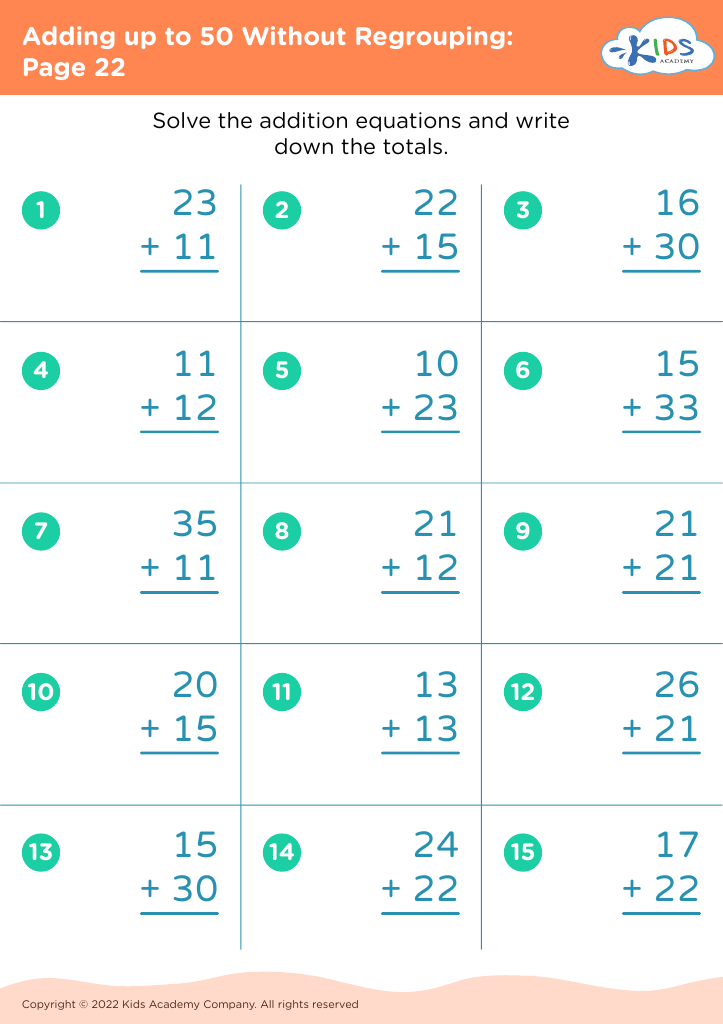
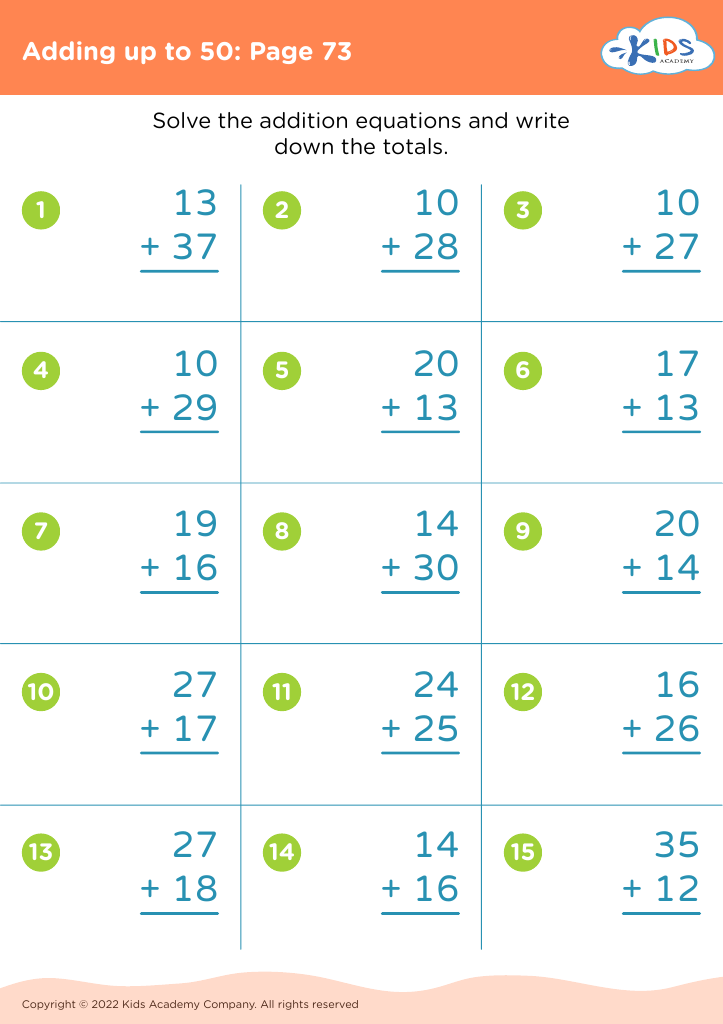


Teaching color recognition and basic addition up to 50 to second graders is crucial for their cognitive and developmental progress. For starters, color recognition isn't just about identifying different shades; it's about enhancing visual perception. When children discern different colors, they fine-tune their observation skills and develop better attention to detail, which are critical in broader learning contexts.
In terms of arithmetic, learning to add up to 50 lays a foundational stone for more complex mathematical concepts. By mastering addition within this range, children sharpen their number sense, enabling them to effortlessly tackle higher arithmetic operations in the future. Also, basic arithmetic exercises both sides of their brain, boosting memory and logical reasoning skills.
Parents and teachers should understand that integrating color in lessons makes learning lively and engaging. For instance, using colored objects to teach calculations can transform potentially mundane addition drills into playful, interactive experiences. This not only improves retention but also cultivates a positive attitude towards learning math.
Moreover, these basic skills are applied in daily activities. Knowing how to add numbers up to 50 helps in practical tasks like counting money, telling time, and measuring, all of which children will encounter often. Thus, focusing on these early educational milestones equips kids with essential tools they’ll continuously use throughout their lives.