Comparing Fractions Grade 2 Adding up to 50 Worksheets - Page 2
30 filtered results
-
From - To
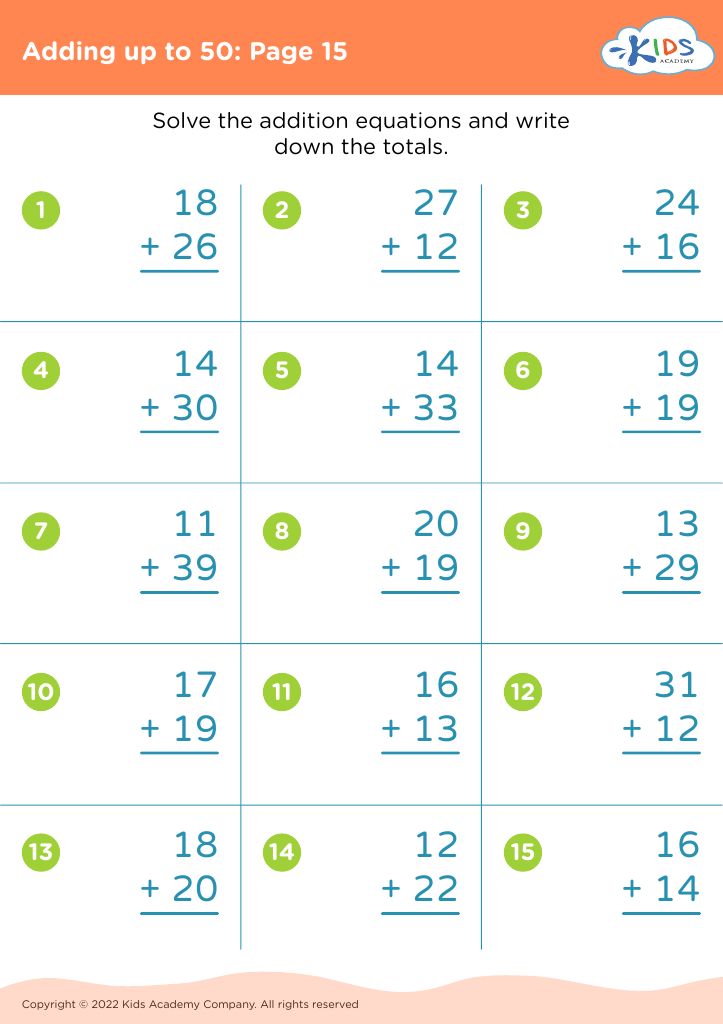
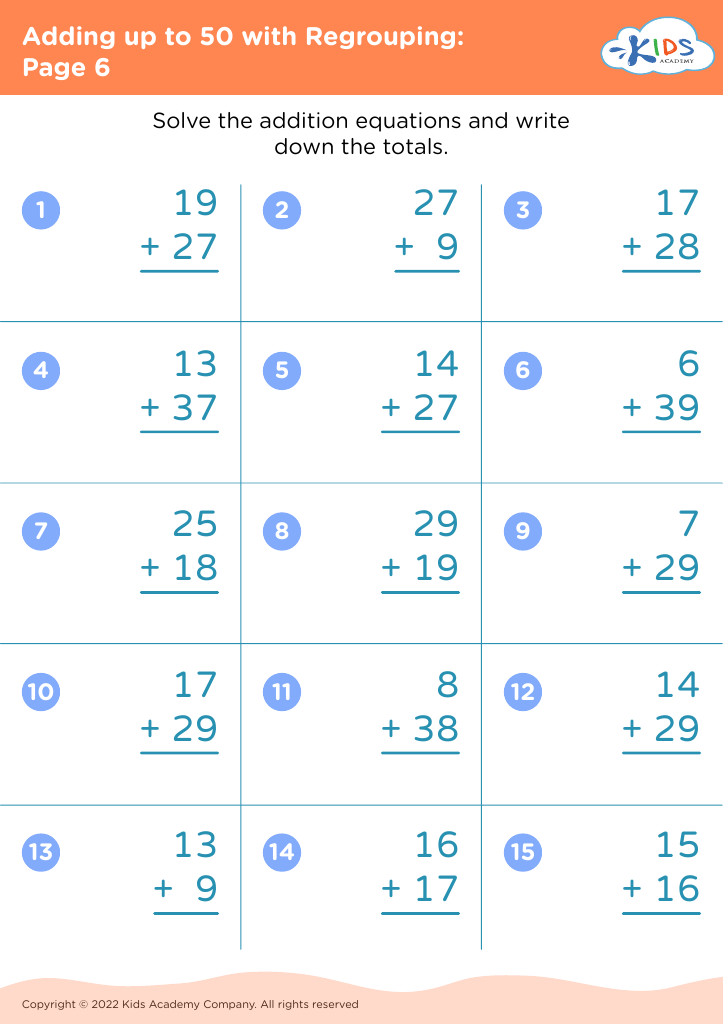
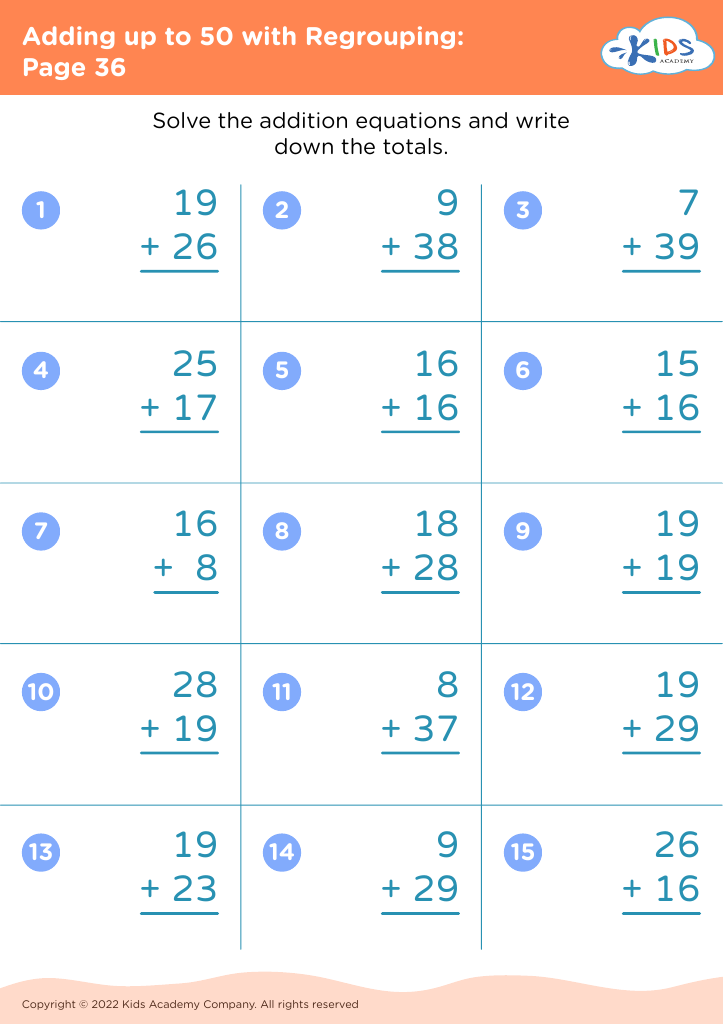
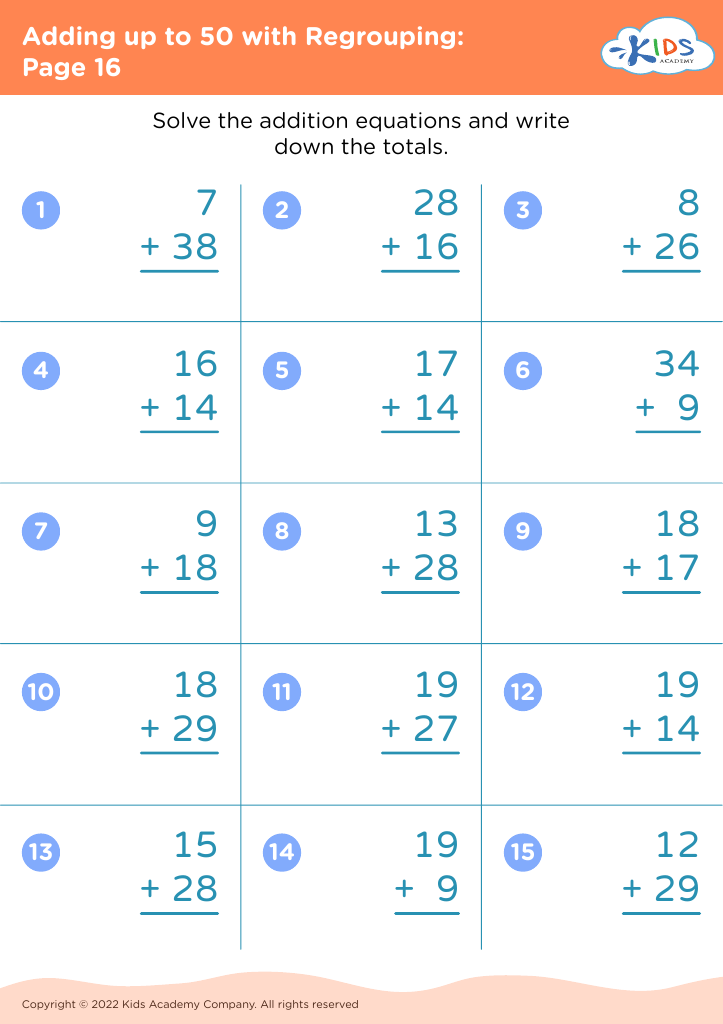
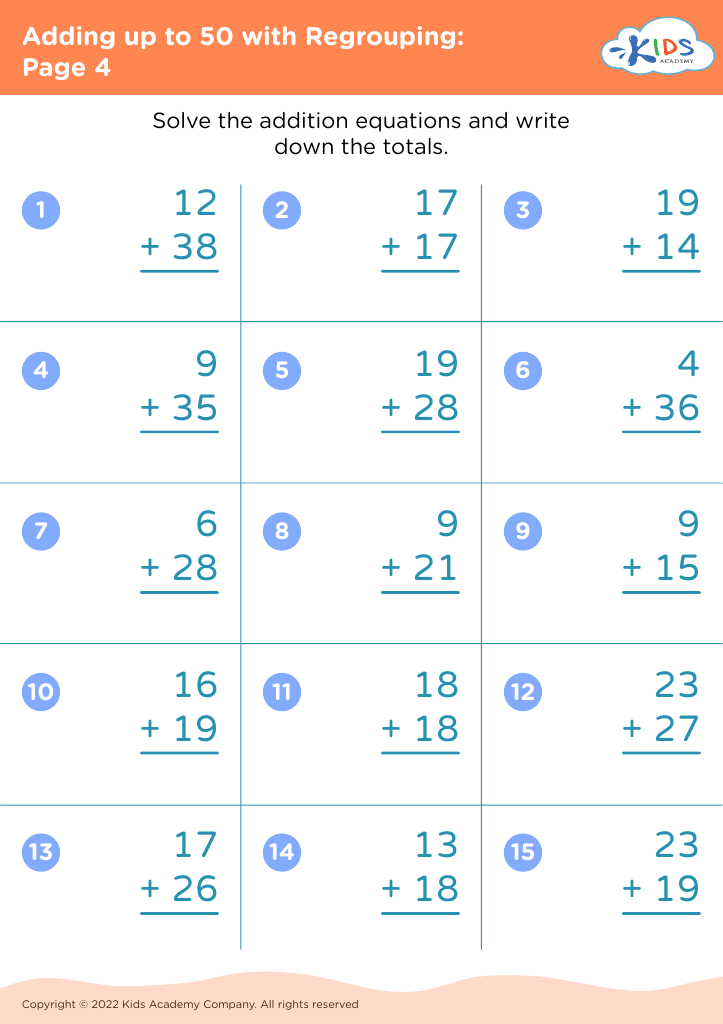
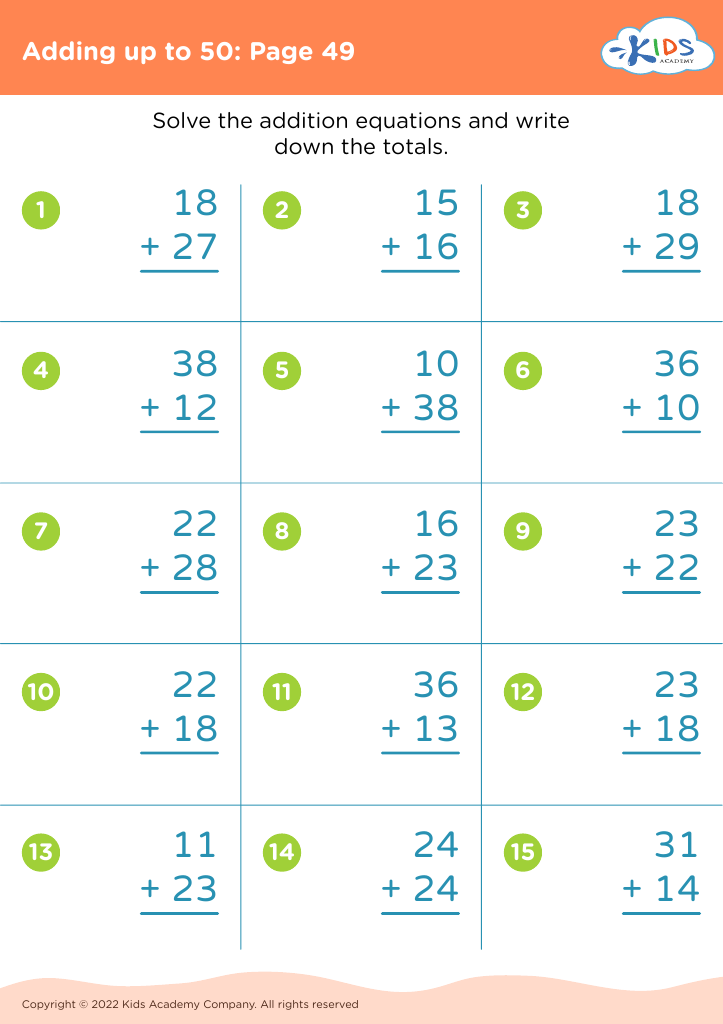


Comparing fractions is a foundational skill in mathematics that sets the stage for understanding more complex concepts later on. In Grade 2, students begin to engage with the idea of comparing fractions, particularly those with different denominators. Mastery of this skill is crucial for several reasons.
Firstly, understanding fractions helps students make sense of everyday situations, such as dividing food or sharing items. When parents or teachers facilitate learning about fractions, they equip children with practical skills that they'll use throughout their lives. This reinforces their confidence and problem-solving abilities.
Secondly, comparing fractions provides an opportunity to develop critical thinking and reasoning skills. Students learn to analyze quantities, understand relationships, and make informed judgments, which are essential skills across all areas of learning. Additionally, this aligns with broader curricula goals, helping educators meet standards while ensuring students are ready for third-grade concepts involving fractions and ratios.
Finally, when learning is fun and engaging, as with activities that involve comparing fractions, it fosters a positive attitude toward mathematics. This encouragement at a young age will help shape a lifelong relationship with learning, ultimately benefiting students in their academic journeys and beyond.