Comparing quantities Grade 2 Adding up to 50 Worksheets
3 filtered results
-
From - To
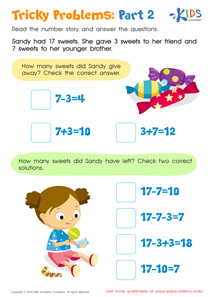
Explore our engaging "Comparing Quantities Grade 2: Adding Up to 50 Worksheets." Designed specifically for second graders, these worksheets help young learners master the concept of comparing quantities through addition. Students will practice their skills by tackling various problems that require them to identify greater, lesser, and equal quantities, all within the range of 1 to 50. Our colorful, interactive worksheets encourage critical thinking and boost confidence in mathematics. Ideal for classroom use or home practice, these resources provide a fun and effective way for children to deepen their understanding of comparing quantities while enhancing their addition skills. Start learning today!
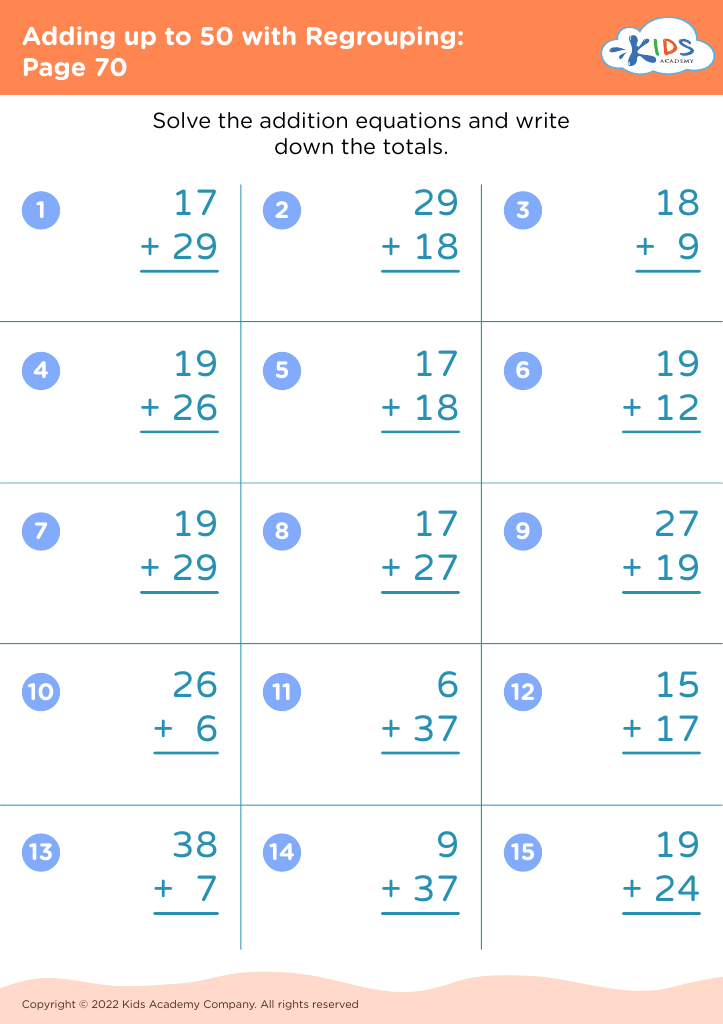
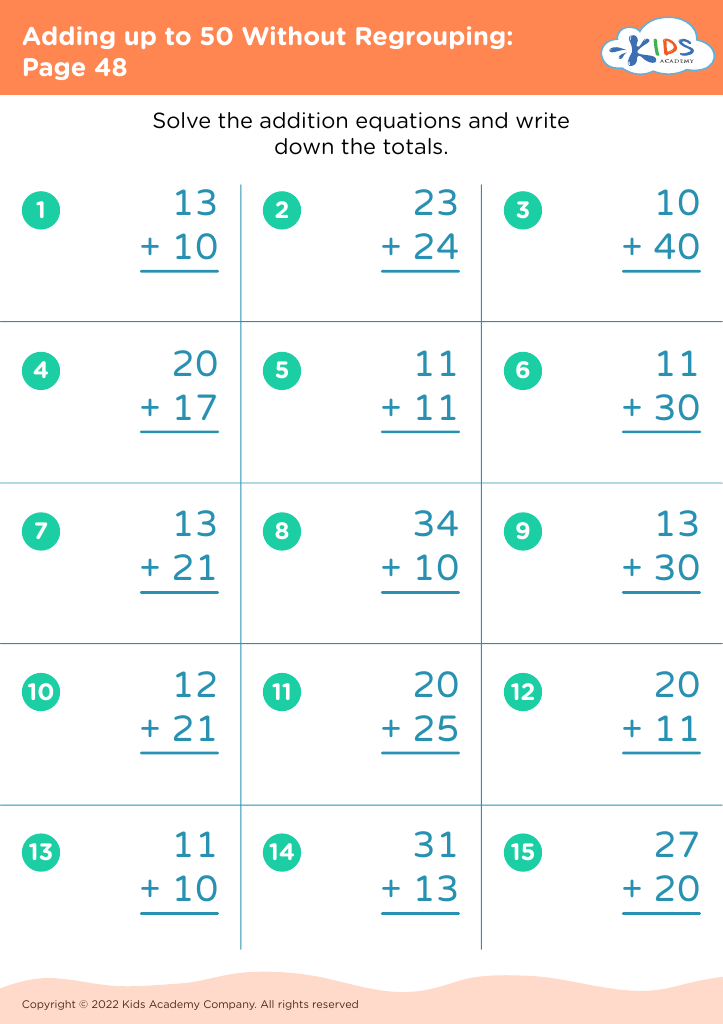
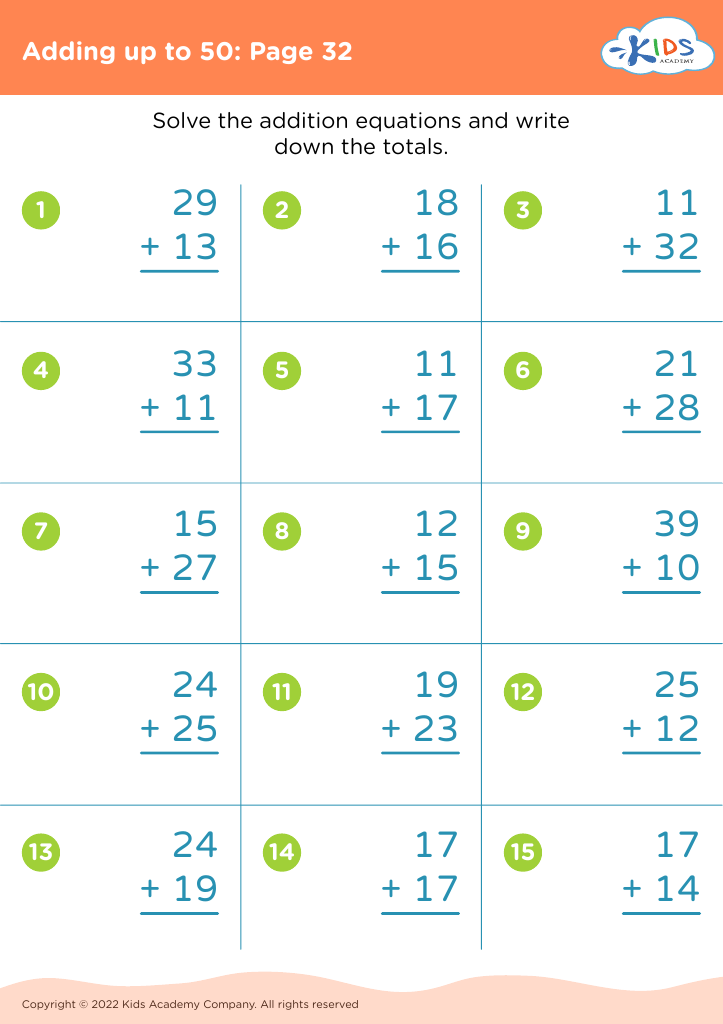


In Grade 2, understanding the concept of comparing quantities while adding up to 50 is crucial for several reasons. Firstly, it builds a strong foundational knowledge of addition and subtraction, which are essential skills in mathematics. By comparing quantities, students develop numerical fluency, learning to recognize how different amounts relate to one another, fostering critical thinking and problem-solving abilities.
Parents and teachers should care because these skills extend beyond the classroom. Mastery of comparing quantities is vital for everyday life, helping children make decisions, manage money, and understand measurements in practical scenarios. Additionally, this concept encourages mathematical reasoning; students learn to represent and manipulate numbers, which is fundamental for later, more complex math topics like multiplication and division.
Moreover, activities involving comparing quantities can be engaging and fun, making learning meaningful. Parents and teachers can use games, visual aids, and real-world examples to reinforce these ideas, creating a supportive learning environment that promotes exploration and curiosity. Encouraging exploration in comparing quantities empowers children to relate math to their everyday lives, leading to a more positive attitude towards mathematics and learning as a whole. Ultimately, fostering these skills ensures that children are better prepared for future academic challenges.