Counting objects Grade 2 Adding up to 50 Worksheets
4 filtered results
-
From - To
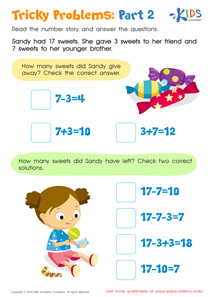
Enhance your second grader's math skills with our "Counting Objects Grade 2 Adding Up to 50 Worksheets"! Specifically designed for young learners, these engaging worksheets help children master the basics of addition through fun, visual exercises. Perfect for classroom use or extra practice at home, the worksheets guide students in counting objects and systematically adding numbers up to 50. By combining vibrant illustrations with practical problems, kids build solid arithmetic foundations while developing critical thinking and problem-solving skills. Accessible and enjoyable, these worksheets are ideal for supporting your child's math journey in a playful learning environment.
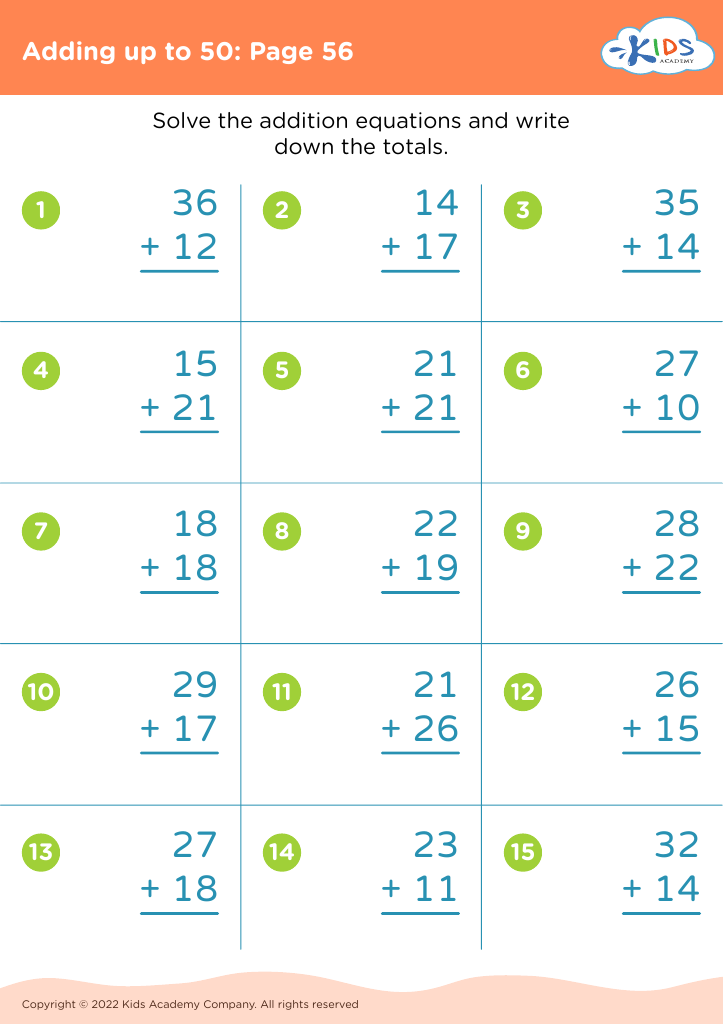
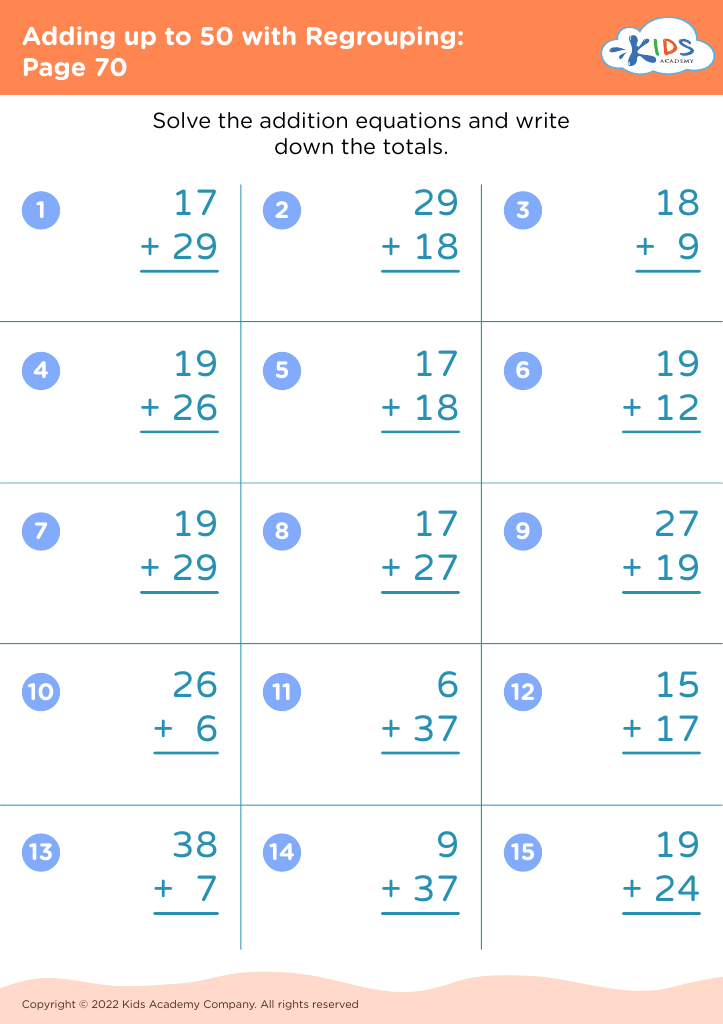
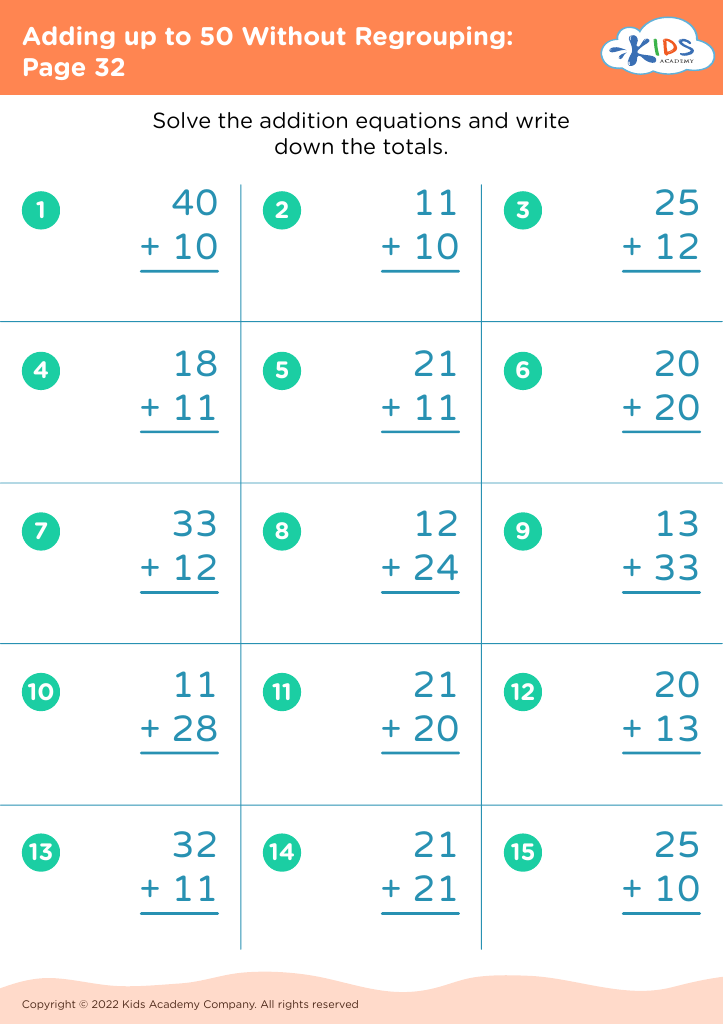
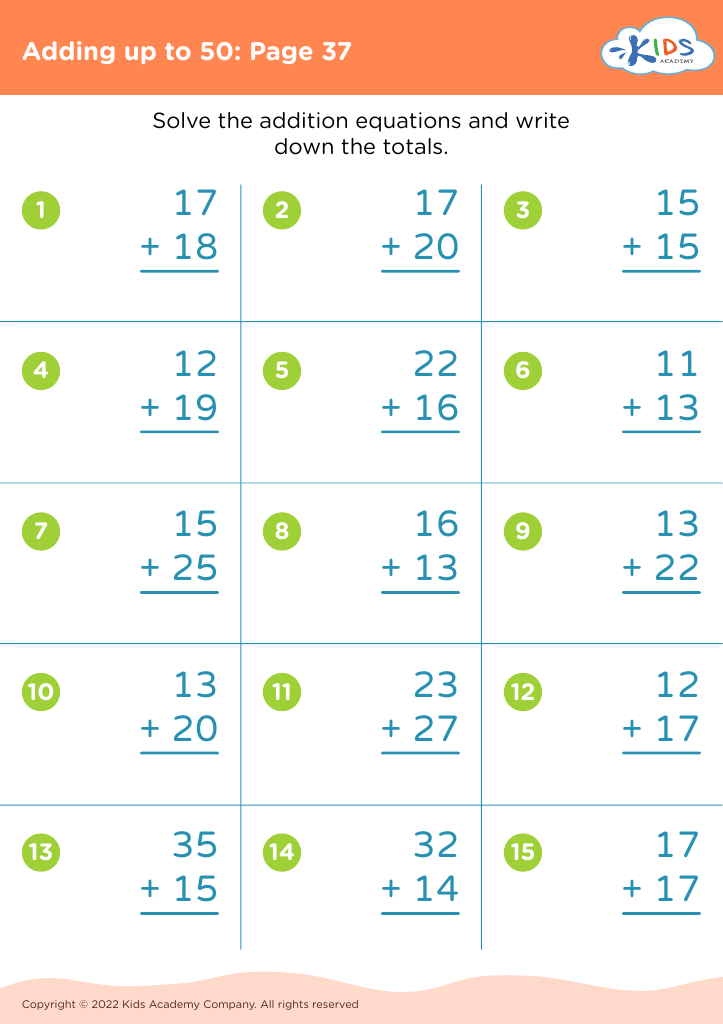


Counting objects and adding up to 50 is a vital skill for second graders that plays a fundamental role in their cognitive and mathematical development. At this age, young learners are transitioning from mere number recognition to more complex numerical problem-solving. Mastering the ability to count and add up to 50 underpins various essential math skills that will be built upon in the subsequent years. This foundational knowledge is crucial for understanding addition, subtraction, and eventually more complex operations such as multiplication and division.
For parents, supporting their child's engagement with counting and adding practices reinforces learning in a fun, real-world context, which can foster a positive attitude toward math. Everyday activities, like counting snacks, toys, or steps, can make math feel intuitive and relevant, increasing both motivation and proficiency.
For teachers, focusing on these skills ensures that each child builds a strong arithmetic foundation. This enables them to tackle more intricate problems confidently and sets a trajectory for future success in math. Furthermore, group activities and hands-on counting exercises also help develop cooperative learning, fine motor skills, and the ability to follow instructions. All these elements collectively contribute to a well-rounded early education, making counting to 50 a cornerstone of early math fluency.