Enhance counting skills Grade 2 Adding up to 50 Worksheets
5 filtered results
-
From - To
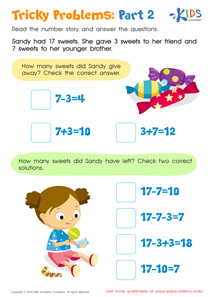
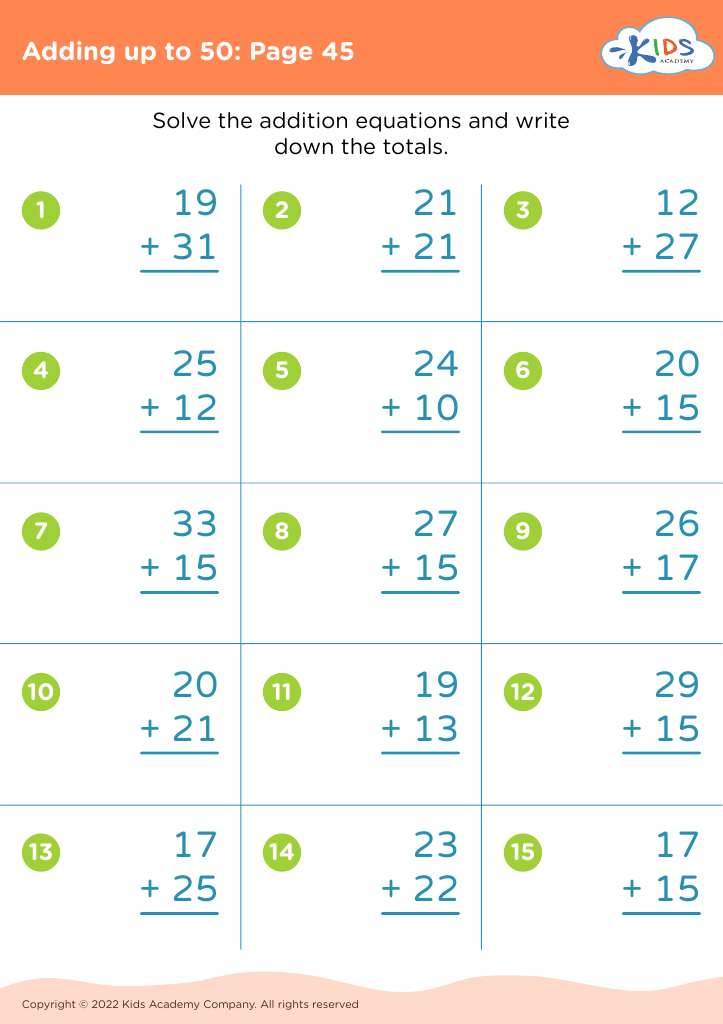
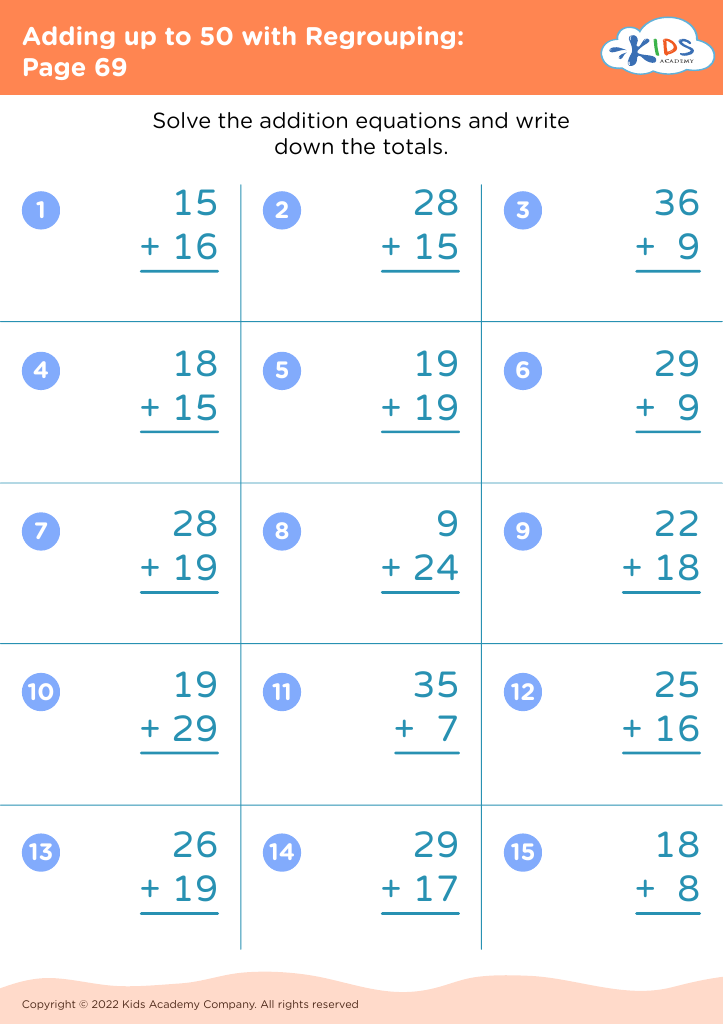
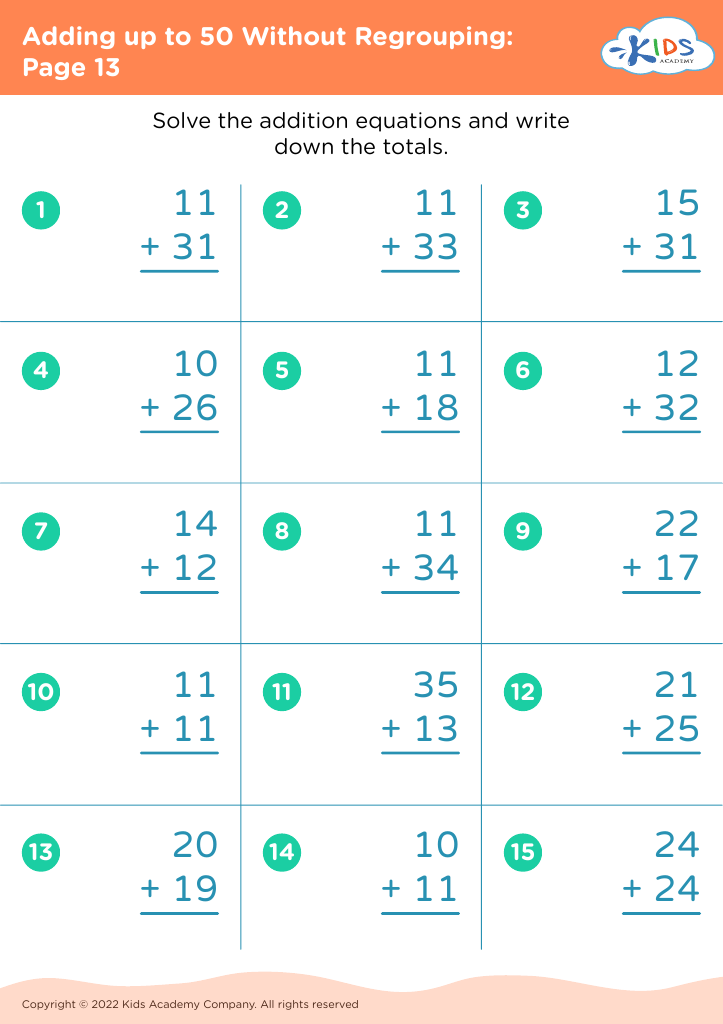
Discover our "Enhance Counting Skills: Grade 2 Adding Up to 50 Worksheets," designed to help students master addition up to 50 while boosting their counting abilities. These engaging, printable worksheets provide a variety of exercises tailored for second graders, allowing them to practice essential math skills through fun and interactive formats. Each worksheet focuses on building confidence in addition through visual aids, step-by-step instructions, and real-world applications. Ideal for classroom instruction or at-home reinforcement, these resources aim to provide a well-rounded approach to learning. Unlock your child’s potential and make math enjoyable with our expertly crafted worksheets!
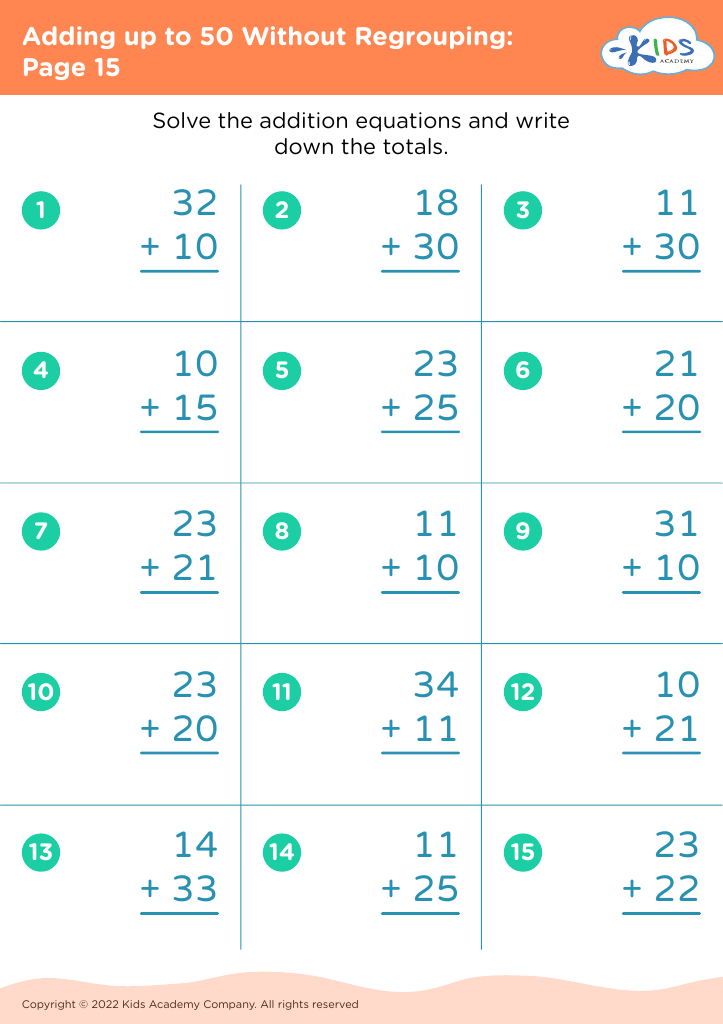
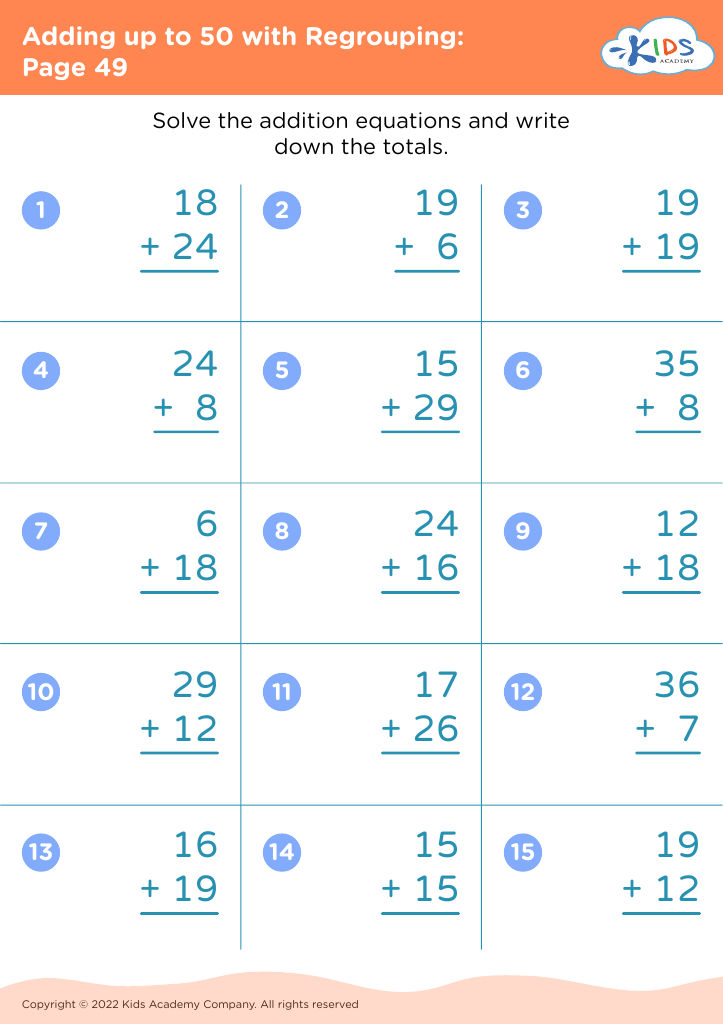


Enhancing counting skills in Grade 2, particularly when it comes to adding up to 50, is crucial for a child’s mathematical foundation and overall academic success. At this stage, students move from concrete counting to more abstract mathematical thinking, which influences their confidence and enjoyment of math. Mastery of counting and addition forms the basis for more complex operations in higher grades.
Parents and teachers should focus on this skill as it develops not only mathematical understanding but also critical thinking. When children add numbers up to 50, they learn to recognize patterns and relationships between numbers, which are essential for problem-solving. Furthermore, strong counting skills contribute to a child’s ability to tackle everyday situations, such as managing money or understanding time.
Additionally, enhancing these skills fosters a growth mindset; students experience the rewarding feeling of achievement as they master new challenges. They become more independent learners, which sets the foundation for future mathematical concepts. Ultimately, prioritizing counting and addition skills in early education empowers children, builds their confidence, and prepares them for ongoing academic challenges and real-world applications. It is an investment in their future success.