Enhance number recognition Grade 2 Adding up to 50 Worksheets
5 filtered results
-
From - To
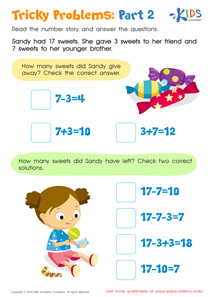
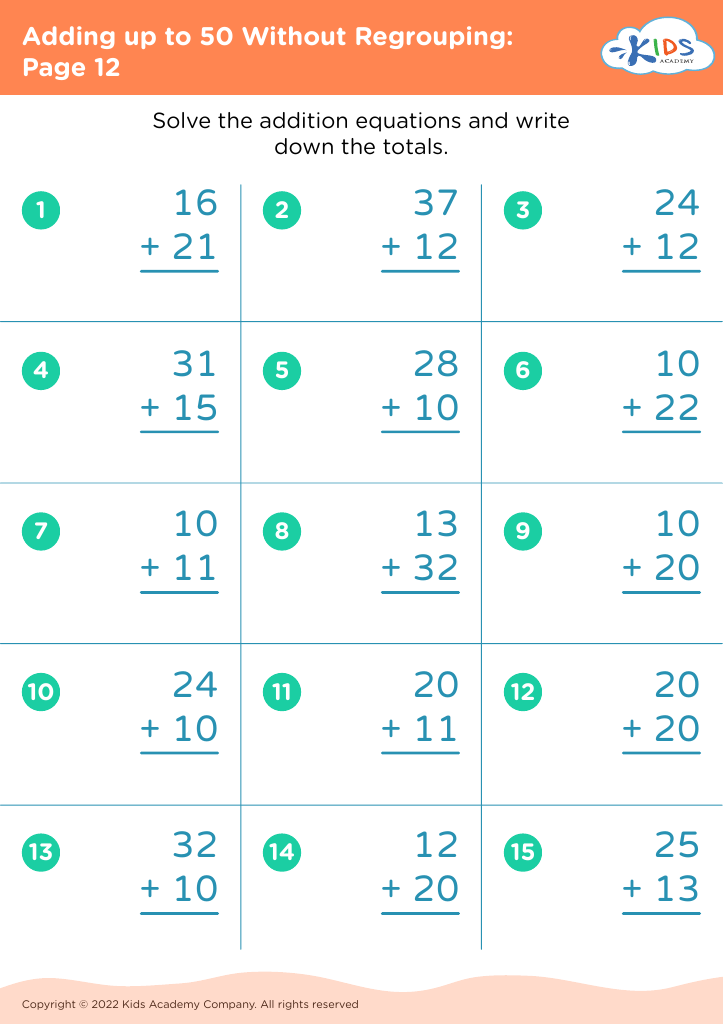
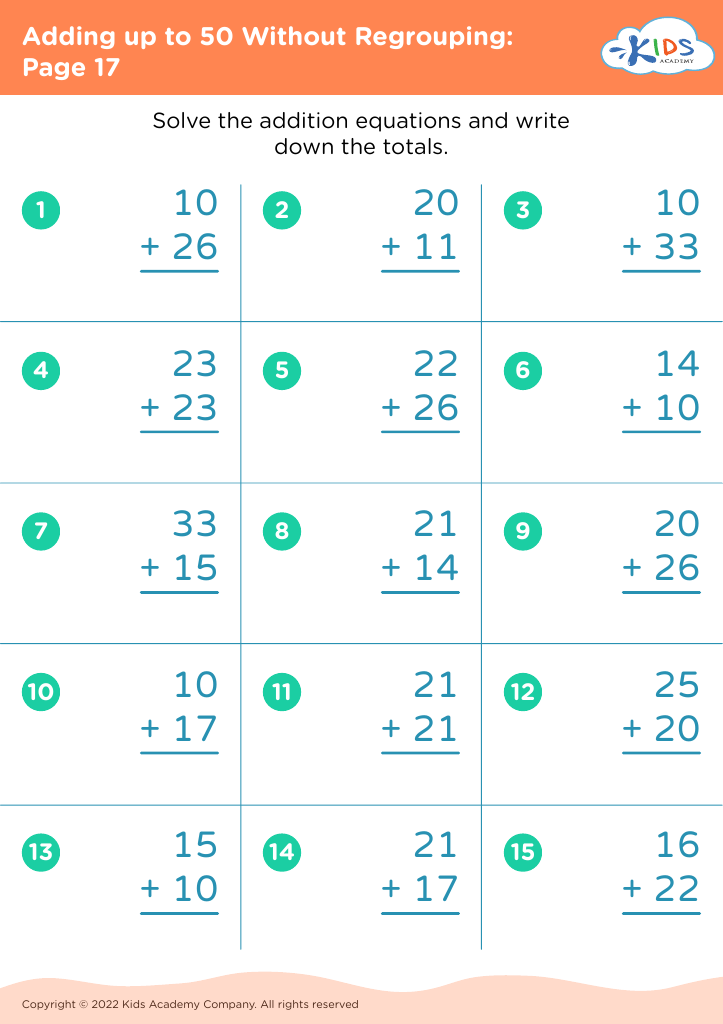
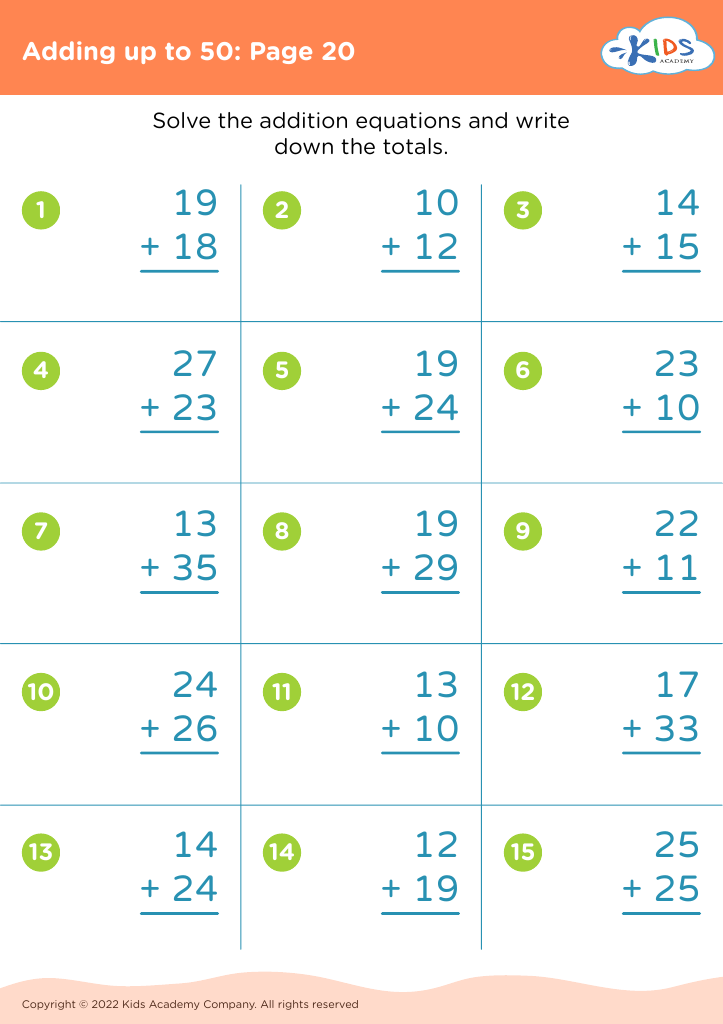
Enhance your Grade 2 student's number recognition and addition skills with our engaging "Adding up to 50" worksheets! These carefully designed worksheets provide fun and interactive ways for kids to practice adding numbers within 50, improving their math proficiency and confidence. The activities focus on building a strong foundation in addition while enhancing numerical understanding through various exercises, including number lines, visual aids, and real-world scenarios. Perfect for classroom use or at-home practice, these worksheets are an excellent resource for teachers and parents looking to support their child's mathematical journey. Help your child master addition and boost their number recognition today!
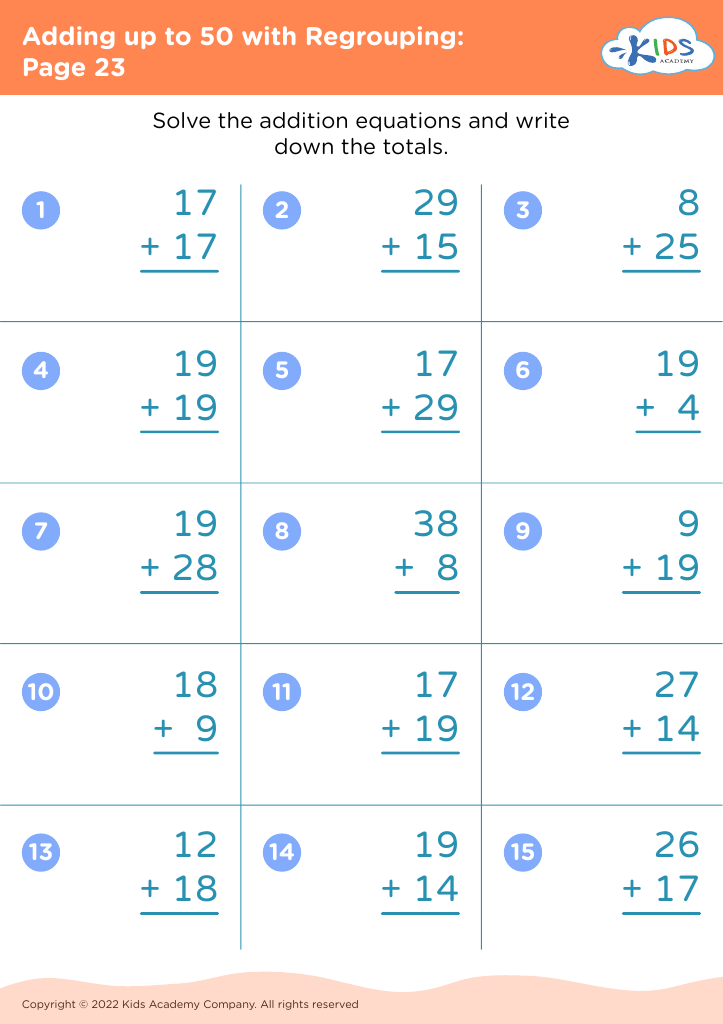
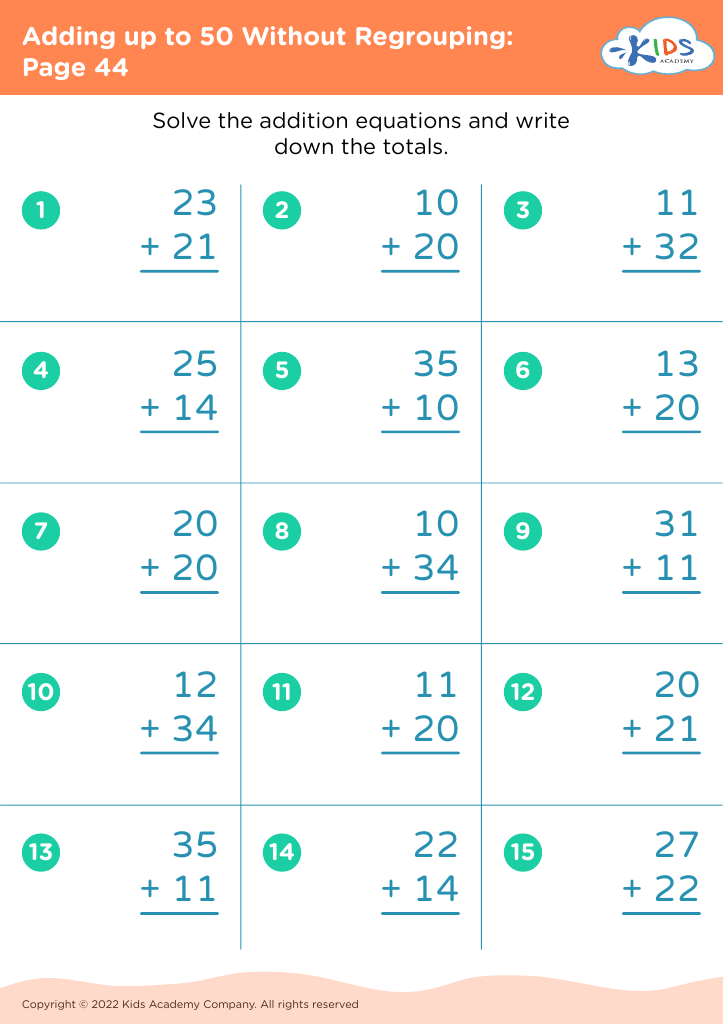


Enhancing number recognition and adding skills up to 50 in Grade 2 is incredibly important because these foundational skills set the stage for future mathematical development. During these early years, children are at a critical stage of cognitive development where they are learning to understand and manipulate numbers. Proficiency in number recognition enables students to grasp more complex concepts such as addition, subtraction, and eventually, multiplication and division.
Teachers and parents who focus on strengthening these skills help children build confidence in their math abilities. This confidence is crucial because it encourages a positive attitude toward learning mathematics and reduces anxiety around the subject. Recognizing numbers fluently allows students to engage in more meaningful and efficient problem-solving, as they can quickly identify values and relationships between numbers.
Additionally, many everyday activities and future academic tasks require a solid grasp of basic arithmetic. Being proficient at adding numbers up to 50 lays the groundwork for tasks such as understanding money, time, and measurement, which are essential life skills.
Investing effort into enhancing these capabilities in Grade 2 not only promotes academic success but also fosters essential lifelong skills. Teachers and parents play a pivotal role in this developmental phase, thus setting their children on a path toward both educational achievement and practical numeracy.