Enhancing problem-solving abilities Grade 2 Adding up to 50 Worksheets
3 filtered results
-
From - To
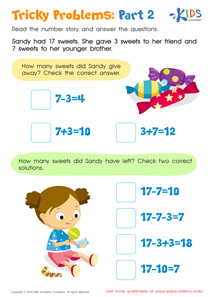
Boost your Grade 2 students' problem-solving skills with our "Adding Up to 50" worksheets. Designed to engage young learners, these printable resources provide a fun and interactive way for students to practice addition while tackling various problem-solving scenarios. Featuring brightly illustrated activities, these worksheets encourage critical thinking and mathematical reasoning as kids solve equations that add up to 50. Perfect for classroom or home use, our materials cater to diverse learning styles, making math enjoyable and accessible. With guided exercises and ample practice, students will build a strong foundation in addition, empowering them to become confident problem solvers. Explore our collection today!
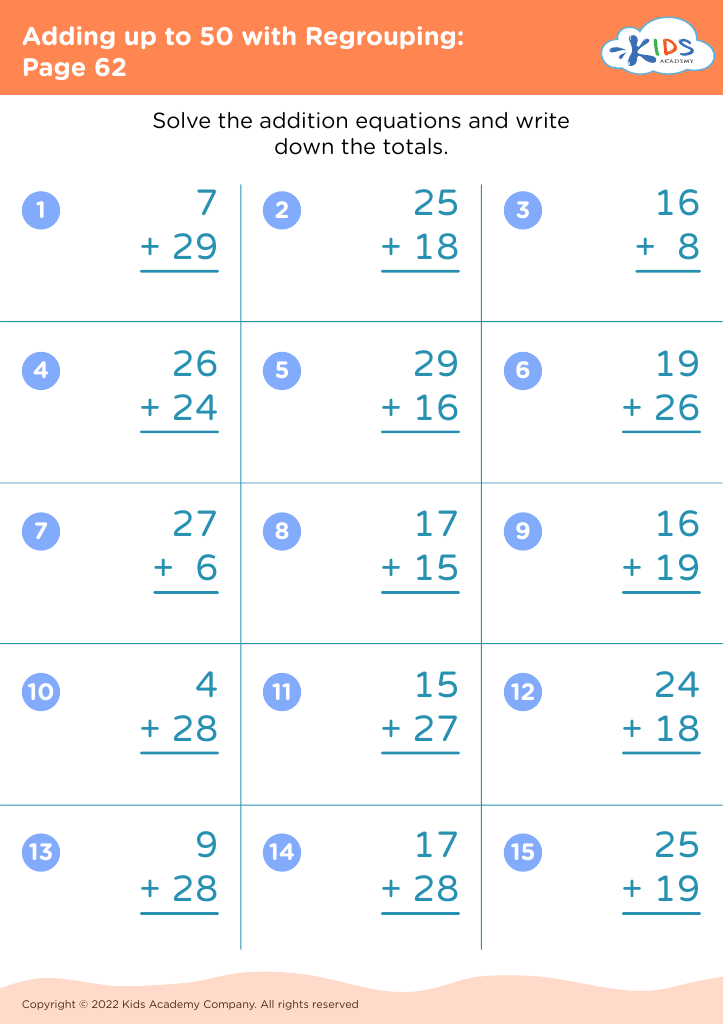
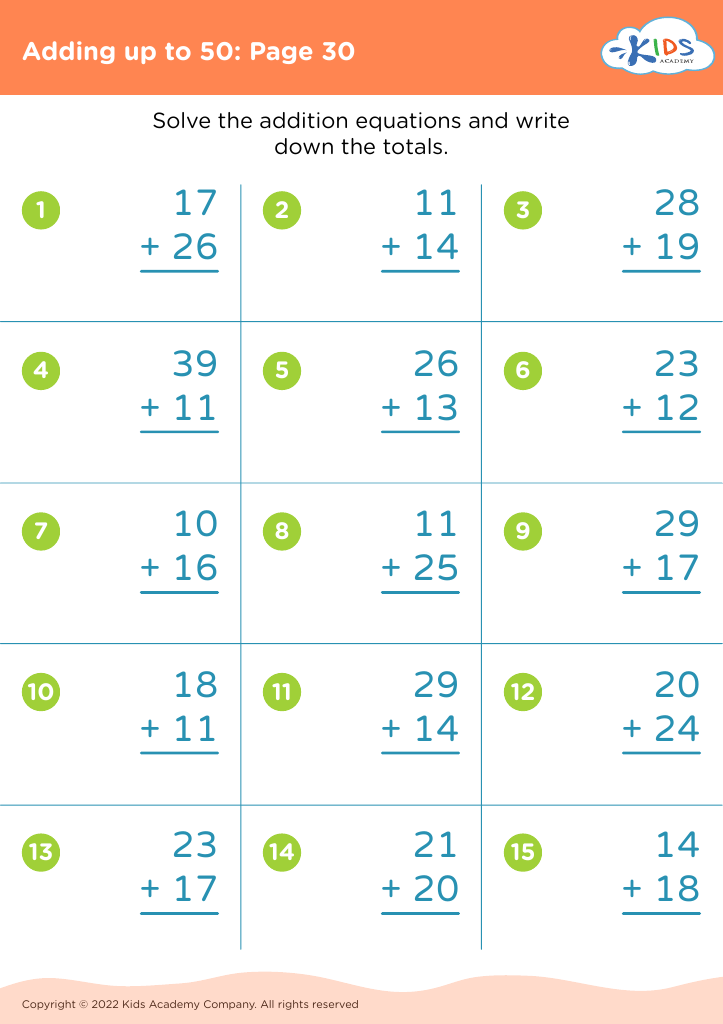
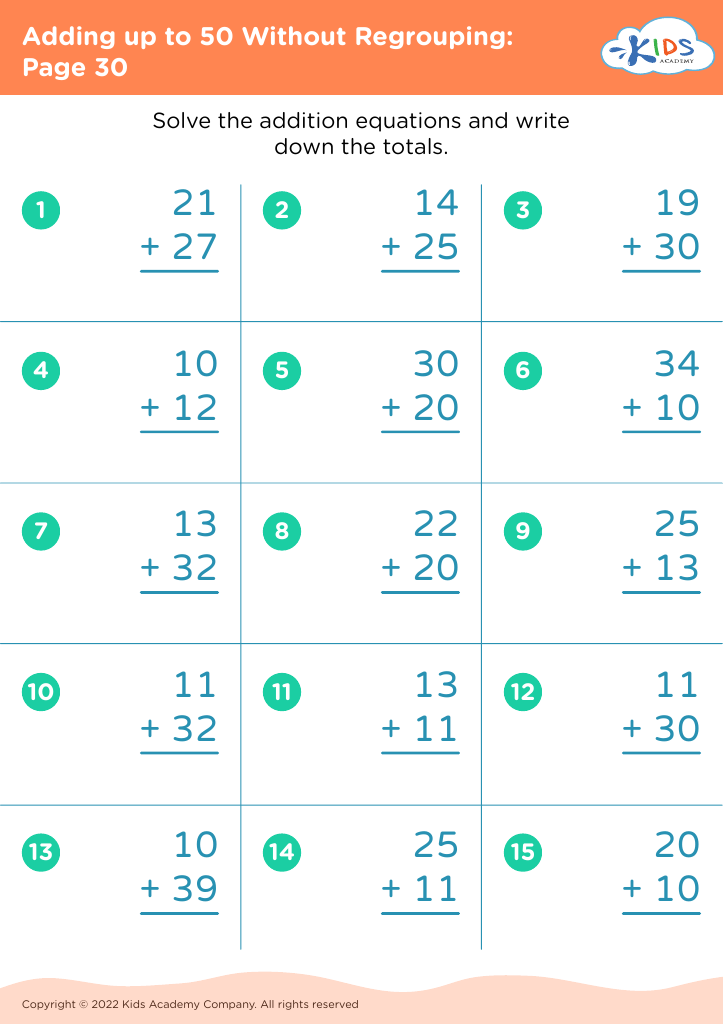


Enhancing problem-solving abilities in Grade 2, particularly in the context of adding up to 50, is crucial for both parents and teachers for several reasons. Firstly, mastering basic addition is foundational to developing more complex math skills later on. Engaging students in problem-solving at this stage helps build confidence and a positive attitude toward mathematics, fostering a lifelong interest and reducing math anxiety.
Moreover, effective problem-solving skills go beyond mere arithmetic; they instill critical thinking and logical reasoning. Students learn to analyze problems, identify patterns, and apply various strategies, which are essential skills not just in math, but in everyday decision-making and other academic subjects.
For parents and teachers, nurturing these skills also promotes collaboration. Working together on problem-solving exercises encourages communication and teamwork, helping students articulate their thought processes and reinforce their learning through discussion. Furthermore, strong problem-solving abilities support academic achievement, setting the groundwork for a child’s future educational success.
Ultimately, enhancing these skills creates resilient learners who can adapt to diverse challenges, paving the way for them to become capable, independent thinkers in the future. Parents and teachers play a vital role in guiding and supporting students through this enriching learning journey.