Fraction Addition Grade 2 Adding up to 50 Worksheets
5 filtered results
-
From - To
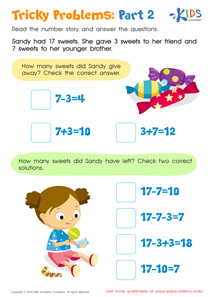
Enhance your Grade 2 students’ math skills with our engaging Fraction Addition worksheets, focusing on adding fractions while keeping sums within 50. Designed for young learners, these worksheets offer a fun and interactive way to help students grasp the concept of adding fractions using visual aids, number lines, and real-world examples. With a variety of problems to solve, students will build confidence in their fraction addition abilities, perfect for both classroom and at-home learning. Boost your child's math proficiency and make learning enjoyable as they explore the world of fractions. Download our worksheets today and watch their skills flourish!
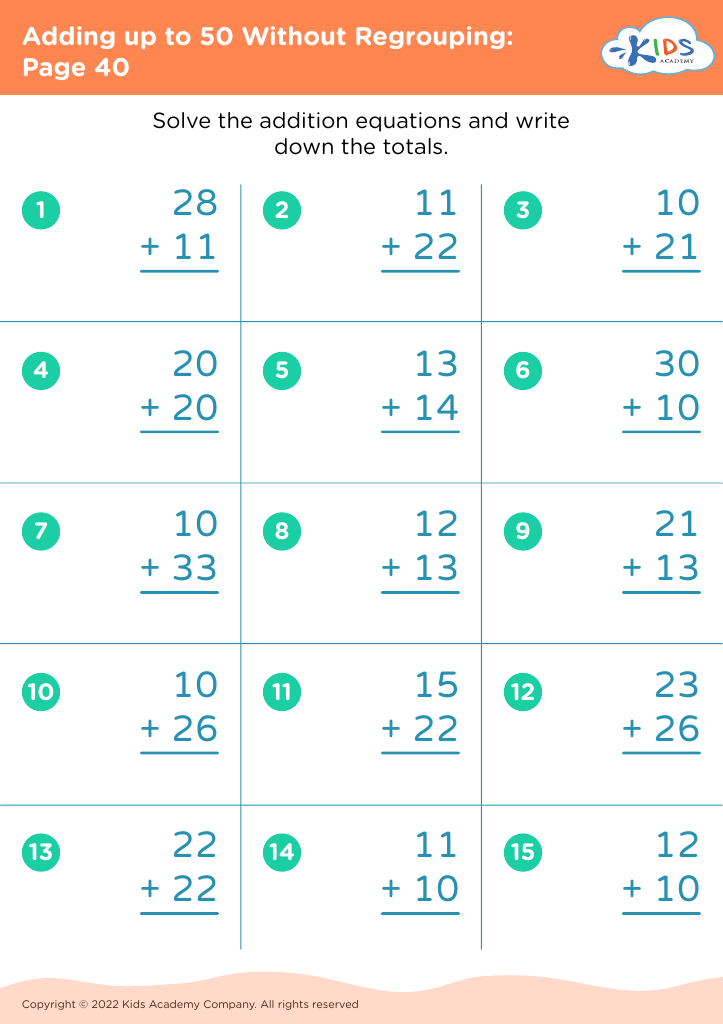
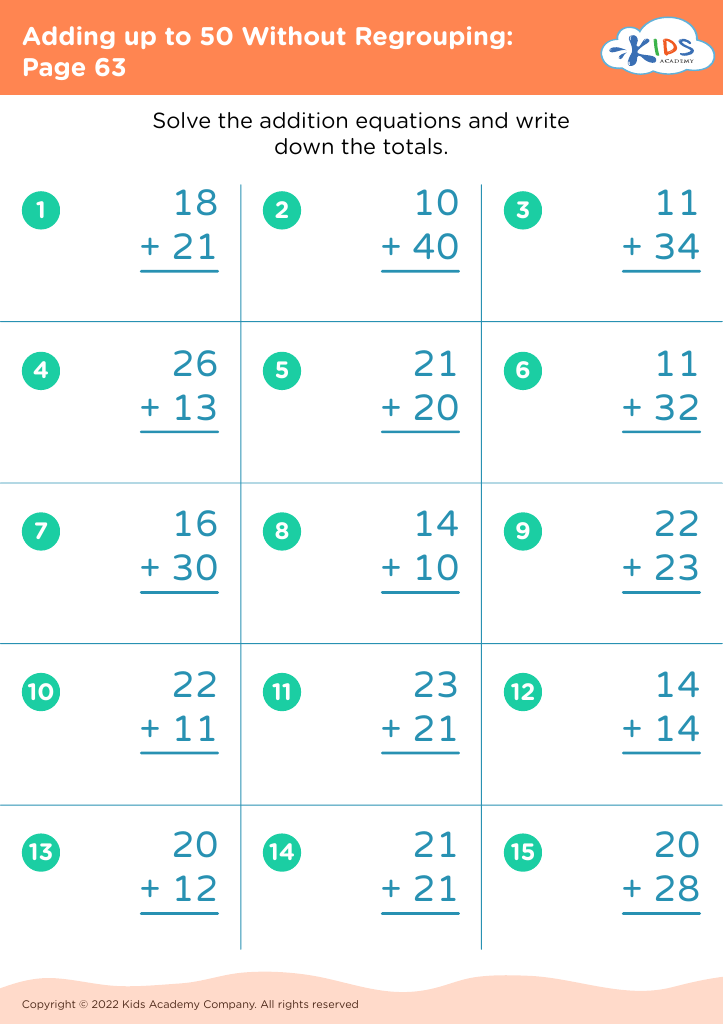
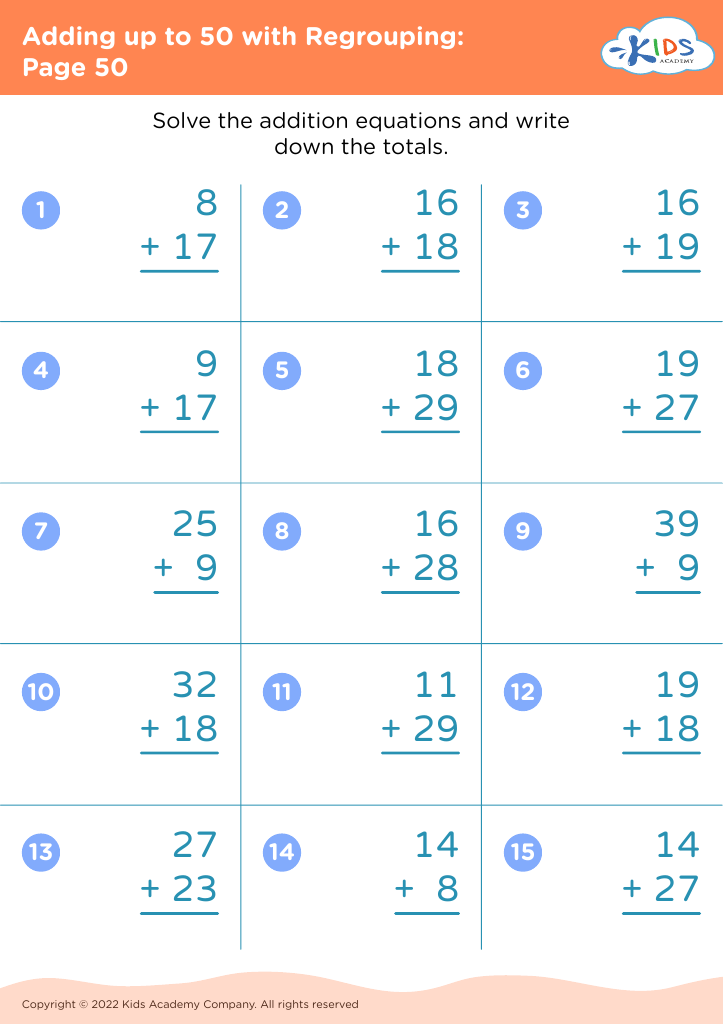
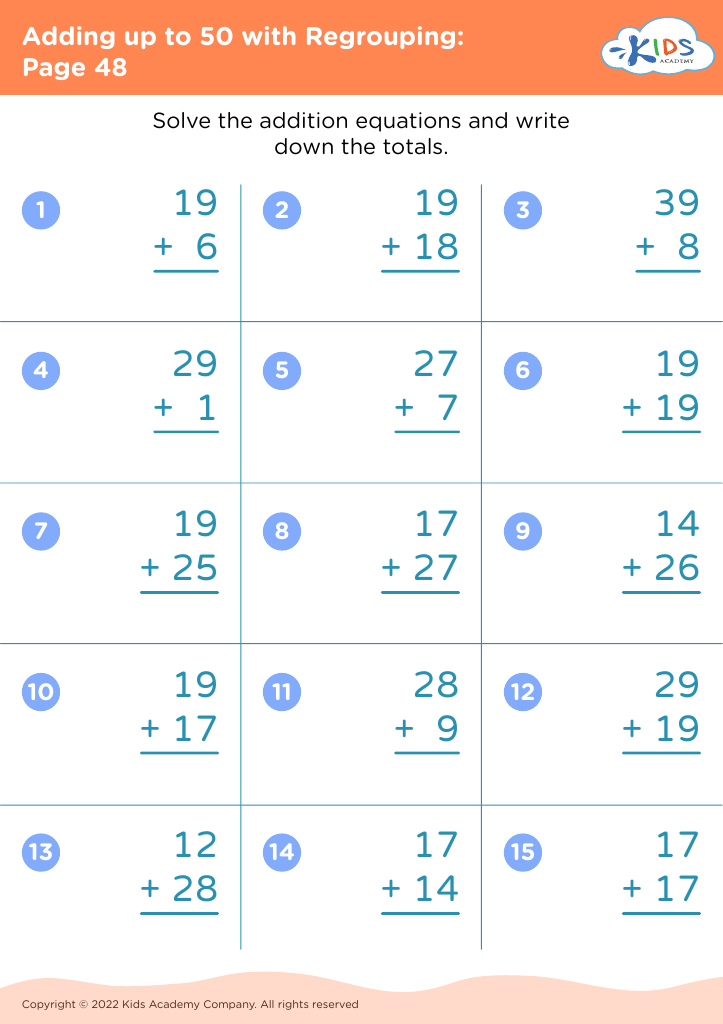
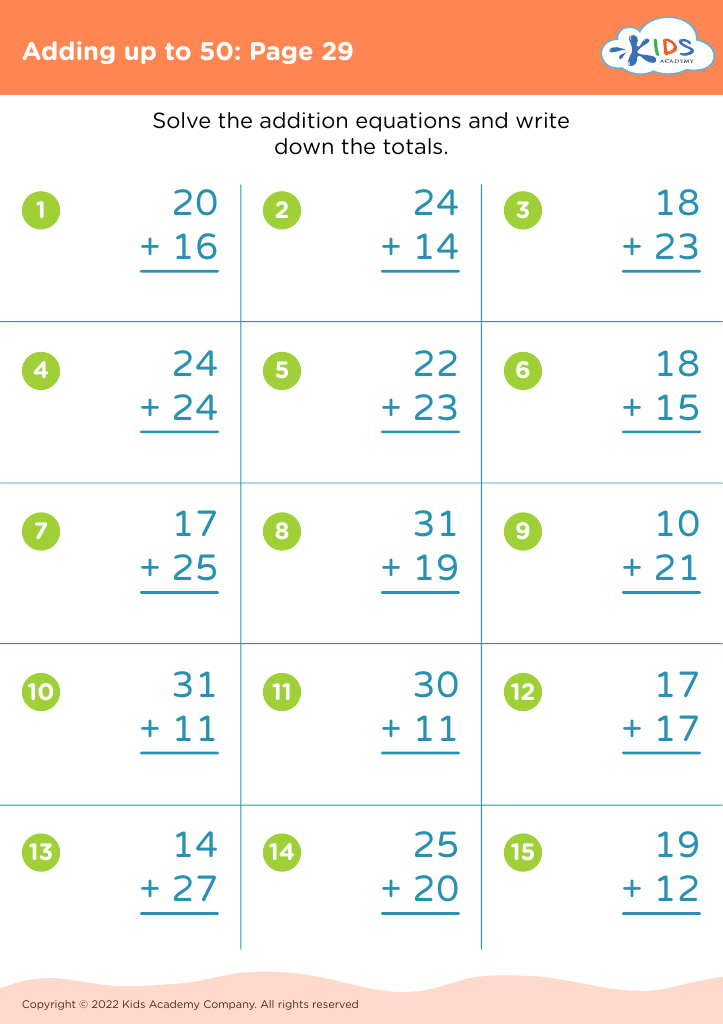


Understanding fraction addition, especially at the second-grade level, is crucial for students as it lays the groundwork for future mathematical learning. Parents and teachers should care about this topic for several reasons. Firstly, grasping the concept of adding fractions enables young learners to develop critical thinking and problem-solving skills. It goes beyond rote memorization and emphasizes conceptual understanding, which is vital for tackling more complex math in later grades.
Moreover, fractions are an essential part of everyday life, from cooking and measuring to budgeting and time management. By instilling strong fraction addition skills, educators and parents equip students with practical tools that they will use outside the classroom.
Additionally, focusing on sums up to 50 helps in preventing frustration and enhances confidence, as children see their mathematical progress in manageable steps. By fostering a positive relationship with math early on, adults can help mitigate anxieties surrounding the subject that may develop later.
Overall, ensuring that children are proficient in adding fractions not only supports their current academic pursuits but also paves the way for lifelong learning engaged with mathematics. This foundational skill encourages persistence, accuracy, and a sense of accomplishment in young learners.