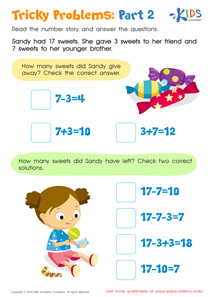
Fraction comparison Grade 2 Adding up to 50 Worksheets
7 filtered results
-
From - To
Help your second grader master math with our Fraction Comparison Adding Up to 50 Worksheets. Designed specifically for Grade 2 students, these engaging and educational worksheets combine two essential math skills: fraction comparison and adding numbers up to 50. Through fun exercises and colorful visuals, kids can easily grasp the concept of comparing fractions and summing up numbers. Each worksheet provides practice and reinforcement to boost their confidence and proficiency. Perfect for both classroom use and homeschooling, our worksheets are a fantastic resource to enhance your child's mathematical abilities and foster a love for learning.
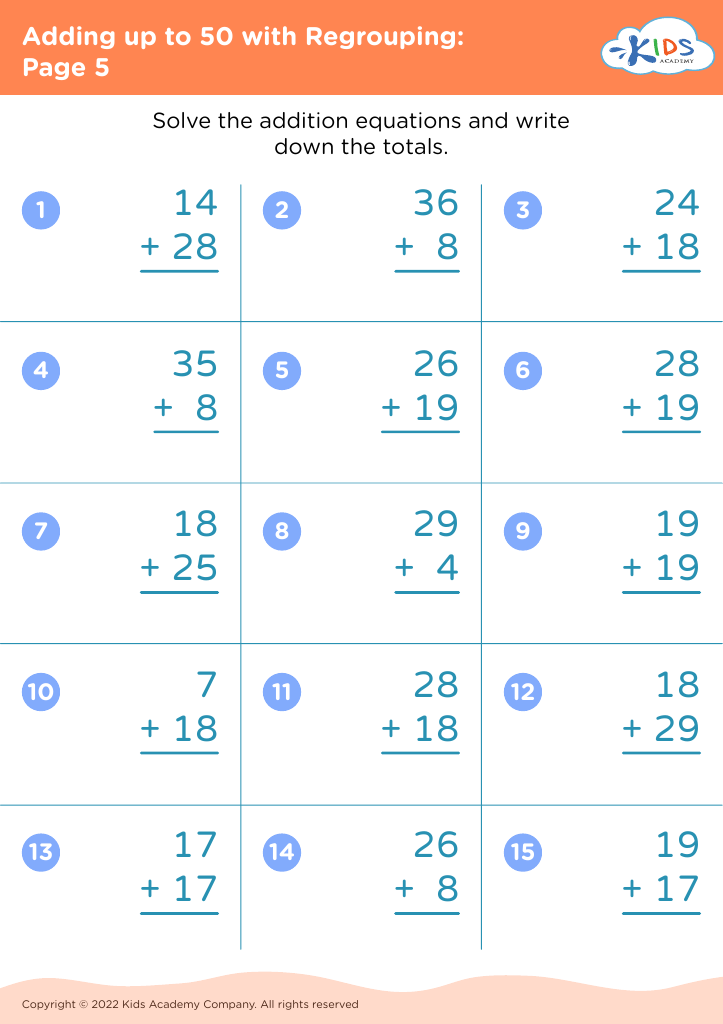
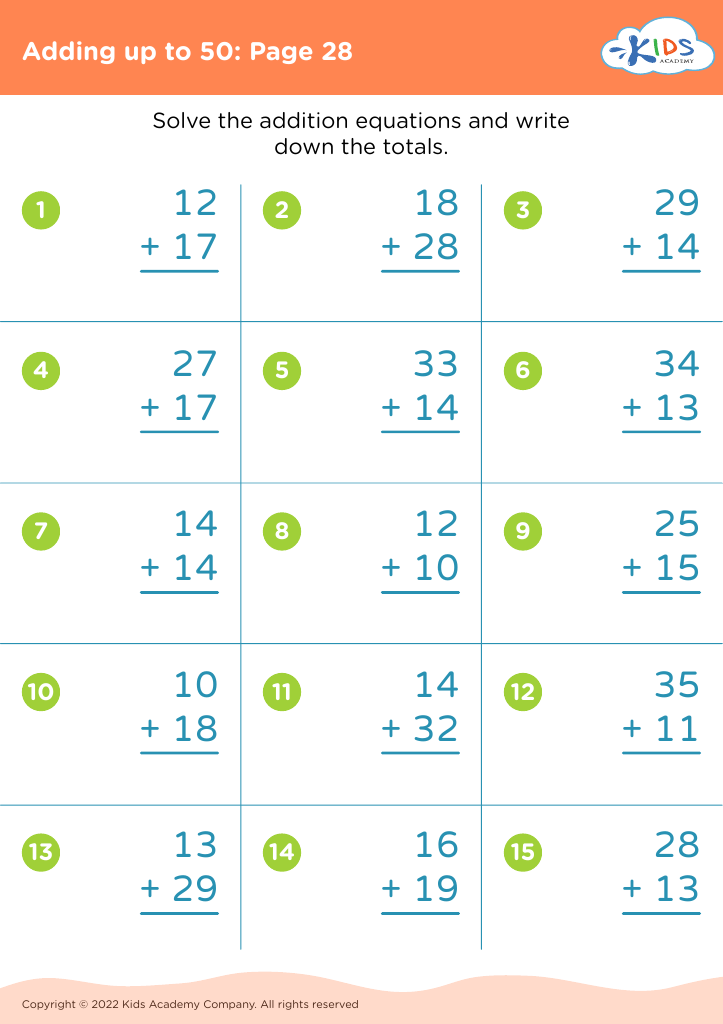
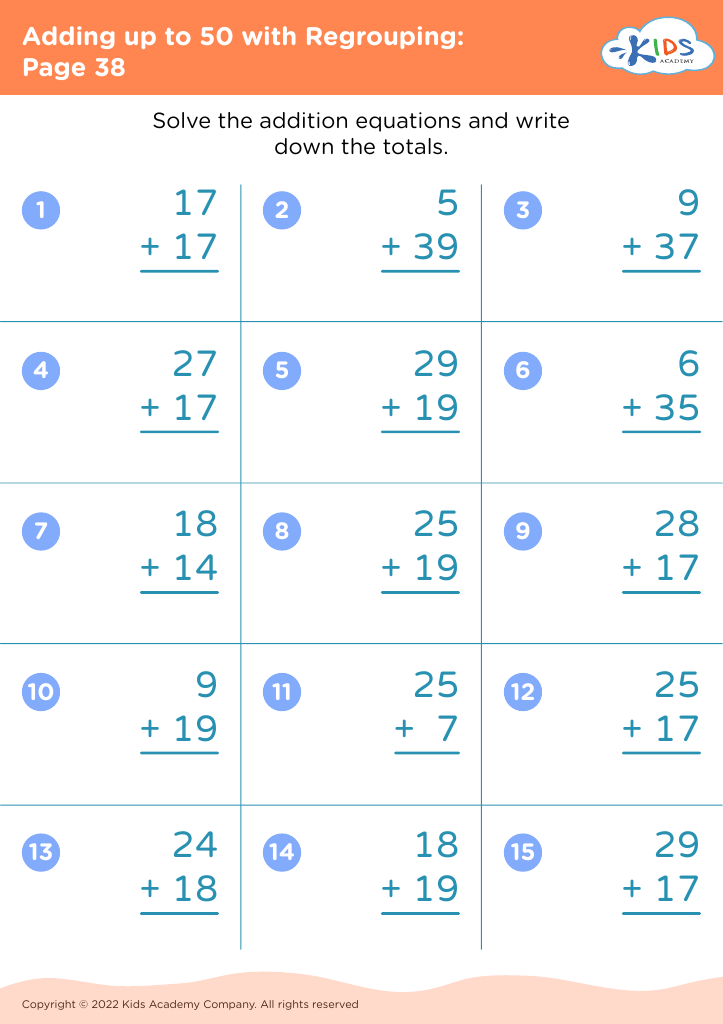
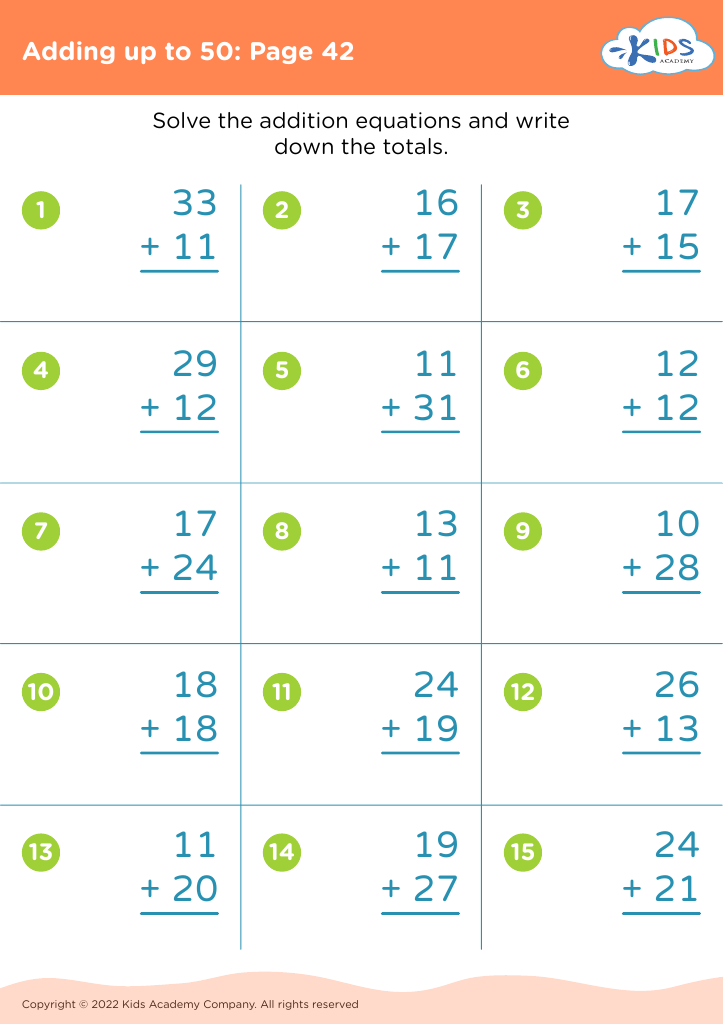
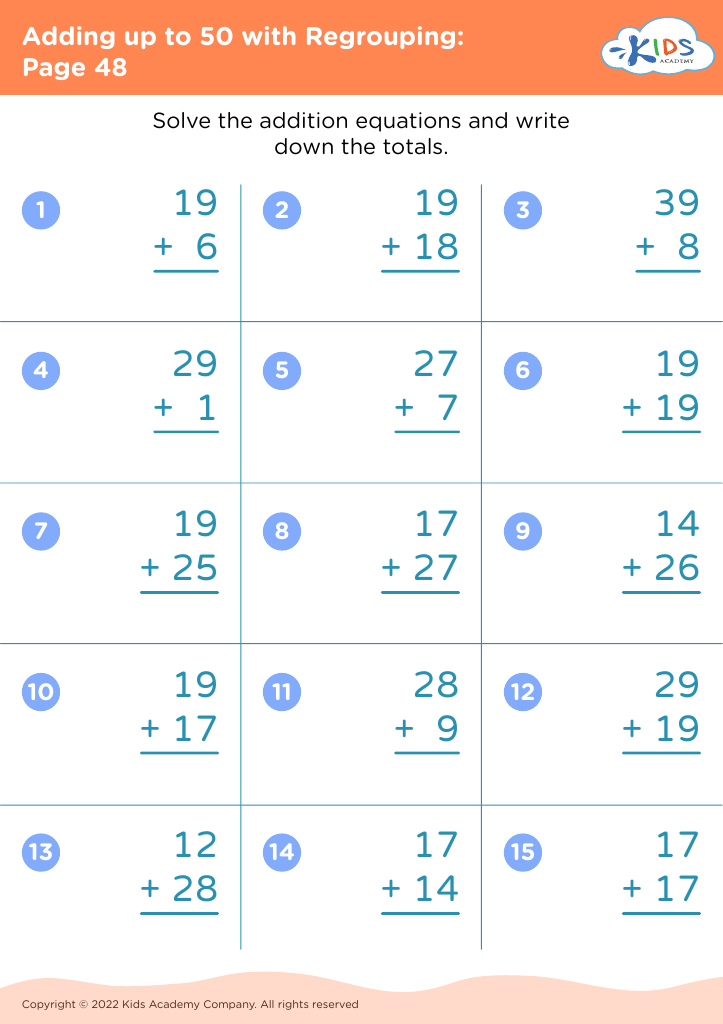
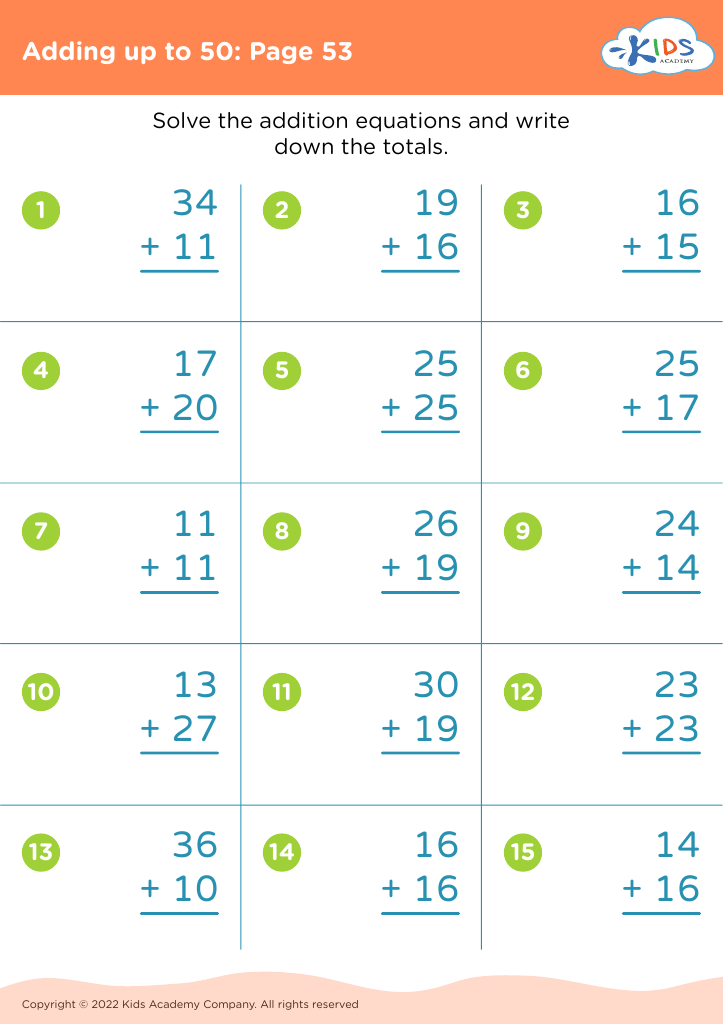
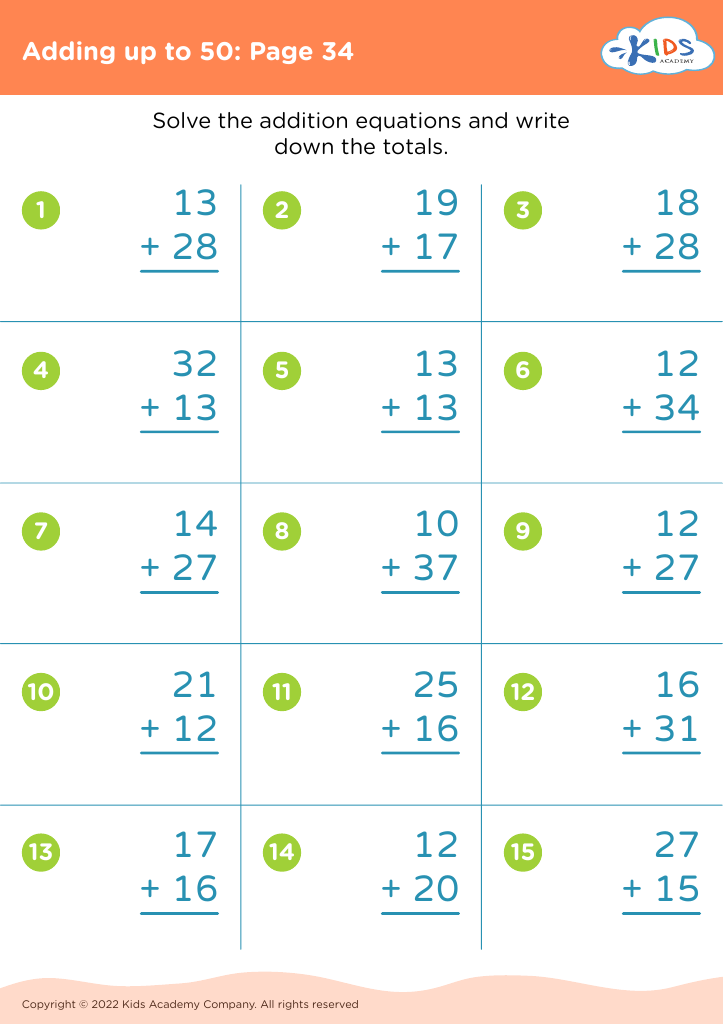


Understanding fraction comparison and addition up to 50 in Grade 2 is fundamental for building strong mathematical foundations. Firstly, mastering fractions helps children grasp essential concepts about parts and wholes, which are critical not only in math but also in real-life situations, such as sharing or cooking. By learning to compare fractions early on, students develop skills in reasoning and numerical thinking.
Adding up to 50 fortifies a student’s number sense and lays the groundwork for future arithmetic operations, such as multi-digit addition, subtraction, multiplication, and division. It enhances their ability to perform mental math, which is a vital everyday skill.
Parents and teachers should care about these concepts because they are crucial for standardized testing and academic progression. Early proficiency ensures that children avoid struggles in higher grades where mathematical concepts become more complex. Moreover, success in these early stages boosts children's confidence and interest in math, contributing to a positive attitude towards learning.
Engaging with these mathematical concepts at an early age also encourages problem-solving skills and logical thinking, which are invaluable lifelong skills. Caring about fractions and addition up to 50 ensures children are better prepared for advanced subjects, thereby fostering their overall academic success and personal development.