Logical thinking Grade 2 Adding up to 50 Worksheets
3 filtered results
-
From - To
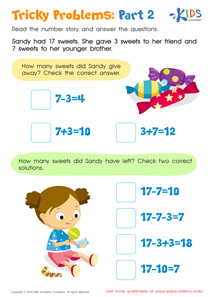
Enhance your second grader's mathematical skills with our engaging "Logical Thinking Grade 2 Adding Up to 50 Worksheets." These thoughtfully designed worksheets focus on improving logical reasoning and problem-solving abilities while introducing addition concepts up to 50. Students will tackle a variety of exercises, including puzzles, word problems, and visual aids, encouraging them to think critically and apply their math knowledge effectively. Ideal for classroom or home use, our resources help reinforce learning, making math enjoyable and interactive. Empower your child’s confidence in math with these essential worksheets that promote both fun and learning! Download your set today!
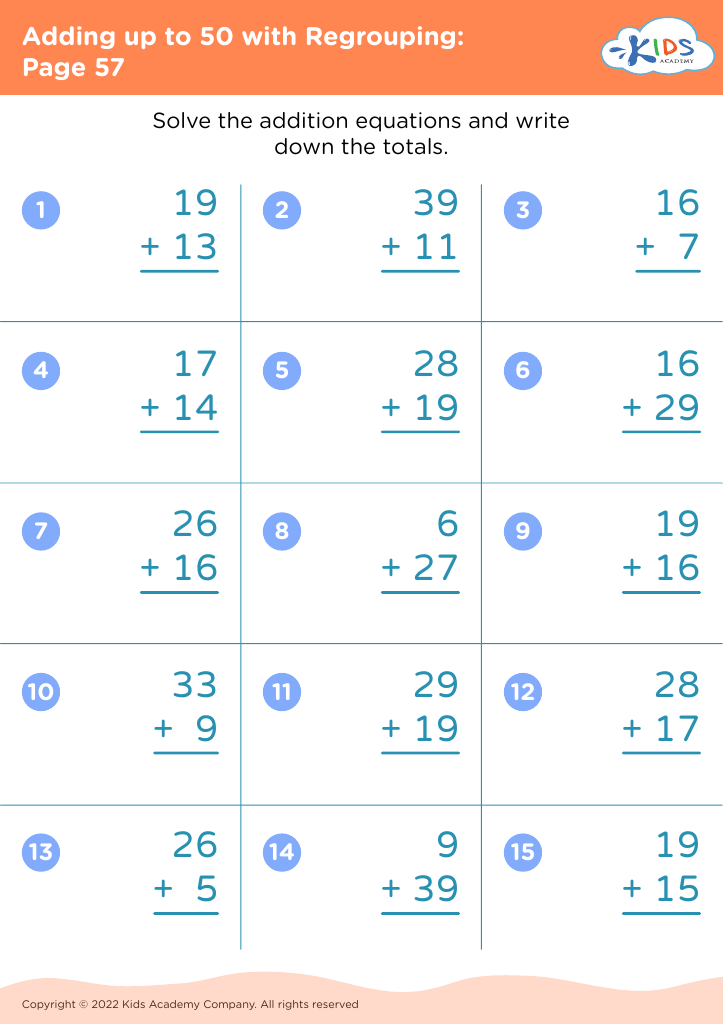
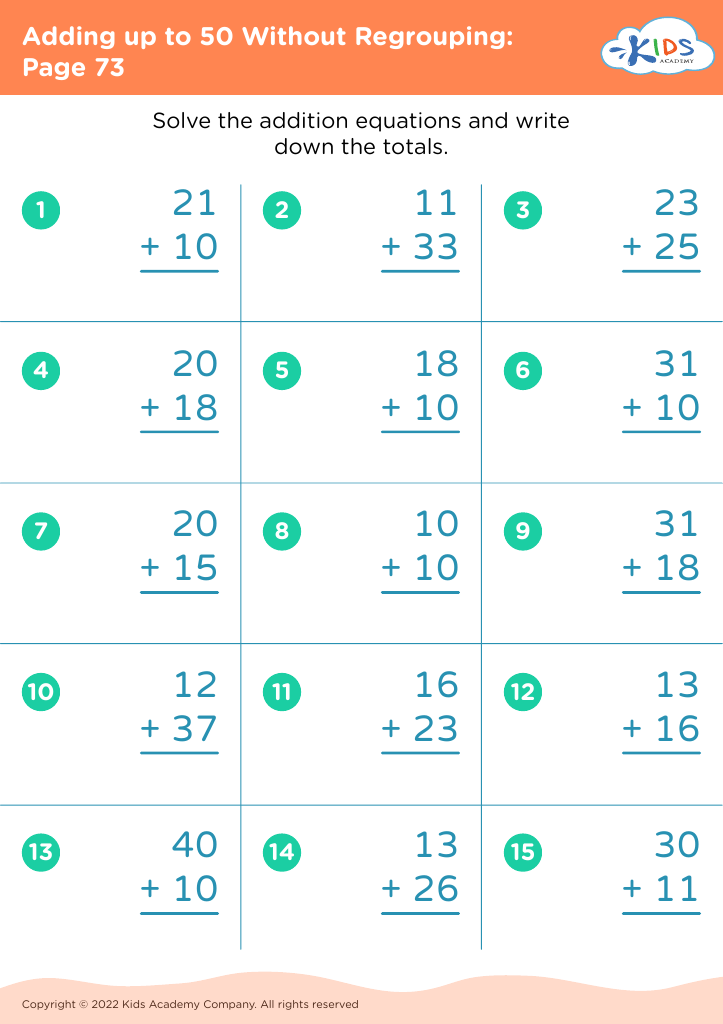
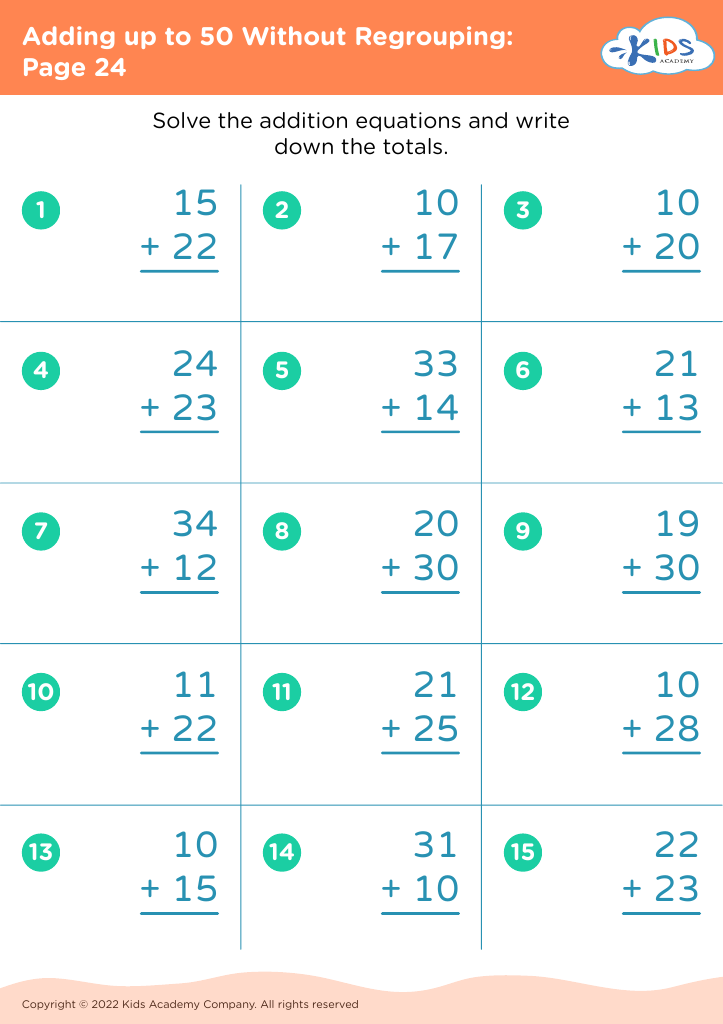


Logical thinking is a critical skill that 2nd graders need to develop, particularly when it comes to mathematical concepts like adding up to 50. Understanding logical reasoning enables students to approach problems systematically, enhance their critical-thinking abilities, and make connections between ideas. When children engage with addition problems up to 50, they not only practice basic math skills but also cultivate their ability to analyze and solve problems in various contexts.
For parents and teachers, nurturing this skill early on is essential. It lays the foundation for more advanced mathematical concepts and promotes a growth mindset. Children learn that making mistakes is part of the learning process, encouraging resilience and perseverance. Moreover, developing logical thinking fosters confidence; students who are comfortable with numbers are often more willing to tackle complex problems as they progress in their studies.
Additionally, these skills are transferable across subjects and life experiences. Logical thinking helps students in everyday decision-making and enhances their ability to think critically about information. Therefore, prioritizing logical reasoning and addition skills at this stage sets children on a path toward academic success and lifelong problem-solving abilities. It’s a vital investment in their education and future.