Number Writing Practice Grade 2 Adding up to 50 Worksheets
4 filtered results
-
From - To
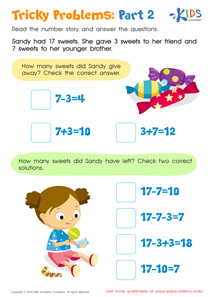
Our "Number Writing Practice Grade 2 Adding up to 50 Worksheets" are designed to enhance your child's math and handwriting skills simultaneously. These printable worksheets offer engaging activities that reinforce number formation and arithmetic abilities, guiding second graders as they practice adding sums up to 50. Rich in educational content, each worksheet focuses on boosting confidence and improving number legibility while making math enjoyable. Ideal for classroom use or homeschool learning, these resources ensure students build a solid foundation in both writing and addition, setting the stage for future mathematical success. Download now and watch your child thrive!
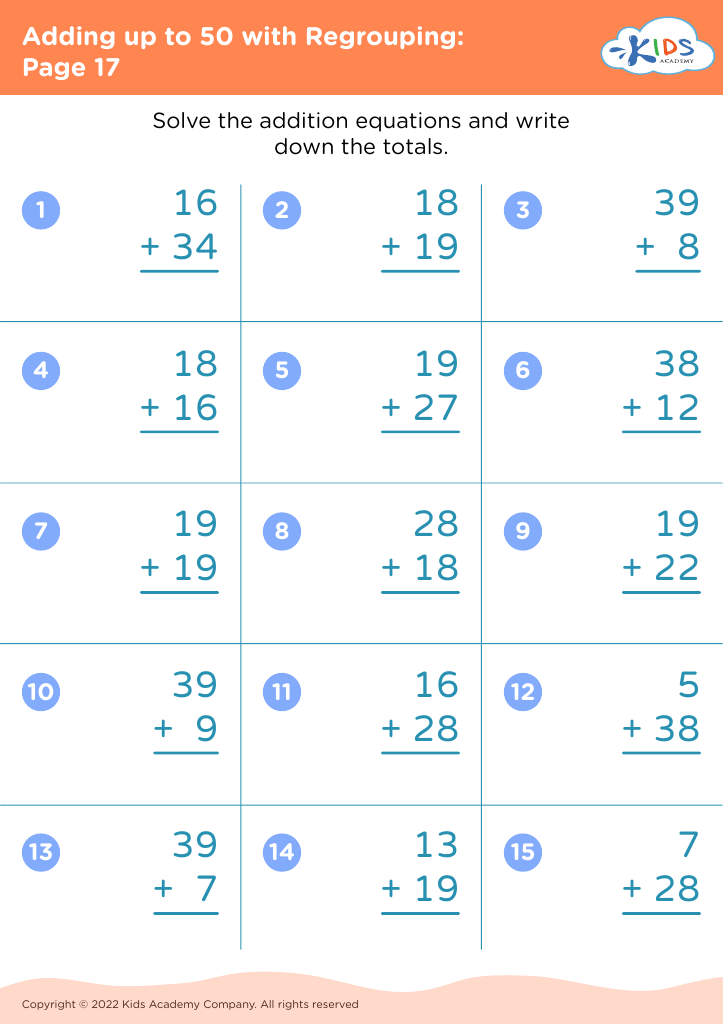
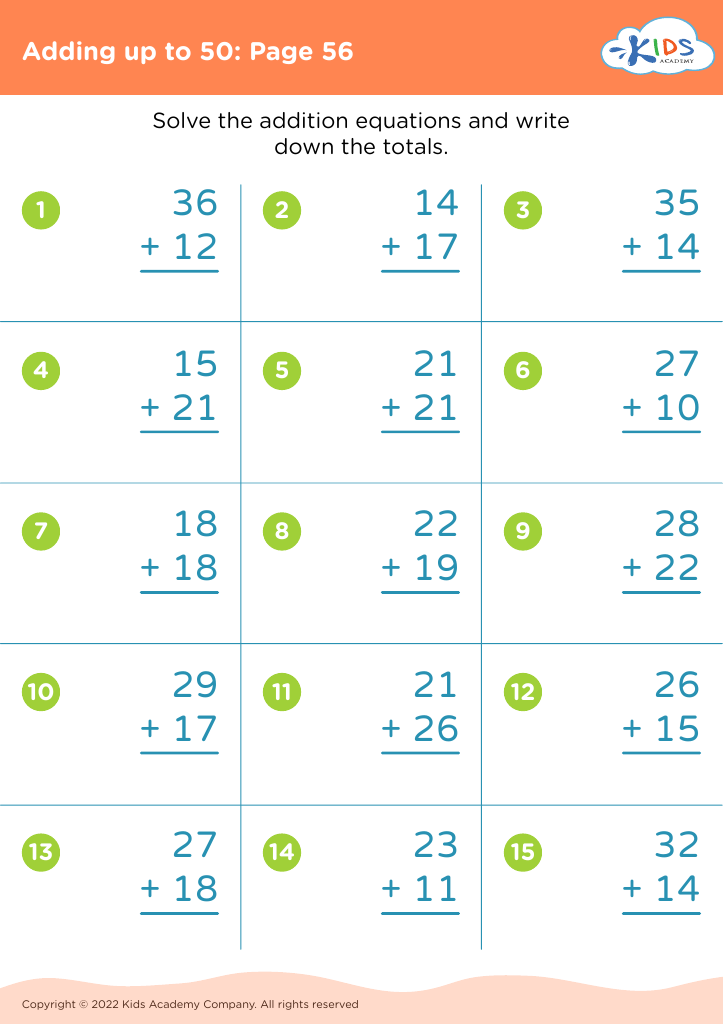
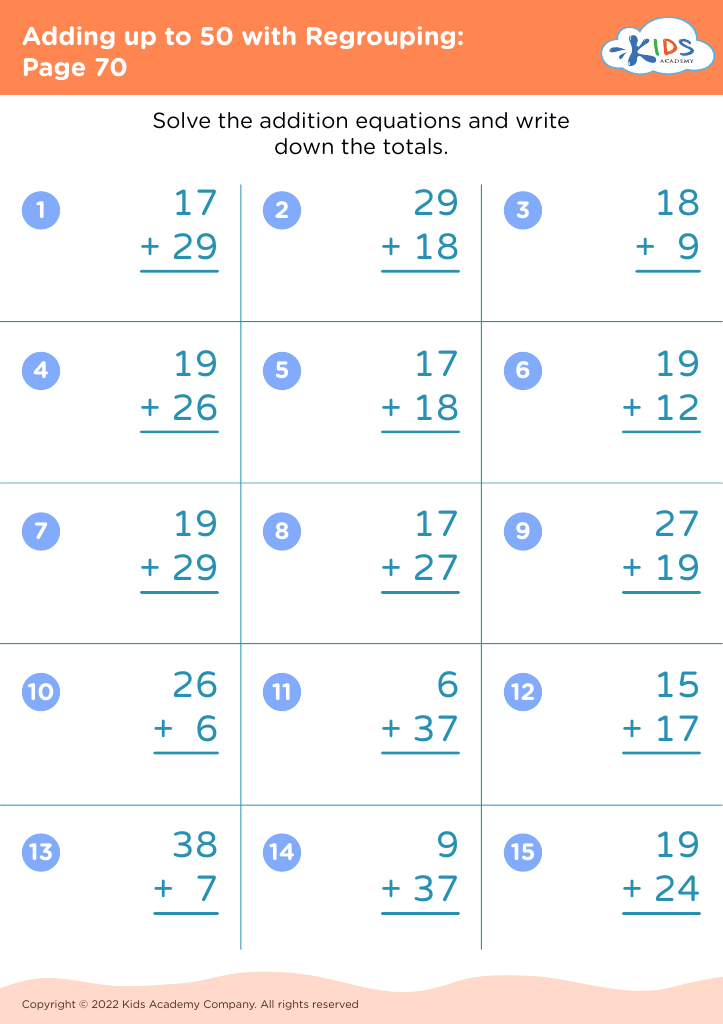
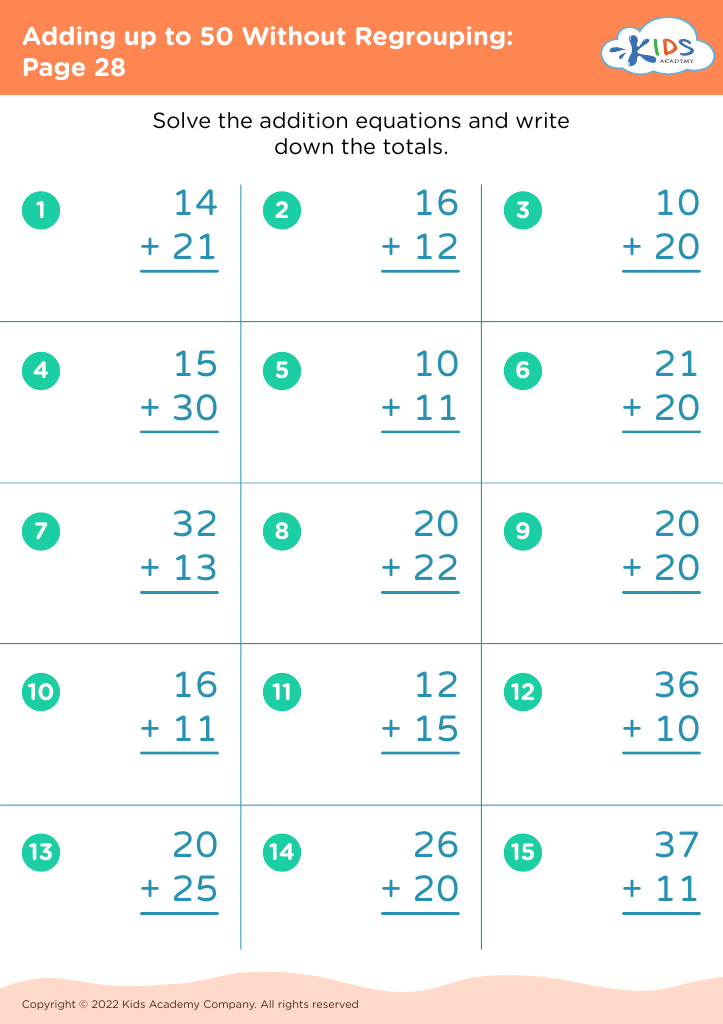


Number writing practice is crucial for second graders, especially when it involves adding up to 50, as it fundamentally supports their arithmetic and cognitive development. At this stage, children are transitioning from basic counting skills to more complex mathematical concepts. Being proficient in writing numbers and performing addition within 50 helps solidify their number sense, which is critical for future math success.
Practicing number writing in conjunction with addition allows children to better recognize number patterns, understand place value, and develop mental math skills. These activities also enhance fine motor skills and hand-eye coordination as children learn to write numbers neatly and accurately.
For parents and teachers, it's a clear indicator of a child’s progress in understanding and manipulating basic numerical information. Attentive engagement in these exercises fosters a positive attitude towards math, preventing math anxiety and building confidence. Furthermore, these skills are integral for everyday tasks such as telling time, handling money, and measuring objects.
In short, focusing on number writing and addition up to 50 in grade 2 lays a robust foundation for advanced mathematical learning and functional life skills. Parents and teachers should prioritize and support these practices to ensure children are well-prepared for the challenges ahead.