Problem-solving practice Grade 2 Adding up to 50 Worksheets
3 filtered results
-
From - To
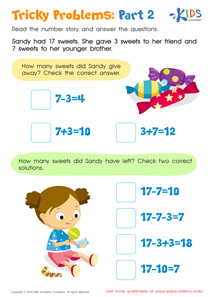
Enhance your Grade 2 student's math skills with our "Problem-solving practice Grade 2 Adding up to 50 Worksheets". These engaging worksheets are specially designed to help young learners master addition within 50 by tackling practical problems. Through a series of fun and interactive exercises, children will develop critical thinking and problem-solving abilities while reinforcing their arithmetic knowledge. Ideal for classroom use or extra practice at home, these worksheets offer a variety of challenges to keep students motivated and actively learning. Help your child build confidence in math with Kids Academy's top-quality resources.
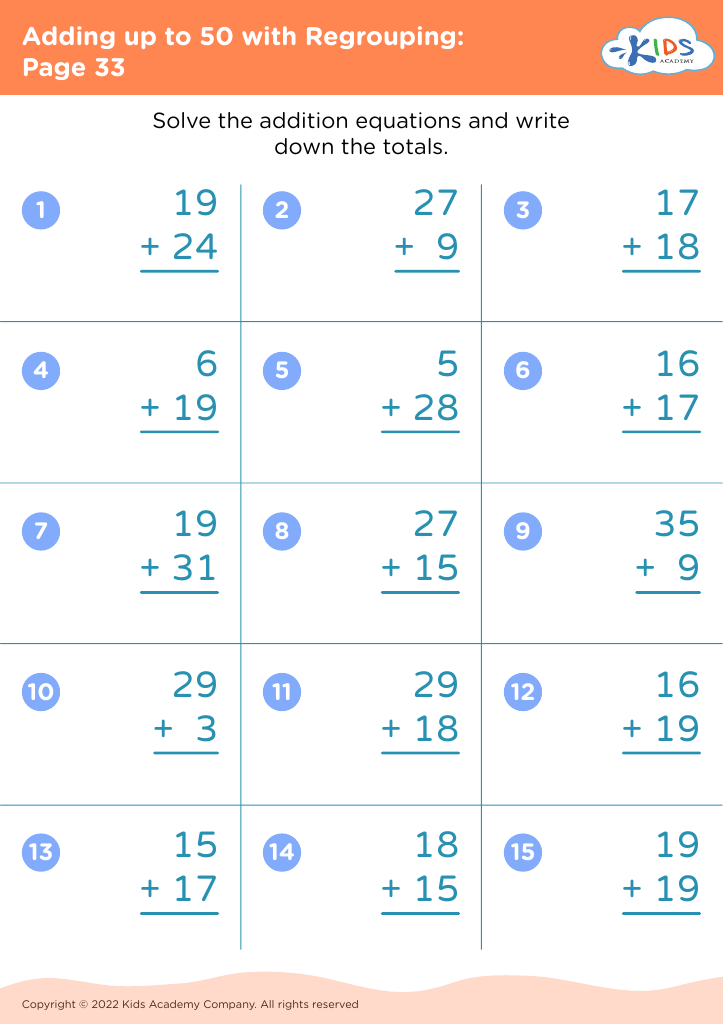
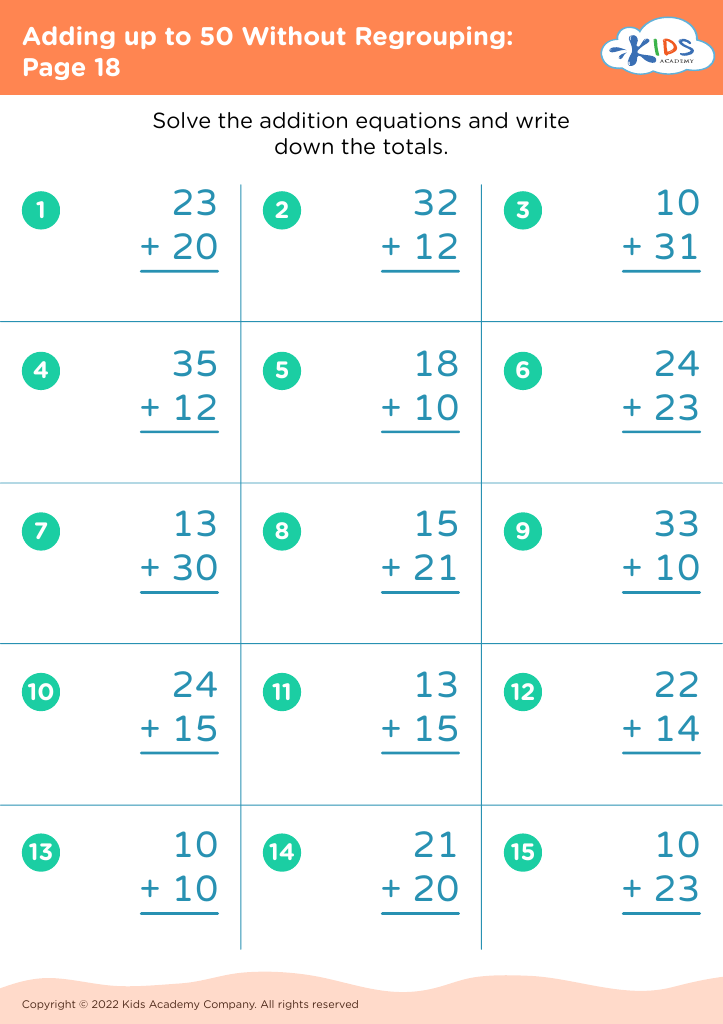
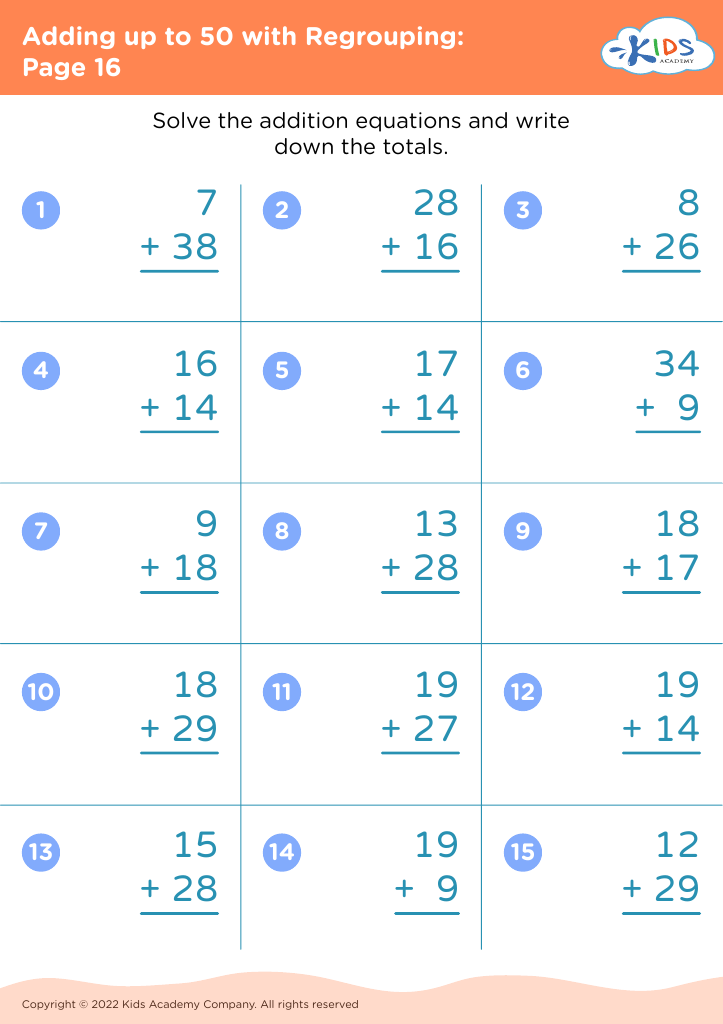


Problem-solving practice for Grade 2 students involving addition up to 50 is crucial for developing foundational math skills. At this age, children are in a critical period of cognitive development where they begin to understand basic arithmetic concepts, including addition, subtraction, and the relationships between numbers. Engaging in problem-solving helps solidify these concepts, promoting both accuracy and speed in their calculations.
Parents and teachers should care because it enhances a child’s reasoning and critical thinking skills. By working on addition problems, children learn to approach and solve problems methodically. They develop persistence when finding solutions, an essential skill not just in math but across all learning areas.
Moreover, mastering addition within 50 builds confidence and a positive attitude towards math. These early successes can mitigate math anxiety, a common issue that can impede a child’s academic trajectory. Regular practice reinforces their understanding and helps identify areas where they need additional support, allowing for targeted interventions that can bridge learning gaps.
Ultimately, problem-solving with adding up to 50 lays a strong mathematical foundation critical for future learning, including more complex arithmetic and problem-solving tasks. It nurtures a resilient, confident learner who can apply their skills in real-life situations, fostering lifelong numeracy skills.