Simplifying Fractions Grade 2 Adding up to 50 Worksheets
8 filtered results
-
From - To
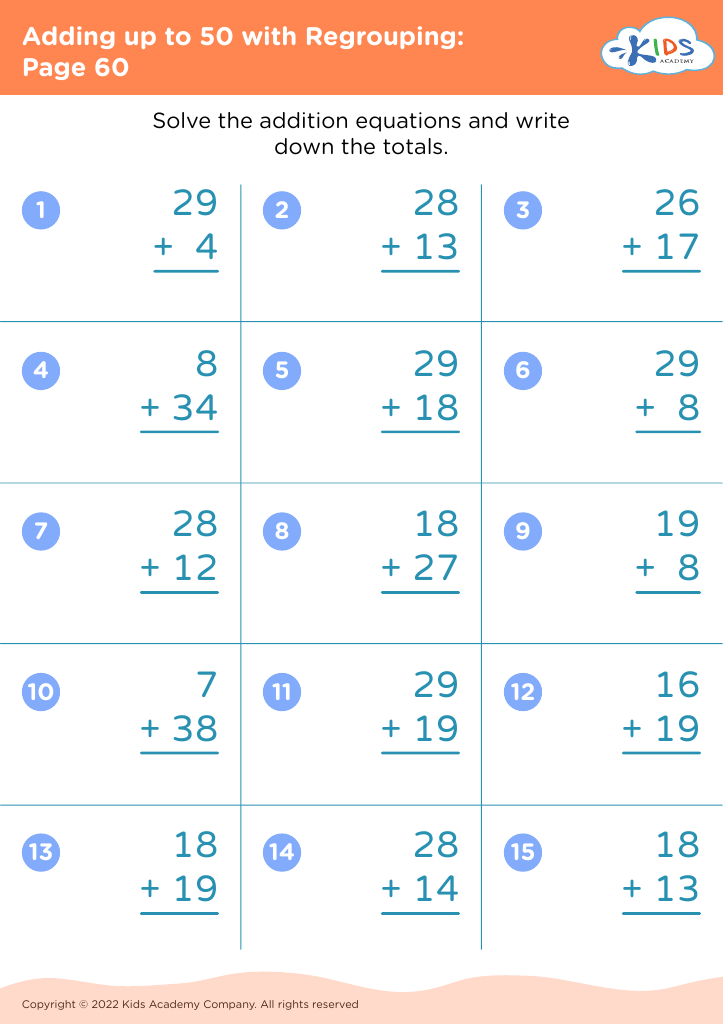
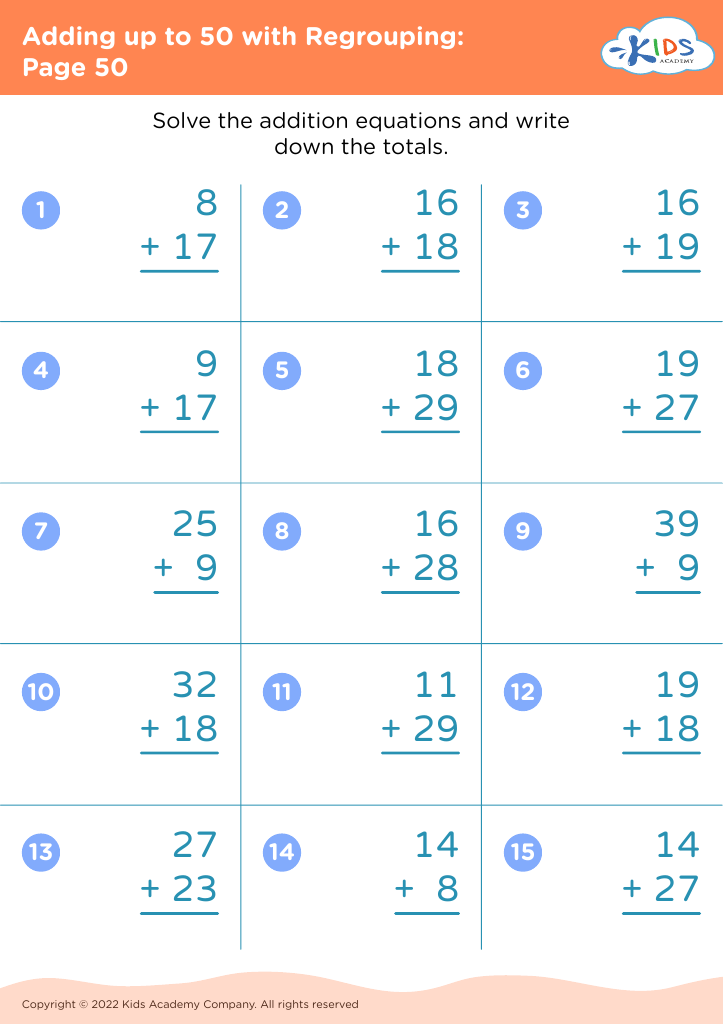
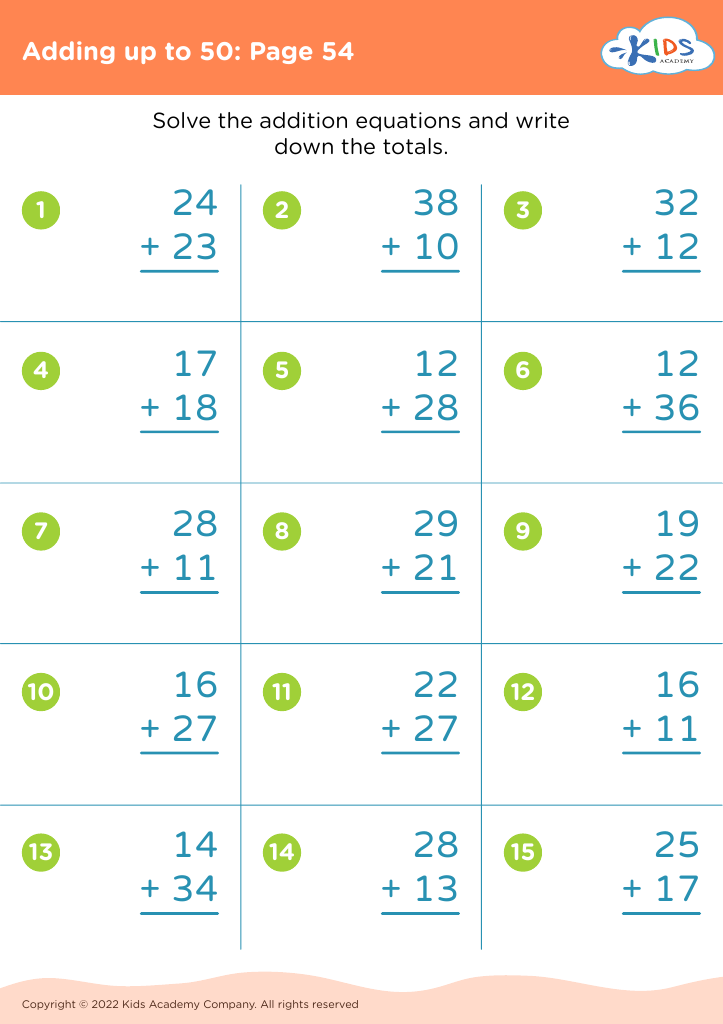
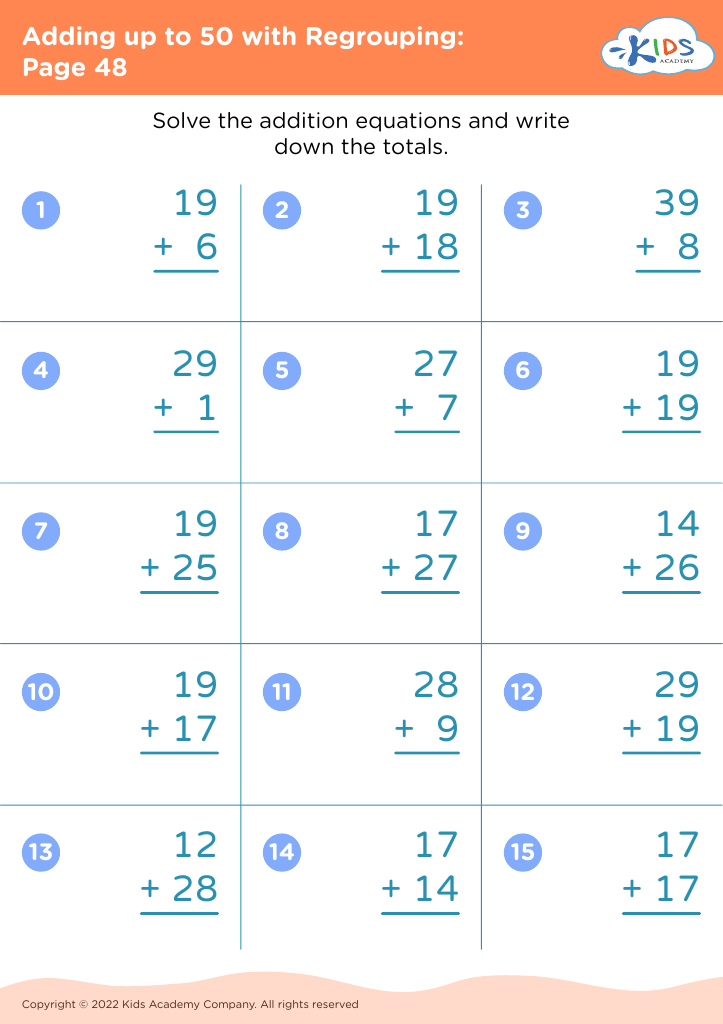
Welcome to our "Simplifying Fractions Grade 2 Adding Up to 50 Worksheets" page! Designed specifically for young learners, these engaging worksheets help students master the concept of simplifying fractions while reinforcing their addition skills. As second graders navigate through fun exercises and colorful illustrations, they'll gain confidence in handling fractions that add up to 50. Each printable worksheet encourages critical thinking and problem-solving, making learning both enjoyable and effective. Whether in the classroom or at home, these resources are perfect for supporting your child's math education. Start simplifying fractions today and watch your child excel in their mathematical journey!
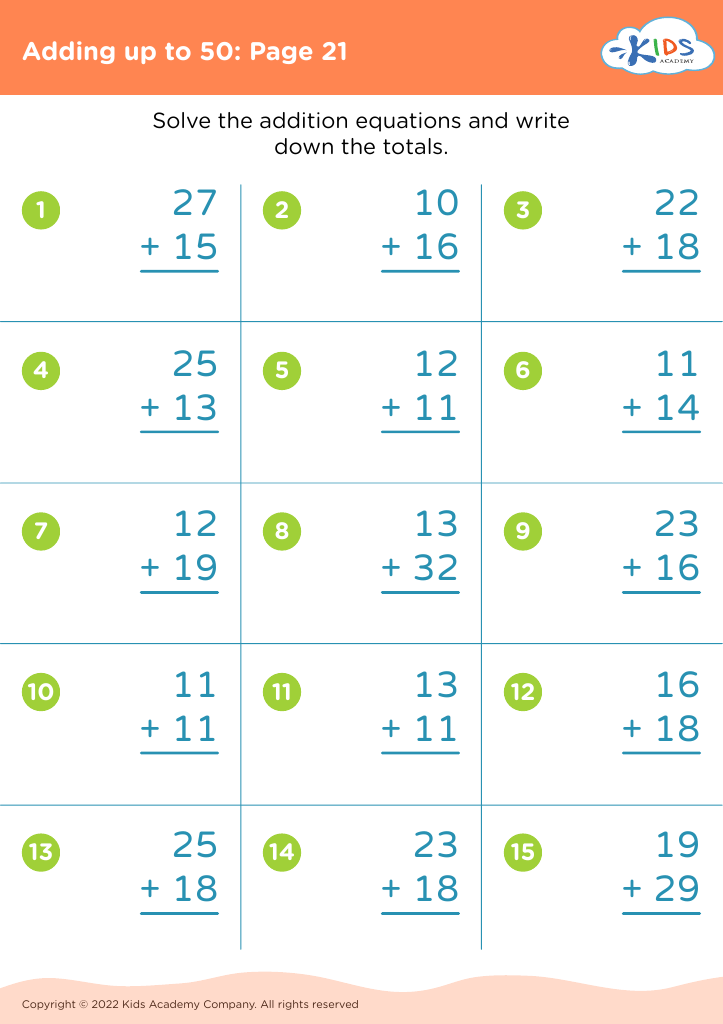
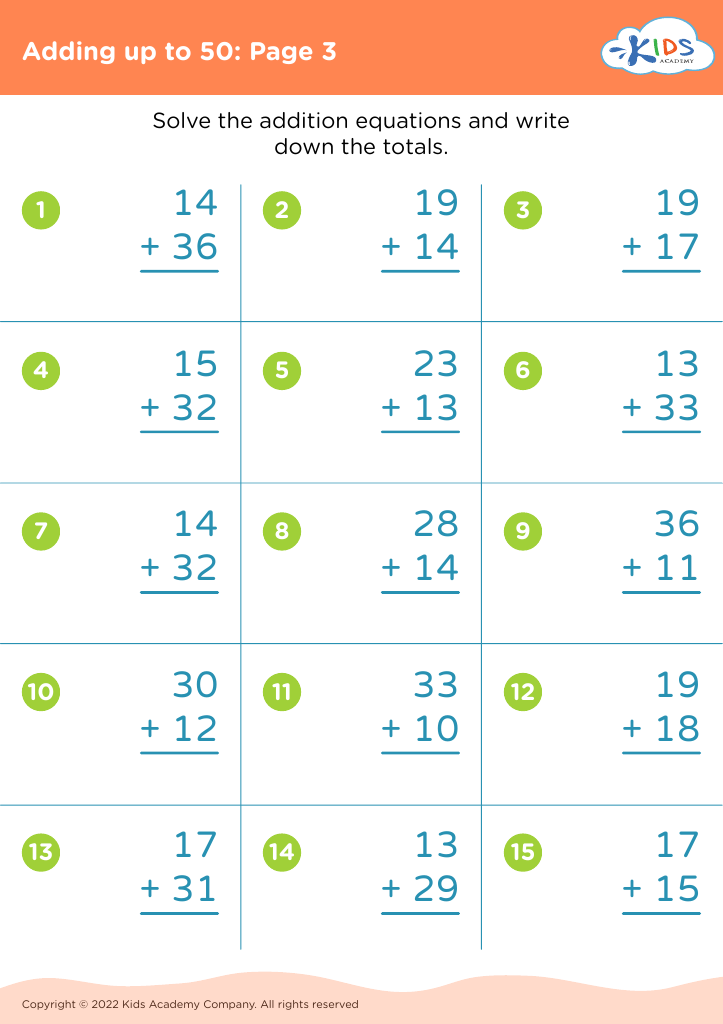
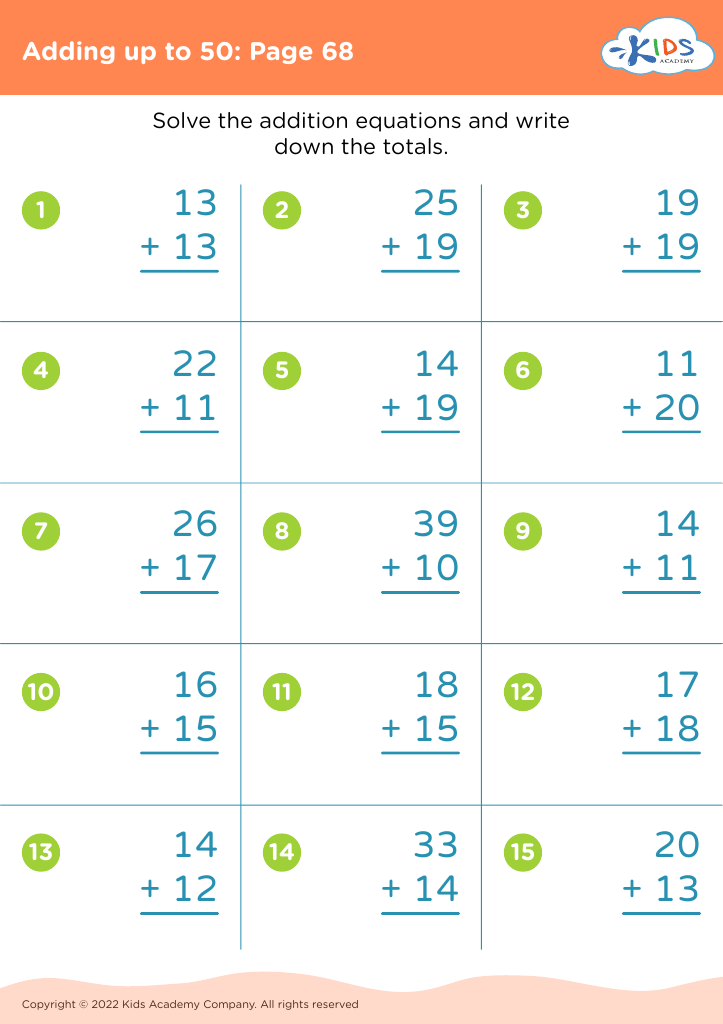
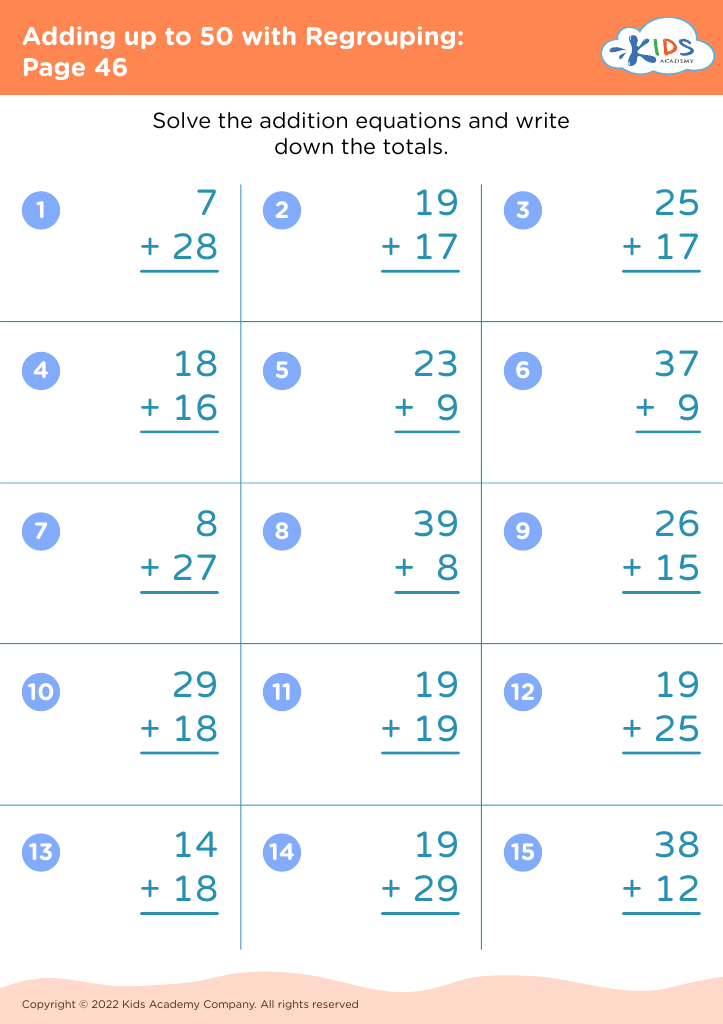


Simplifying fractions is an essential skill for students, even in Grade 2, as it lays a foundation for more advanced mathematical concepts. Learning to simplify fractions, especially in the context of addition, promotes critical thinking and problem-solving skills. Students at this stage are developing their number sense, and understanding fractions helps them grasp the relationships between numbers more effectively.
When children add numbers up to 50, they often encounter situations where working with fractions becomes beneficial. For instance, using real-life examples – like dividing a pizza among friends or measuring ingredients in cooking – helps them relate fractions to daily activities, making learning more engaging.
Parents and teachers should care about this because simplifying fractions improves computational skills and boosts confidence in handling math problems. It encourages collaborative learning, as students can work in groups to solve fraction problems, enhancing their social skills. Furthermore, mastering this topic early on can reduce anxiety towards math as students progress, ensuring a positive attitude toward the subject. Thus, simplifying fractions not only reinforces math skills but also contributes to a well-rounded understanding that will benefit students throughout their educational journey.