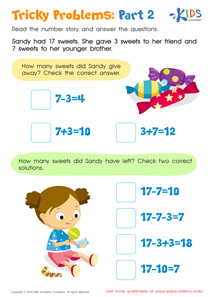
Subtraction practice Grade 2 Adding up to 50 Worksheets
3 filtered results
-
From - To
Enhance your second grader’s mathematical skills with our engaging Subtraction Practice Worksheets, designed specifically for counting and calculations up to 50. These worksheets provide a range of fun and challenging problems that help reinforce essential subtraction concepts through repetitive practice. Ideal for classroom or home learning, each worksheet encourages students to hone their problem-solving abilities while developing confidence in their math skills. From simple exercises to more complex scenarios, our resources support diverse learning styles and accommodate every child's pace. Begin your child's journey to math mastery while making learning enjoyable and interactive with our thoughtfully crafted subtraction worksheets today!
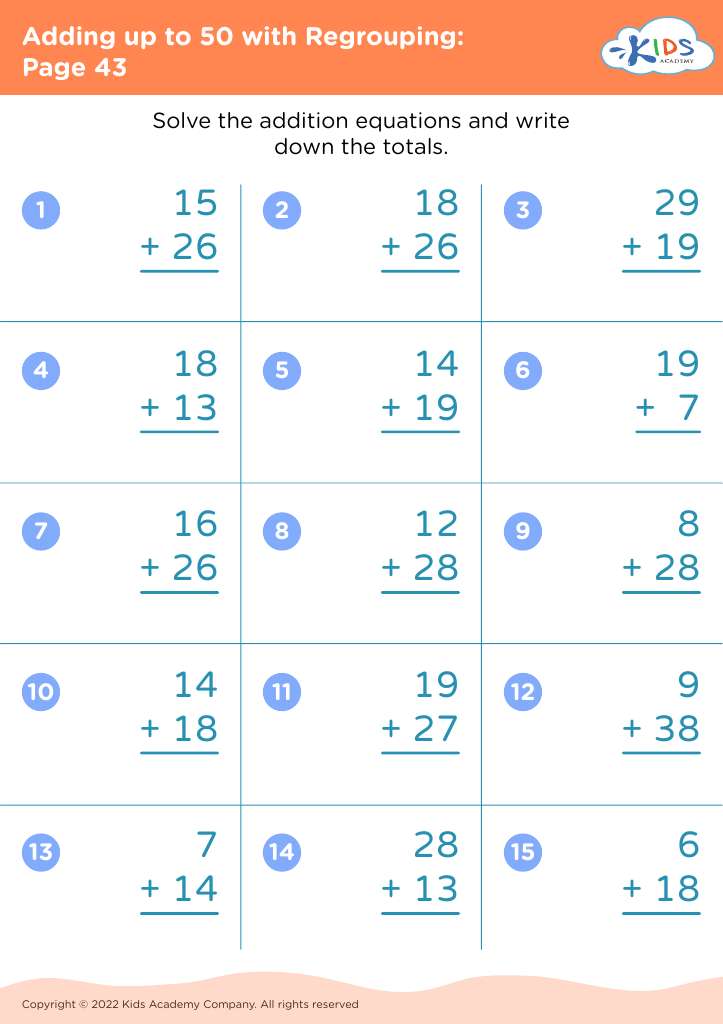
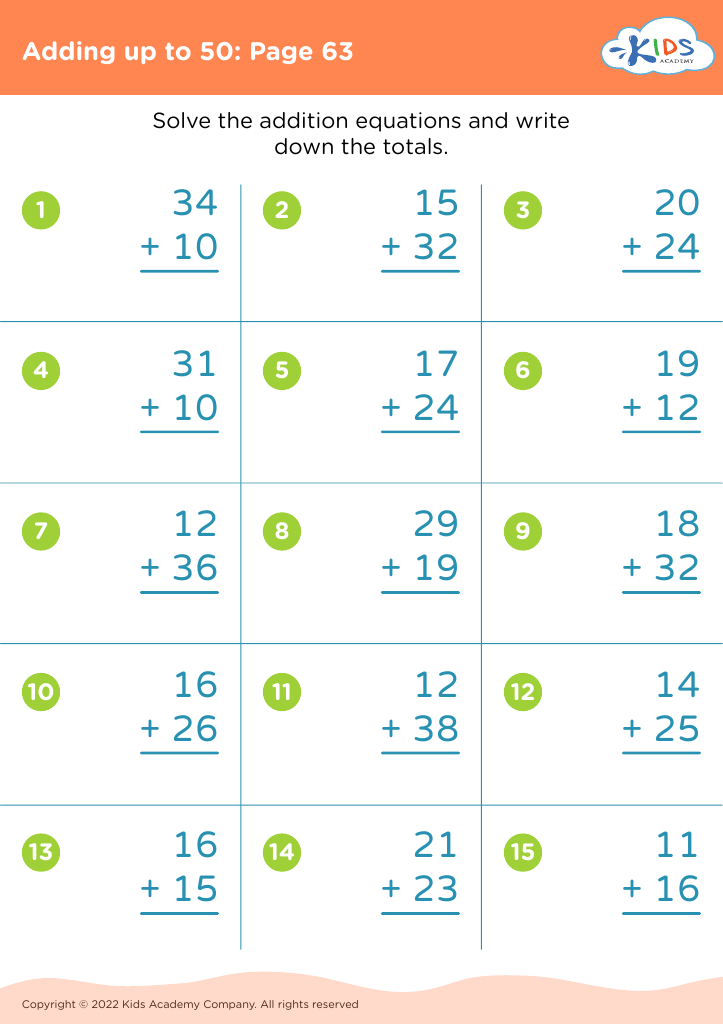
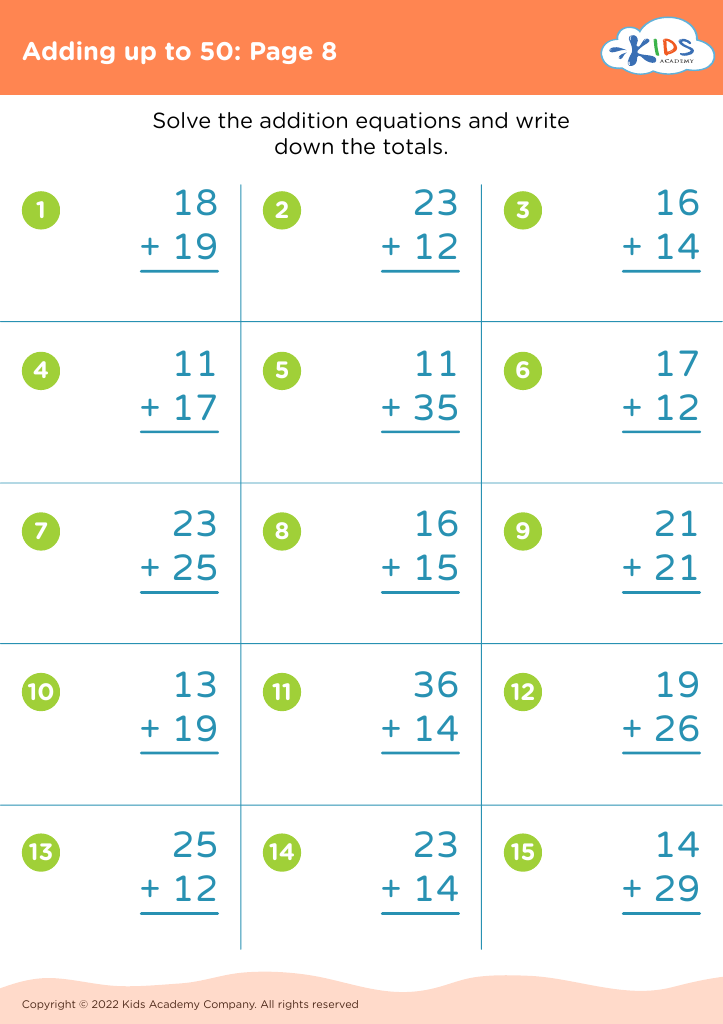


Subtraction practice for Grade 2, particularly when adding up to 50, is crucial for several reasons. Firstly, it lays the foundation for essential mathematical skills required as children progress in their education. Subtraction, one of the core mathematical operations, enables students to develop problem-solving abilities and logical thinking. Mastering subtraction helps children understand the relationship between addition and subtraction, enhancing their overall quantitative reasoning.
Moreover, practice at this level fosters confidence and fluency, which are essential for future academic success. A solid grasp of subtraction enhances students' ability to engage with word problems and real-life mathematical scenarios, such as budgeting and measuring. As children encounter more complex mathematical concepts in subsequent grades, their understanding of basic subtraction will support their comprehension.
Additionally, consistent subtraction practice encourages a growth mindset and resilience when tackling challenging problems, teaching children that mistakes are part of the learning process. By prioritizing subtraction skills in Grade 2, parents and teachers not only enrich students' numerical capabilities but also inspire a positive attitude toward mathematics, setting the stage for lifelong learning and enthusiasm for subjects that involve critical thinking and analytical skills.