Vocabulary enhancement Grade 2 Adding up to 50 Worksheets
3 filtered results
-
From - To
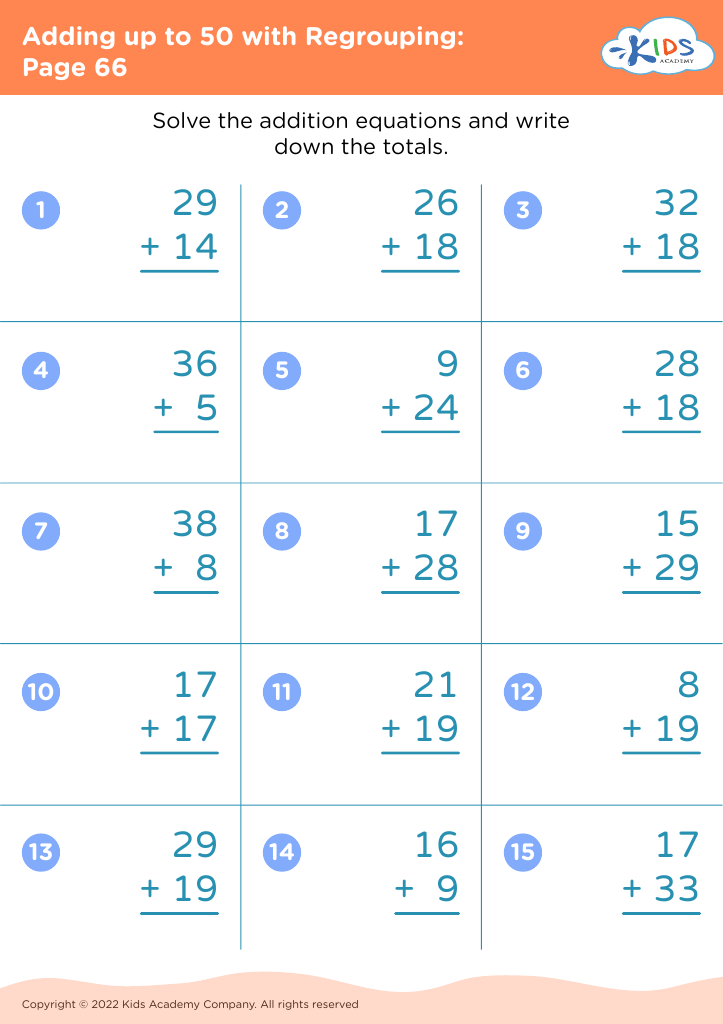
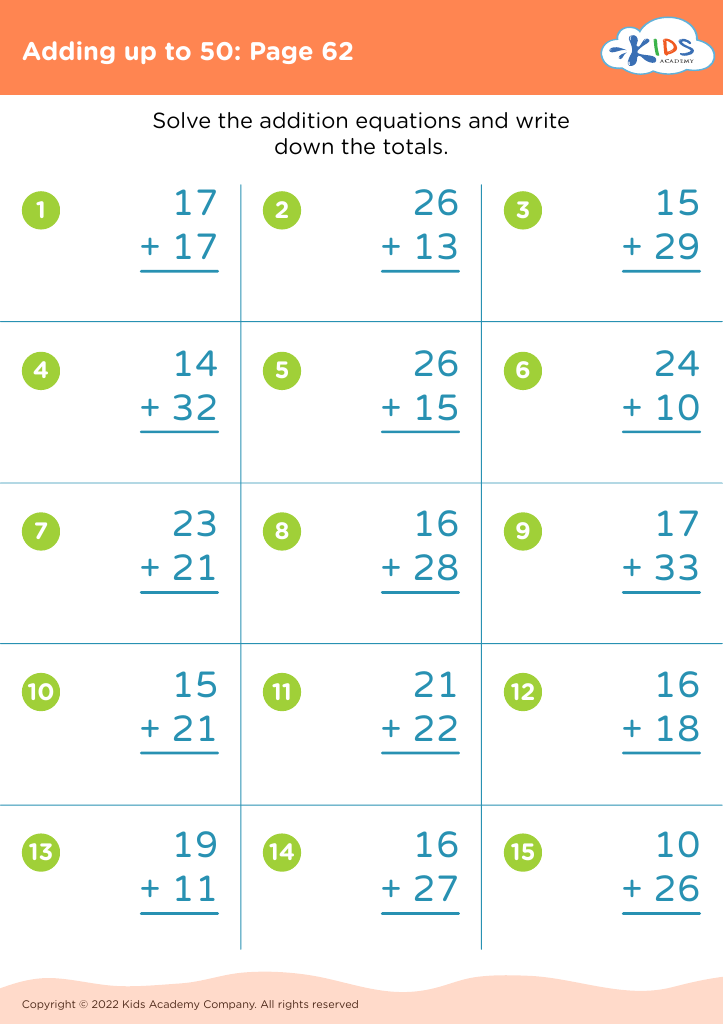
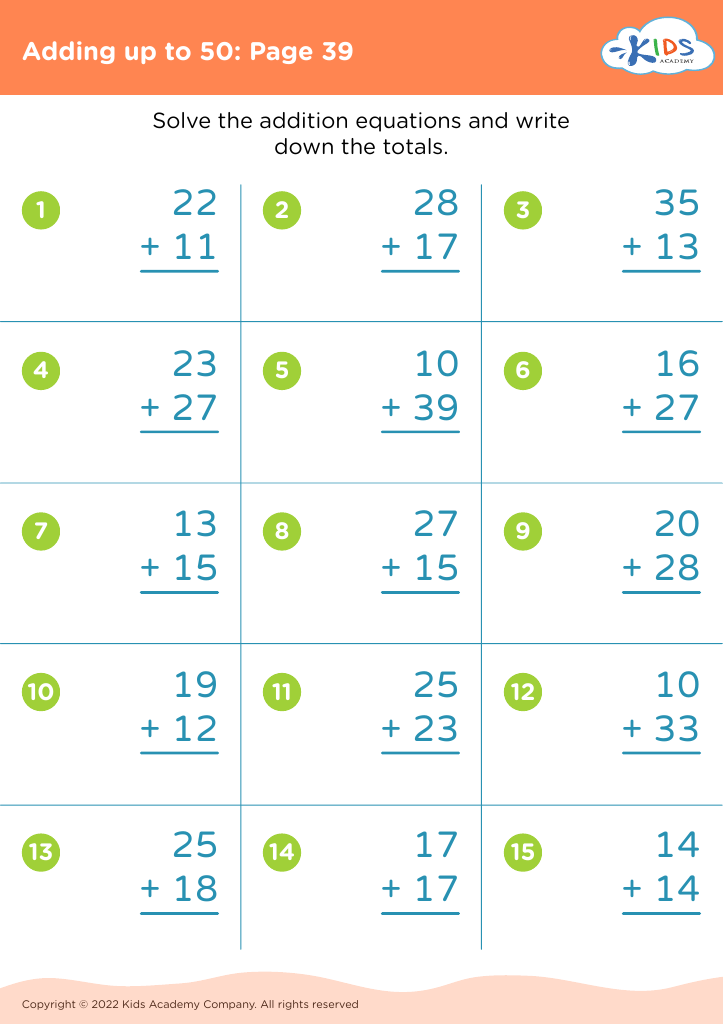
Boost your second grader's vocabulary and math skills with our "Vocabulary Enhancement Grade 2: Adding Up to 50 Worksheets." Designed to integrate language development with numerical concepts, these worksheets provide engaging activities that help students build a robust understanding of math vocabulary. As kids work through adding up to 50, they'll encounter essential terms that enhance comprehension and retention. With a fun blend of exercises, our worksheets make learning both effective and enjoyable. Perfect for classroom or home use, these resources will strengthen your child's language proficiency and mathematical abilities, setting the foundation for future academic success. Start enriching their education today!


Vocabulary enhancement is crucial in Grade 2, especially when integrating math concepts like "adding up to 50." At this stage, students transition from learning to read to reading to learn, making vocabulary a foundational tool for understanding and expressing mathematical ideas. When children increase their vocabulary, they latch onto essential math terms such as "sum," "total," and "combine," fostering both language development and numerical comprehension.
Effective communication about math strategies relies on a solid vocabulary. Teachers and parents should focus on enhancing students' word banks by introducing relevant mathematical language, promoting discussions around addition, and encouraging students to articulate their thought processes. This not only builds confidence but also equips children with the language skills needed for problem-solving.
Moreover, understanding vocabulary within math helps students make connections between different subjects, reinforcing overall literacy. Reading math-related books, engaging in conversations, and using games that emphasize math vocabulary allows for interactive and enjoyable learning experiences.
By investing time in vocabulary enhancement, parents and teachers raise students' academic performance, laying a strong foundation for future learning. Ultimately, it cultivates critical thinkers who can articulate complex ideas clearly, preparing them for success in all academic disciplines.