Comparing numbers Grade 2 Addition & Subtraction Worksheets
4 filtered results
-
From - To
Unlock your second grader's potential in math with our Comparing Numbers Grade 2 Addition & Subtraction Worksheets! These engaging and educational printable worksheets provide a fun way for kids to master the essential math skills of adding and subtracting while comparing numbers. Tailored for young learners, each worksheet combines colorful illustrations and interactive exercises designed to hold their interest and build confidence. Perfect for both homeschooling and classroom environments, these activities align with common core standards, ensuring your child is on the right track. Boost their numeric fluency today with Kids Academy's expertly crafted resources!
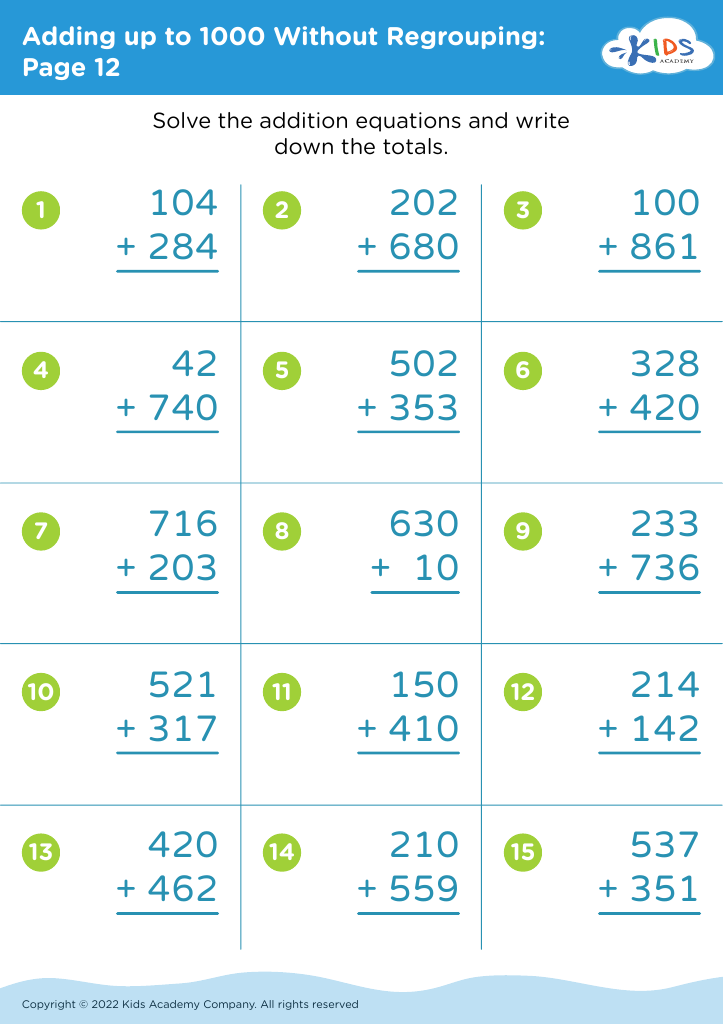
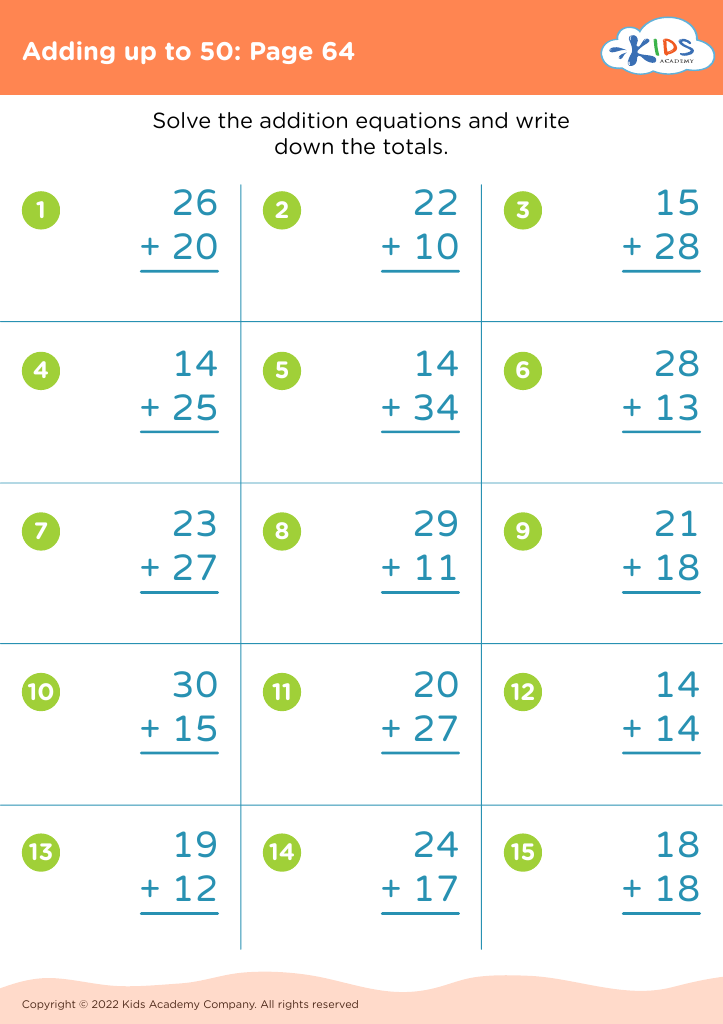
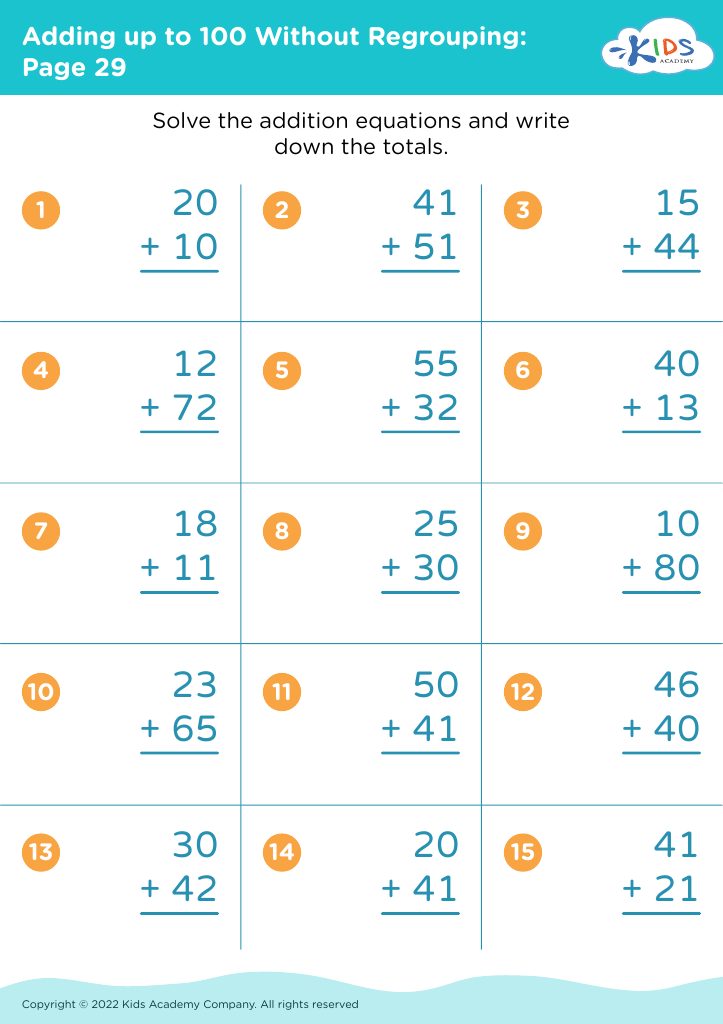
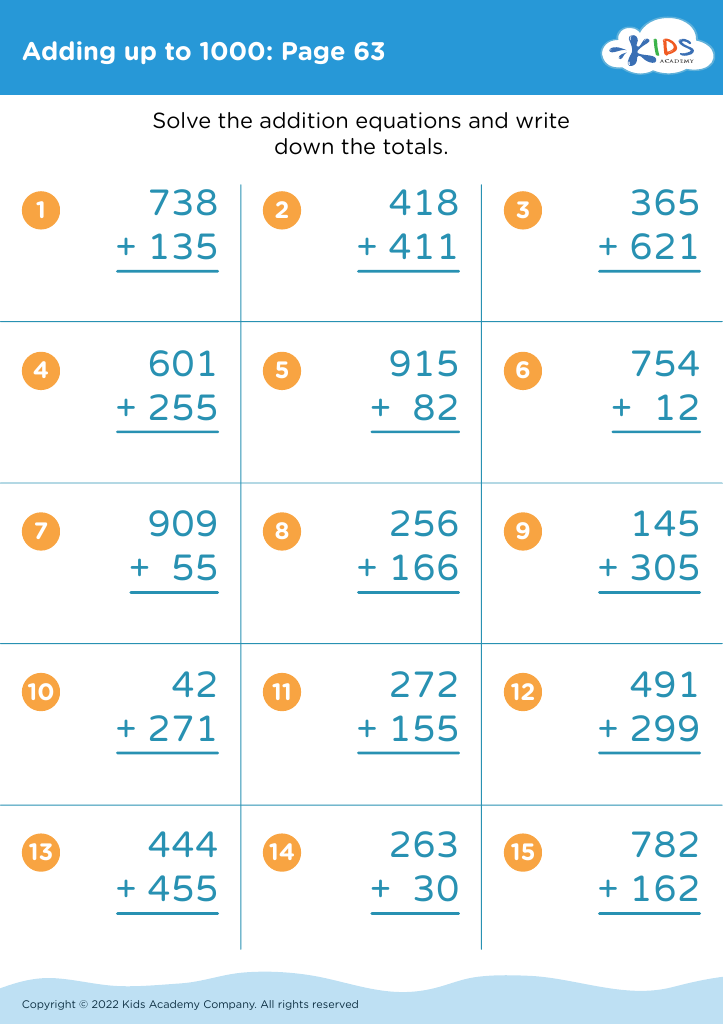








Understanding how to compare numbers and grasping basic addition and subtraction in Grade 2 are foundational skills that parents and teachers should prioritize. These mathematical concepts are critical as they lay the groundwork for more advanced mathematical operations. When children learn to compare numbers effectively, they develop essential number sense, allowing them to understand the relative value of numbers and the concepts of greater than, less than, or equal to.
Addition and subtraction are the building blocks of arithmetic. Mastery in these areas not only enhances problem-solving skills but also boosts confidence and encourages logical thinking. For example, when students understand that they can put numbers together to form a bigger number (addition), or take numbers apart to find what remains (subtraction), they gain a practical understanding of how numbers interact in everyday situations, such as budgeting their allowance or sharing among friends.
Moreover, proficiency in these skills is crucial for success in higher grades, where mathematical concepts become increasingly complex and abstract. Early competence in comparing numbers and basic arithmetic sets students up for confidence and achievement in both their current academic endeavors and future learning opportunities.
Regular practice, positive reinforcement, and contextual learning through engaging activities can help solidify these vital skills, making parents' and teachers' roles immensely significant in this stage of a child's mathematical education.