Decision making skills Grade 2 Addition & Subtraction Worksheets
3 filtered results
-
From - To
Boost your child's math proficiency with our engaging "Decision Making Skills Grade 2 Addition & Subtraction Worksheets." Specifically designed for second graders, these worksheets help young learners master addition and subtraction while strengthening critical thinking abilities. Through fun and challenging exercises, children will learn to choose the best strategies for solving problems, boosting their confidence and problem-solving skills. Ideal for use at home or in the classroom, our worksheets are designed to make learning both effective and enjoyable, setting the foundation for future success in mathematics. Download now for a path to numerical excellence!
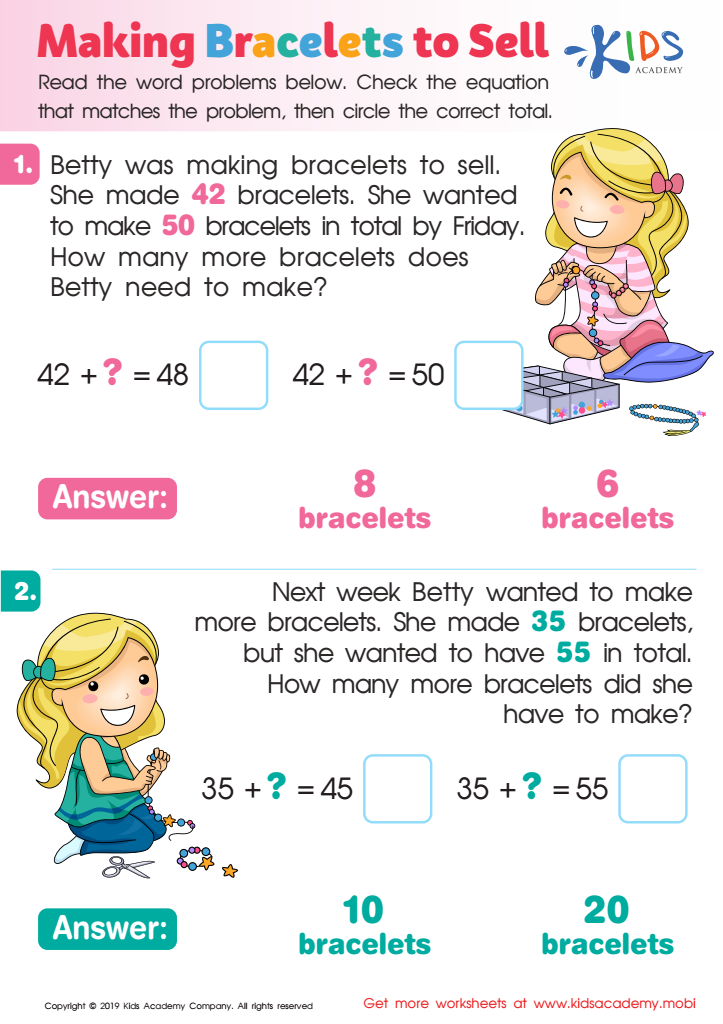
Making Bracelets to Sell Worksheet
 Assign to My Students
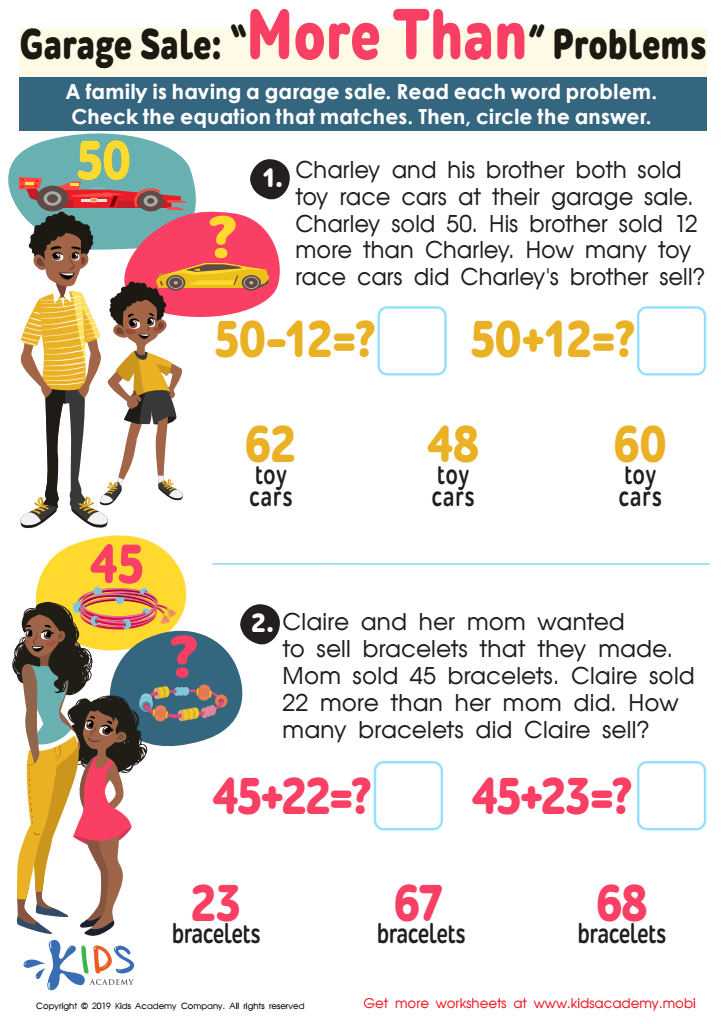
Garage Sale - More yhan Worksheet
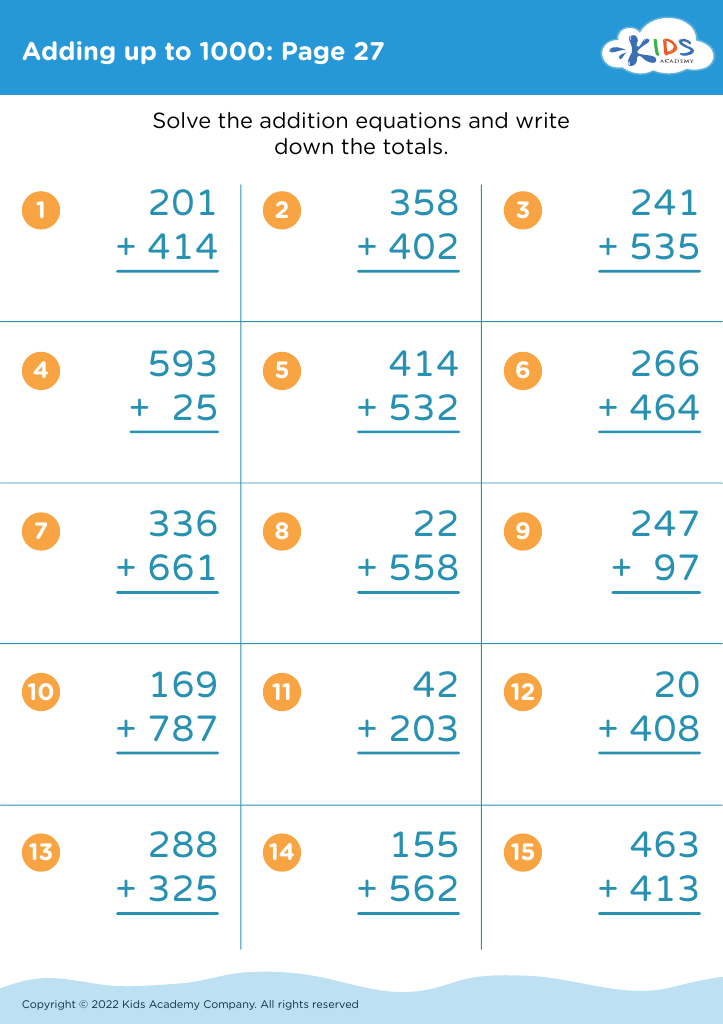








Decision-making skills are crucial for young learners, particularly those in the second grade, as they form the bedrock for problem-solving and critical thinking. For youngsters learning addition and subtraction, these skills extend beyond simple calculations; they enable children to evaluate choices, understand consequences, and make informed decisions. When students practice addition and subtraction, they are not just engaging in rote memorization. They're also learning to decide the best strategies to use, such as counting on, using number lines, or breaking numbers into manageable parts.
Developing decision-making skills at this stage plays a pivotal role in their academic and personal lives. For example, when a child decides which method to use for solving a problem, they engage in analysis and reflection, setting the foundation for more complex decision-making later on. This not only boosts their self-confidence but also encourages resilience, as they learn to navigate and correct their mistakes.
Furthermore, decision-making exercises related to math can foster a growth mindset. Parents and teachers who emphasize these skills help children understand the value of thoughtful planning and the merits of trial and error. These abilities are not confined to academia; they're transferable, aiding children in social interactions, time management, and daily chores. Therefore, nurturing decision-making skills through addition and subtraction in the second grade equips children with the tools to become independent and competent thinkers.