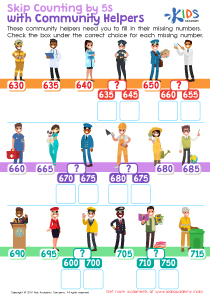
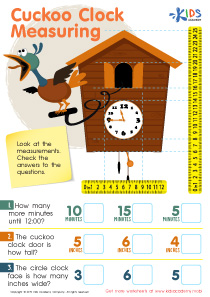
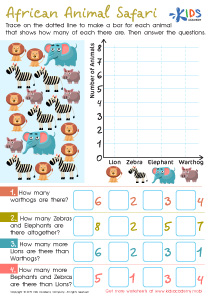
Develop inference skills Grade 2 Addition & Subtraction Worksheets
3 filtered results
Difficulty Level
Grade
Age
-
From - To
Subject
Activity
Standards
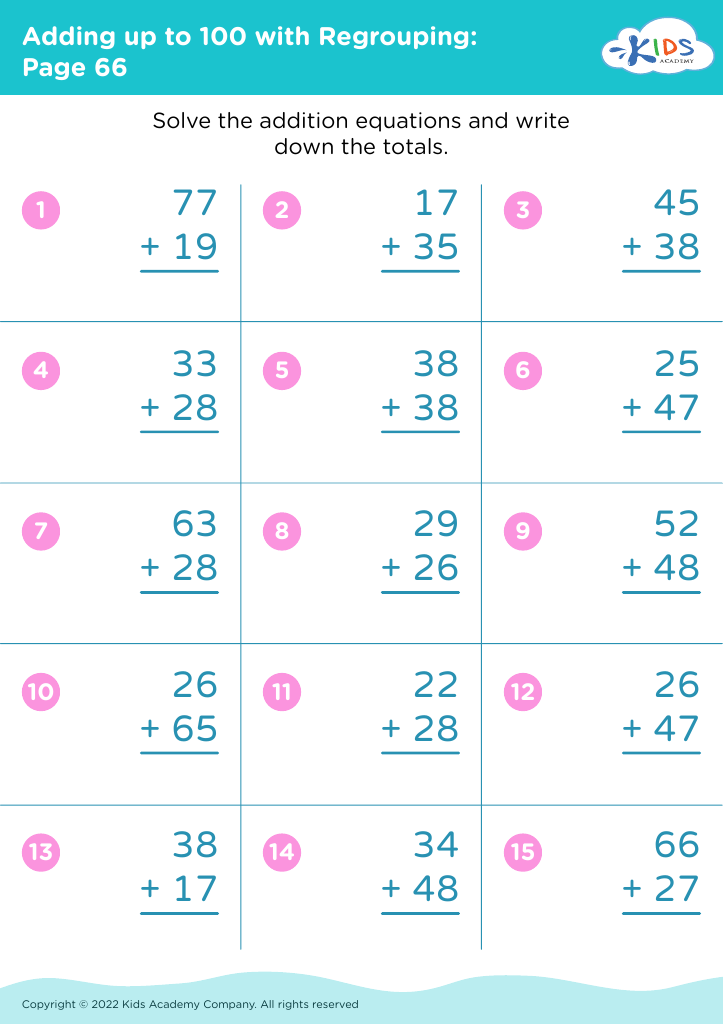
Enhance your second grader's mathematical abilities with our engaging addition and subtraction worksheets designed to develop inference skills! This resource focuses on critical thinking, encouraging students to analyze and interpret problems effectively. Through a variety of interactive exercises, kids will learn to draw conclusions from given data, enhancing their problem-solving skills in practical contexts. Our worksheets are aligned with educational standards, ensuring that your child receives quality practice that can boost their confidence in math. Download and empower your child to make inferences through fun and stimulating math challenges! Perfect for classroom or at-home learning.
Favorites
With answer key
Interactive
Join Kids Academy for Free
Who is primarily going to use this learning content?








Developing inference skills in Grade 2, particularly in relation to addition and subtraction, is crucial for both parents and teachers. Inference skills enable students to go beyond surface-level understanding and make connections between mathematical concepts and real-life situations. Encouraging young learners to infer relationships helps them enhance critical thinking and problem-solving skills.
These skills are foundational for future mathematical learning. When students learn to infer from given information, they become adept at identifying patterns, estimating results, and understanding the underlying principles of addition and subtraction. For instance, when solving word problems, they will begin to anticipate outcomes based on context clues rather than relying solely on rote calculations.
Furthermore, by fostering inference skills, parents and teachers support students in becoming more autonomous learners. Children develop confidence in their ability to assess various scenarios and tackle complex problems, skills that are transferable beyond mathematics and into other subject areas and everyday life.
In summary, caring about the development of inference skills in addition and subtraction not only strengthens students’ mathematics foundation but also encourages a broader set of cognitive abilities critical for academic success. This holistic approach benefits children later in their education and in their everyday decision-making processes.