Logical thinking Grade 2 Addition & Subtraction Worksheets
7 filtered results
-
From - To
Discover our engaging Grade 2 Addition and Subtraction Worksheets designed to enhance logical thinking skills in young learners! These worksheets aim to boost mathematical understanding through fun, interactive exercises that promote problem-solving and critical reasoning. Each activity encourages students to apply their addition and subtraction knowledge in diverse scenarios, fostering a deeper grasp of mathematical concepts. Ideal for both classroom settings and home practice, our resources support differentiated learning and help students develop essential skills in a playful manner. Explore our collection to empower your child's mathematical journey while nurturing their logical thinking abilities! Perfect for reinforcing classroom learning at home!
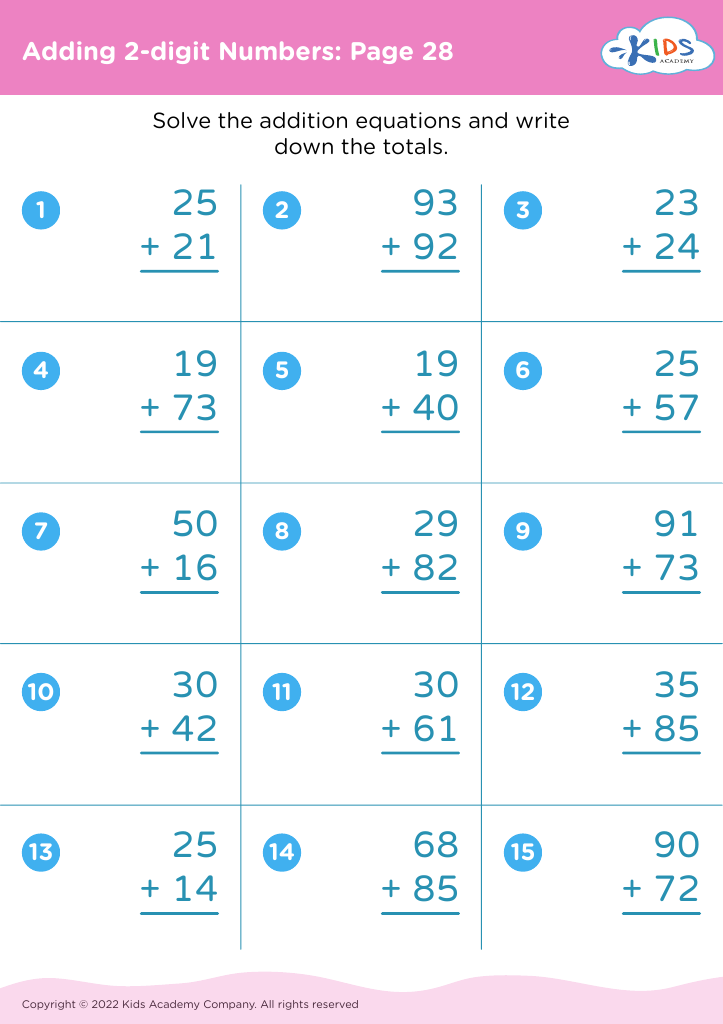
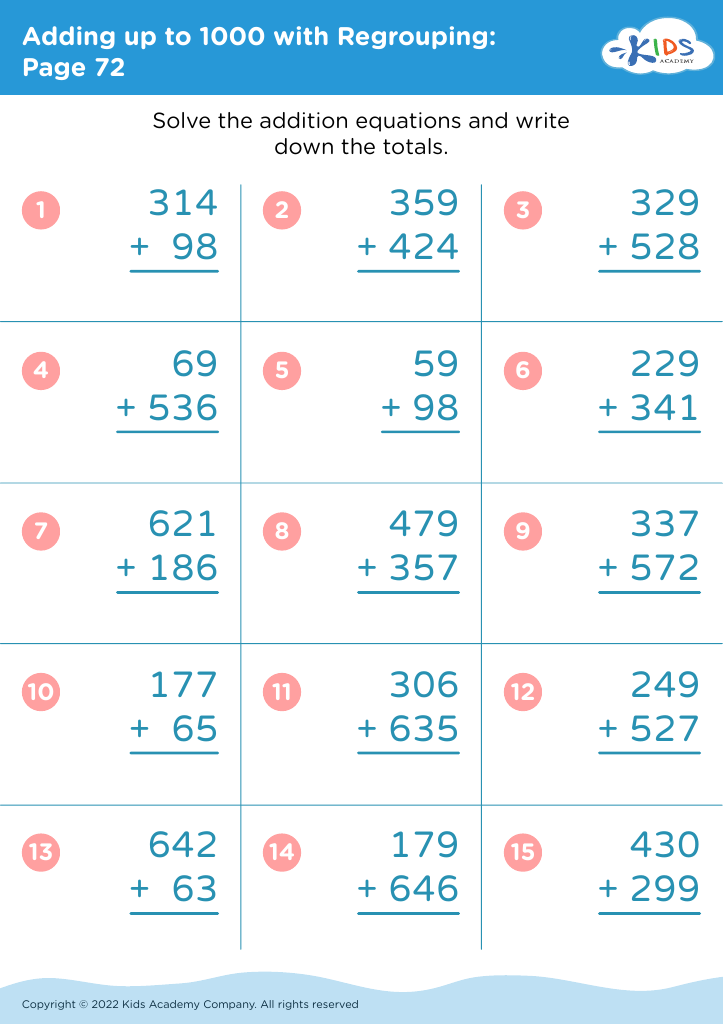
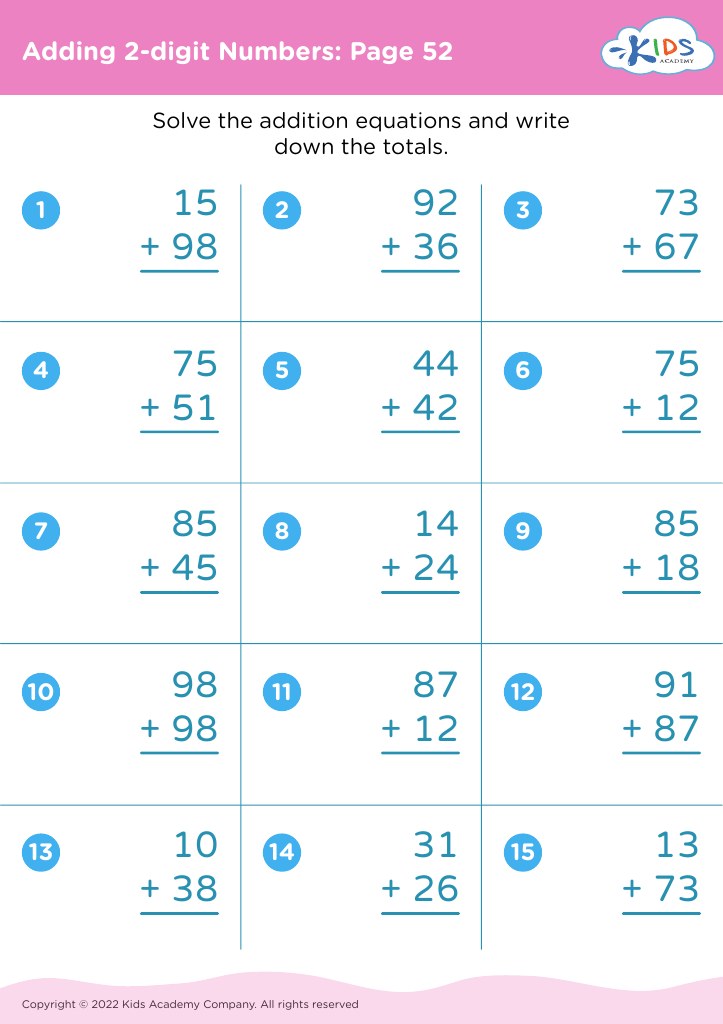
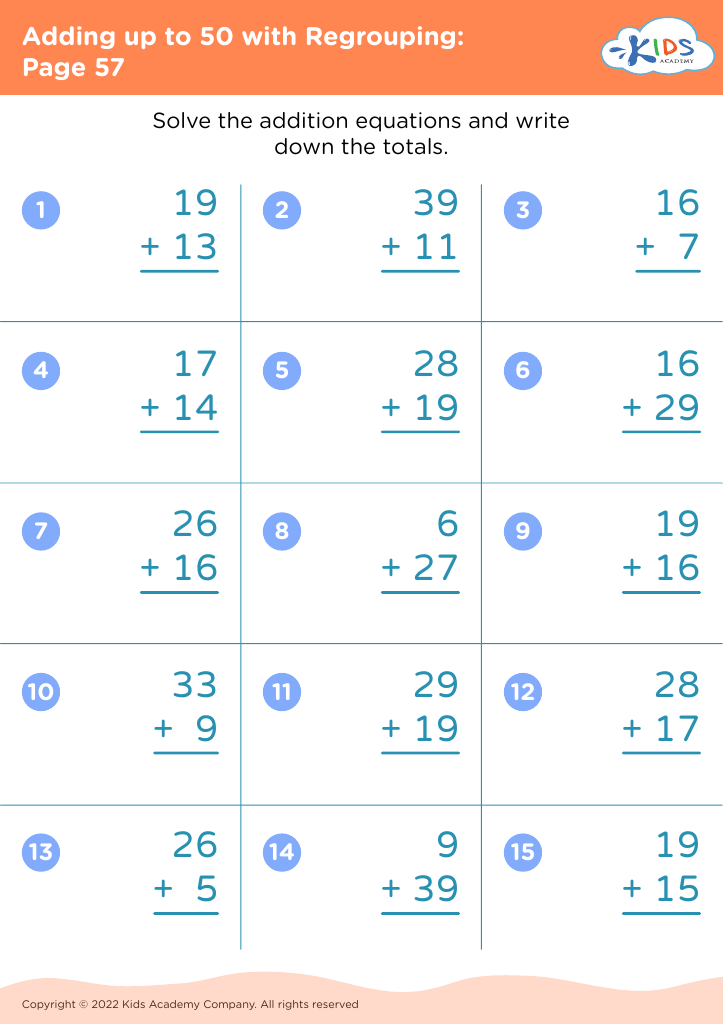
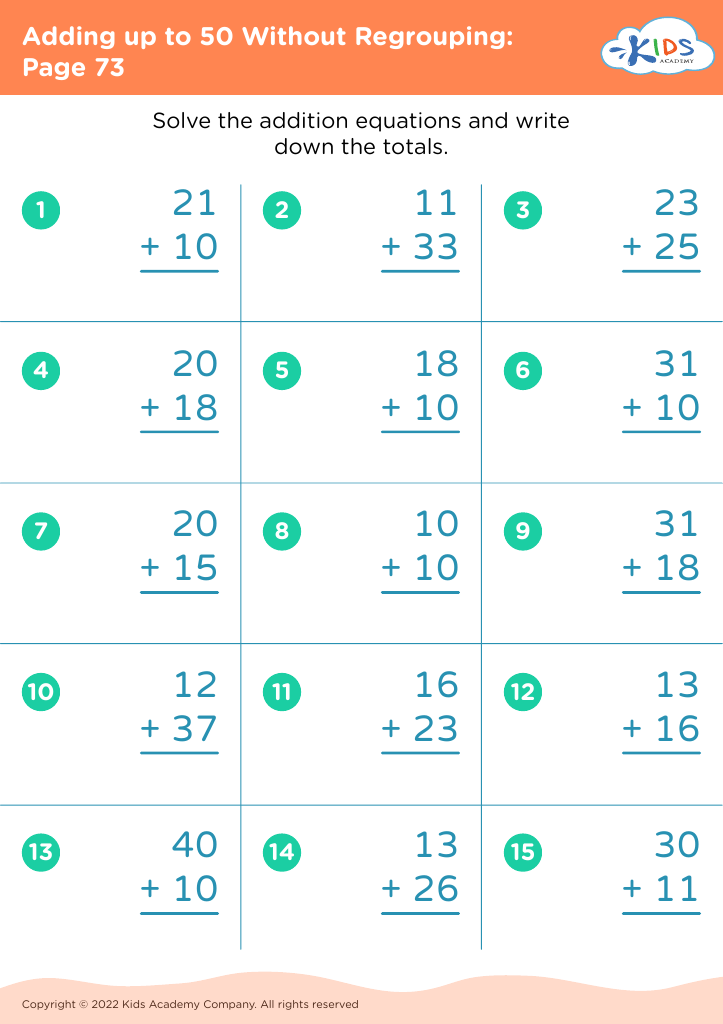
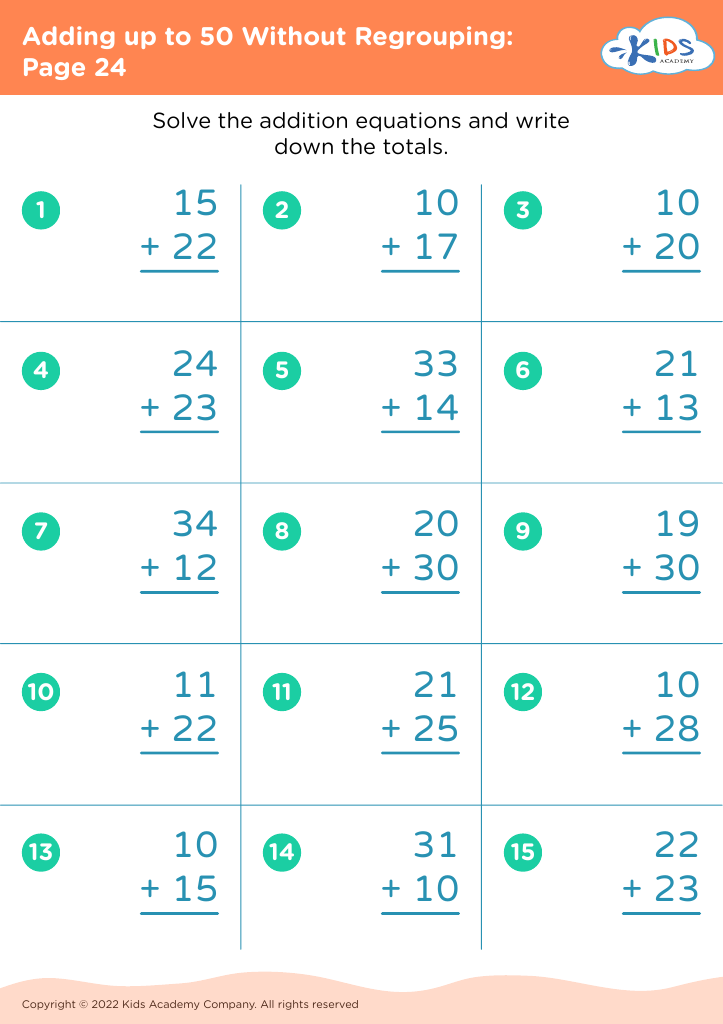
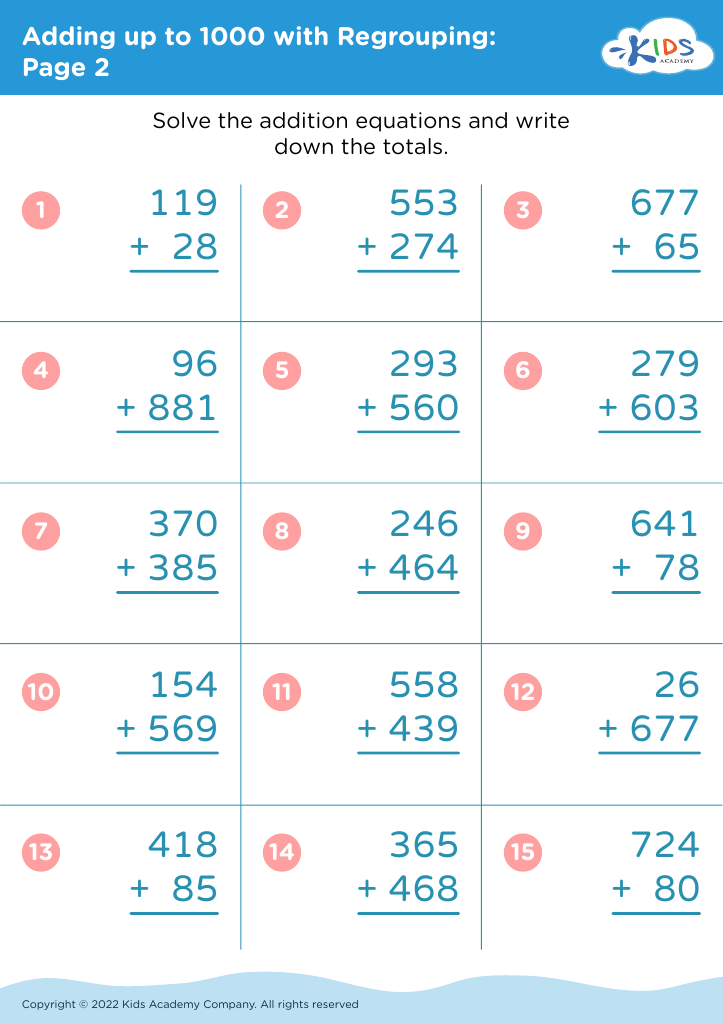








Encouraging logical thinking through addition and subtraction in Grade 2 is essential for students' overall mathematical development and critical reasoning skills. At this stage, children transition from concrete understanding to more abstract concepts. Engaging with these fundamental operations fosters their ability to solve problems, recognize patterns, and apply strategies—a foundational skill set that can be beneficial across all subjects.
Developing logical thinking not only improves their computational skills but also builds confidence as they tackle complex problems. By mastering addition and subtraction through logical reasoning, children learn to approach challenges methodically, enhancing their analytical skills. This ability to think critically provides a strong basis for future mathematical learning, including multi-step problems, fractions, and eventually algebra.
Furthermore, early exposure to logical thinking helps motivate students and nurture a love for learning. When parents and teachers emphasize these skills, they cultivate an environment that values resilience and the joy of discovery. Lastly, strong logical reasoning promotes collaboration, as students often share and discuss different problem-solving strategies, enhancing their communication skills. In a rapidly changing world, equipping children with such essential skills lays the groundwork for lifelong learning and adaptability.