Artistic Expression Grade 2 Math Worksheets
3 filtered results
-
From - To
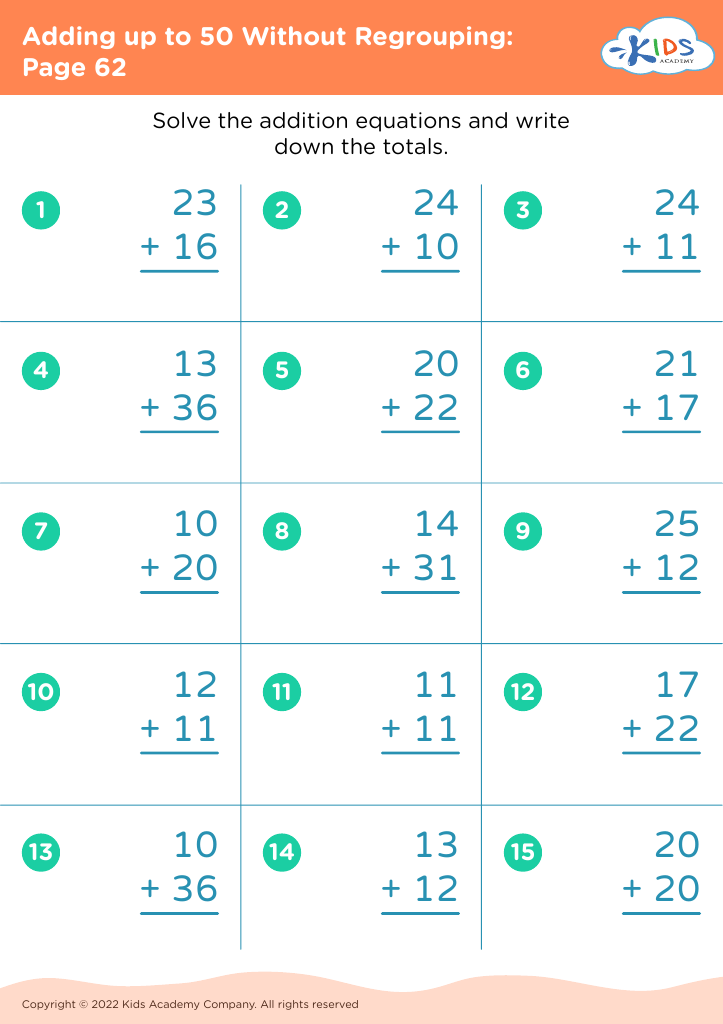
Enhance your child's mathematical skills with our "Artistic Expression Grade 2 Math Worksheets" from Kids Academy. These engaging worksheets integrate art and math, making learning both exciting and visually stimulating. Perfectly crafted for second graders, they reinforce key concepts such as addition, subtraction, place value, and more through creative activities. Watch your child deepen their math understanding while developing their artistic talents. Each worksheet is designed to captivate young minds, encouraging a love for learning. Ideal for both classroom use and home practice, these worksheets make math fun and accessible for every child. Explore, learn, and create today!
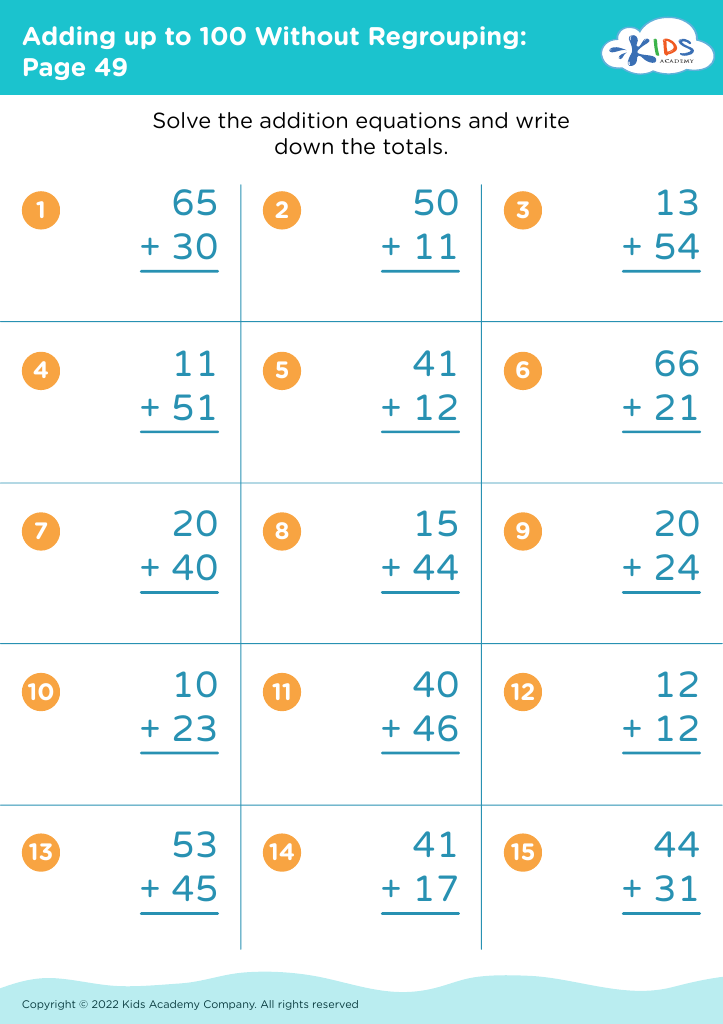
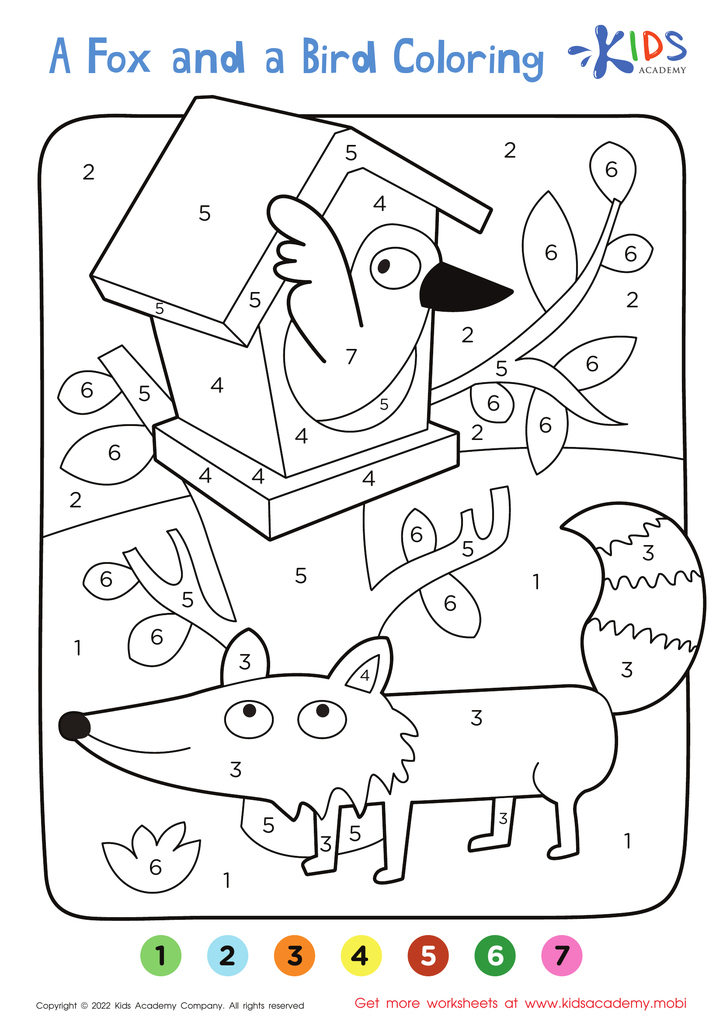
A Fox and a Bird – Coloring by Numbers


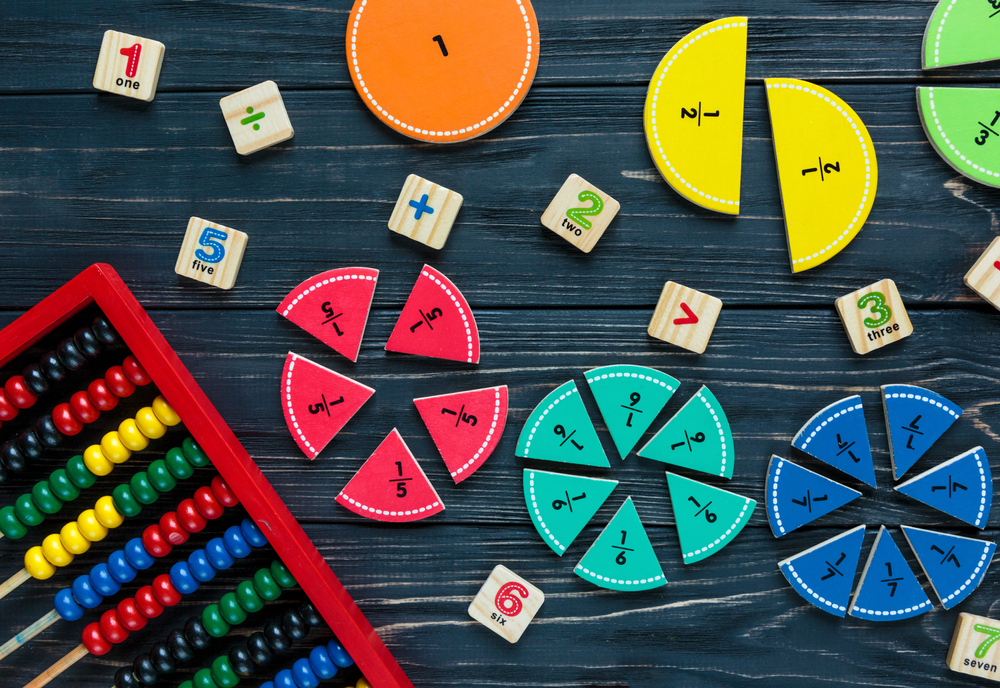



Artistic expression in Grade 2 Math is crucial because it supports comprehensive learning and development in young children. Integrating art into math enhances engagement and makes abstract concepts more tangible. When children use artistic methods like drawing, modeling, or crafting, they develop a deeper understanding of mathematical principles. For instance, creating visual patterns or geometric shapes helps solidify knowledge of symmetry, fractions, and spatial reasoning.
Additionally, artistic activities foster critical thinking and problem-solving skills. As students explore different creative approaches to math problems, they learn to experiment and think outside the box. This kind of exploration is invaluable for intellectual growth and can spark a lifelong love of learning.
Moreover, blending art with math caters to diverse learning styles. Visual learners, in particular, can grasp complex ideas through artistic representation, thus making math more inclusive. This integration also boosts self-confidence as children feel they can succeed in multiple ways.
Furthermore, artistic expression nurtures socio-emotional development. It empowers children to express their understanding and feelings about math creatively, fostering a positive attitude towards the subject. Parents and teachers should encourage this fusion of art and math as it makes learning enjoyable, nurtures creativity, and builds a solid foundation for future academic success.