Comparing Fractions Grade 2 Math Worksheets
85 filtered results
Difficulty Level
Grade
Age
-
From - To
Subject
Activity
Standards
Introduce your second graders to the fun world of fractions with our engaging "Comparing Fractions Grade 2 Math Worksheets." Specially designed to align with educational standards, these printable worksheets help young learners grasp the basics of comparing and ordering fractions through colorful activities and easy-to-follow exercises. As students embark on this mathematical journey, they'll enhance their critical thinking and problem-solving skills while building a strong foundation for future math success. Perfect for both classroom and home use, these worksheets provide a comprehensive and interactive approach to making fraction comparisons an enjoyable experience for every child.
Favorites
With answer key
Interactive
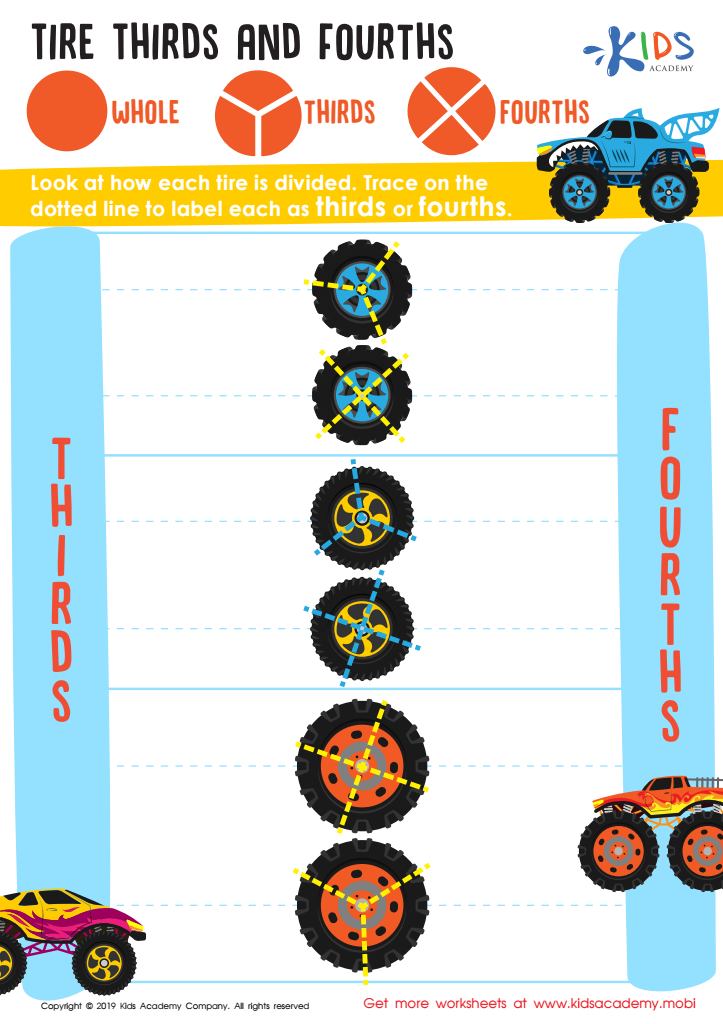
Tire Thirds and Fourths Worksheet
Learning geometry is key in your child's education. Have them identify and name shapes cut into 2, 3 and 4 parts. Test their knowledge with this worksheet - trace the dotted line to label each as third or fourth. Encourage them to keep learning!
 Assign to My Students
Tire Thirds and Fourths Worksheet
Worksheet
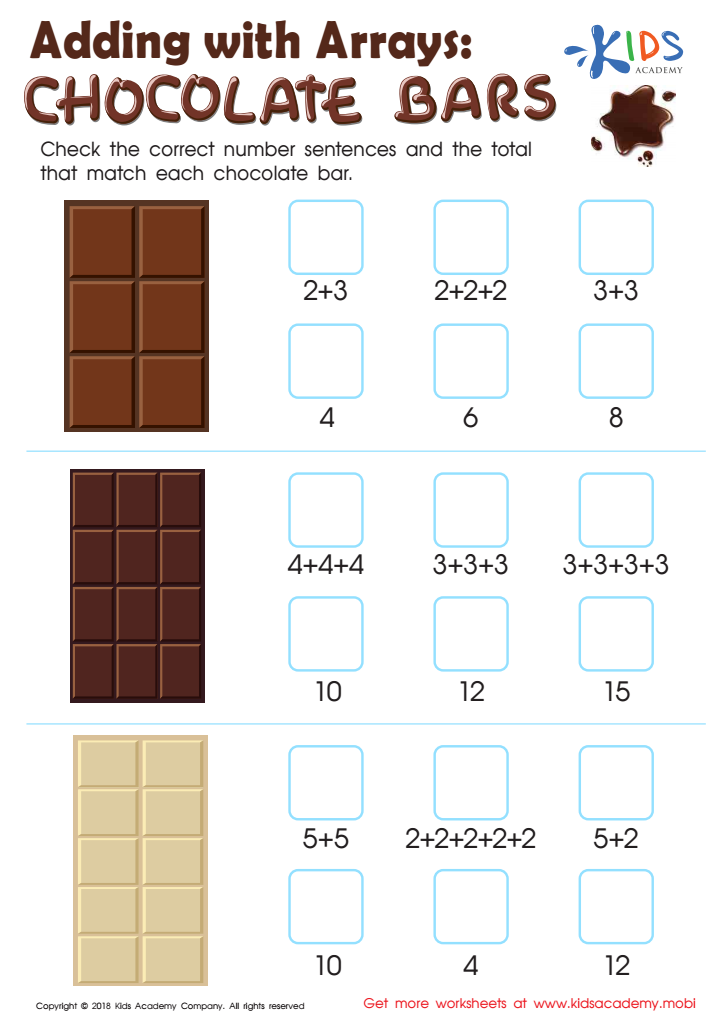
Adding with Arrays: Chocolate Bars Worksheet
Kids love chocolates! Gauge how enthused your kids get when you mention them. This worksheet is a fun exercise about chocolates - get your kids to check the correct number sentences and totals for each chocolate bar. Reward their hard work with some chocolates - extra incentive for a job well done!
Adding with Arrays: Chocolate Bars Worksheet
Worksheet
Join Kids Academy for Free
Who is primarily going to use this learning content?






Comparing fractions in Grade 2 is a foundational mathematical concept that anchors a child's understanding of how parts relate to a whole, which is crucial for their progression in mathematics. When parents and teachers emphasize comparing fractions, they cultivate a child’s ability to think critically, reason logically, and make sense of numbers in real-world situations. This skill also enhances a child's understanding of more complex mathematical concepts they will encounter later, such as ratios, proportions, and percentages.
Early exposure to comparing fractions helps students to grasp the importance of fair sharing and equal parts, which can be directly applied in everyday activities like dividing snacks among friends or measuring ingredients in a recipe. This practical understanding boosts their confidence and interest in mathematics, fostering a positive attitude towards learning.
Furthermore, integrating fractions in fun, relatable activities helps children develop problem-solving skills and promotes perseverance in tackling mathematical challenges. Parents and teachers play a pivotal role by providing consistent support and reinforcement, using visual aids and interactive tools to make learning enjoyable.
By valuing the significance of comparing fractions at an early age, parents and teachers contribute to a stronger mathematical foundation, setting the stage for future academic success and a lifelong appreciation of math.