Observational skills Grade 2 Math Worksheets
3 filtered results
-
From - To
Enhance your second grader's observational skills with our engaging Grade 2 Math Worksheets! Designed to develop critical thinking and attention to detail, these worksheets provide a fun and interactive approach to learning. Students will tackle various exercises, including pattern recognition, data interpretation, and comparative analysis tailored to their grade level. Our printable resources foster a deeper understanding of math concepts while promoting essential observational skills that are foundational for more advanced learning. With visually appealing layouts and age-appropriate challenges, these worksheets are perfect for classroom use or homeschooling. Elevate your child's learning experience with our thoughtfully crafted math materials today!
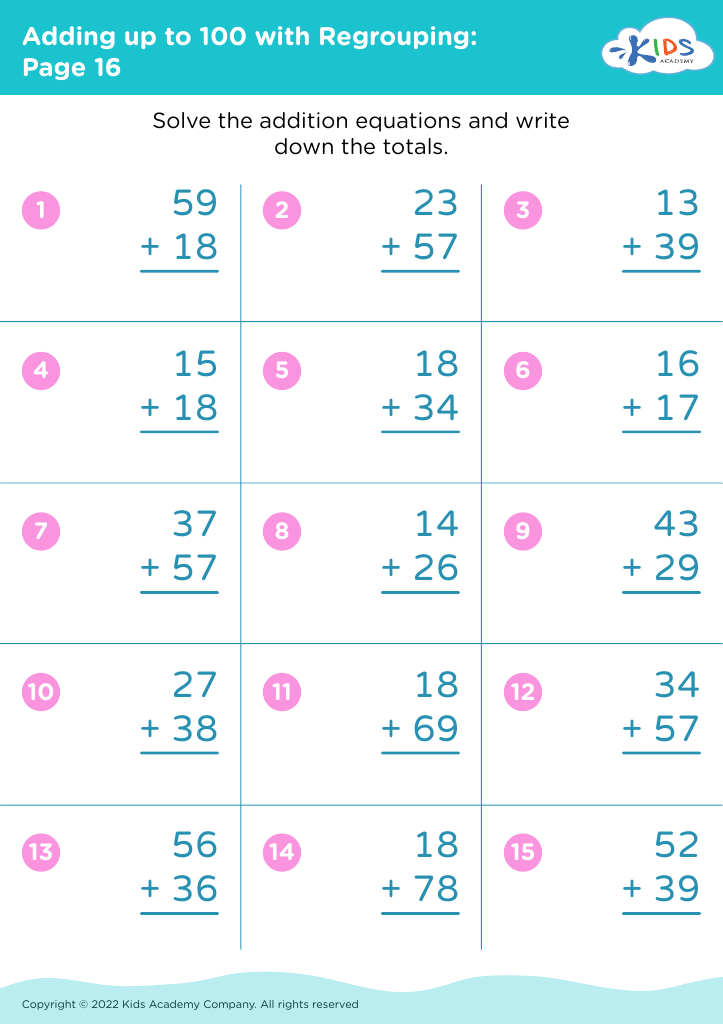
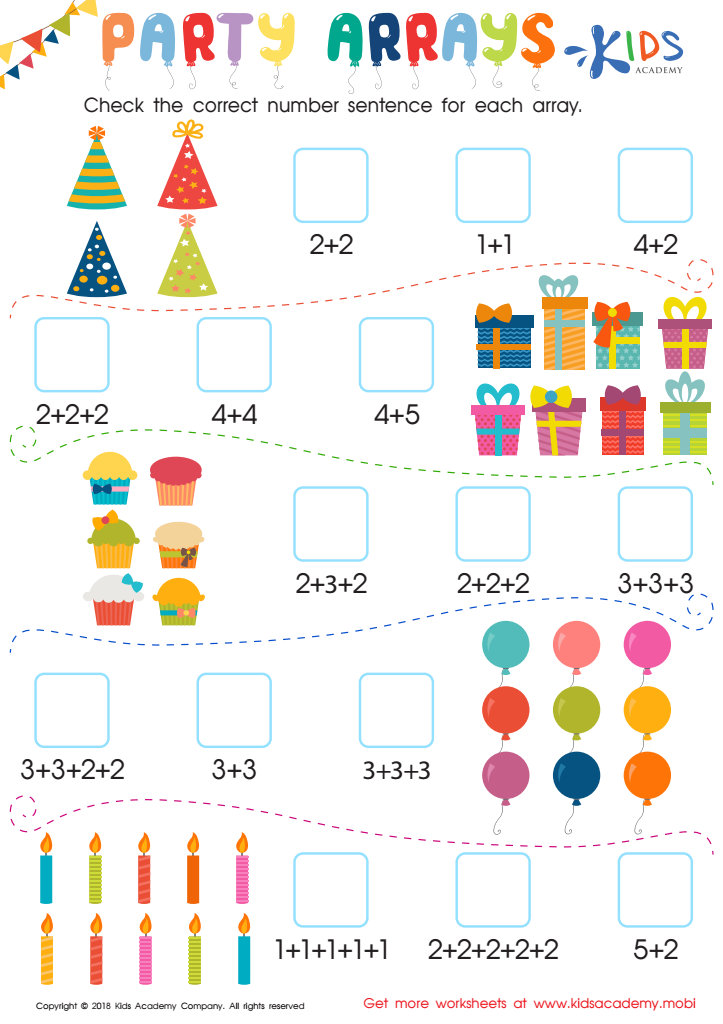
Party Arrays Worksheet
 Assign to My Students








Observational skills are fundamental in Grade 2 math as they enhance a child's ability to understand and engage with mathematical concepts. For parents and teachers, fostering these skills is crucial for several reasons. First, observational skills help students recognize patterns, shapes, and relationships in their environment, which forms the basis of critical mathematical concepts like addition, subtraction, and geometric understanding.
Additionally, these skills encourage active learning, prompting children to analyze problems rather than rely solely on memorization. Through observation, students develop reasoning abilities, promoting deeper comprehension of mathematical principles. This lays the groundwork for advanced problem-solving skills needed in future grades.
Support from parents and teachers can also reinforce the importance of observational skills. Parents engaging in interactive activities, such as counting everyday objects or identifying shapes around the house, augment classroom learning and demonstrate the practical applications of math in daily life.
Moreover, by creating a rich, observation-friendly learning environment, educators can help students become more curious and independent thinkers. Ultimately, enhancing observational skills in Grade 2 not only boosts math proficiency but also cultivates critical thinking abilities essential for lifelong learning. Thus, prioritizing these skills is an investment in a child's overall academic development.