Understanding equality Grade 2 Math Worksheets
3 filtered results
-
From - To
Explore our engaging "Understanding Equality Grade 2 Math Worksheets" designed to help young learners grasp the concept of equality in mathematics. These worksheets provide a variety of activities that make learning fun and interactive, reinforcing the essential skills needed to compare numbers and understand mathematical relationships. With colorful visuals and stimulating exercises, students will develop confidence in solving equations and recognizing true statements. Ideal for classroom use or homework assignments, our free printable resources ensure that children gain clarity on this fundamental concept while enjoying their mathematical journey. Help your second grader master equality with our expertly crafted worksheets today!
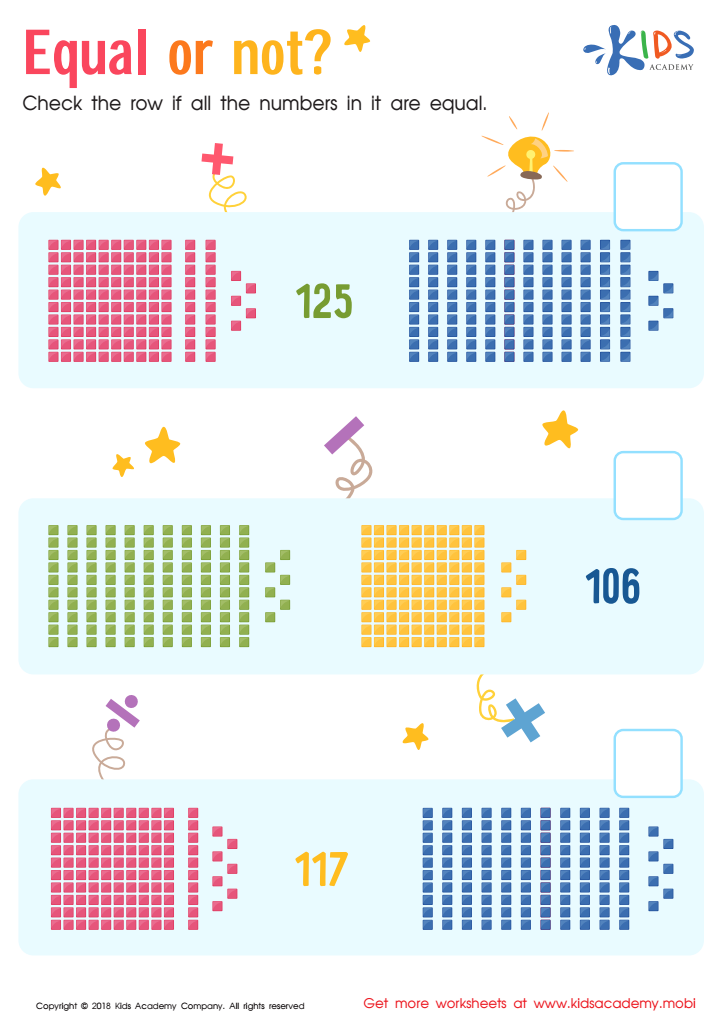
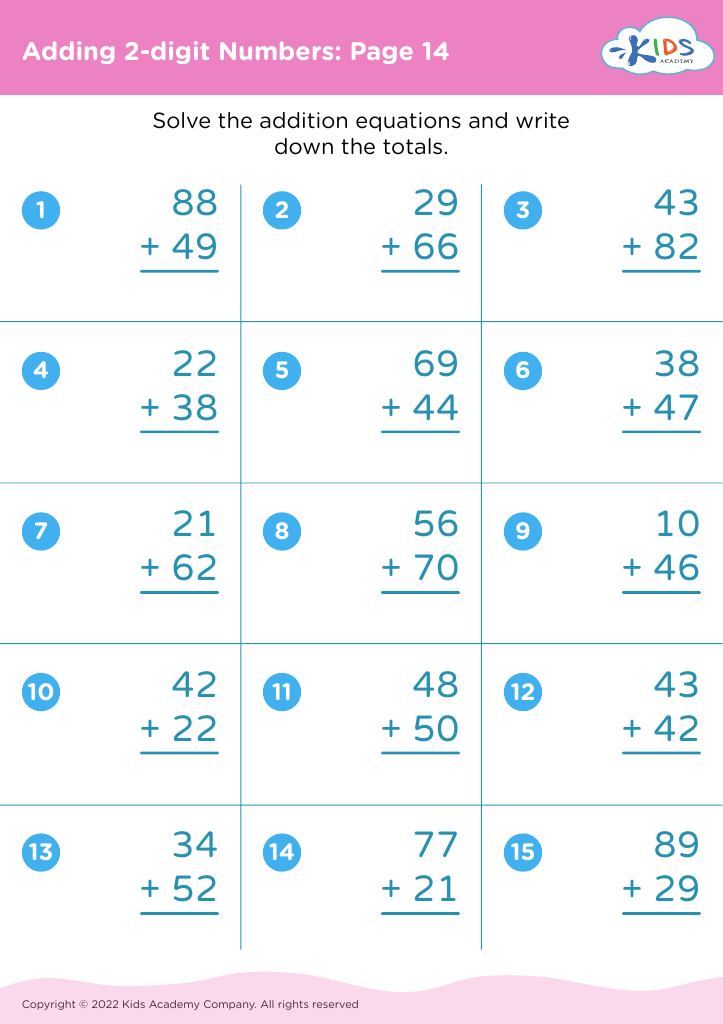
Equal or not Worksheet
 Assign to My Students
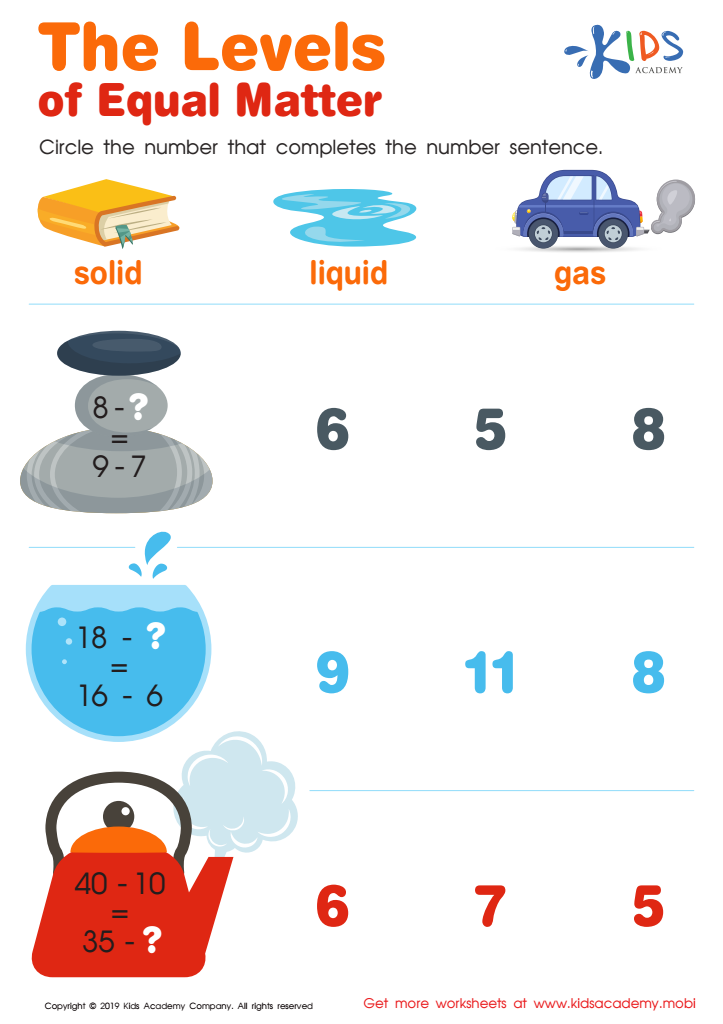
The Levels of Equal Matter Worksheet







Understanding equality in Grade 2 math is essential for developing foundational mathematical skills and critical thinking. At this stage, children are introduced to the concept of equality, which fosters their ability to compare quantities, solve simple equations, and understand relationships between numbers. When parents and teachers emphasize this concept, they help students grasp that an equation represents two equal sides, which is crucial for later mathematical operations and problem-solving.
Furthermore, a strong understanding of equality promotes confidence in students' abilities to tackle challenges. It encourages logical reasoning and helps them recognize patterns and relationships in mathematics. As children encounter more complex problems in future grades, a solid grasp of equality will aid their transitions into higher-level math concepts, such as algebra.
Additionally, this understanding cultivates a growth mindset; students learn that mistakes are a part of the learning process. Parents and teachers can support this learning by providing real-world examples and interactive activities that emphasize the importance of equality, ultimately instilling a positive attitude towards math.
In conclusion, by prioritizing the understanding of equality in Grade 2, parents and teachers set the stage for a lifelong appreciation and competency in mathematics.