Understanding patterns Grade 2 Math Worksheets - Page 2
29 filtered results
-
From - To
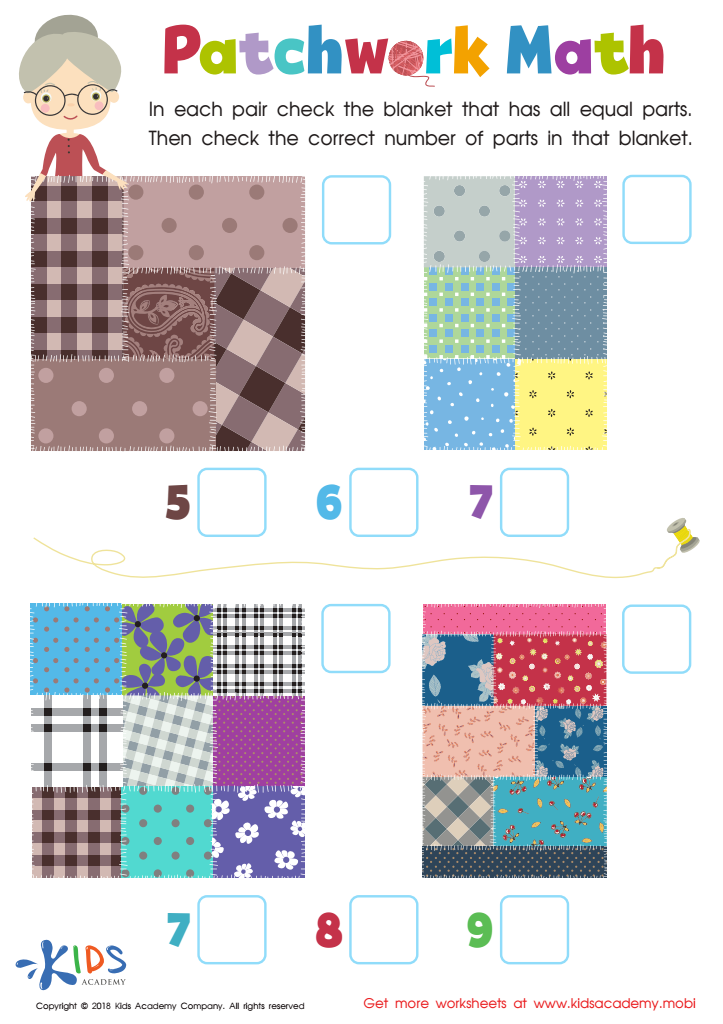
Patchwork Math Worksheet
 Assign to My Students








Understanding patterns in Grade 2 math is crucial for several reasons. Firstly, patterns form the foundation of mathematical reasoning. Recognizing and creating patterns helps children develop critical thinking skills, which are essential for problem-solving in everyday situations. By understanding patterns, students learn to predict outcomes and make informed decisions based on observations, fostering logical thinking.
Additionally, patterns are interconnected with various mathematical concepts, including addition, subtraction, multiplication, and the understanding of sequences. Mastering patterns enables students to better grasp these concepts, as patterns often appear in number relationships, shapes, and even in their surroundings. This knowledge makes advanced mathematics more accessible as they progress in their education.
Moreover, incorporating pattern recognition in early education supports children's cognitive development. It encourages creativity, as students can explore and identify patterns in different contexts, including art and music, enriching their learning experience.
For parents and teachers, reinforcing pattern recognition at this stage cultivates a love for math, setting a positive tone for future learning. Staying engaged with their child's progress fosters a supportive environment, promoting resilience and confidence in their problem-solving abilities. Ultimately, understanding patterns empowers students with essential skills to navigate both academic and daily life challenges.