Understanding place value Grade 2 Math Worksheets
6 filtered results
Difficulty Level
Grade
Age
-
From - To
Subject
Activity
Standards
Unlock the power of numbers with our "Understanding Place Value Grade 2 Math Worksheets"! Tailored to second graders, these engaging worksheets help young learners grasp the concept of place value, enhancing their number sense and mathematical skills. Focusing on understanding digits in the ones, tens, and hundreds places, our colorful and fun exercises make learning foundational math concepts a breeze. Boost your child's confidence and proficiency in math with tasks designed to solidify their place value knowledge. Perfect for both classroom use and homeschooling, these worksheets combine education with enjoyment to make mastering math a rewarding experience.
Favorites
With answer key
Interactive
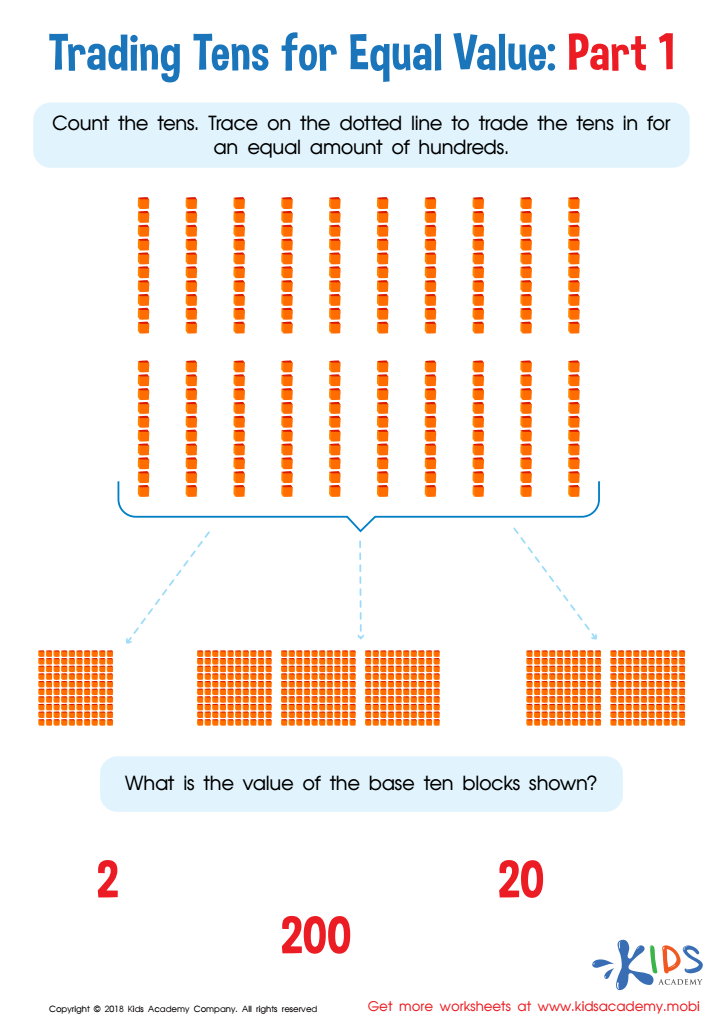
Trading Tens for Equal Value Worksheet: Part 1
This worksheet helps 3rd graders count large numbers and recognize base numbers. It lists 10 cubes and asks students to identify the hundreds, then circle the base blocks. This colorful pdf provides a fun, visual way to help students strengthen their math basics.
 Assign to My Students
Trading Tens for Equal Value Worksheet: Part 1
Worksheet
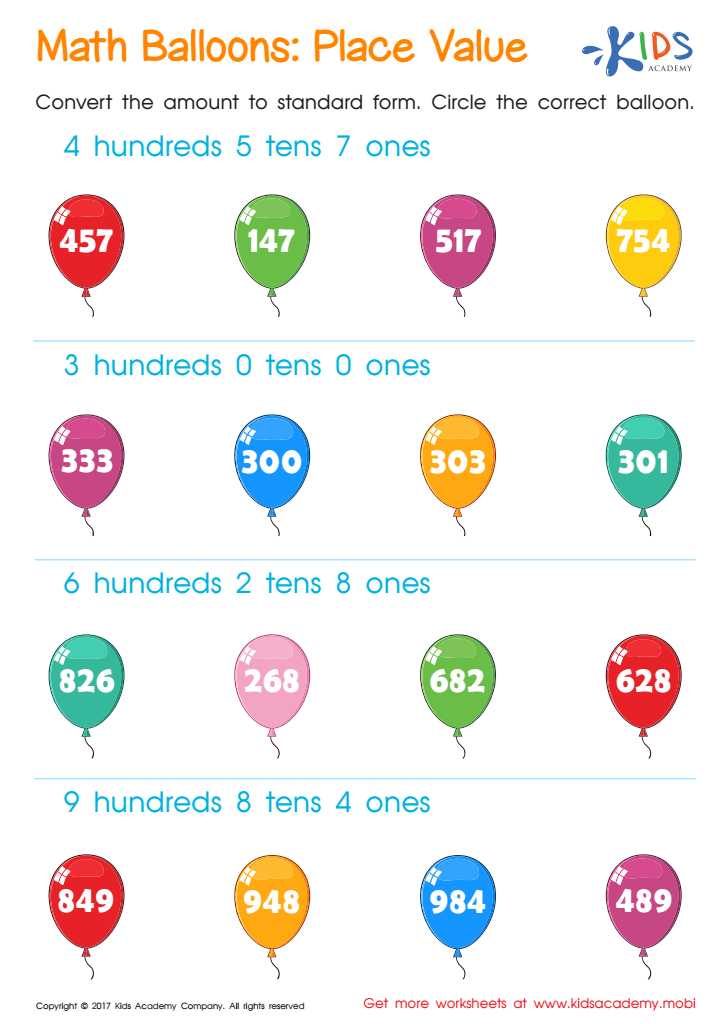
Place Value Printable Worksheet
Understand large numbers using this fun worksheet! Read numbers in hundreds, tens, and ones, then convert them to standard form and select the corresponding amount. Challenging and rewarding, this printable PDF will help your child master place value!
Place Value Printable Worksheet
Worksheet
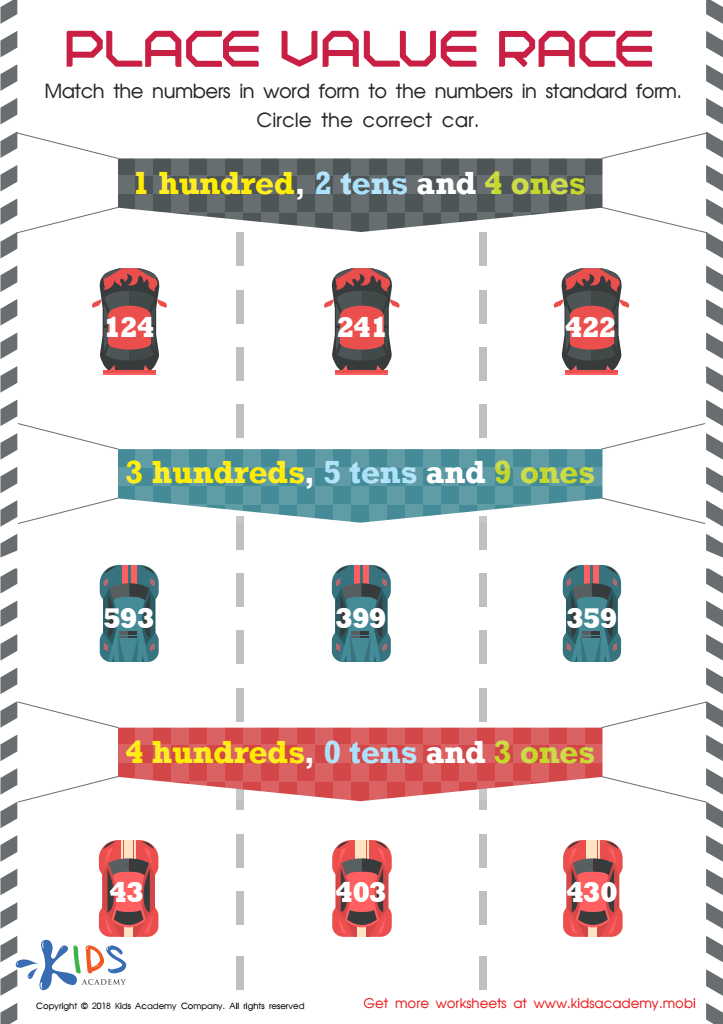
Place Value Race Worksheet
Teach your child to count, then write numbers in word form and back to standard form. In this worksheet, they'll match the numbers written in word form to their standard form and circle the correct car with the correct answer.
Place Value Race Worksheet
Worksheet
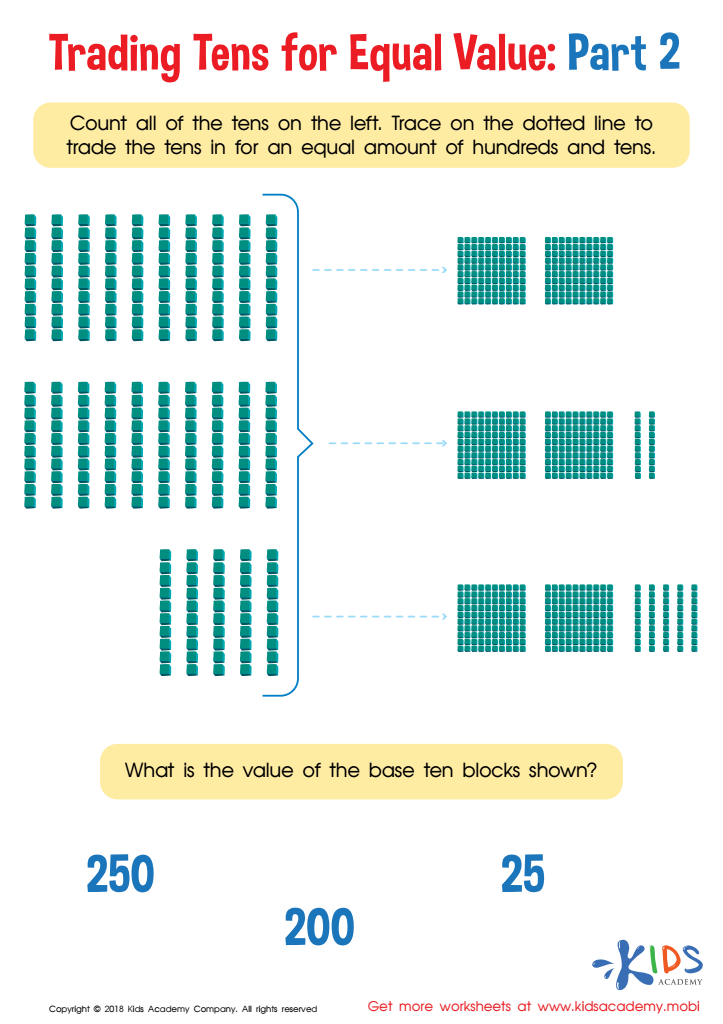
Trading Tens for Equal Value Worksheet: Part 2
Exchange coins for bills and cubes for longs or flats with this helpful place value worksheet! Encourage children to count all the tens, then trace the dotted line to the correct answer and determine the value. This concept can be tricky to teach in elementary math, but this worksheet can help!
Trading Tens for Equal Value Worksheet: Part 2
Worksheet
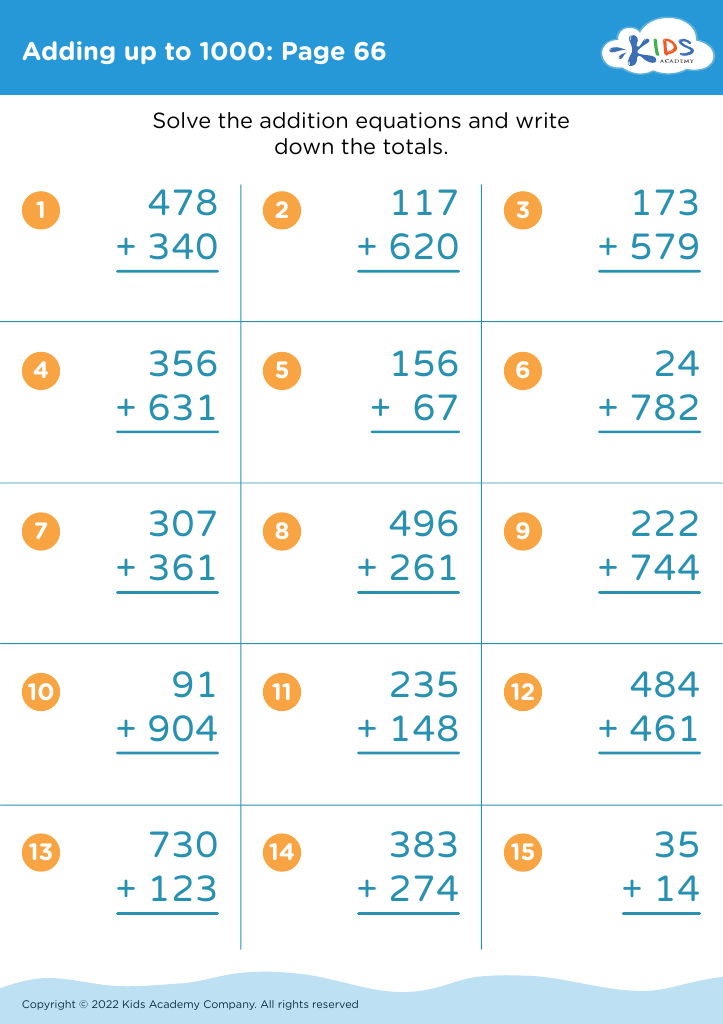
Join Kids Academy for Free
Who is primarily going to use this learning content?







Understanding place value is a foundational concept in math that significantly affects a child's ability to perform arithmetic and grasp higher-level math concepts. In Grade 2, mastering place value helps children comprehend the relationship between digits and their positions within a number.
When students understand place value, they realize that the digit '5' in '50' represents fifty, not just five, giving them a clearer understanding of the number's composition. This insight is crucial for effective addition, subtraction, and later on, multiplication and division. It aids in strategies like regrouping (borrowing and carrying) during these operations. For instance, knowing that 237 means 200 + 30 + 7 allows students to decompose and recombine numbers, making mental math simpler.
Moreover, place value understanding helps children estimate and compare numbers, setting a foundation for rounding and other number sense skills. It encourages logical thinking and problem-solving abilities, enhancing overall cognitive development.
For parents and teachers, fostering a solid grasp of place value paves the way for future success in math. It empowers children to confidently tackle more complex tasks and builds self-assurance in their academic abilities. Intervening at this critical stage ensures that learning gaps do not persist, providing children with the tools they need for continuous progress in math and other subjects.