Understanding life cycles Grade 2 Plants and Animals Worksheets
3 filtered results
Difficulty Level
Grade
Age
-
From - To
Subject
Activity
Standards
Explore the fascinating world of life cycles with our Grade 2 Plants and Animals worksheets! Designed specifically for young learners, these engaging and educational resources help students understand the stages of growth and development in various plants and animals. Each worksheet encourages critical thinking and creativity through activities such as matching, fill-in-the-blanks, and illustrative diagrams. Hands-on exercises make learning fun while reinforcing essential science concepts. Ideal for classroom use or at-home learning, our worksheets align with educational standards and foster an appreciation for nature. Empower your students to discover the wonders of life cycles today with our vibrant, interactive materials!
Favorites
With answer key
Interactive
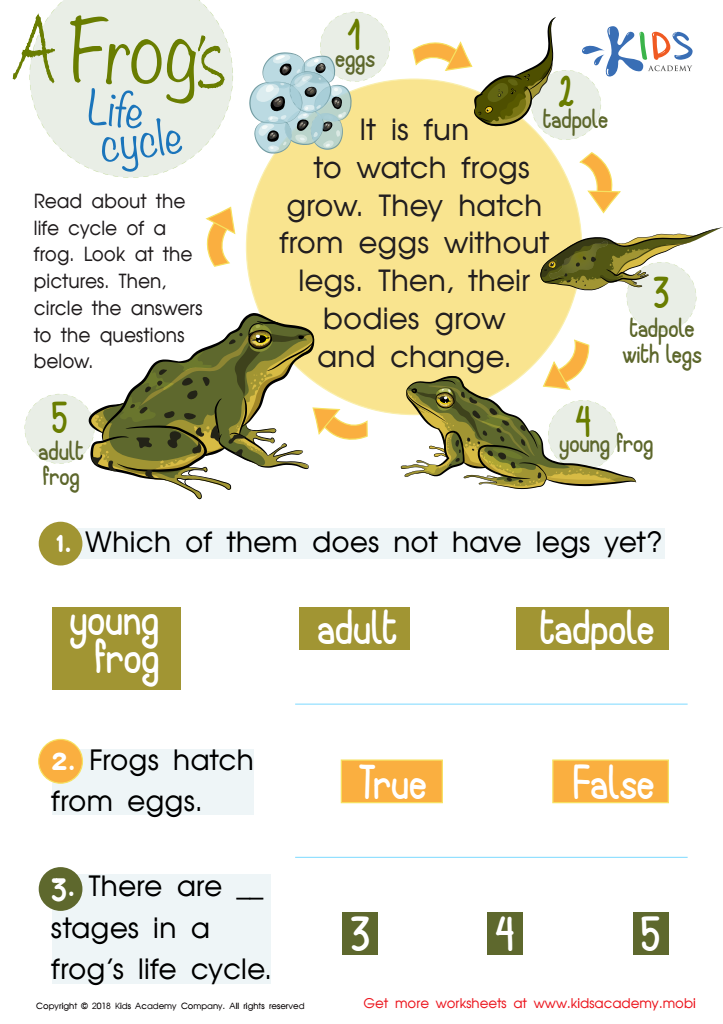
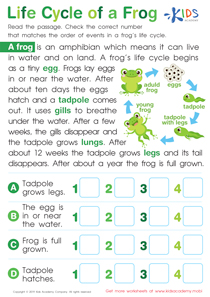
A Frog’s Life Cycle Worksheet
Encourage your kids to learn about frogs! Ask them to tell you some features, then read and discuss the text that explains the frog's life cycle. Show them the pictures to help them visualize it. Finish by helping them answer the questions at the bottom of the worksheet.
 Assign to My Students
A Frog’s Life Cycle Worksheet
Worksheet
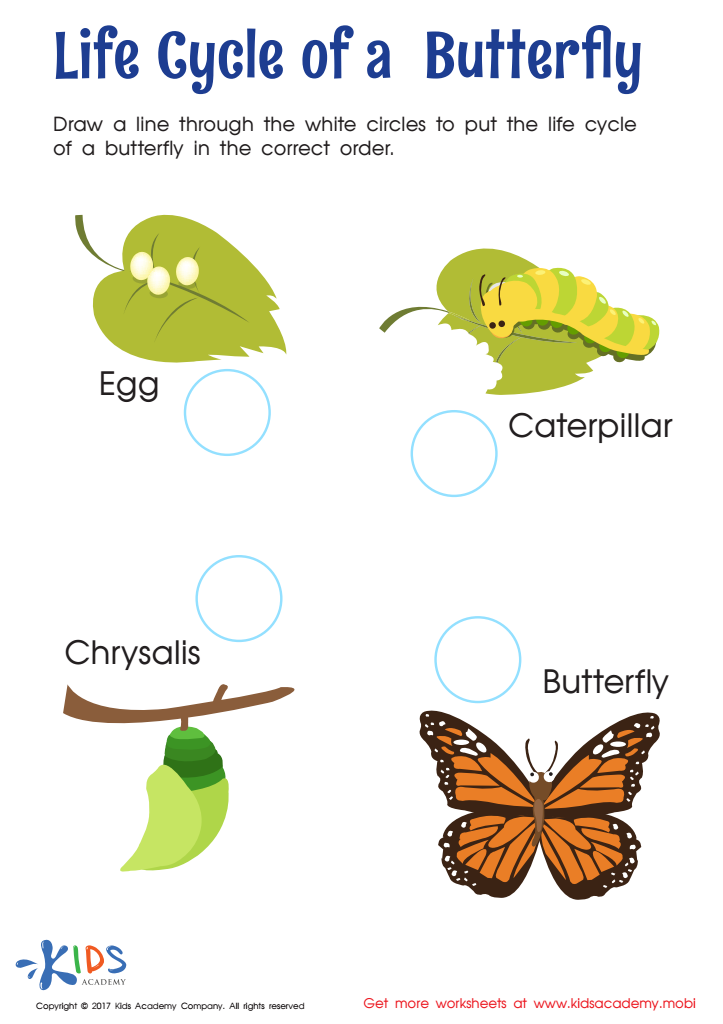
Life Cycle of Butterfly Worksheet
Kids Academy offers an exciting activity – a Life Cycle of a Butterfly Worksheet PDF. It shows four stages in the lifecycle of a butterfly with vivid pictures. Kids put the stages in the correct order to study the lifecycle.
Life Cycle of Butterfly Worksheet
Worksheet
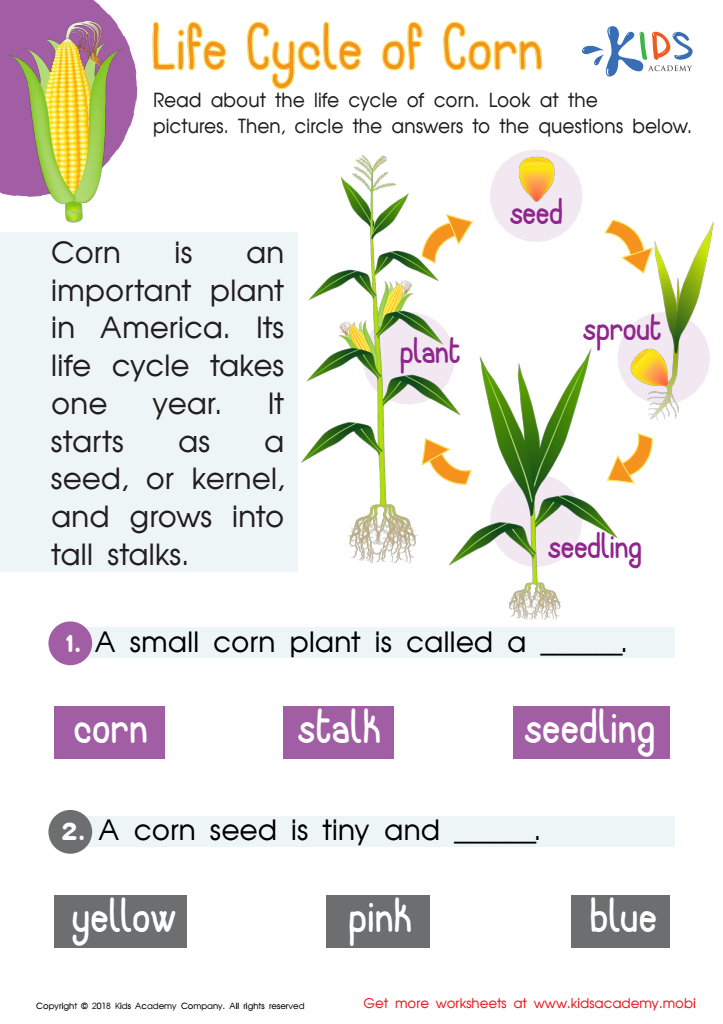
Life Cycle of Corn Worksheet
Help your kids learn about corn! Ask them what foods it's used to make. Read this worksheet and look at the pictures to learn the life cycle of corn. Then, have them circle the answers to the questions at the bottom. Corn is an important crop for farmers, used to make many foods we eat today.
Life Cycle of Corn Worksheet
Worksheet
Join Kids Academy for Free
Who is primarily going to use this learning content?



Understanding life cycles is essential for both parents and teachers to engage young learners effectively, particularly in Grade 2, where curiosity about nature flourishes. This fundamental concept deepens students' appreciation of the intricate processes all living organisms undergo. Teaching life cycles fosters critical thinking as children observe, compare, and analyze different stages of growth in plants and animals.
By exploring life cycles, students develop a foundational grasp of biology and ecology. This knowledge can help them appreciate biodiversity and the environment, fostering responsible stewardship from an early age. It also supports scientific inquiry skills; students embark on hands-on investigations, such as planting seeds or observing insects, which stimulate their natural curiosity and enhance their observational skills.
Moreover, understanding life cycles ingrains concepts of change and adaptation, offering broader lessons about life’s resilience and interconnectedness. Parents and teachers can connect lessons to students’ daily lives, encouraging them to notice and relate to the natural world around them.
In summary, grasping life cycles not only equips young minds with essential scientific knowledge but also sparks curiosity, nurtures responsibility, and enriches students' educational experiences. Engaging with this topic cultivates a generation that values and understands the delicate balance of nature.