Handwriting improvement Grade 3 Letter Recognition Worksheets
3 filtered results
-
From - To
Enhance your 3rd grader's handwriting skills with our engaging Letter Recognition Worksheets, specifically designed to improve younger students’ writing proficiency. These printable resources cater to challenging yet fun activities focused on recognizing and neatly writing letters to ensure continual improvement. Kids Academy offers expertly crafted exercises to reinforce consistent practice, bolstering fine motor skills essential for legible penmanship. Perfect for use in classrooms or as supplementary practice at home, our diverse collection cultivates both confidence and excellence in young writers. Help your child achieve handwriting mastery with these comprehensive, easy-to-follow worksheets!
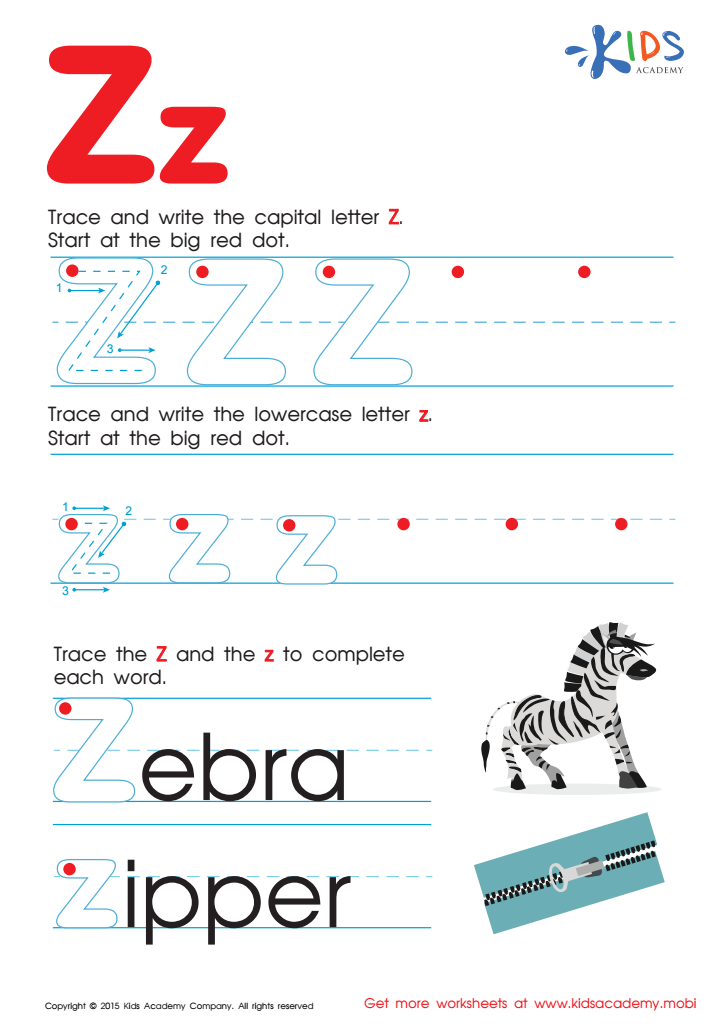
Letter Z Tracing Page
 Assign to My Students

Letter J Tracing Page

Letter B Tracing Page





Improving handwriting and letter recognition in Grade 3 is pivotal for a child’s academic and cognitive development. For parents and teachers, focusing on these skills can significantly influence a child's future learning experiences and literacy. Good handwriting aids in clear communication, enabling children to express their thoughts effectively. When students have legible handwriting, they feel more confident in their work, potentially leading to greater academic achievements and success.
Letter recognition serves as a backbone for reading and writing skills. When children struggle with distinguishing and identifying letters, it can hinder their ability to decode words, impacting their reading fluency and comprehension. By the time students reach Grade 3, they transition from learning to read to reading to learn, which makes it essential to have strong foundation skills.
Furthermore, the practice of handwriting boosts fine motor skills and cognitive development, improving hand-eye coordination and concentration. It also prevents future academic struggles; poor handwriting has been linked to issues in spelling, math, and executive functioning. Ultimately, investing in the improvement of handwriting and letter recognition sets children up for long-term academic success, enhances their self-esteem, and cultivates a love for learning. Thus, it's crucial for both parents and teachers to prioritize these fundamental skills in early education.