Mental math practice Grade 3 Worksheets
4 filtered results
Difficulty Level
Grade
Age
-
From - To
Subject
Activity
Standards
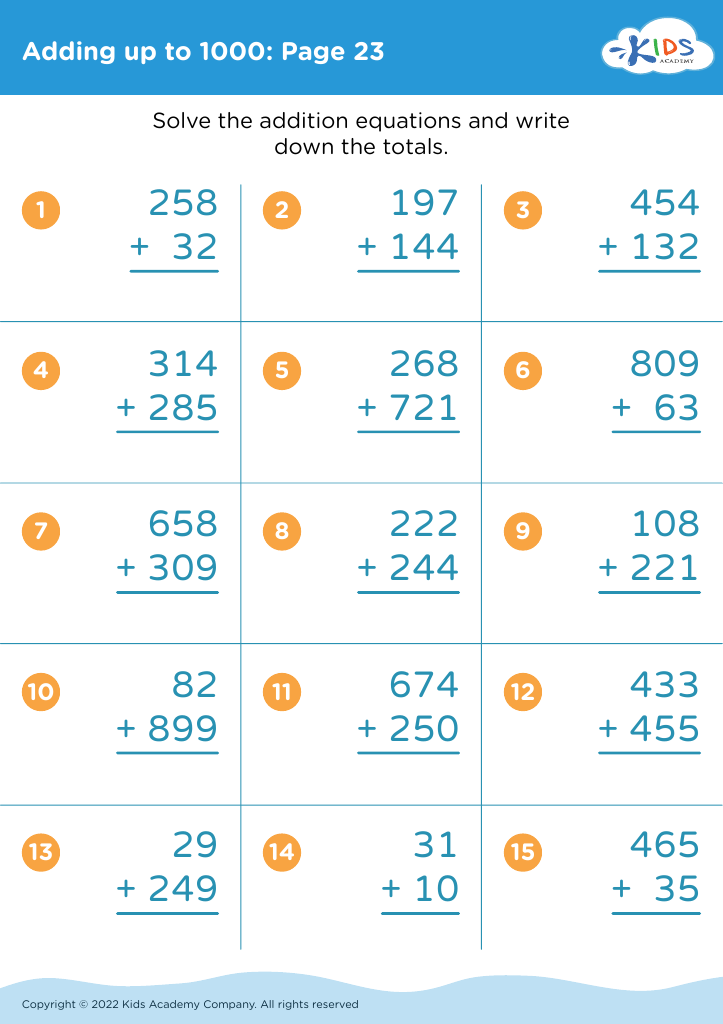
Boost your third grader’s math skills with our engaging Mental Math Practice Worksheets! Designed for Grade 3 students, these worksheets help enhance mental calculation abilities, fostering confidence and efficiency in arithmetic. Featuring a variety of exercises that cover addition, subtraction, multiplication, and division, these worksheets are perfect for classroom use or at-home practice. Each worksheet encourages critical thinking, speed, and accuracy, making math fun and interactive. Parents and educators can easily access printable resources to support their child’s learning journey, ensuring they excel in foundational math skills. Take the first step towards mastering mental math today!
Favorites
With answer key
Interactive
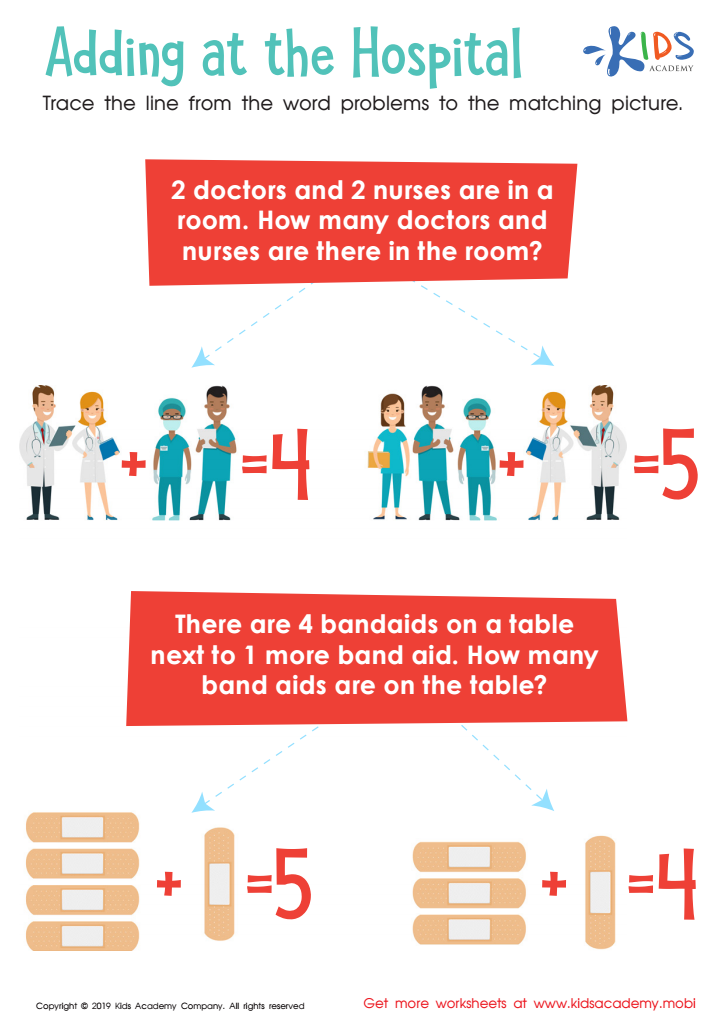
Adding at the Hospital Worksheet
A hospital visit doesn't have to be scary for kids. With this worksheet, they can count along with doctors and nurses, by reading the word problems and tracing lines to the corresponding picture. Guide them through it and you'll help them have a fun experience.
 Assign to My Students
Adding at the Hospital Worksheet
Worksheet
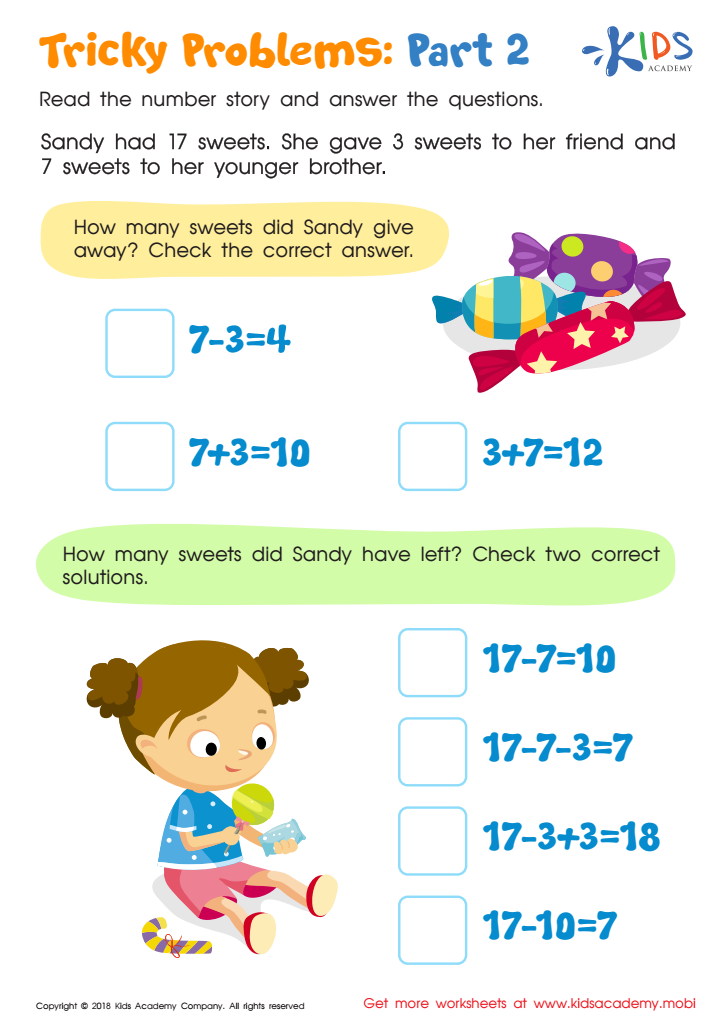
Tricky Problems Worksheet: Part 2
Help your little math learner visualize number stories with this engaging worksheet. They'll connect pictures to the story and use math facts to find the sums. After that, they'll be able to identify the correct number sentences to match. Let them practice and get better at problem solving!
Tricky Problems Worksheet: Part 2
Worksheet
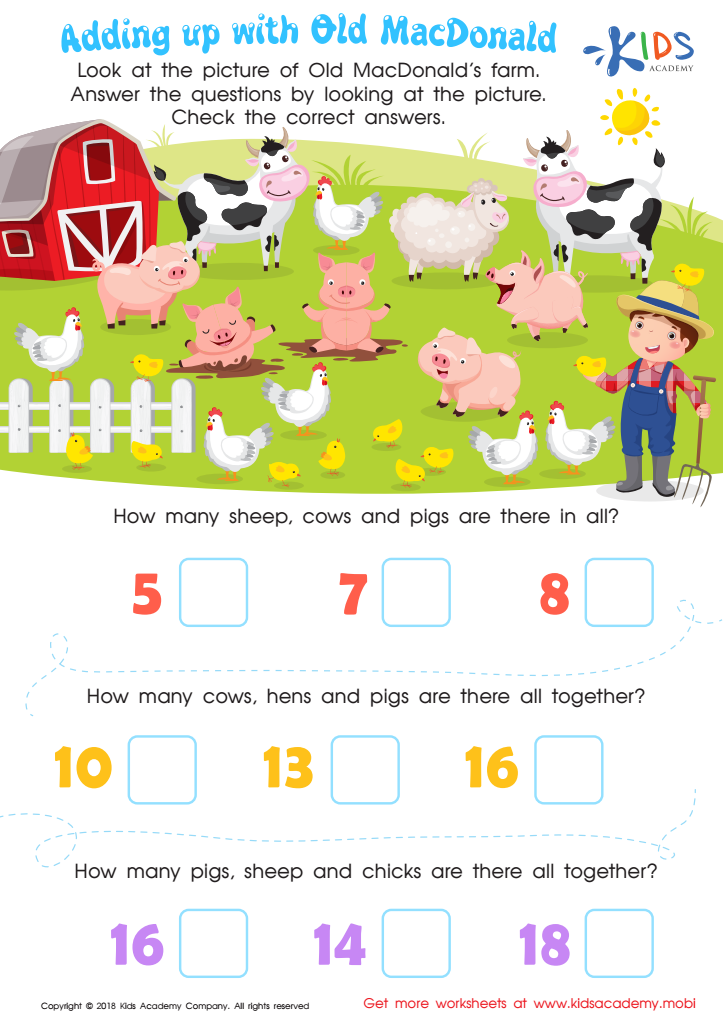
Adding Up with Old MacDonald Worksheet
Old MacDonald needs help counting his animals! Give your little math whiz a fun challenge with a free PDF worksheet. They'll love counting the animals and doing basic addition with two or three addends. Who knew math could be so much fun on the farm?
Adding Up with Old MacDonald Worksheet
Worksheet
Join Kids Academy for Free
Who is primarily going to use this learning content?






Mental math practice is crucial for Grade 3 students, as it forms the foundation for their mathematical understanding and problem-solving skills. At this stage, children are transitioning from grasping basic arithmetic to applying these concepts in various contexts. Mental math enhances their ability to perform calculations quickly and accurately, which is essential for everyday situations, such as budgeting or measuring ingredients for a recipe.
Moreover, mental math encourages number sense, enabling students to recognize patterns and relationships between numbers. This skill fosters confidence as they tackle more complex math topics in future grades. Regular practice also helps improve working memory and cognitive flexibility, which are vital for overall academic success.
Teachers and parents should prioritize mental math exercises because they support the development of critical thinking skills. Engaging students in games, challenges, or real-life problems not only makes learning enjoyable but also reinforces their calculations in a practical manner. The habits formed during Grade 3 will serve them well in higher-level mathematics and other subjects, ultimately cultivating a positive attitude toward math. By investing time in mental math practice, caregivers can help cultivate resilience and perseverance in students, empowering them for future academic challenges.