Understanding multiplication Grade 3 Worksheets
8 filtered results
-
From - To
Unlock the world of mathematics for your third grader with our "Understanding Multiplication Grade 3 Worksheets." Designed to simplify the concepts of multiplication, these worksheets provide a solid foundation for young learners. Engaging exercises and fun activities help children grasp multiplication through visual aids, arrays, and real-life problems. These printable resources make learning enjoyable while fostering essential problem-solving skills. Perfect for classroom or at-home practice, our worksheets support your child's mathematical journey, enhancing their confidence and proficiency in multiplication. Set your third grader up for success with the best tools on their educational path!
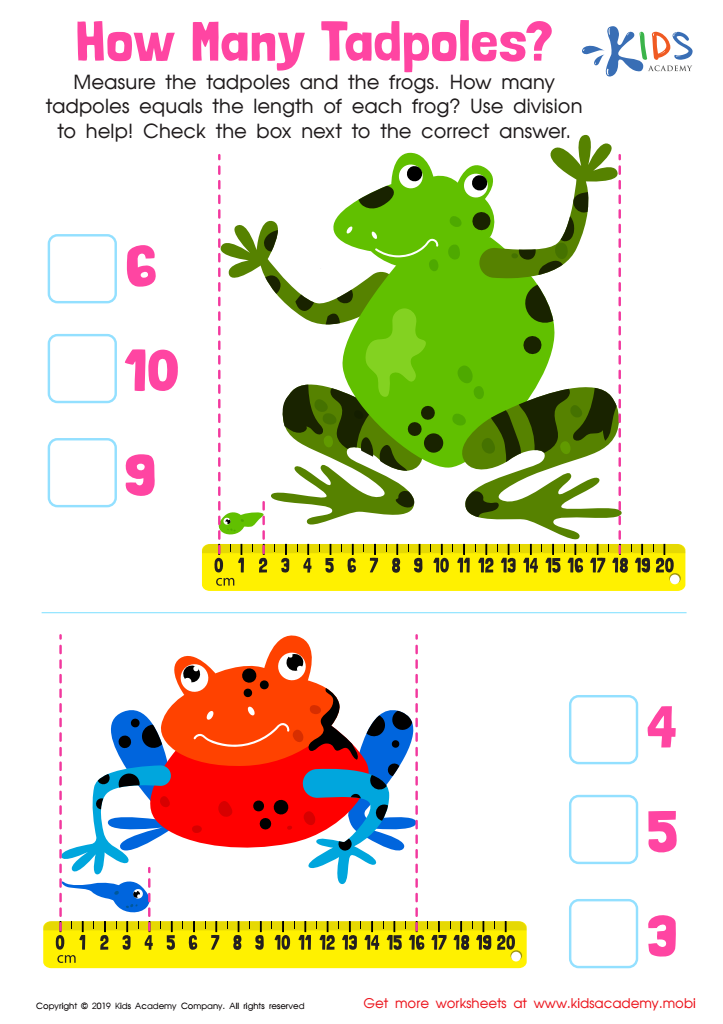
How Many Tadpoles Worksheet
 Assign to My Students
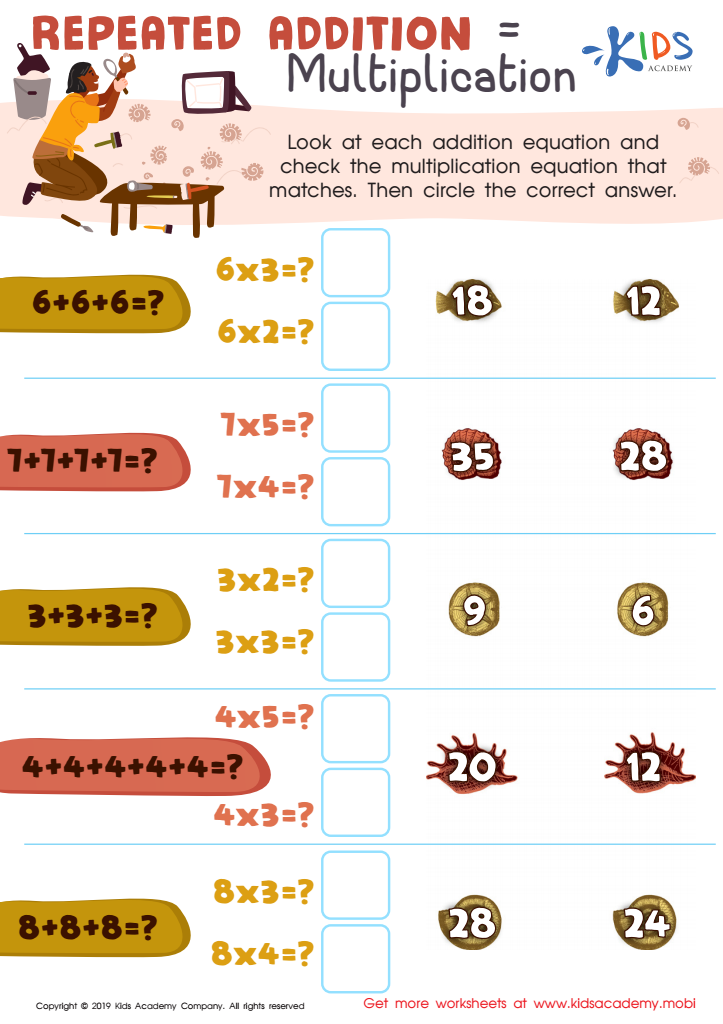
Repeated Addition = Multiplication Worksheet
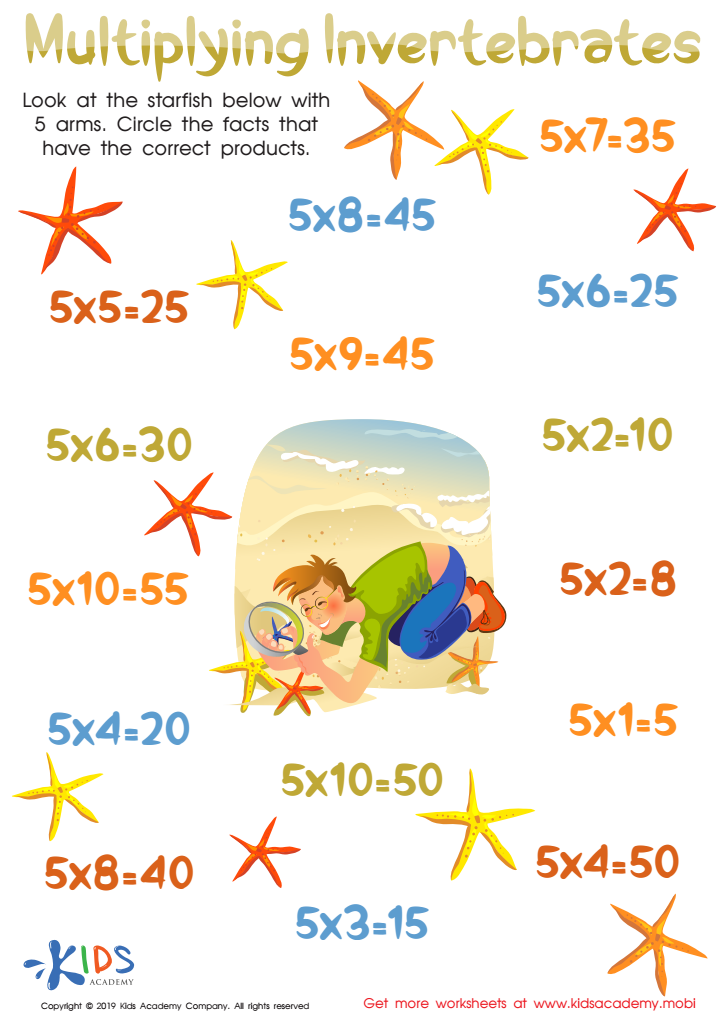
Multiplying Invertebrates Worksheet
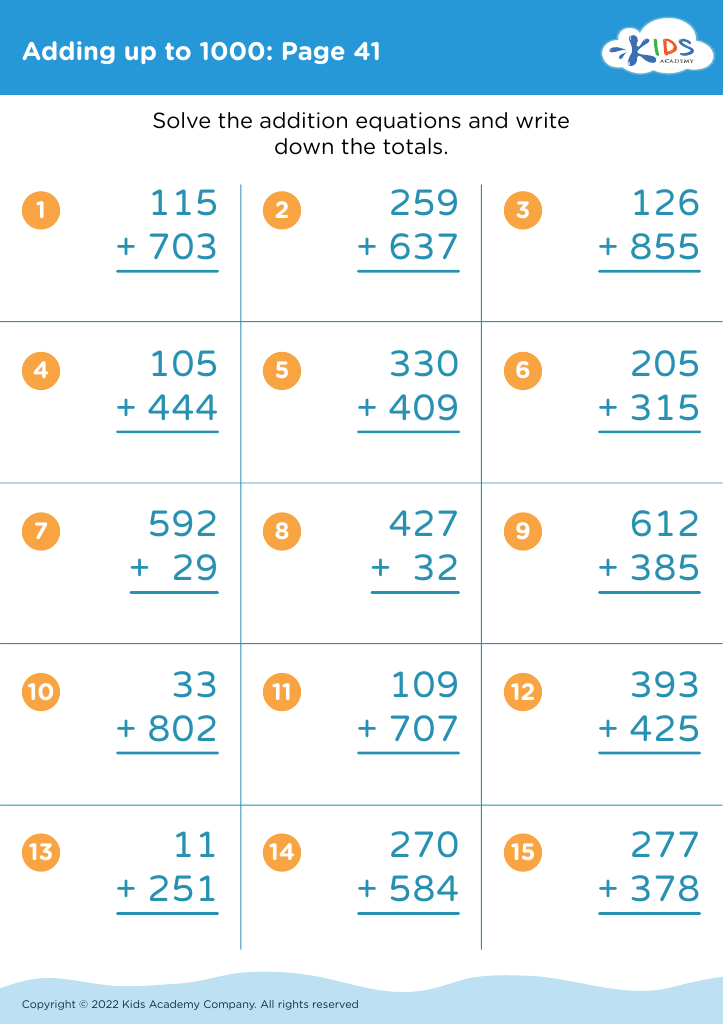
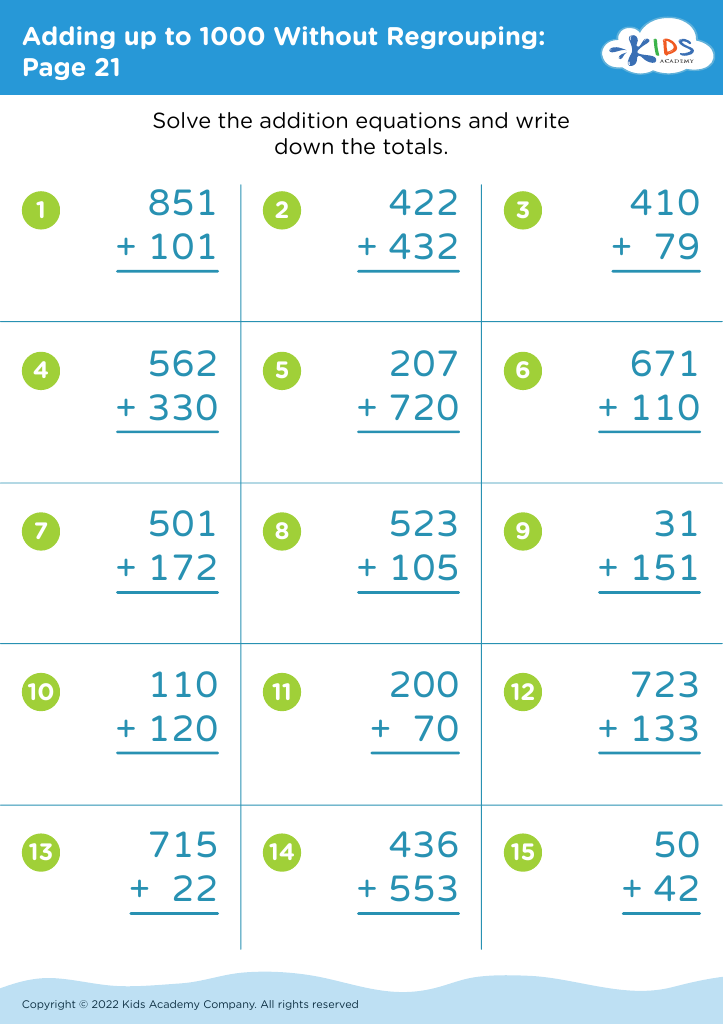
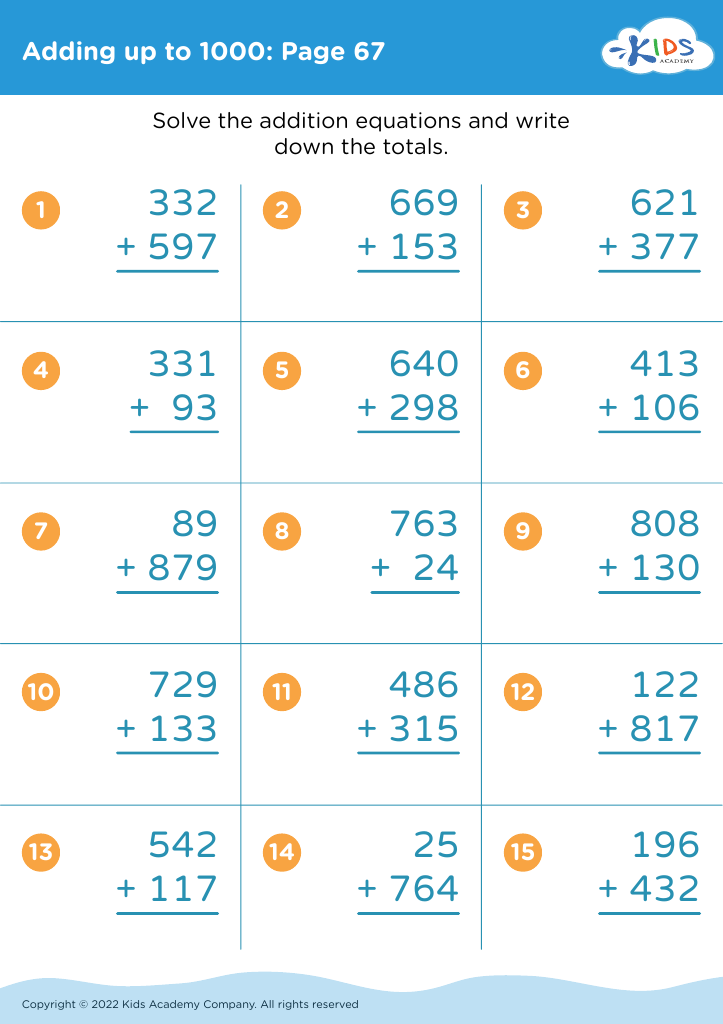






Understanding multiplication in Grade 3 is crucial for both parents and teachers to focus on because it sets a foundation for future math success and practical life skills. At this stage, children transition from simple arithmetic to more complex mathematical concepts, and mastering multiplication is a significant milestone.
For parents, showing interest in their child's multiplication skills reinforces the value of education and helps build confidence. Parents who understand the importance of multiplication can create a supportive learning environment at home. This encouragement can spark a child's enthusiasm for learning and make them more resilient when facing academic challenges.
Teachers should care because a strong understanding of multiplication is essential for progressing through higher levels of math, such as division, fractions, and algebra. It helps develop mental math skills and promotes logical thinking and problem solving.
Multiplication is not just essential in academia; it also has practical applications in everyday life. From cooking and shopping to budgeting and time management, knowing how to multiply helps children handle real-world tasks efficiently.
In conclusion, a robust grasp of multiplication in Grade 3 forms an educational cornerstone that influences a child's future academic achievements and day-to-day problem-solving abilities. Parents' and teachers' active involvement in this learning phase is paramount for nurturing well-rounded, confident learners.