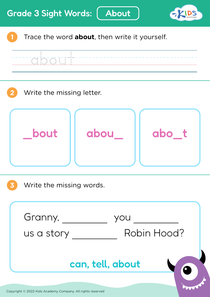
Vocabulary improvement Grade 3 Worksheets
4 filtered results
Difficulty Level
Grade
Age
-
From - To
Subject
Activity
Standards
Enhance your third graders' vocabulary with our engaging Vocabulary Improvement Worksheets! Designed specifically for Grade 3 students, these worksheets focus on key language skills, helping children expand their word knowledge and usage. With a variety of exercises, including word games, fill-in-the-blanks, and synonym challenges, students develop essential strategies for effective communication. Our printable worksheets encourage independent learning and can easily be integrated into daily lessons or homework. Foster a love for language and boost your child's academic confidence as they discover new words and meanings in a fun and interactive way. Start enriching your child’s vocabulary today!
Favorites
With answer key
Interactive
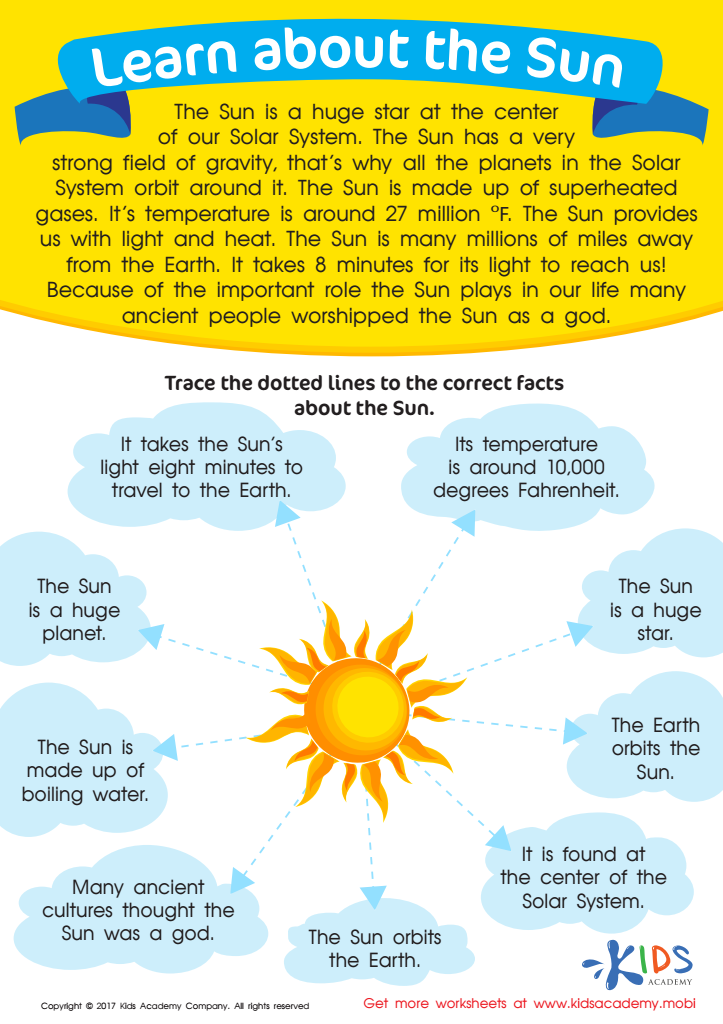
Sun Facts Worksheet
Test your child's reading comprehension with this sun facts PDF worksheet! It offers a quiz to help kids hone their knowledge on the sun. A fun way to learn, it puts their skills to the test!
Sun Facts Worksheet
Worksheet
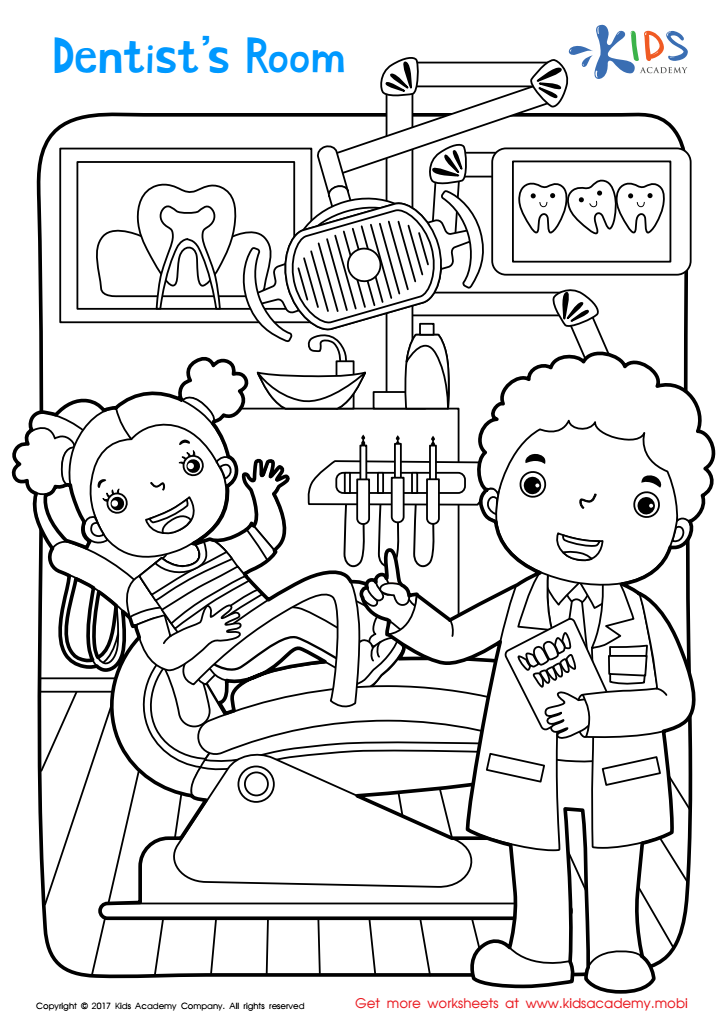
Dental Coloring Page Worksheet
Make your kid's dental visit fun and educational with our coloring page! It will help familiarize children with the dentist's office, from the chair to the tools. Plus, they'll learn about the dentistry profession.
Download (PDF)
 Assign to My Students
Assign to My Students
Dental Coloring Page Worksheet
Worksheet
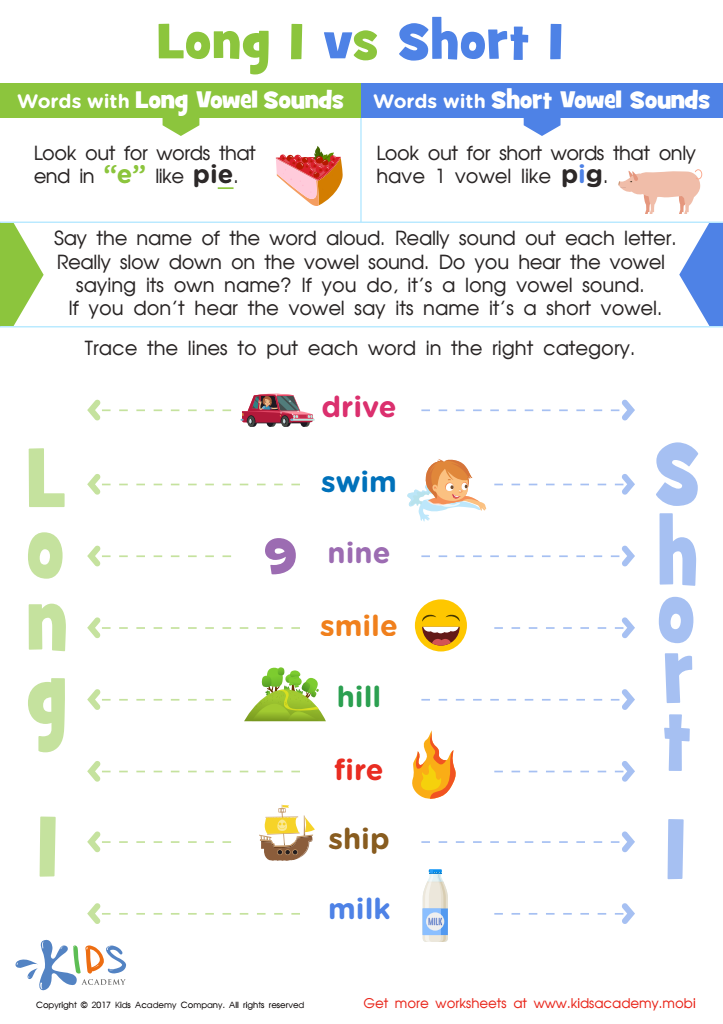
Long and Short Vowel I Spelling Worksheet
When it comes to long "I" sounds, kids should look out for the letter "E" at the end. With examples and sounding out words, kids will improve spelling skills with this long/short "I" worksheet!
Long and Short Vowel I Spelling Worksheet
Worksheet
Join Kids Academy for Free
Who is primarily going to use this learning content?







Vocabulary improvement in Grade 3 is crucial for several reasons. At this stage, children are transitioning from learning to read to reading to learn. A strong vocabulary enhances their comprehension skills, enabling them to understand and analyze texts more effectively. This foundational skill is essential, as it affects their performance across all subjects, not just language arts.
When children possess a rich vocabulary, they can express their ideas more clearly and confidently. This is vital for their participation in class discussions, collaborative group work, and written assignments. Furthermore, developing vocabulary in early education sets the stage for lifelong learning and academic success. It is linked to better standardized test scores and improves overall literacy skills.
Parents and teachers play a crucial role in this development. Engaging children in conversations, introducing new words in context, and encouraging reading various genres help expand their vocabulary. Additionally, using interactive activities like word games and storytelling can make learning enjoyable, fostering a love for words and reading. When educators and caregivers prioritize vocabulary improvement, they not only enhance children's immediate academic experiences but also equip them with critical tools for future success in their educational journey and beyond.