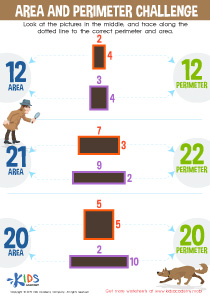
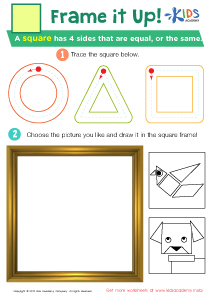
Shape Recognition Grade 3 2D Shapes Worksheets
4 filtered results
-
From - To
Discover engaging "Shape Recognition Grade 3 2D Shapes Worksheets" specially designed to reinforce and extend your child's understanding of shapes. These worksheets offer a variety of exciting activities to help third graders identify, compare, and analyze various 2D shapes such as circles, triangles, and rectangles. Aligned with curriculum standards, they foster critical thinking and problem-solving skills. Each worksheet includes clear instructions, vibrant illustrations, and practice problems to make learning fun and effective. Empower your child to confidently master shape recognition with our high-quality, printable worksheets. Explore now to enhance your third grader's geometry knowledge!
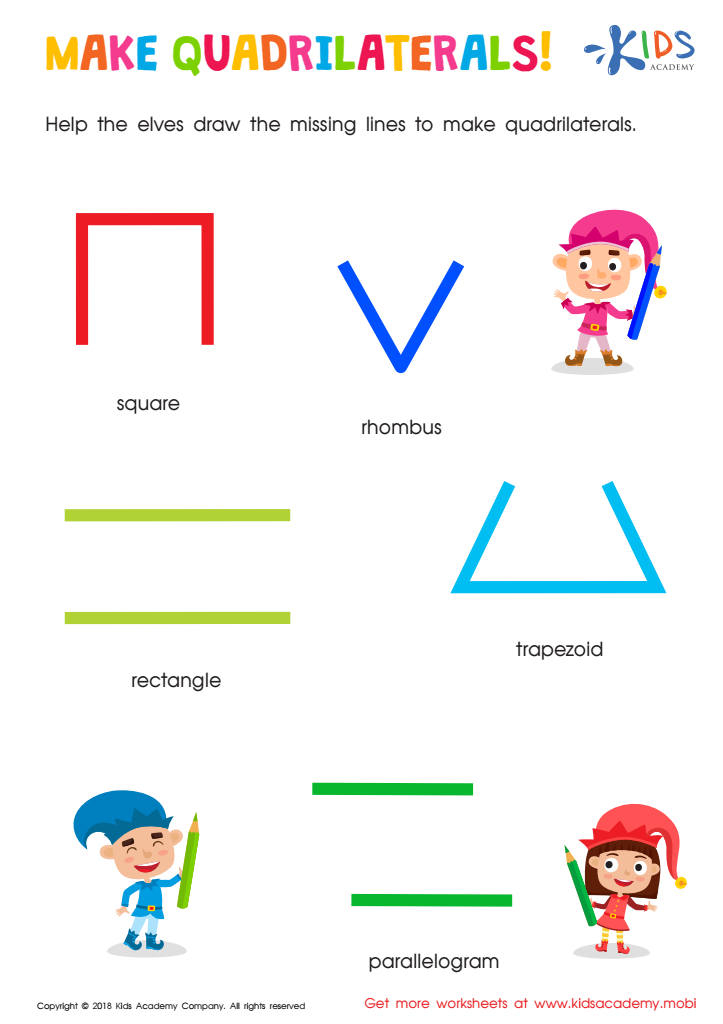
Make Quadrilaterals Worksheet
 Assign to My Students
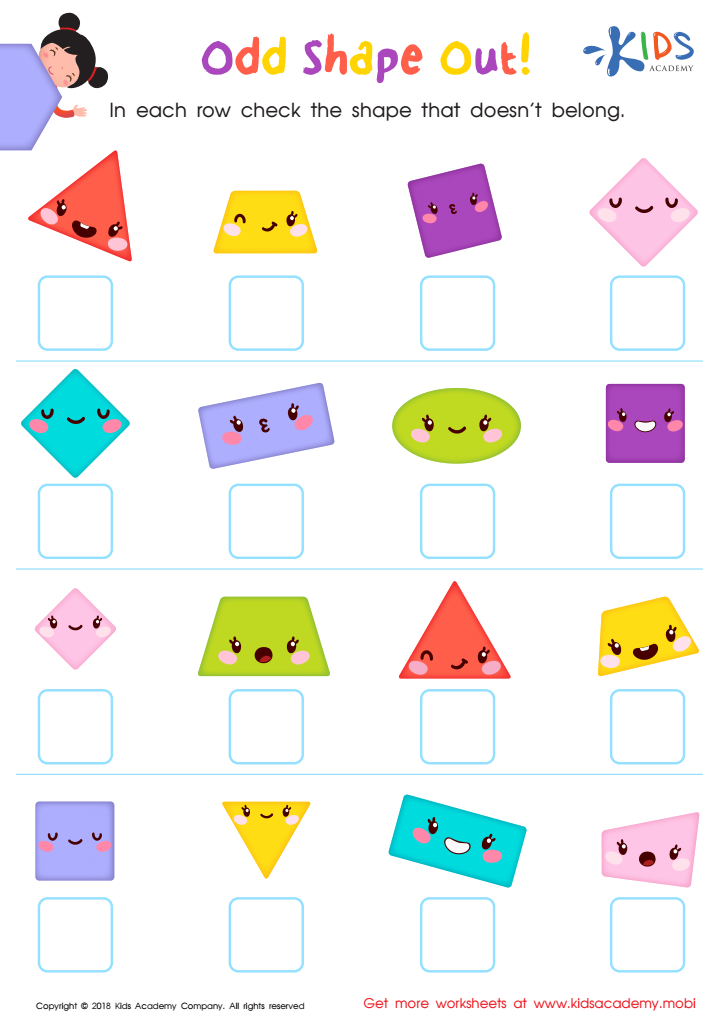
Odd Shape Out Worksheet for Grade 3
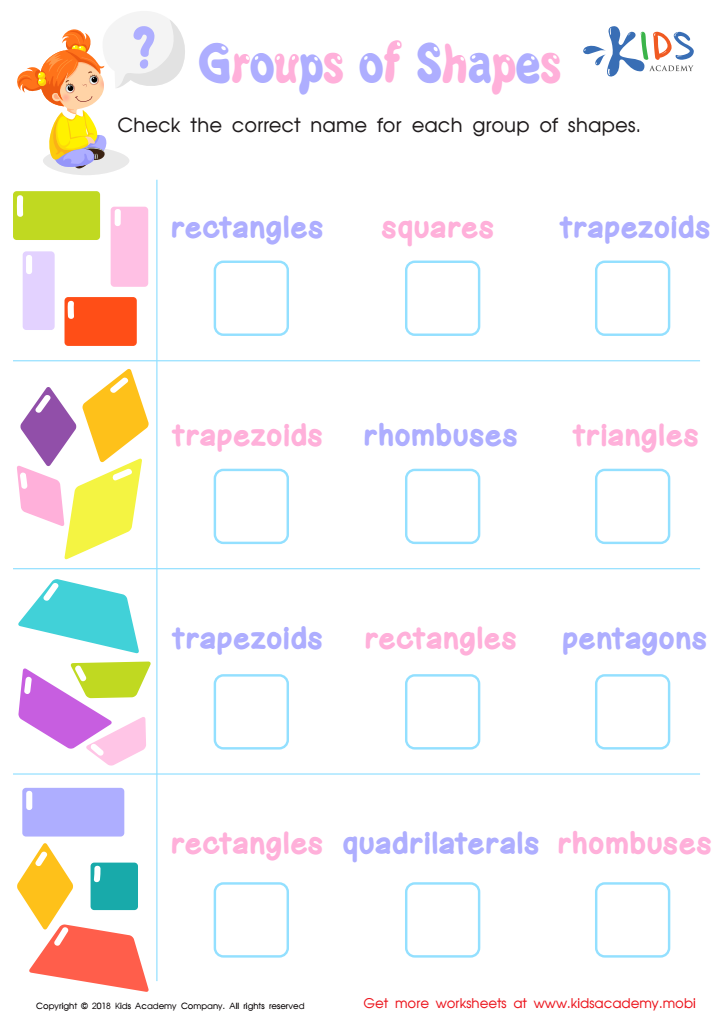
Groups of Shapes Worksheet
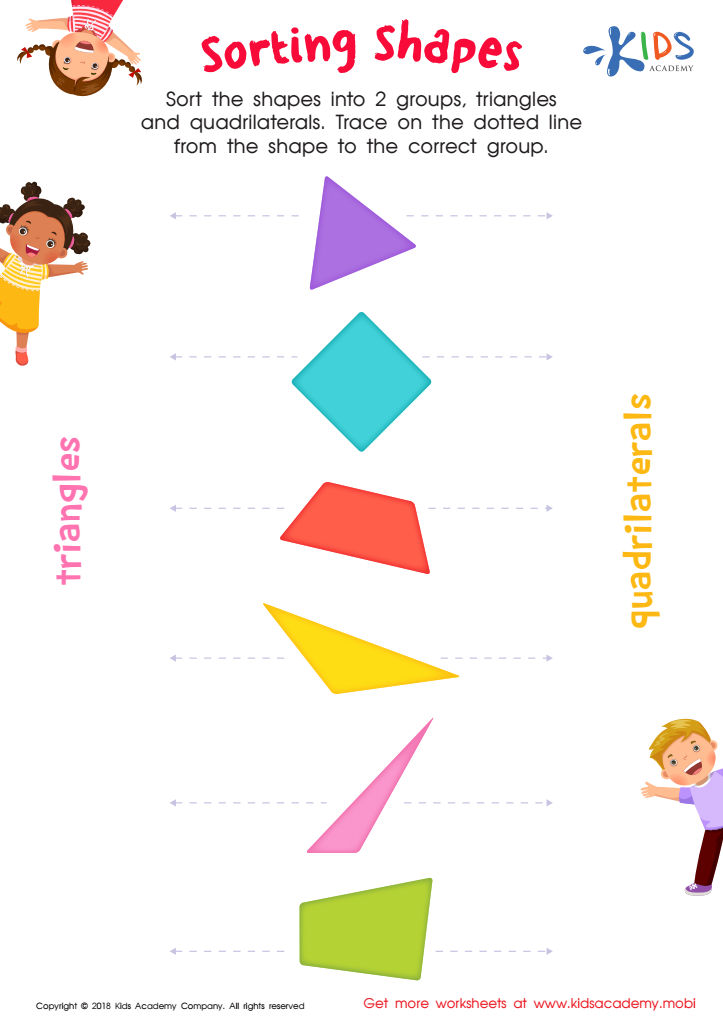
Sorting Shapes Worksheet





Shape recognition is an essential skill for third-graders, as it builds the foundation for more complex mathematical and spatial reasoning. At this developmental stage, children transition from simple shape identification to a deeper understanding of geometric properties, which enhances both their cognitive and problem-solving abilities.
Firstly, shape recognition supports mathematical learning by introducing children to fundamental concepts such as symmetry, area, and perimeter. Recognizing and differentiating between various 2D shapes—like rectangles, squares, circles, and triangles—prepares students for advanced topics in geometry, algebra, and eventually, trigonometry.
Secondly, this skill aids in the development of spatial awareness and visual-spatial reasoning. These faculties are critical not just in mathematics but also in everyday tasks such as reading maps, packing, or navigating spaces. Understanding shapes also helps children appreciate the structure and design of objects in their surroundings.
Additionally, shape recognition exercises typically enhance fine motor skills and hand-eye coordination, especially when students engage in activities like drawing, tracing, and crafting shapes. These activities can encourage creative expression while concurrently reinforcing academic concepts.
In conclusion, parents and teachers should prioritize shape recognition for third-graders as it equips them with indispensable mathematical knowledge and broadens their cognitive and practical abilities, laying a strong groundwork for future educational and real-world challenges.