Basic Math Skills Grade 3 Adding up to 1000 Misc Worksheets
3 filtered results
-
From - To
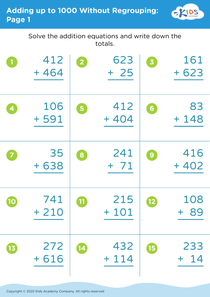
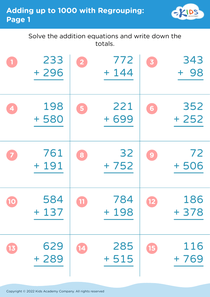
Enhance your child's math proficiency with our collection of "Basic Math Skills Grade 3 Adding up to 1000 Misc Worksheets." These meticulously crafted worksheets are designed to challenge and support third graders in mastering addition concepts up to 1000. Each worksheet features a variety of problems that ensure comprehensive practice and reinforce understanding, both in classroom settings and at home. Watch your child build confidence and sharpen their math abilities through engaging exercises that not only meet educational standards but also make learning enjoyable. Ideal for students seeking to solidify their foundational math skills.
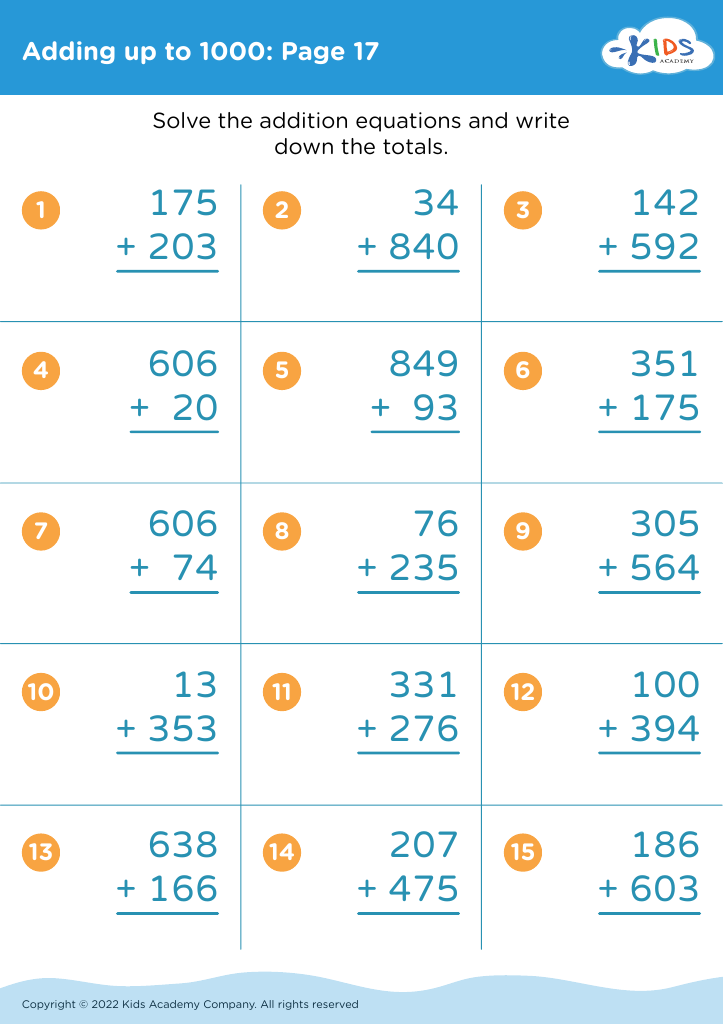
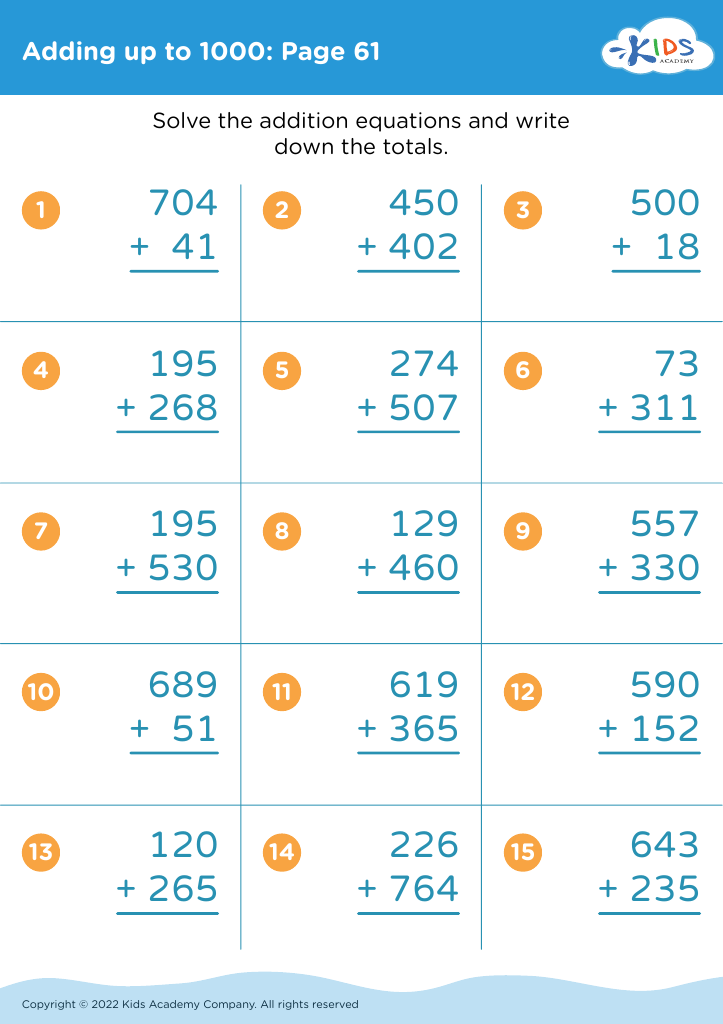
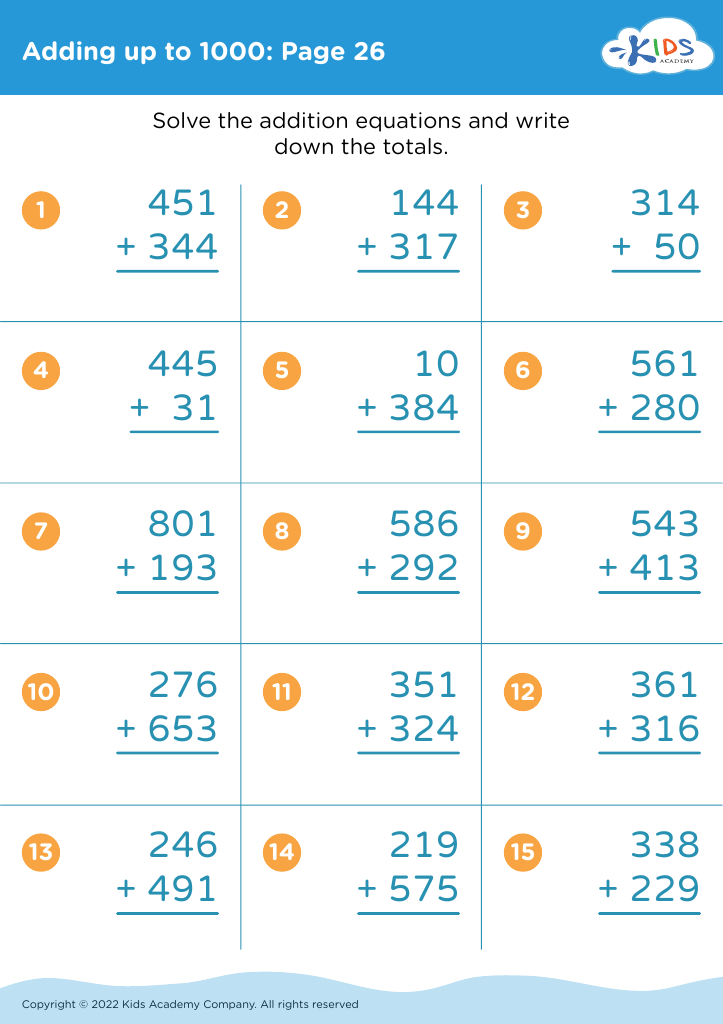


Parents and teachers should prioritize ensuring that third graders master basic math skills, such as adding up to 1,000, because these skills form the foundation for their future mathematical learning and everyday life. Mastery of basic arithmetic improves cognitive development and problem-solving abilities. When children confidently understand addition, they are better prepared for more complex operations like subtraction, multiplication, and division.
Moreover, honing these skills in third grade, a critical developmental period, instills a sense of confidence and academic achievement in young learners. It enables them to approach math with a positive mindset, reducing the likelihood of math anxiety. Nuanced concepts such as borrowing in addition also improve their understanding of numerical operations, place values, and logical reasoning.
Basic math skills also have practical applications outside of the classroom. Performing mental calculations and understanding numbers are essential for things like handling money, following recipes, and planning events. Establishing strong math foundations at an early stage accelerates students’ ability to engage in real-life problem-solving activities confidently.
Ultimately, fostering proficiency in basic math during the third grade ensures that students are not only prepared for future academic success but also equipped with crucial life skills necessary for their daily environment.