Comparing Fractions Grade 3 Adding up to 1000 Misc Worksheets
5 filtered results
-
From - To
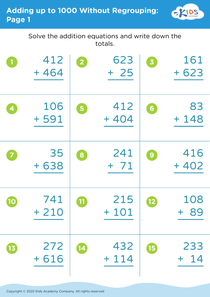
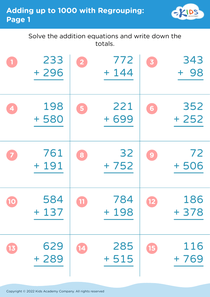
Explore a collection of diverse worksheets designed to help third graders master comparing fractions and adding numbers up to 1000. These engaging activities from Kids Academy combine fun with educational rigor, offering a variety of challenges such as fraction comparisons, mixed numbers, and addition drills. Each worksheet supports skill development through practical exercises and step-by-step guidance to boost confidence in young learners. Perfect for classroom use or additional practice at home, our worksheets align with grade-level standards, ensuring students build a strong foundation in math. Enhance your child's learning journey with our comprehensive and interactive resources today!
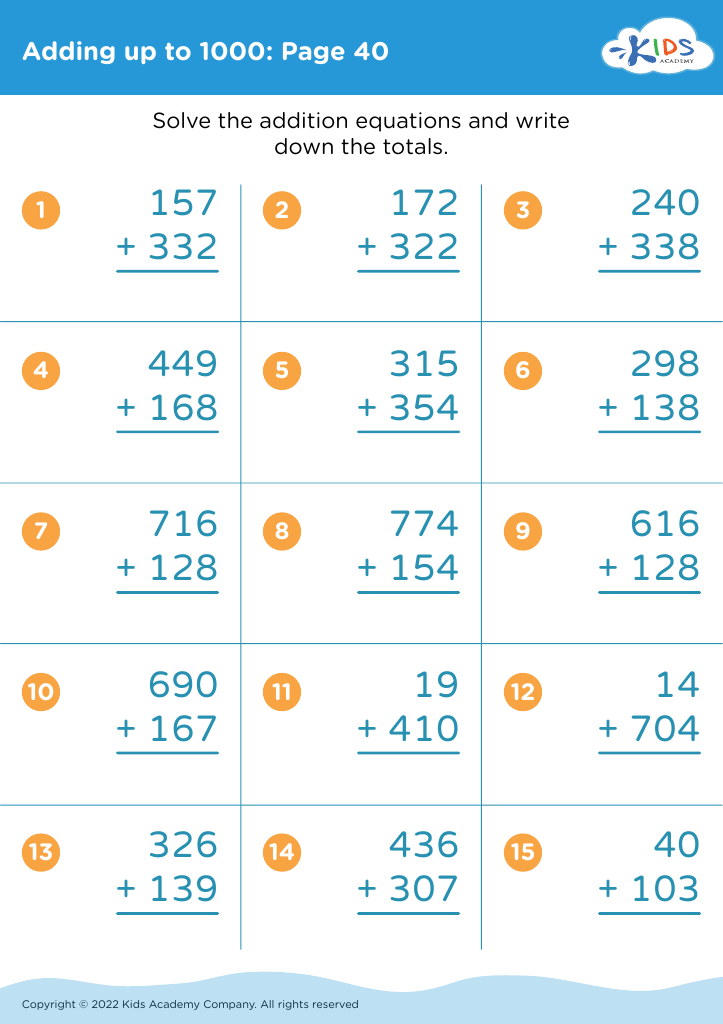
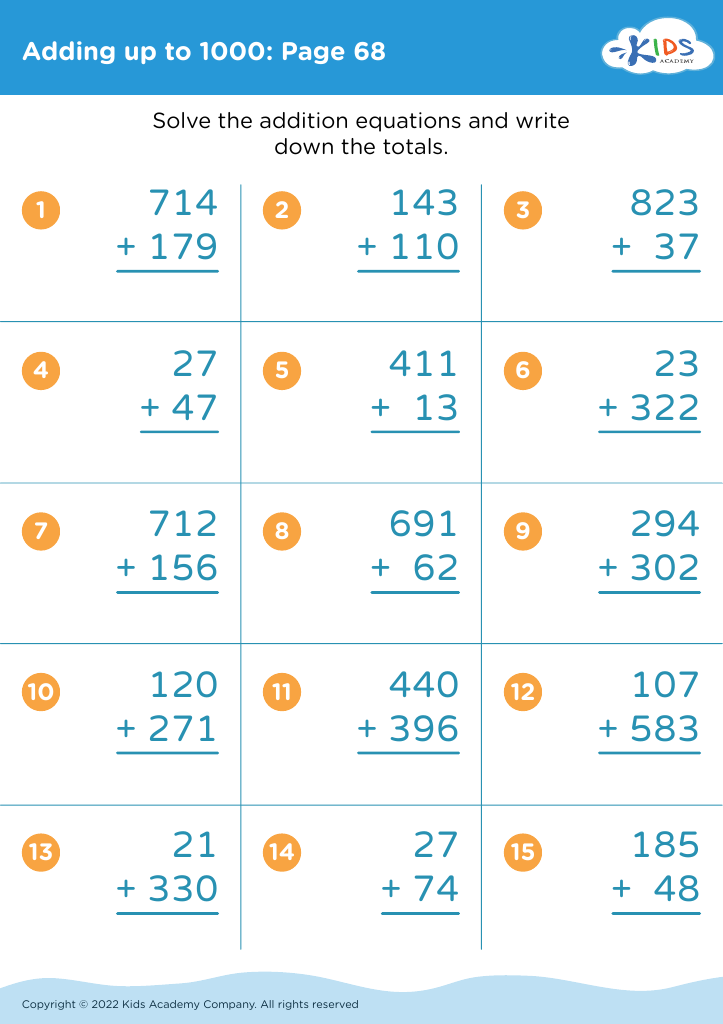
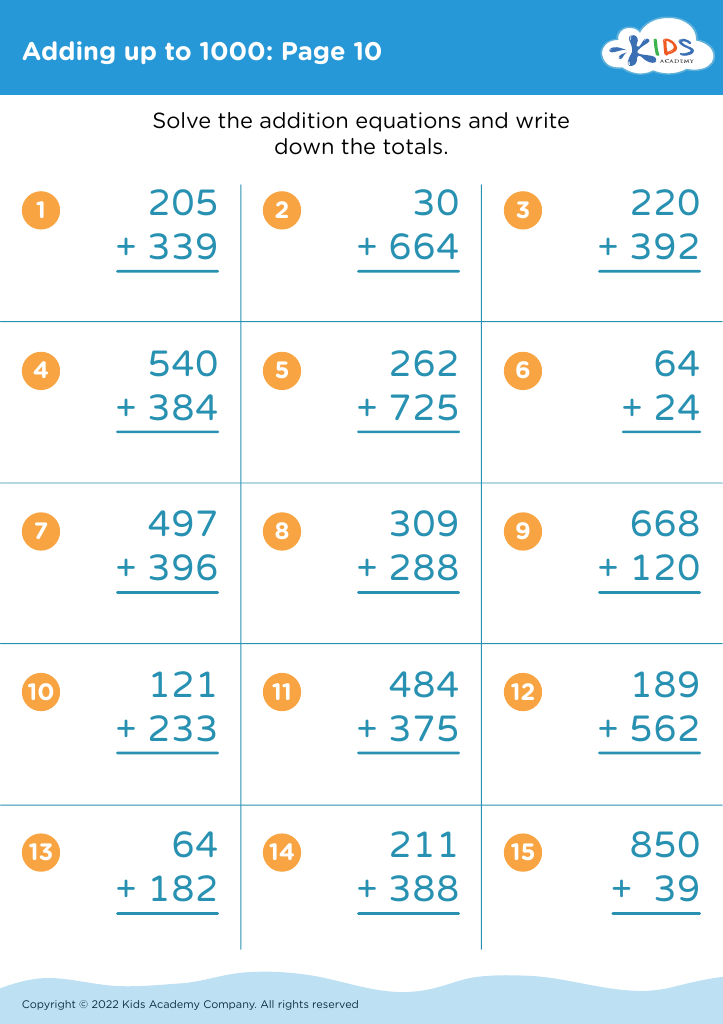
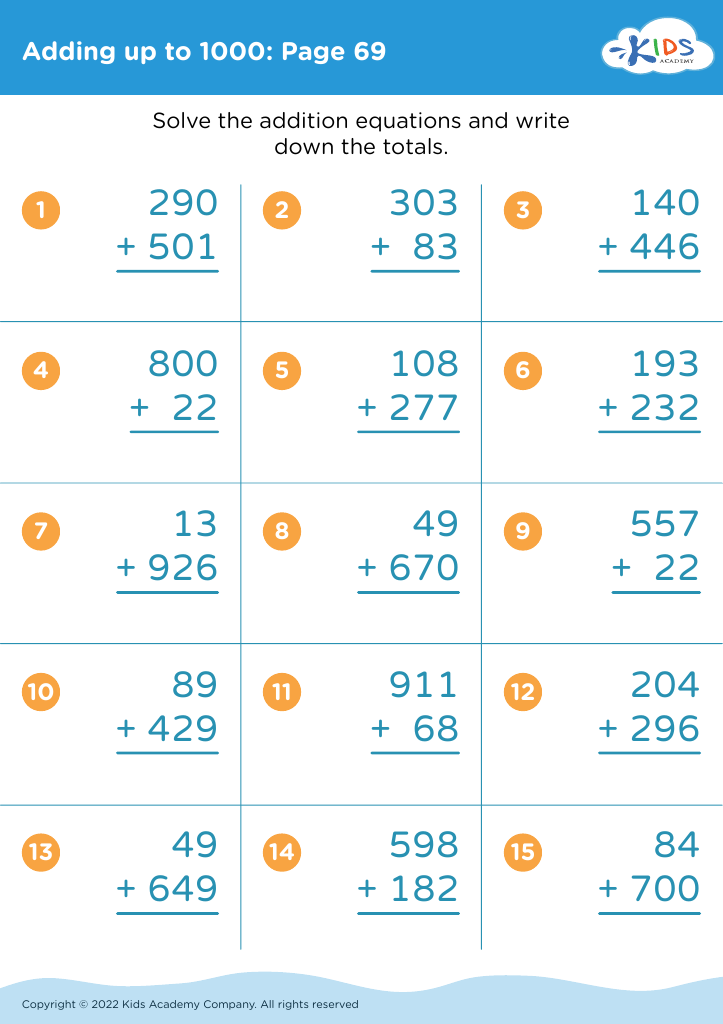
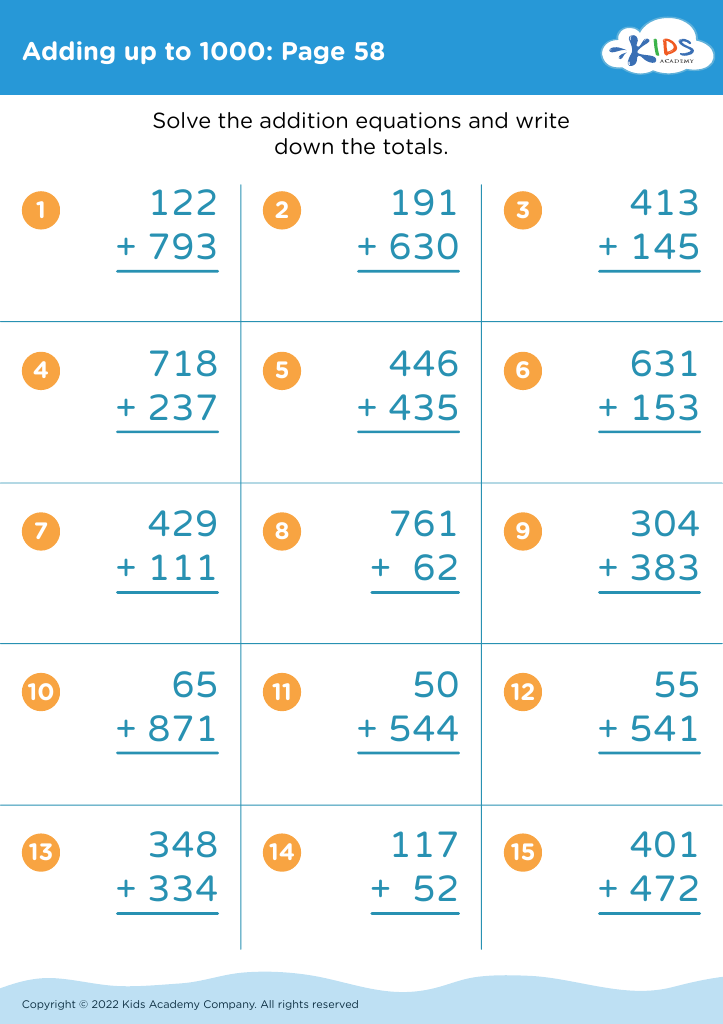


Understanding fractions and addition up to 1,000 are foundational math skills critical for third-grade students. When parents and teachers focus on helping students grasp comparing fractions, they enable young learners to develop a vital mathematical concept essential for more advanced topics like algebra, ratios, and proportional reasoning. Fractions represent parts of a whole and understanding how to compare them helps students interpret numerical relationships and apply them in real-world scenarios.
Adding numbers up to 1,000 enhances arithmetic fluency, which translates to quick and accurate calculations in practical situations, such as managing time and navigating finances. Mastery of these skills is linked to improved cognitive capabilities, including problem-solving, logical reasoning, and analytical thinking.
Caring about these skills also underscores the importance of confidence in mathematics. As students successfully navigate core math concepts, their self-esteem in their academic abilities grows, fostering a positive attitude towards learning. For parents and teachers, supporting these learning milestones involves providing a strong foundational base that students can build on, ensuring they are well-prepared for ongoing educational challenges. Engaging students with these concepts through supportive and interactive activities ensures they remain motivated and gain a lifelong appreciation for mathematics.