Counting practice Grade 3 Adding up to 1000 Misc Worksheets
8 filtered results
-
From - To
Enhance your Grade 3 students' math skills with our engaging "Counting Practice: Adding Up to 1000" worksheets! Designed to make learning fun, these miscellaneous worksheets cover a variety of counting exercises tailored for young learners. Students will practice addition, develop number sense, and improve their ability to count up to 1000 through interactive activities. Ideal for classroom work or at-home practice, these resources support a diverse range of learning styles and abilities. Download now to provide your students with the tools they need to build confidence and mastery in their math skills, paving the way for future academic success!
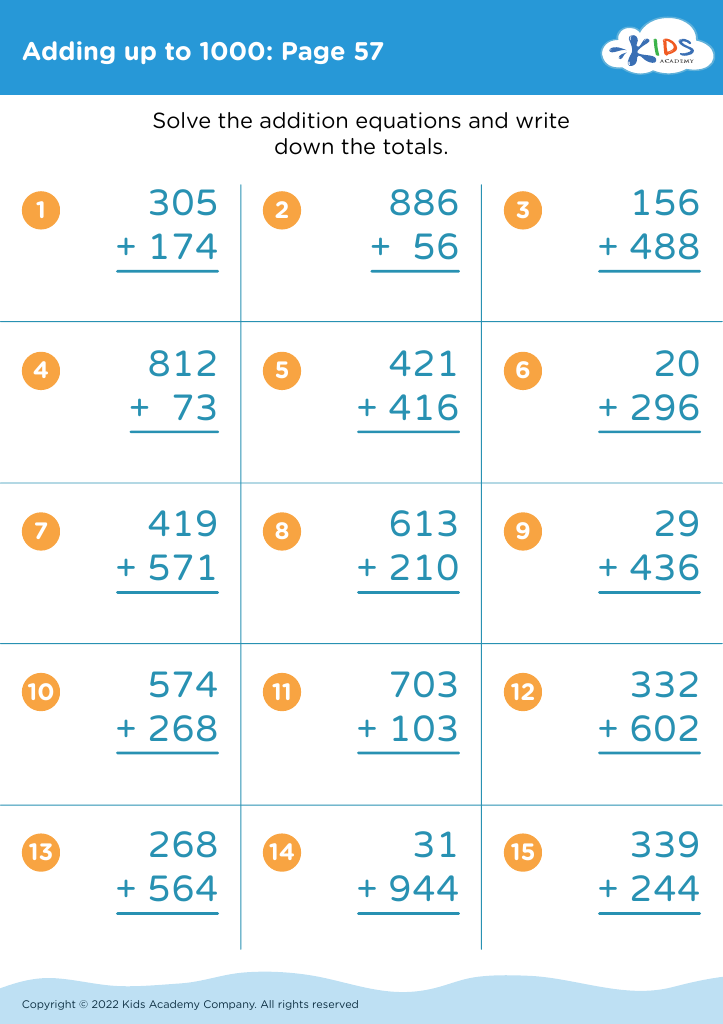
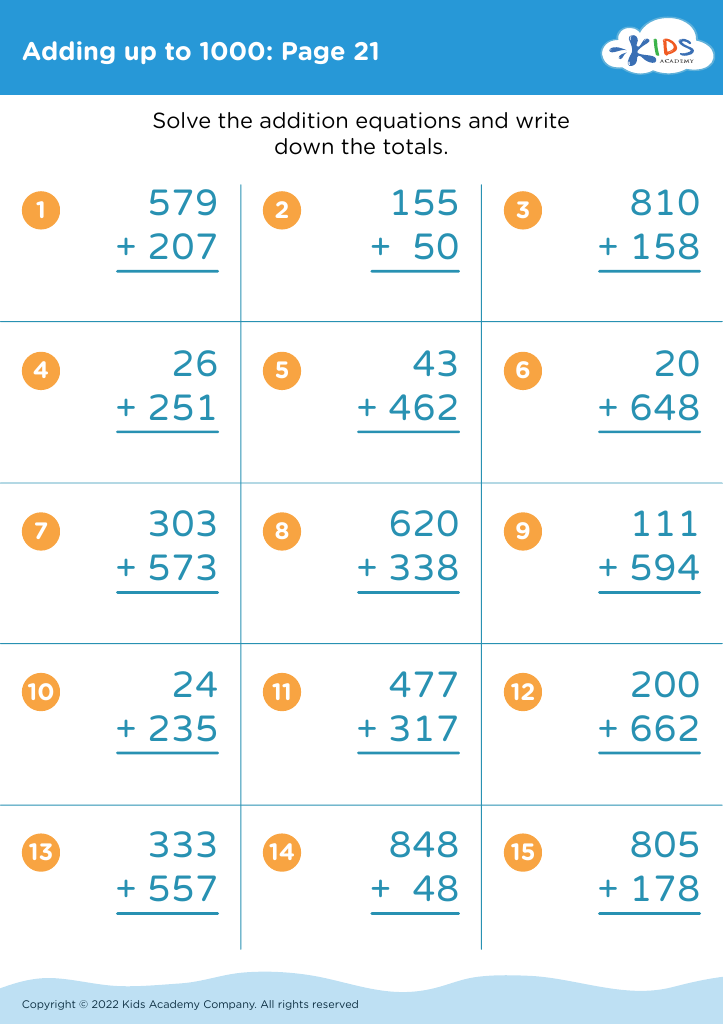
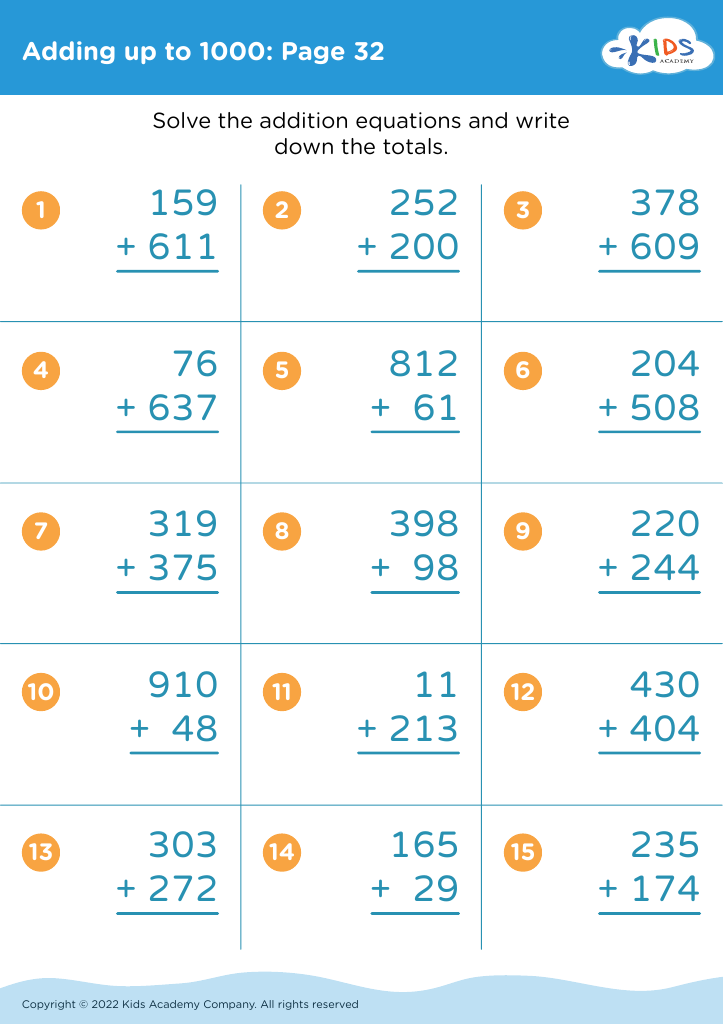
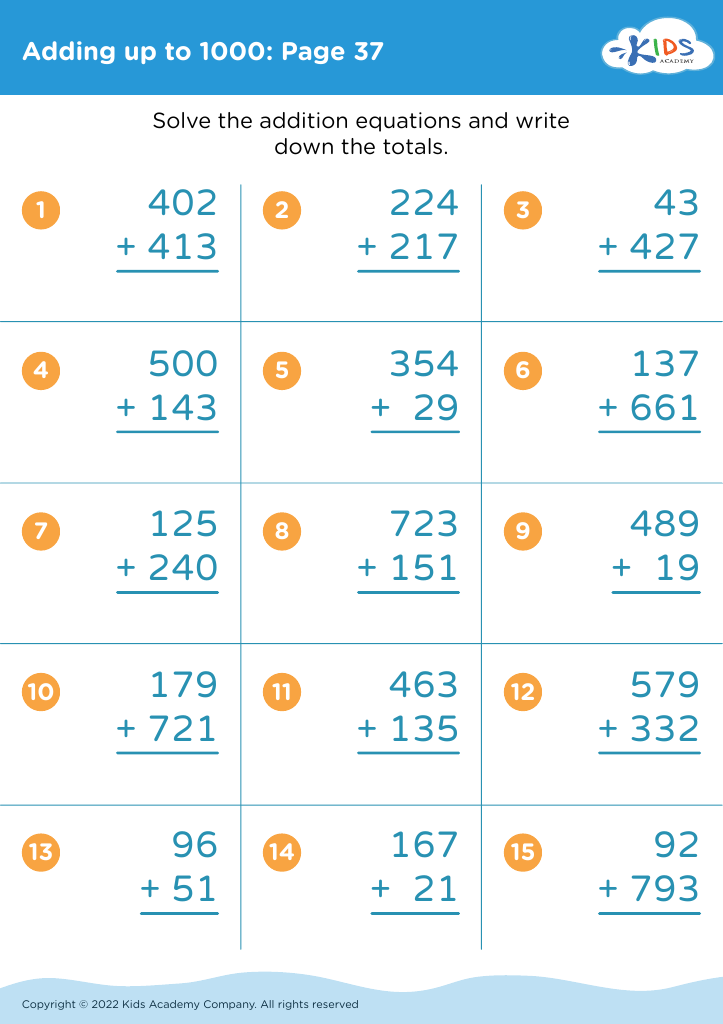
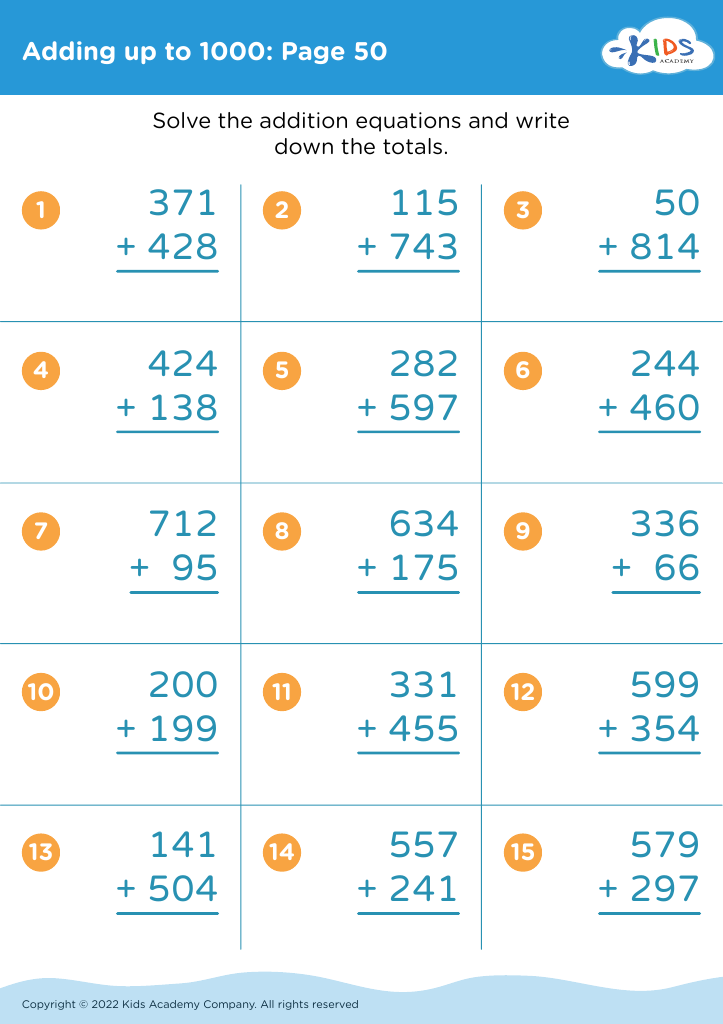
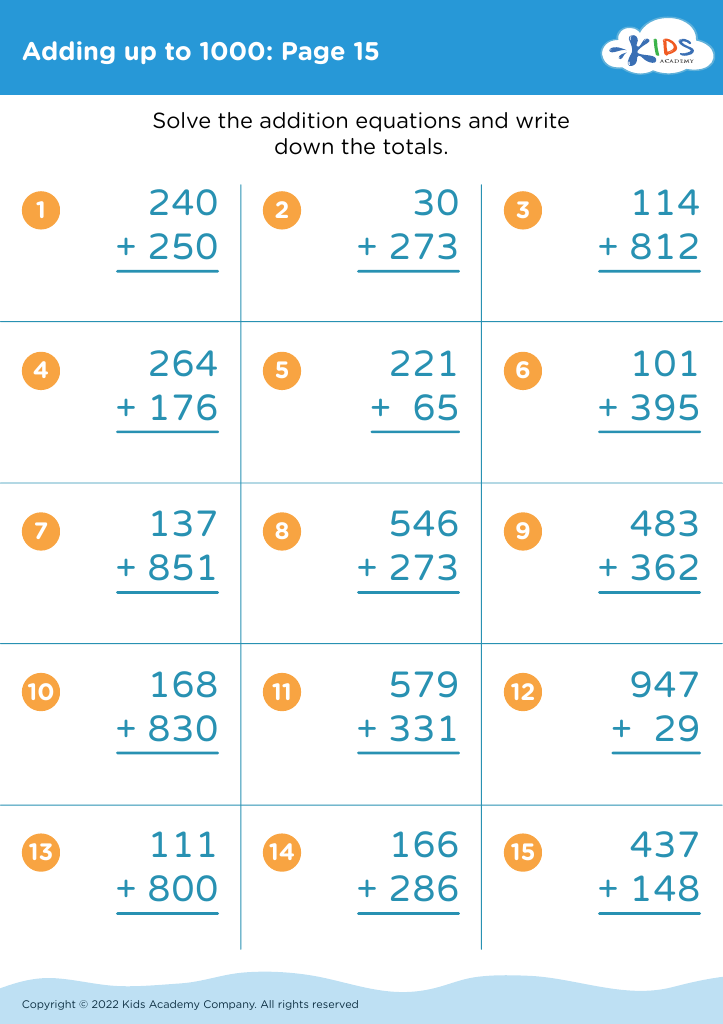
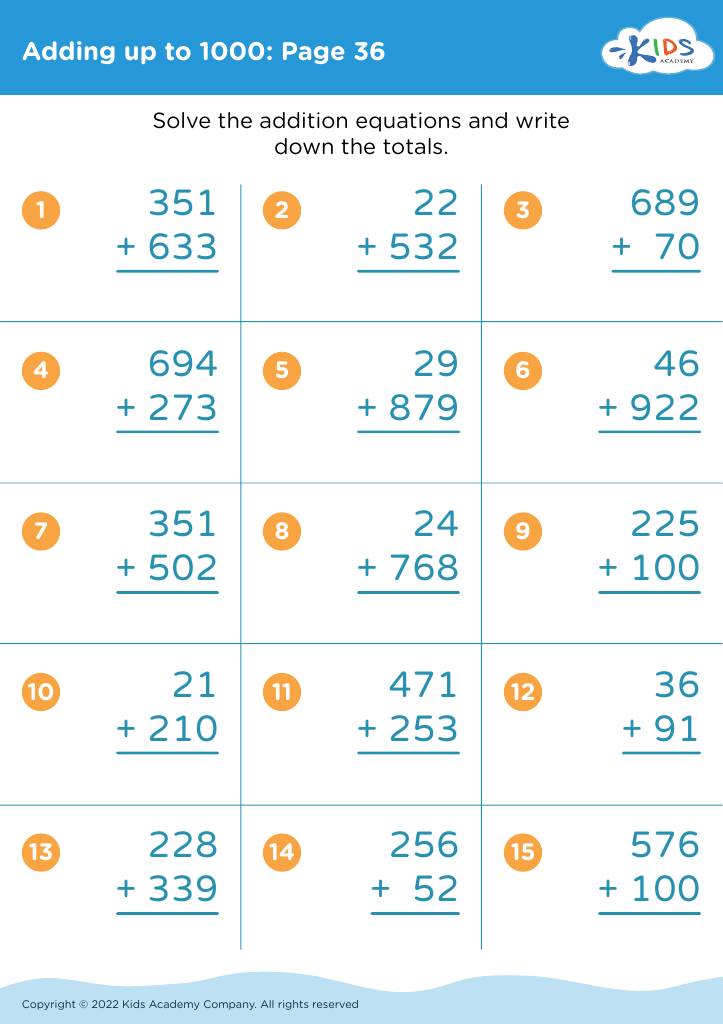
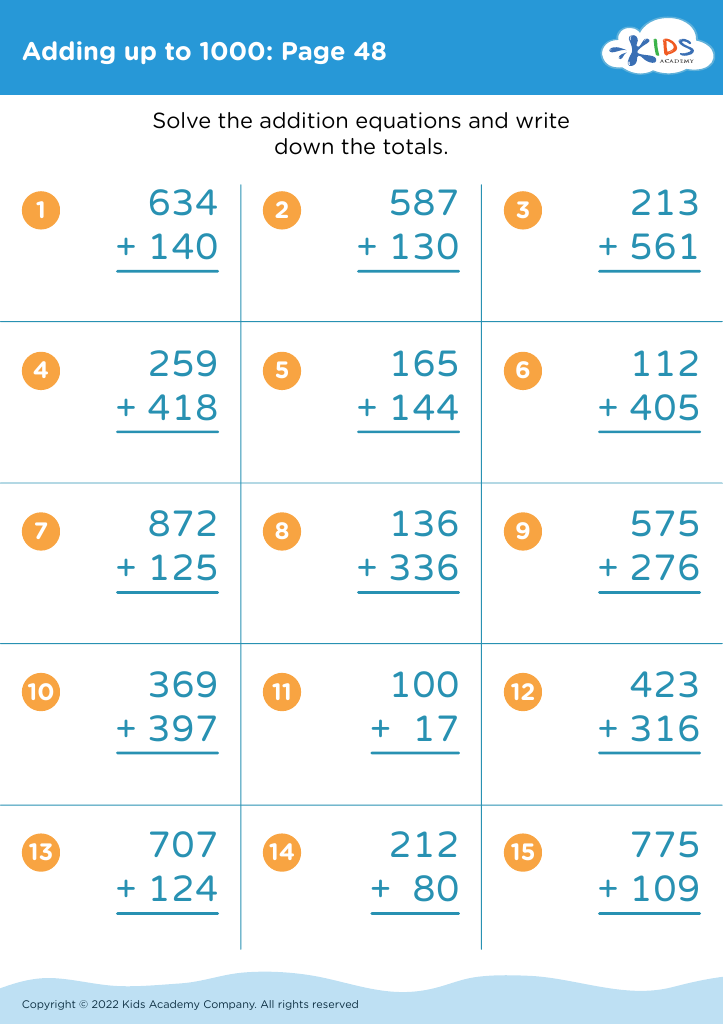


Counting practice for Grade 3, particularly in adding up to 1000, is essential for several reasons. First, it lays a foundational understanding of numbers that is crucial for future mathematical learning. At this age, students transition from simple addition to more complex operations, and having a strong grasp of adding numbers up to 1000 enhances their confidence and competence.
Second, counting practice develops essential cognitive skills, such as problem-solving and critical thinking. Children learn to recognize patterns in numbers, which helps in understanding concepts like place value. Mastering these skills fosters a sense of achievement and contributes to positive attitudes toward mathematics.
Moreover, teachers and parents should be aware that consistent practice encourages a growth mindset. As students tackle progressively challenging problems, they learn persistence and resilience. This not only builds mathematical skills but also instills essential life skills.
Finally, integrating counting exercises into daily routine can make learning enjoyable. It can enrich interactions between parents and children, reinforcing connection and collaboration. When parents engage in discussions about counting, it reinforces their children’s learning, demonstrating that math is not only necessary but also applicable in everyday life. Thus, prioritizing counting practice is beneficial for holistic child development.