Critical Thinking Grade 3 Adding up to 1000 Misc Worksheets
3 filtered results
-
From - To
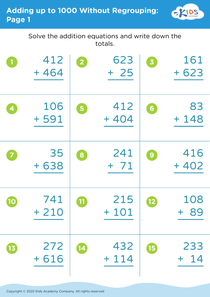
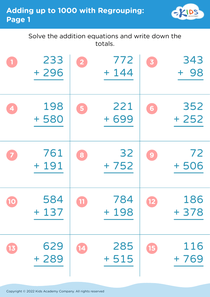
Enhance your third grader's critical thinking and math skills with our "Critical Thinking Grade 3 Adding up to 1000 Misc Worksheets." These engaging, printable worksheets challenge students to solve a variety of addition problems up to 1000. Designed to promote analytical thinking, the exercises require learners to apply logic, recognize patterns, and understand the principles behind addition. Perfect for classroom use or at-home practice, these worksheets make mastering math both fun and educational. Give your child the tools they need to succeed in math and beyond with these skill-enhancing resources. Visit us today to download and get started!
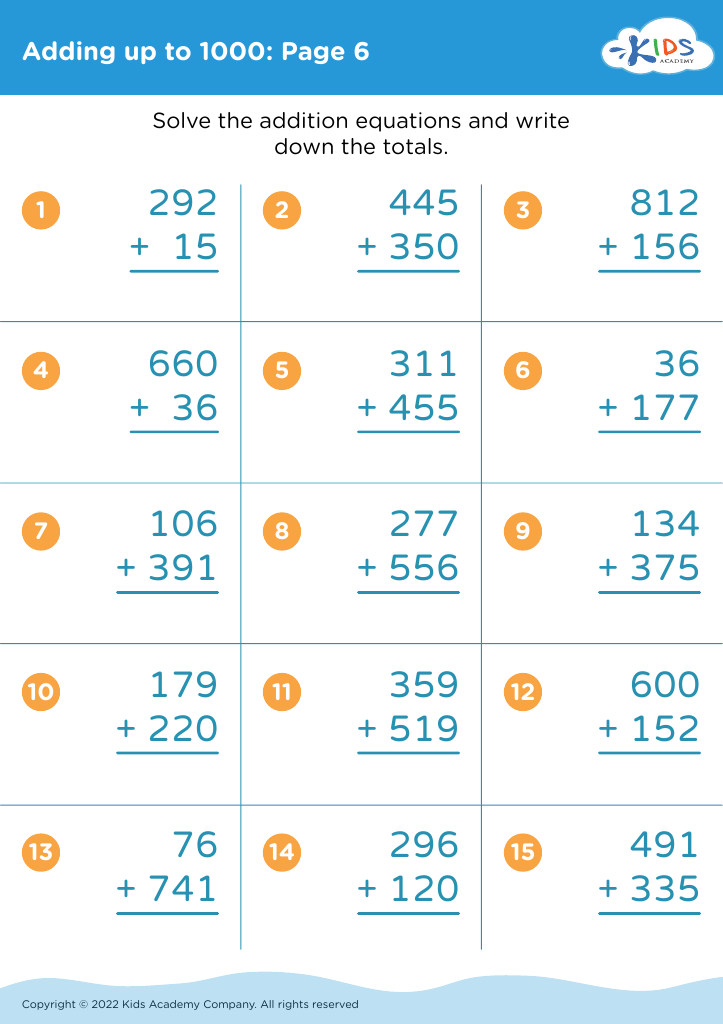
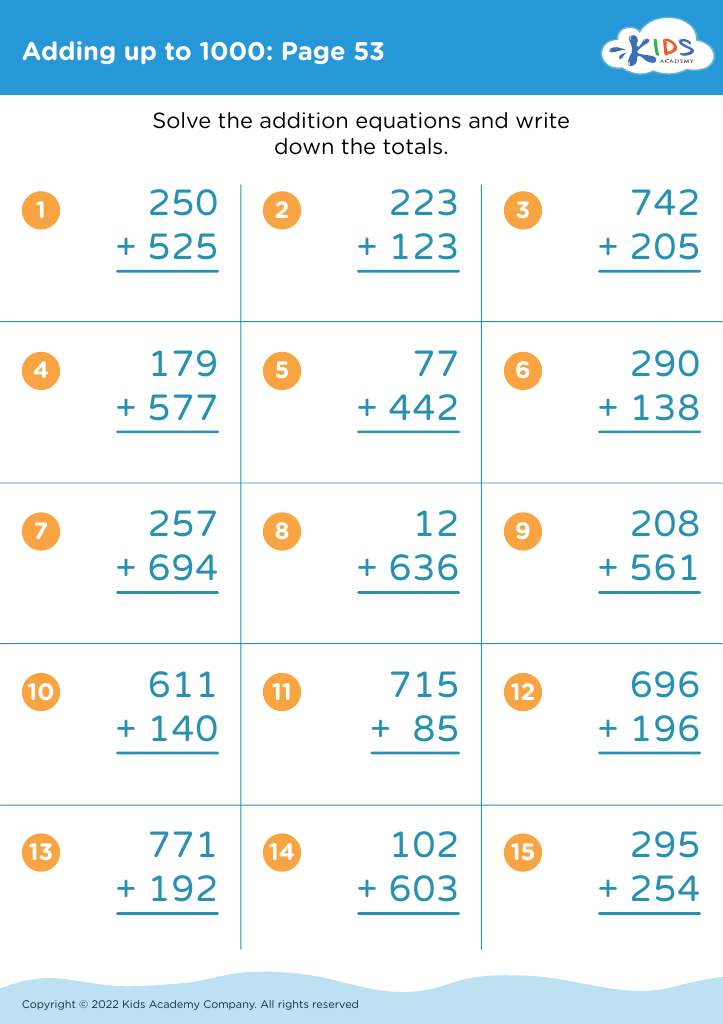
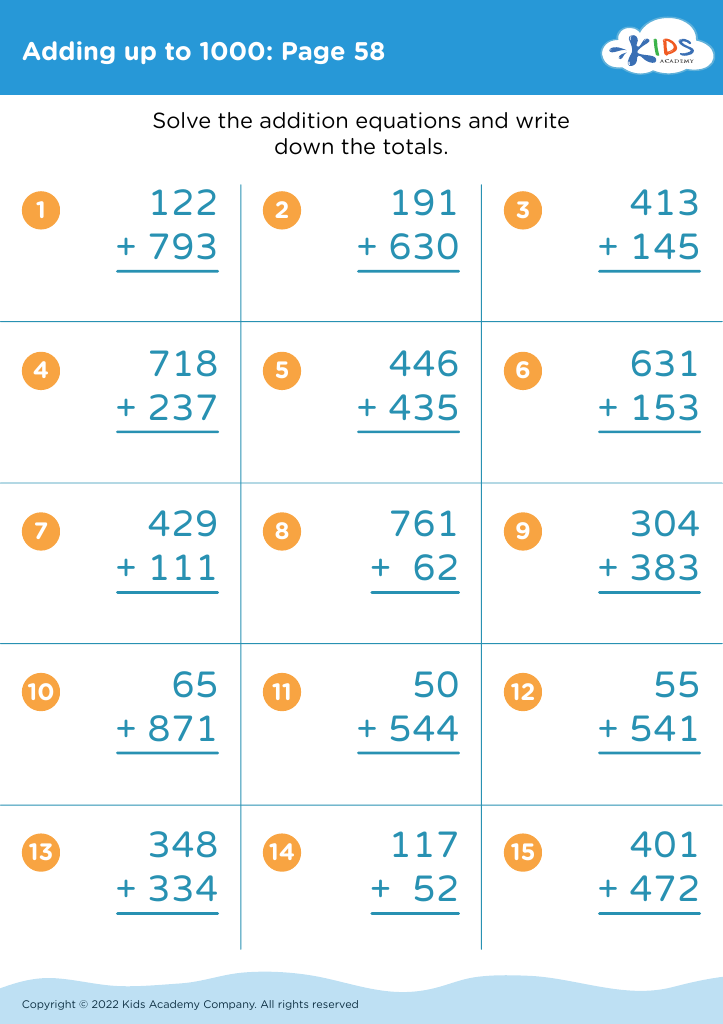


Parents and teachers should prioritize critical thinking in Grade 3, especially in subjects like math that involve adding up to 1000, because it fosters a deeper understanding beyond memorizing facts. At this developmental stage, children are just beginning to grasp more complex concepts and relationships between numbers, making it prime time to instill critical thinking skills.
Encouraging critical thinking in math helps children understand the "why" behind the operations. When kids understand why certain numbers add up to a larger one, they become more adept at debugging mistakes and approaching problems from different angles. This prepares them for more advanced math and problem-solving in later grades.
Critical thinking also boosts self-confidence. When children can solve problems on their own, they believe in their abilities, making them more likely to take on challenging tasks without fear. Additionally, these skills are transferable; children who think critically in math often apply these skills in other areas like reading comprehension and science.
Incorporating critical thinking exercises into math classrooms encourages active learning and fosters resilience. It's not just about getting the right answer, but about the journey to understanding, making young learners more engaged, curious, and independent—tools essential for lifelong learning.
In essence, embedding critical thinking into math studies at a young age sets a solid foundation for both academic and personal growth, making it an invaluable focus for both parents and teachers.