Fine Motor Skills Grade 3 Adding up to 1000 Misc Worksheets
5 filtered results
-
From - To
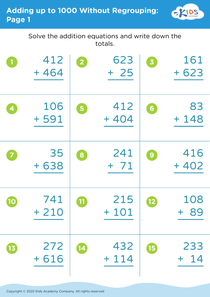
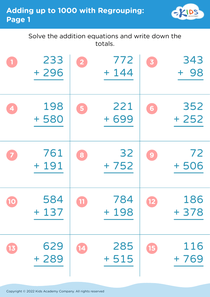
Unlock your child's potential with our "Fine Motor Skills Grade 3 Adding up to 1000 Misc Worksheets”. Specifically designed to enhance students' addition skills up to 1000, these worksheets are a valuable resource to improve their fine motor skills as they write, trace, and solve mathematical problems. Perfectly tailored for third graders, the engaging activities aid in building both mathematical competency and fine motor precision. These misc worksheets serve as an excellent supplement to classroom learning or as enjoyable practice at home, making math fun and accessible. Prepare your child for success with Kids Academy’s tailored educational tools.
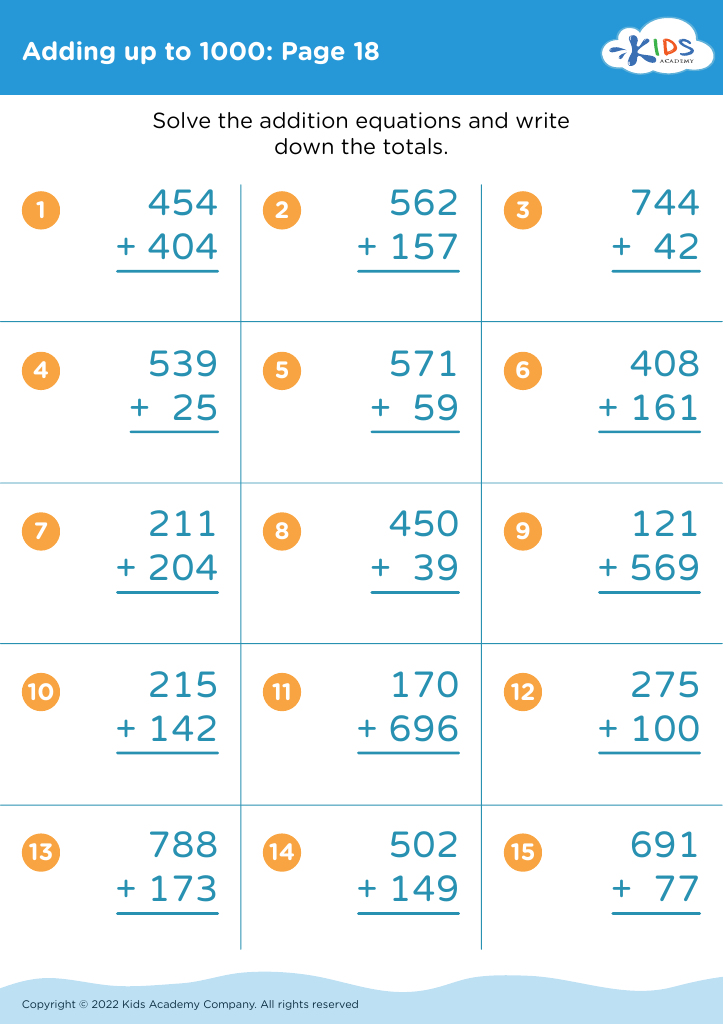
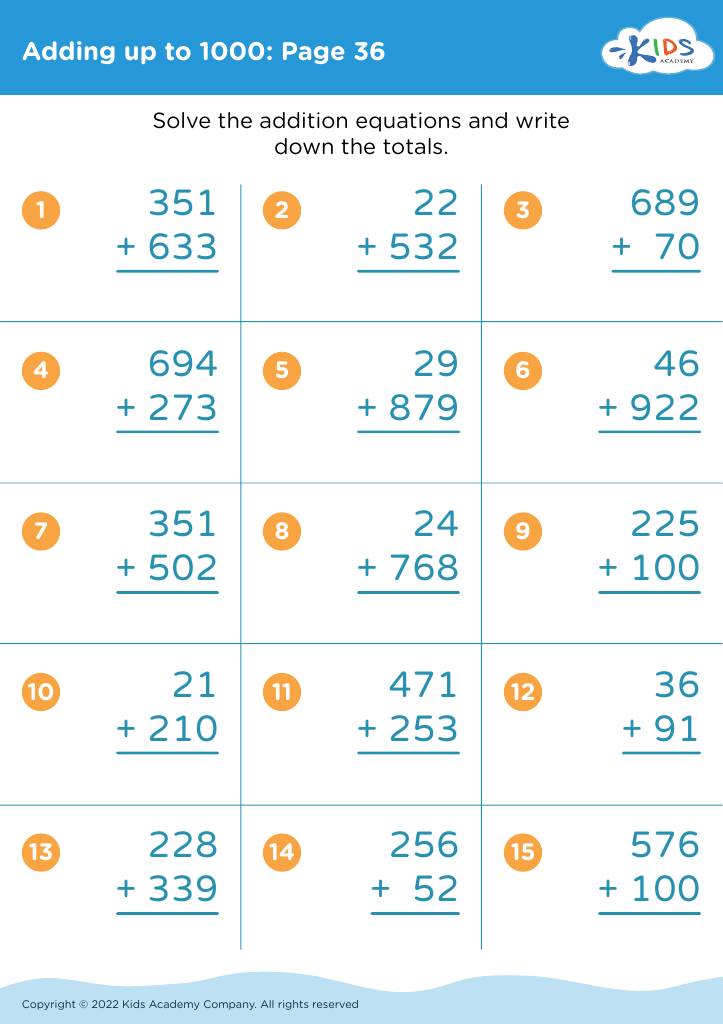
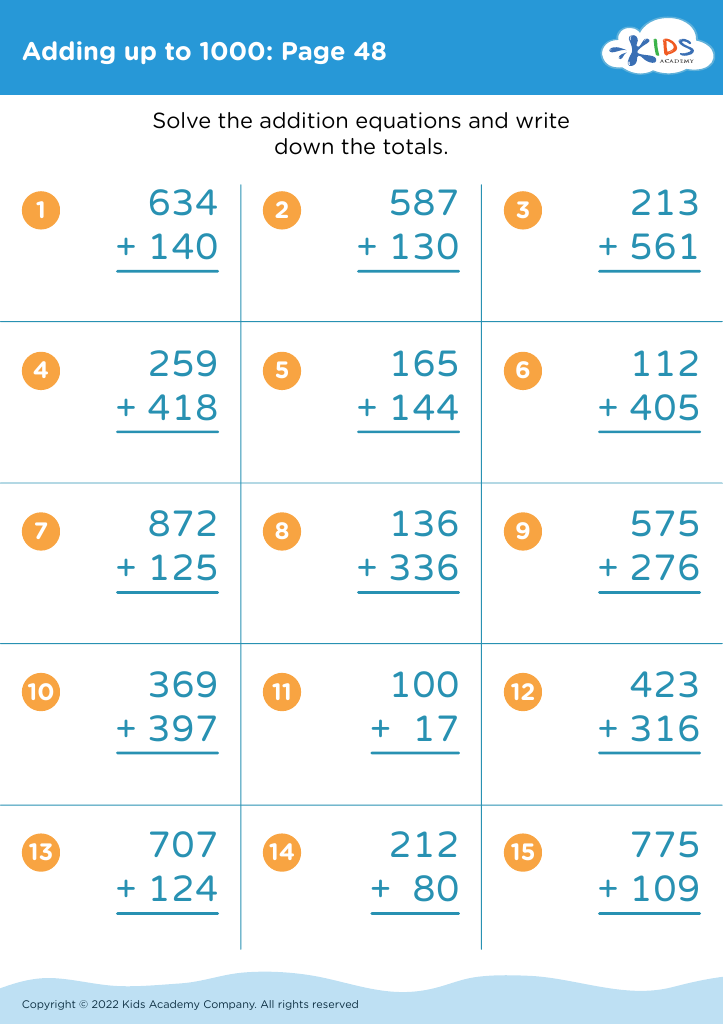


Parents and teachers should care about developing fine motor skills in Grade 3 students because these skills are foundational for both academic success and daily life activities. Fine motor skills involve the coordination of small muscles, particularly in the hands and fingers, enabling children to perform precise actions. These skills are critical in Grade 3 as students are required to handle more complex tasks, such as writing longer texts, solving math problems, and manipulating small objects.
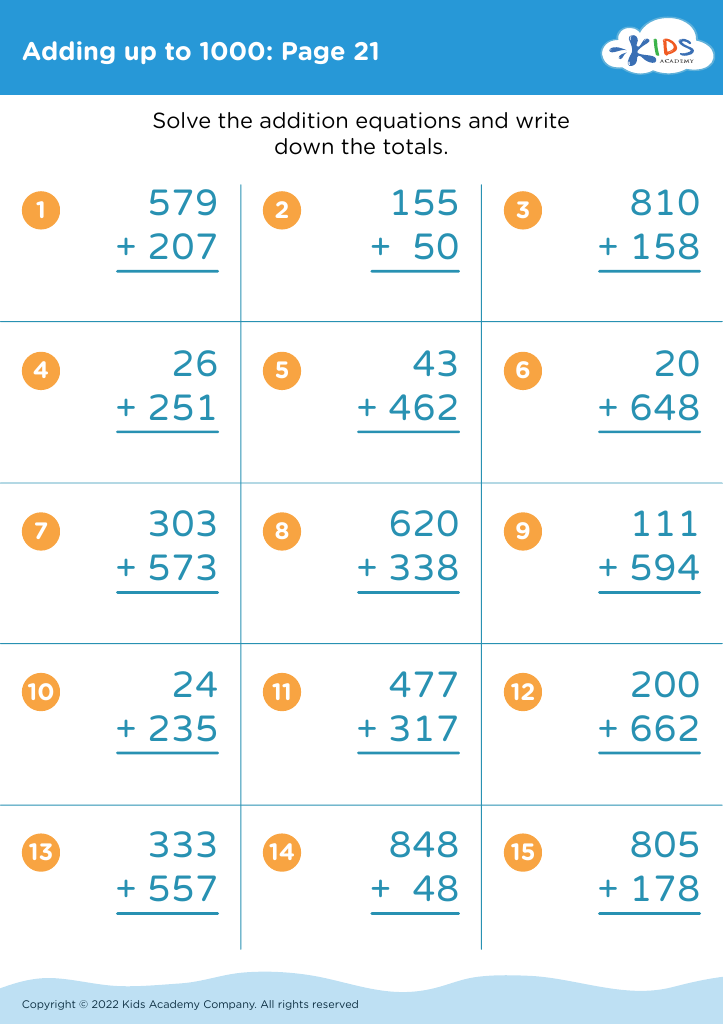
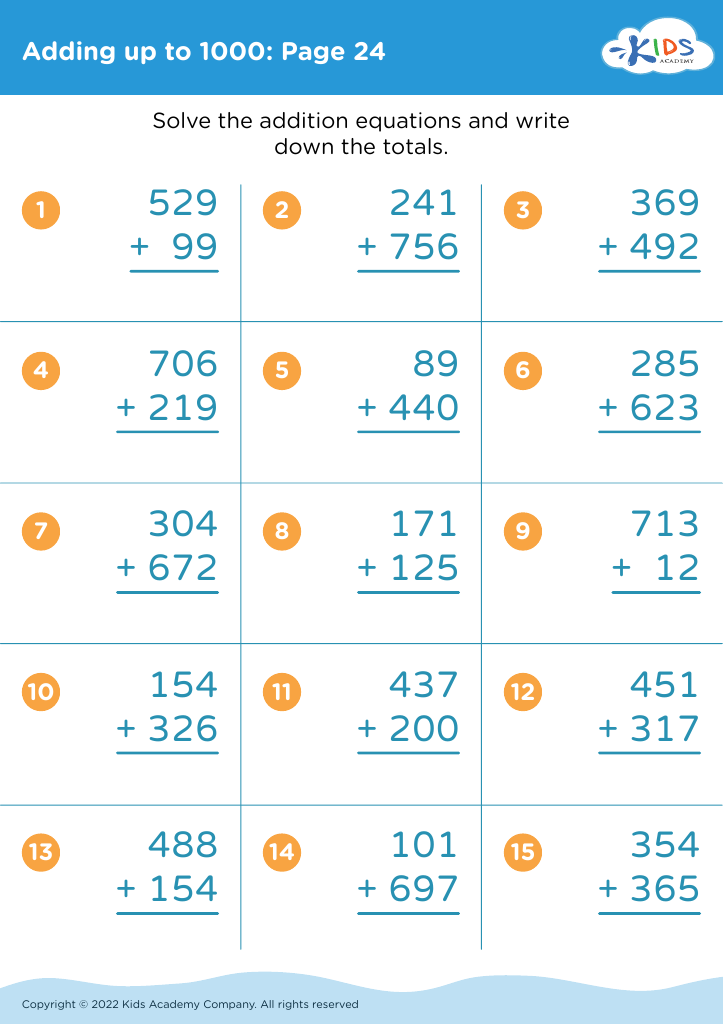
When working on activities like adding up to 1000, fine motor skills come into play as students must be able to hold a pencil correctly, write legibly, and align numbers accurately. Poor fine motor control can lead to difficulties in these areas, causing frustration and impacting academic performance. Moreover, strong fine motor skills support autonomy and confidence. Tasks like cutting shapes, typing on a keyboard, or even tying shoelaces become more manageable, fostering a sense of independence.
In summary, focusing on fine motor skills ensures that students are not hindered by physical coordination challenges. It enables smoother academic development and prepares them for future tasks, both in school and in their everyday lives, thus underscoring their well-rounded growth and success.