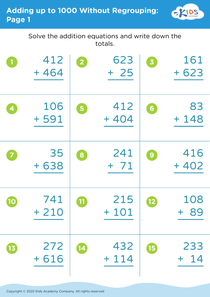
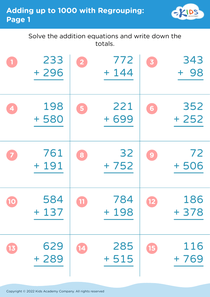
Improve math skills Grade 3 Adding up to 1000 Misc Worksheets
3 filtered results
-
From - To
Enhance your third grader’s math proficiency with our “Improving Math Skills: Adding Up to 1000” worksheets. Designed to engage and challenge, these miscellaneous worksheets help students practice addition and develop problem-solving skills in a fun and interactive way. Covering various aspects of addition, these activities facilitate a deeper understanding of numbers up to 1000. Each worksheet provides opportunities for independent practice and reinforcement, making math mastery a rewarding experience. Ideal for use at home or in the classroom, our resources ensure kids become confident in their math abilities, setting a solid foundation for future learning. Start exploring today!
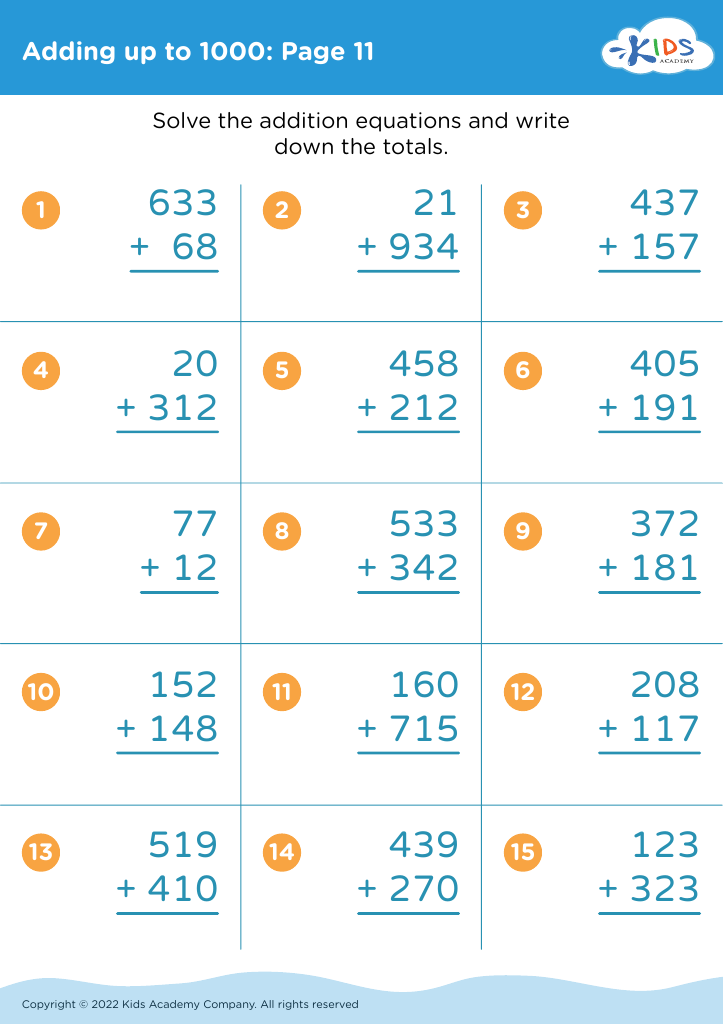
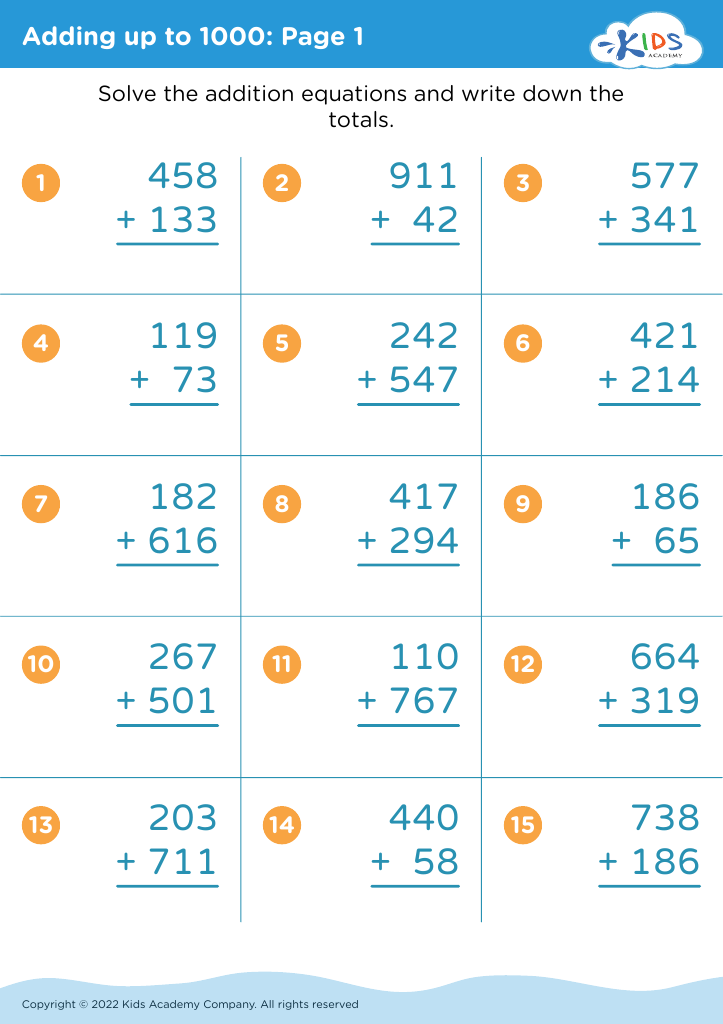
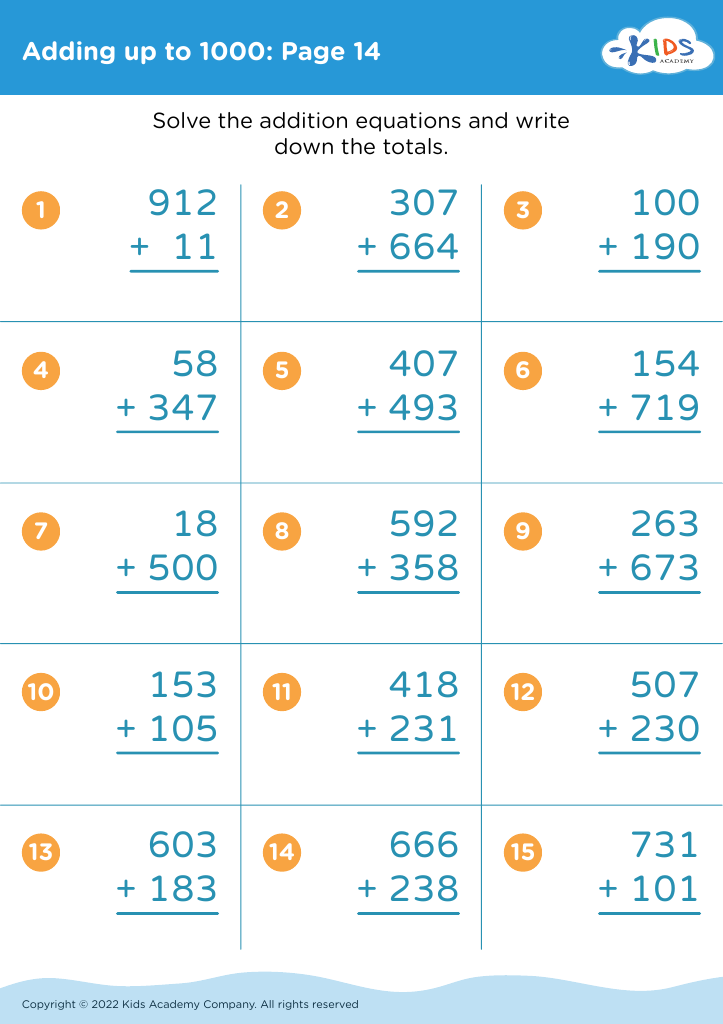


Improving math skills, especially in Grade 3, is crucial for a child's overall academic success and confidence. Mastering addition concepts up to 1000 not only lays a solid foundation for future mathematical concepts but also enhances problem-solving abilities critical for everyday life.
For parents and teachers, supporting children in developing these skills helps them foster essential cognitive abilities, including logical thinking, reasoning, and pattern recognition. As students tackle addition up to 1000, they learn to manipulate numbers and apply strategies like regrouping and carrying, allowing them to efficiently solve more complex mathematical problems later on.
Additionally, strong math skills can boost a child's self-esteem. When children experience success in mathematics, it encourages a positive attitude toward learning in general. In today's technology-driven world, quantitative literacy is increasingly valuable, making it essential for children to achieve proficiency early on.
Furthermore, collaborative learning—when parents and teachers work together to support students—can enhance these positive outcomes. By prioritizing improvements in addition skills, we can empower young learners to thrive academically and savor the challenges of future mathematics courses with confidence.