Comparing Fractions Grade 3 Adding up to 1000 with Regrouping Worksheets
8 filtered results
-
From - To
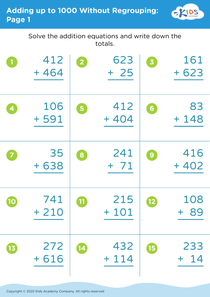
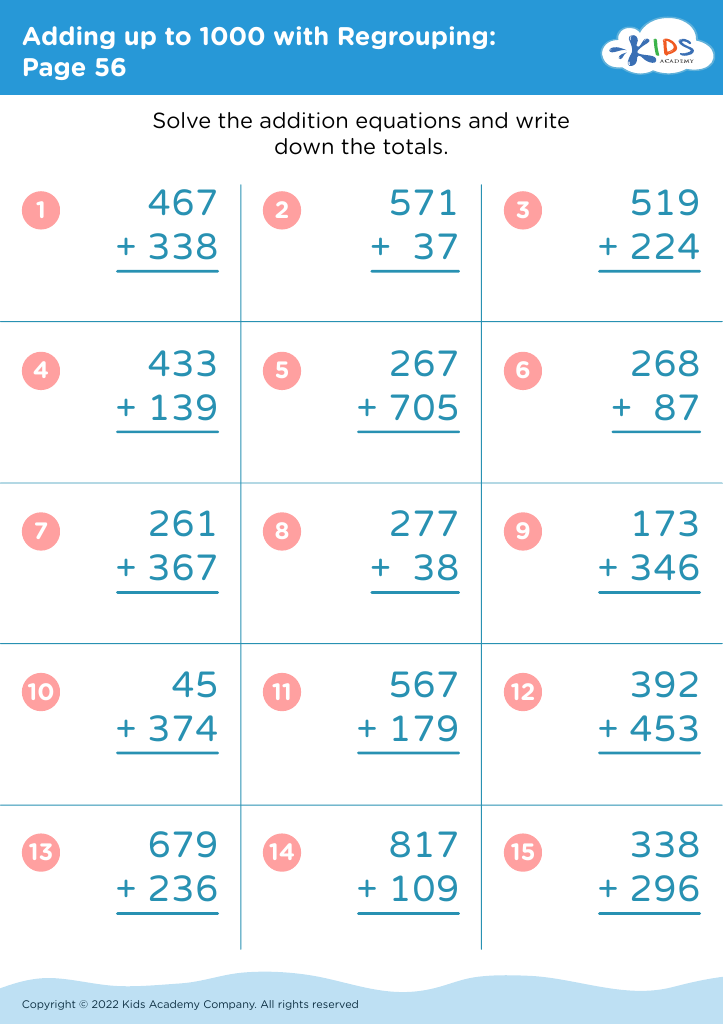
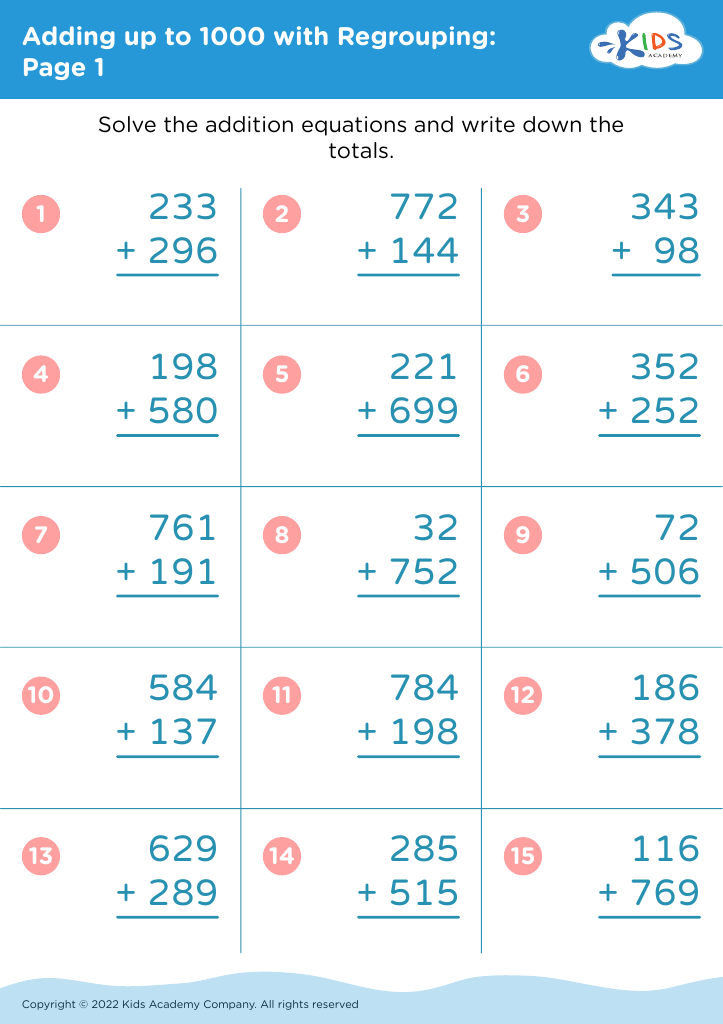
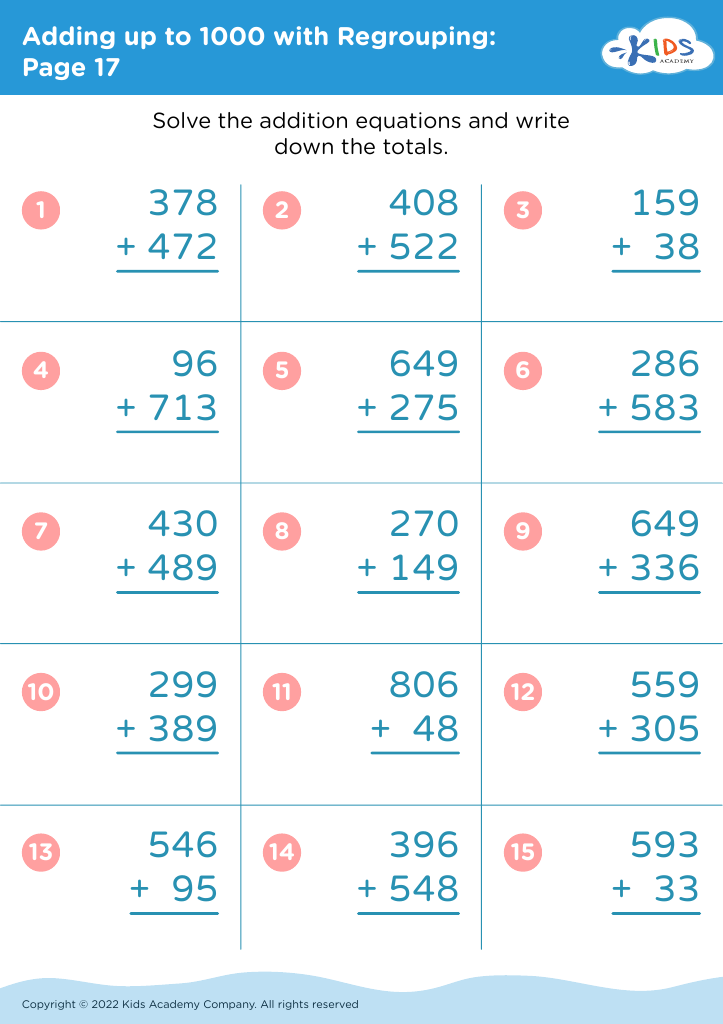
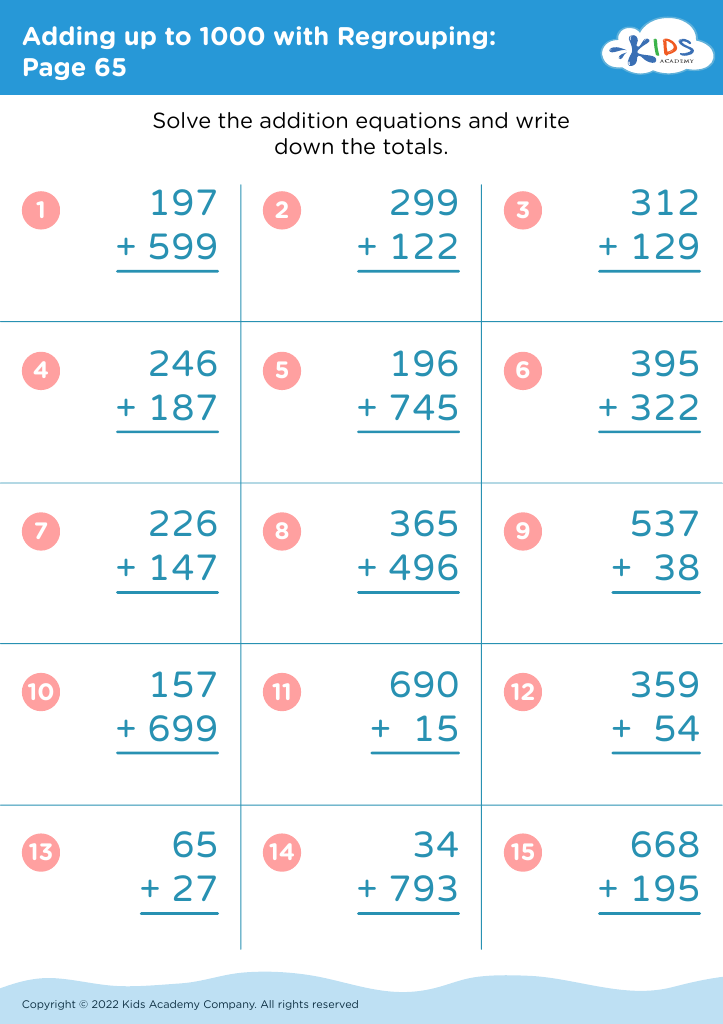
Introducing our dynamic "Comparing Fractions Grade 3 Adding up to 1000 with Regrouping Worksheets", designed specifically for third graders to master two essential skills. These worksheets offer engaging exercises to compare fractions visually and numerically, ensuring a solid understanding of fractional concepts. Additionally, students will practice adding numbers up to 1000 with regrouping, enhancing their addition skills. Our printable worksheets stimulate critical thinking, build confidence, and support deeper mathematical comprehension. Perfect for classroom activities or home learning, these resources will help your child excel in math while making learning enjoyable and fulfilling. Download now to jumpstart their success!
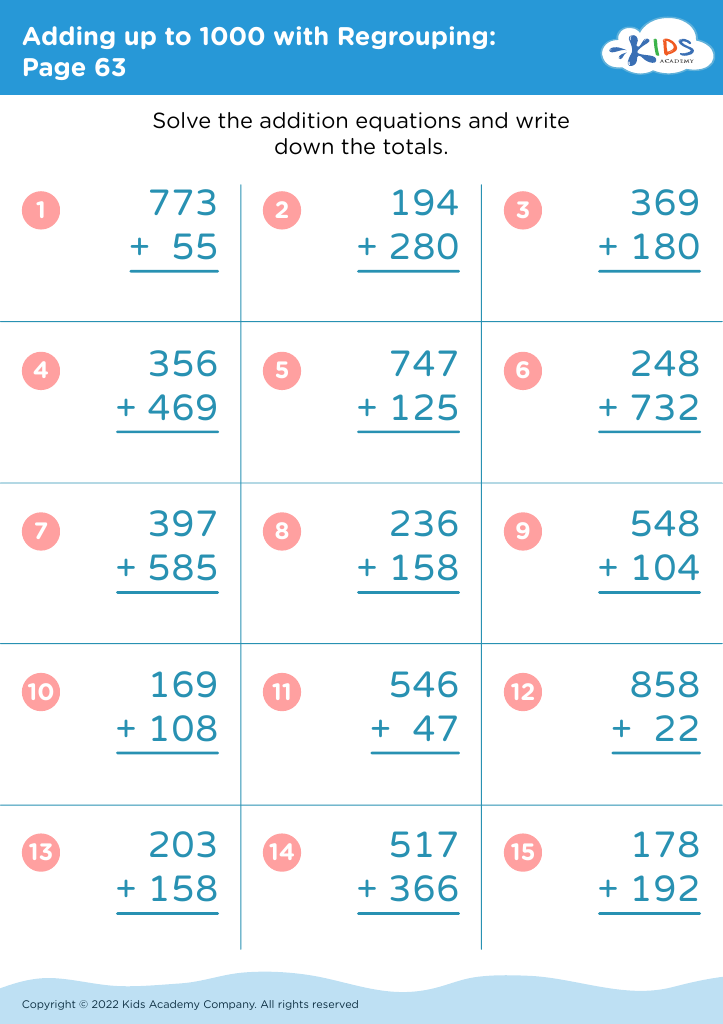
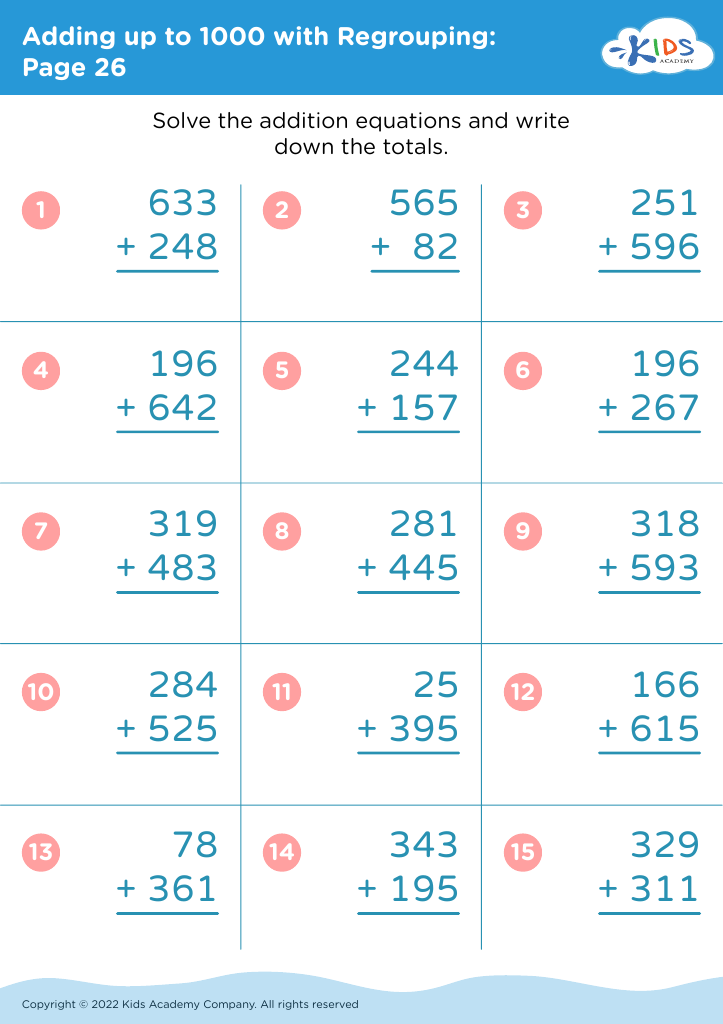
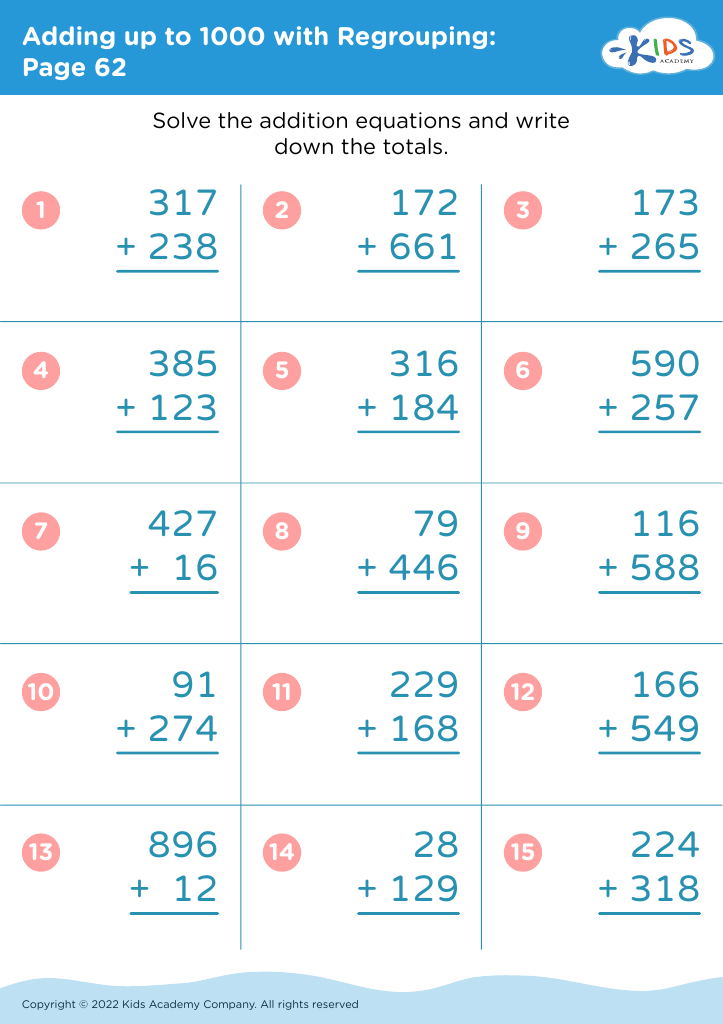
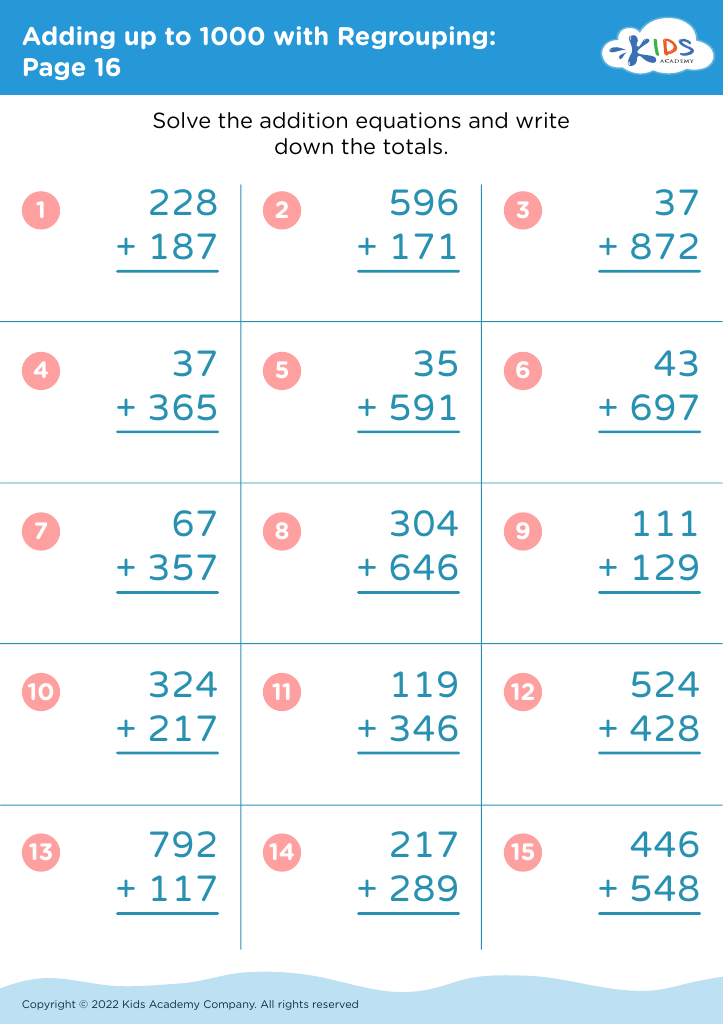


Parents and teachers should care about these key concepts because they build the foundation for mathematical proficiency and number sense, crucial skills for young learners. Comparing fractions, for example, helps children understand parts of a whole and how values relate to each other, enhancing their critical thinking and problem-solving abilities. Fractions are prevalent in everyday life, such as cooking or time management, making this knowledge practical as well as academic.
Adding up to 1000 with regrouping, on the other hand, promotes a solid grasp of place value and arithmetic skills. Mastering addition with larger numbers helps students handle real-world tasks, like managing allowances or reading large quantities in texts. This skill also prepares students for more complex mathematical operations they'll encounter in higher grades, such as multiplication, division, and algebra.
Both concepts underscore the importance of developing both accuracy and efficiency in calculations. Knowledgeable and confident in these areas, students are well-equipped to tackle more challenging mathematical problems. Parents and teachers who prioritize these concepts not only make math more relevant and engaging for children but also set the stage for academic growth and lifelong numeracy skills.