Fine Motor Skills Grade 3 Adding up to 1000 with Regrouping Worksheets
4 filtered results
-
From - To
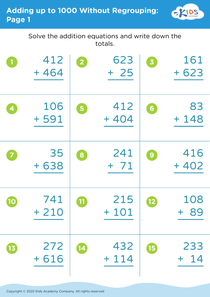
Enhance your child's fine motor skills and mathematical abilities with our "Fine Motor Skills Grade 3 Adding up to 1000 with Regrouping Worksheets." Specially designed for third graders, these worksheets focus on adding numbers up to 1000, featuring interactive regrouping exercises. Each activity promotes precision, hand-eye coordination, and keen attention to detail, crucial for developing fine motor skills. Perfect for at-home practice or classroom reinforcement, our engaging worksheets make mastering complex addition enjoyable and effective. Visit our site to download and support your third grader's academic and motor skill growth simultaneously!
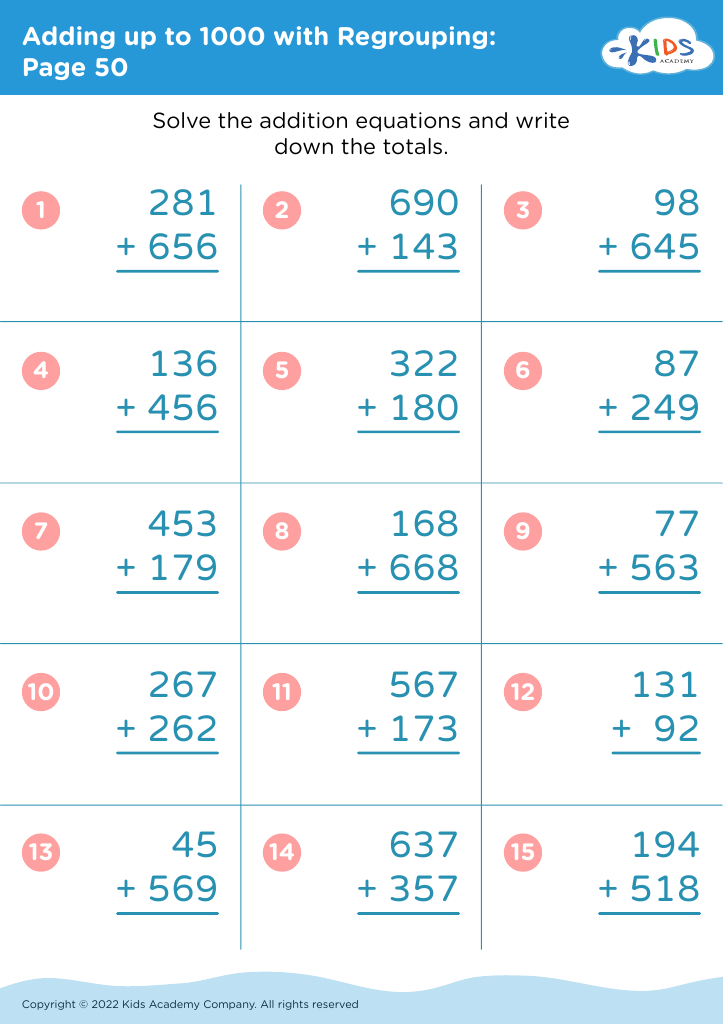
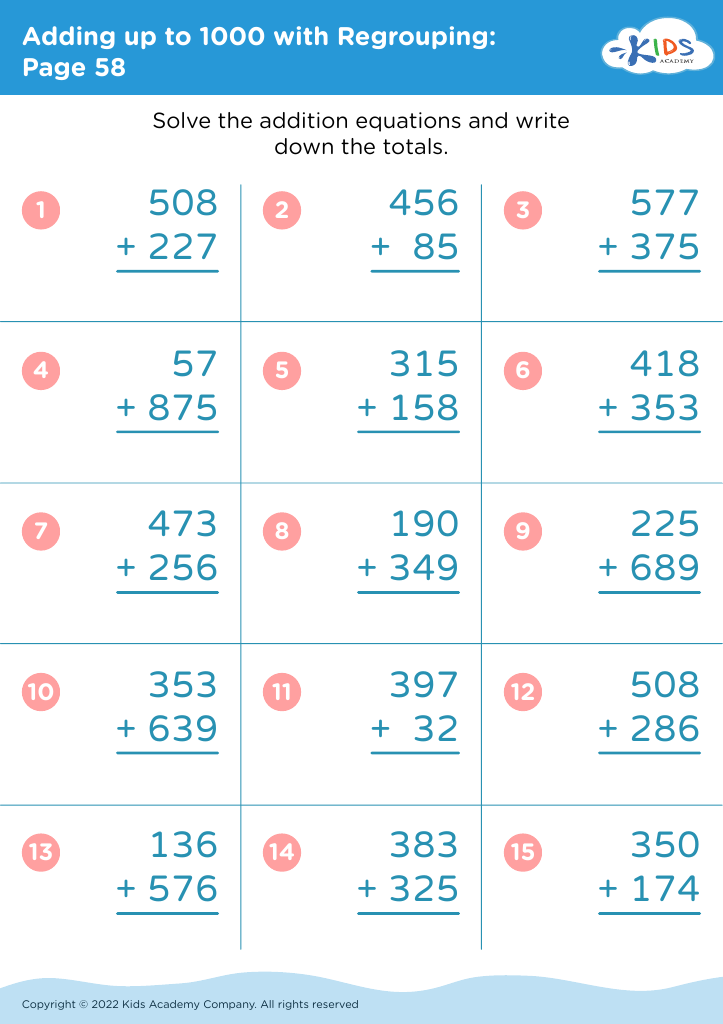
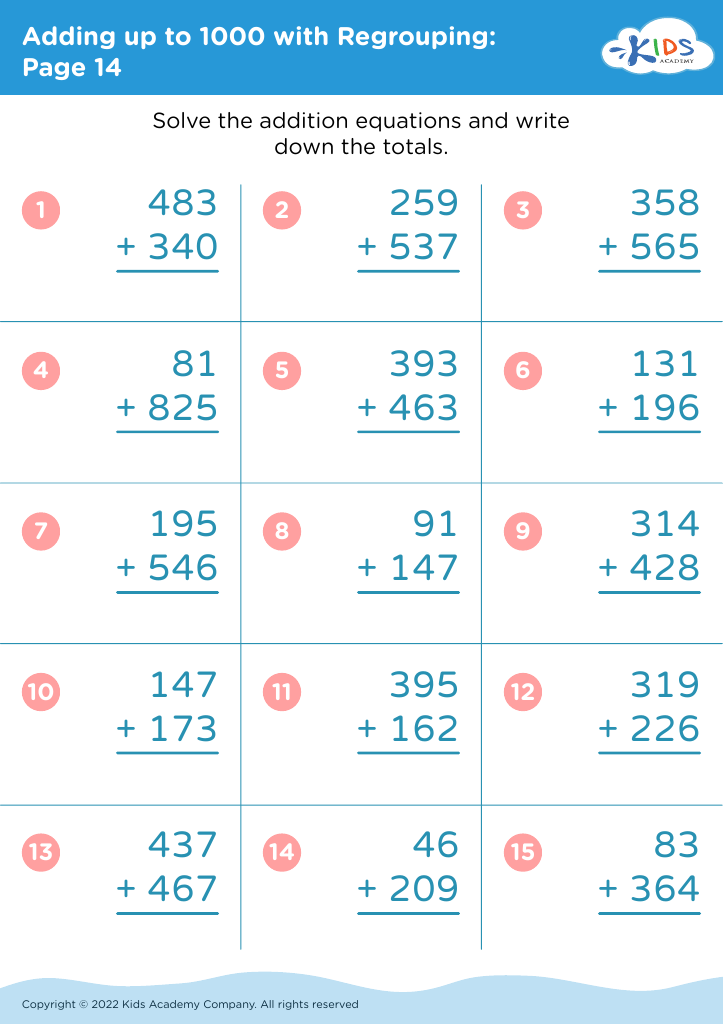
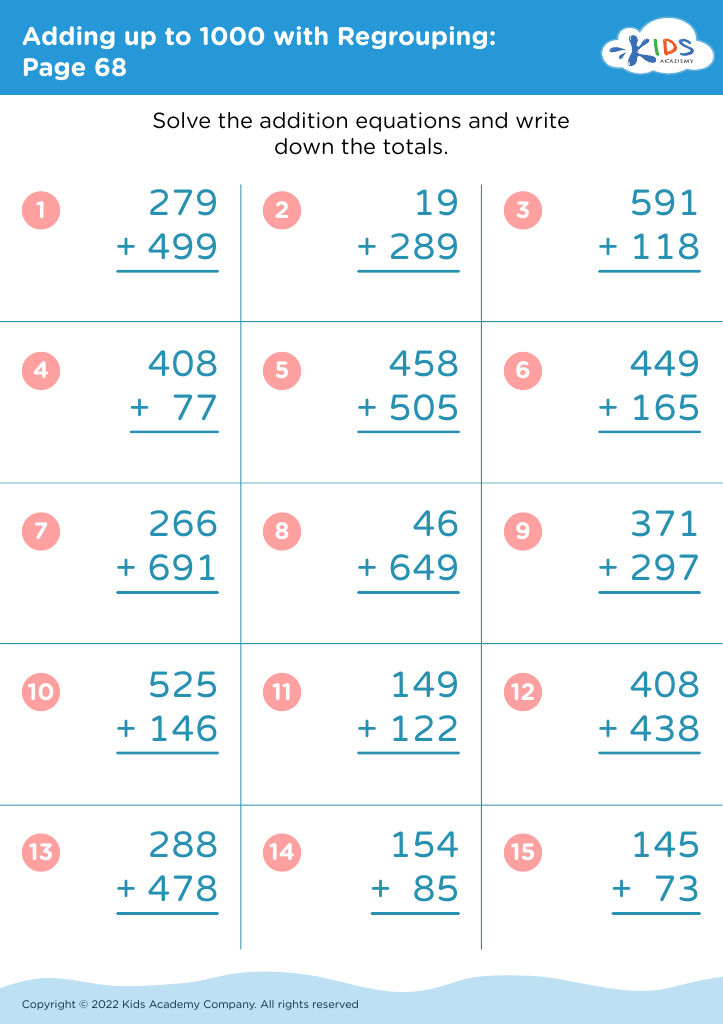


Fine motor skills are crucial in developing a child's ability to perform tasks such as writing, cutting, and manipulating small objects. In the context of Grade 3, one specific area where these skills come into play is adding up to 1000 with regrouping in mathematics. This foundational math skill requires not only mental computation but also physical dexterity, as students often use pencils to solve problems or write out their work.
For parents and teachers, focusing on fine motor skills means supporting a child's overall academic development. Without strong fine motor skills, a student may struggle to write numbers legibly and line them up correctly into columns for addition. Misaligned numbers can lead to mistakes in calculations, causing frustration and potentially a dislike for math. Furthermore, sharpening these skills bolsters a child's confidence and independence in completing assignments.
Regrouping (or carrying) in addition involves moving numbers from one column to the next. This concept can be abstract for third graders, and the act of physically writing the numbers helps in solidifying their understanding. Encouraging activities that promote fine motor skills - like drawing, playing with clay, or even daily practice with math problems and puzzles - lays a foundation for academic resilience and success in later years.