Shape Recognition Grade 3 Adding up to 1000 with Regrouping Worksheets
6 filtered results
-
From - To
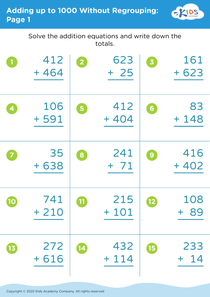
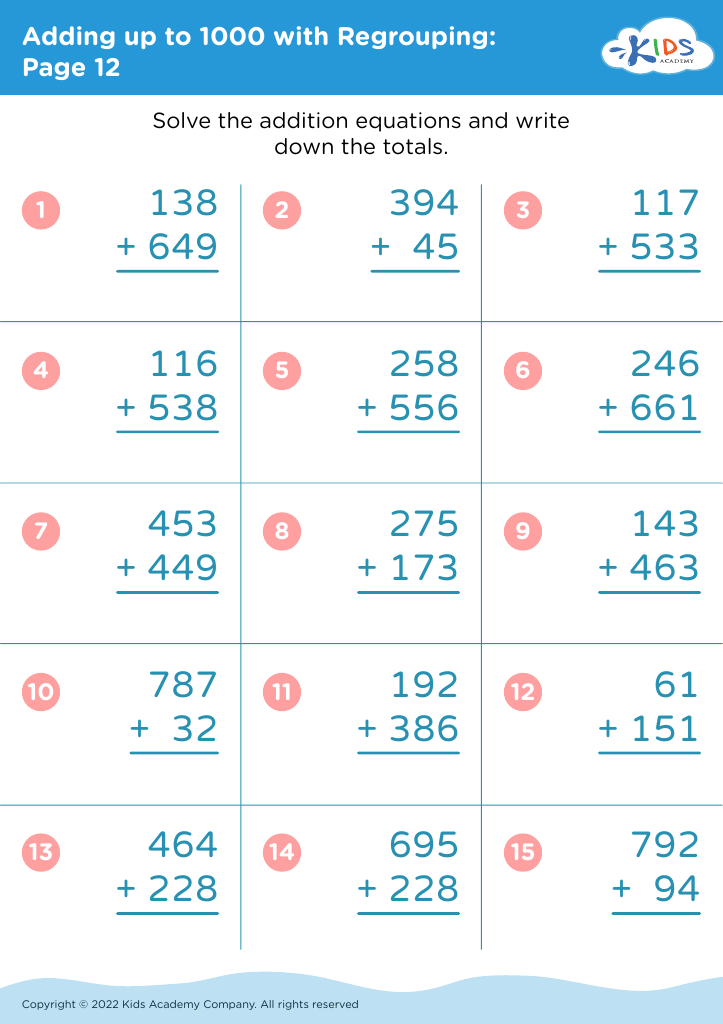
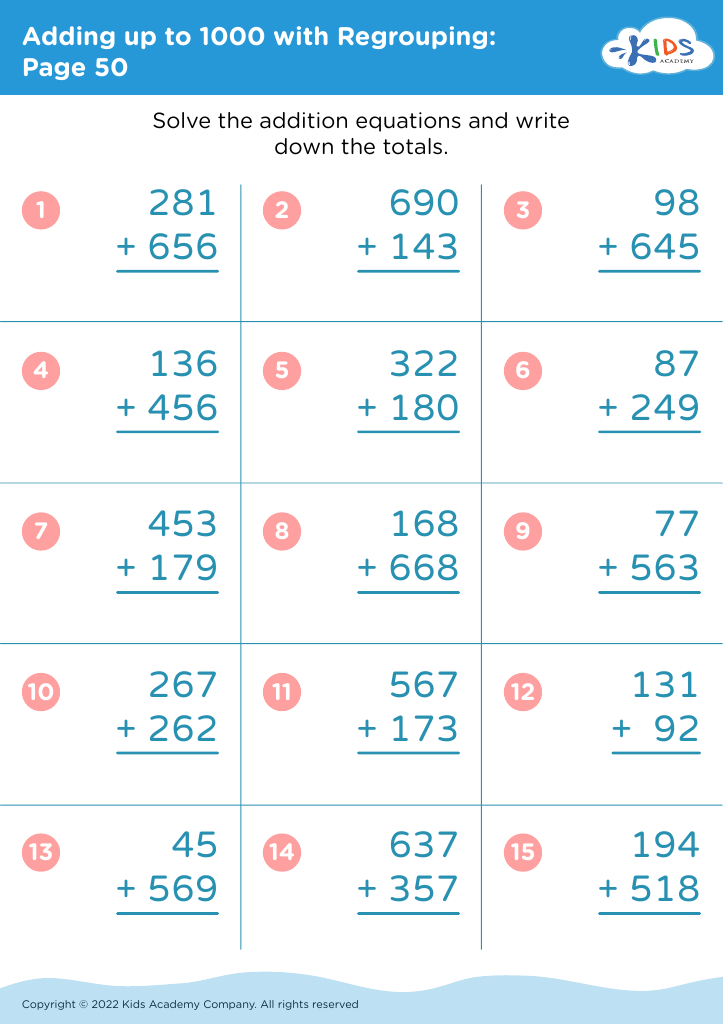
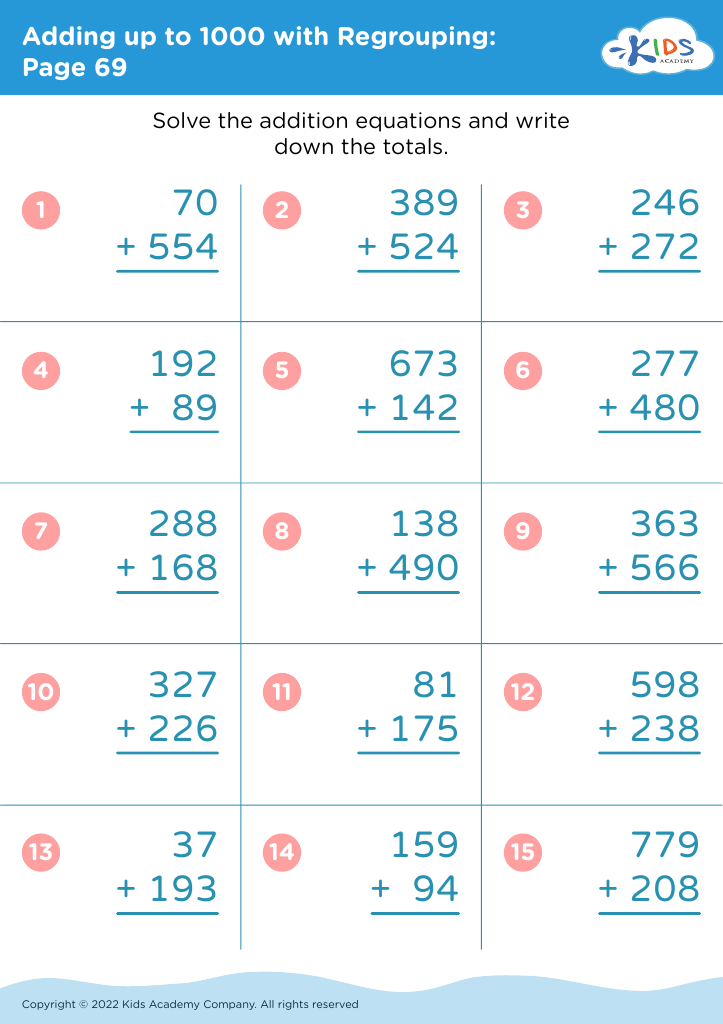
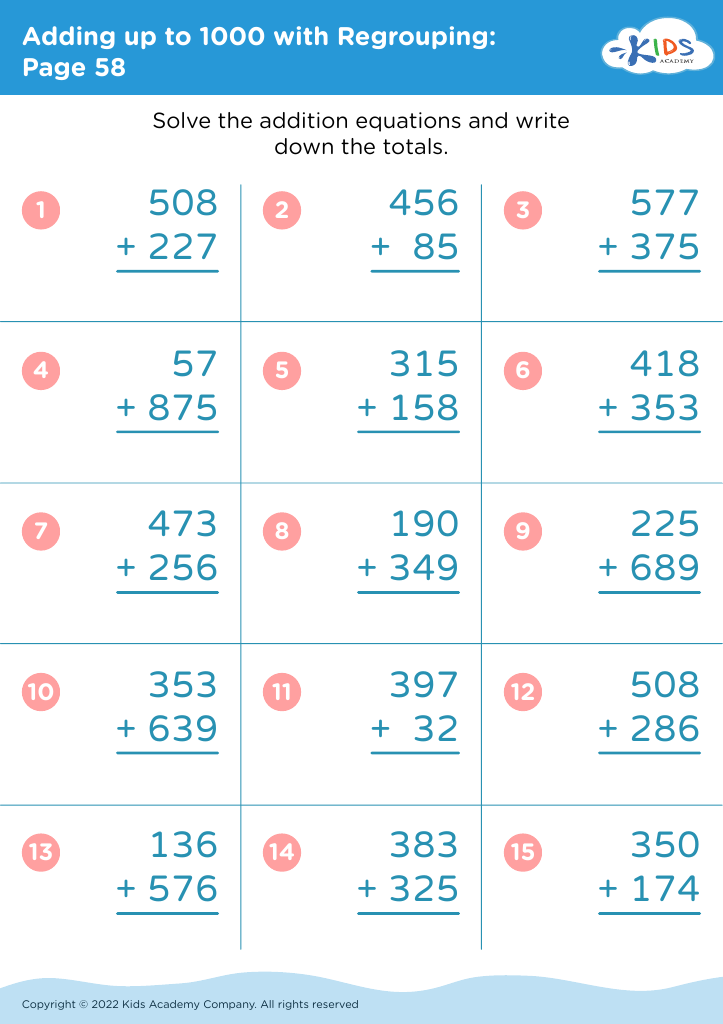
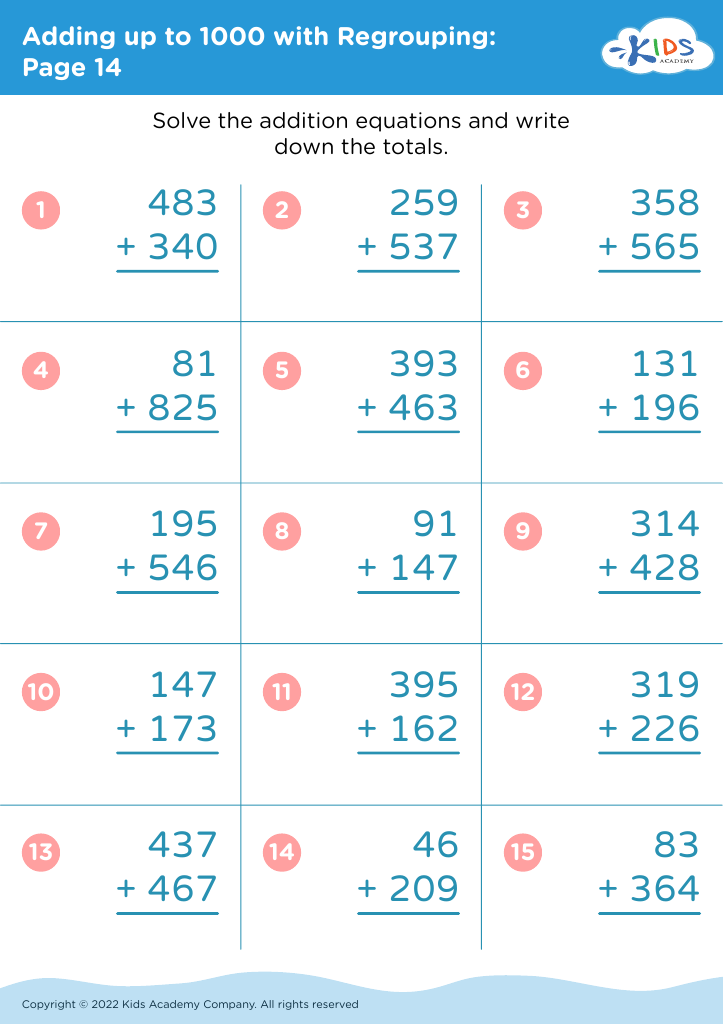
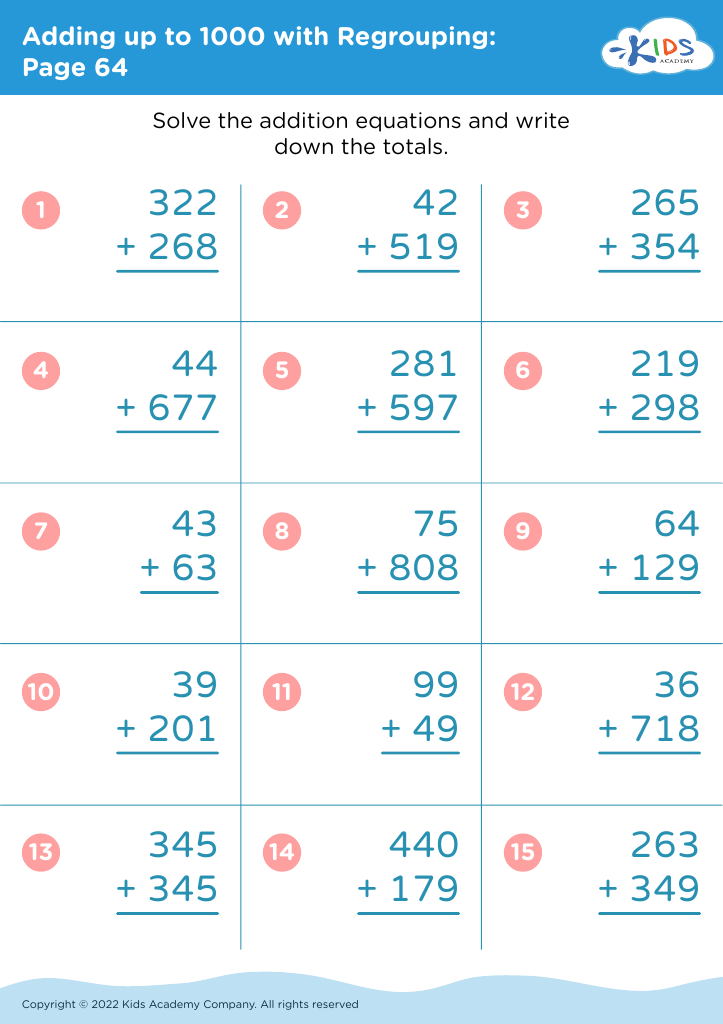
Enhance your third graders' mathematical skills with our "Shape Recognition Grade 3 Adding up to 1000 with Regrouping Worksheets"! This engaging resource combines the essential concepts of shape recognition and addition, encouraging students to recognize shapes while mastering regrouping strategies for adding three-digit numbers. Our worksheets feature fun and colorful exercises that make learning enjoyable and effective. As students solve problems, they strengthen their understanding of geometry and enhance their arithmetic abilities, helping them build a solid foundation for future math concepts. Perfect for classroom use or supplementary practice at home, these worksheets are designed to foster a love for learning in young mathematicians!


Shape recognition and numeracy—such as adding up to 1000 with regrouping—are foundational skills in a child's early education, especially in Grade 3. Understanding shapes enhances spatial reasoning, which is crucial for problem-solving in mathematics and everyday life. When children can identify and classify shapes, they develop critical thinking skills and learn to see patterns, aiding in later subjects like geometry and art.
Moreover, adding up to 1000 with regrouping helps children master essential arithmetic operations. Regrouping— or carrying over—teaches them to manage larger numbers, preparing them for more complex mathematical concepts. This skill fosters flexibility in thinking and enhances their ability to tackle problems without fear. As Grade 3 students also start to encounter multi-digit numbers, it’s vital that they are comfortable with both shape recognition and addition processes.
Parents and teachers should care about these skills because they are interrelated. A solid foundation in both can lead to improved confidence in math, stimulate a continued interest in learning, and prepare children for future academic challenges. By emphasizing these areas, adults can help empower young learners to develop critical skills that are applicable not just in school, but in logical reasoning and everyday decision-making.