Understanding fractions Grade 3 Adding up to 1000 with Regrouping Worksheets
18 filtered results
-
From - To
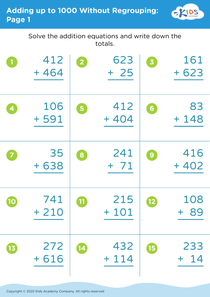
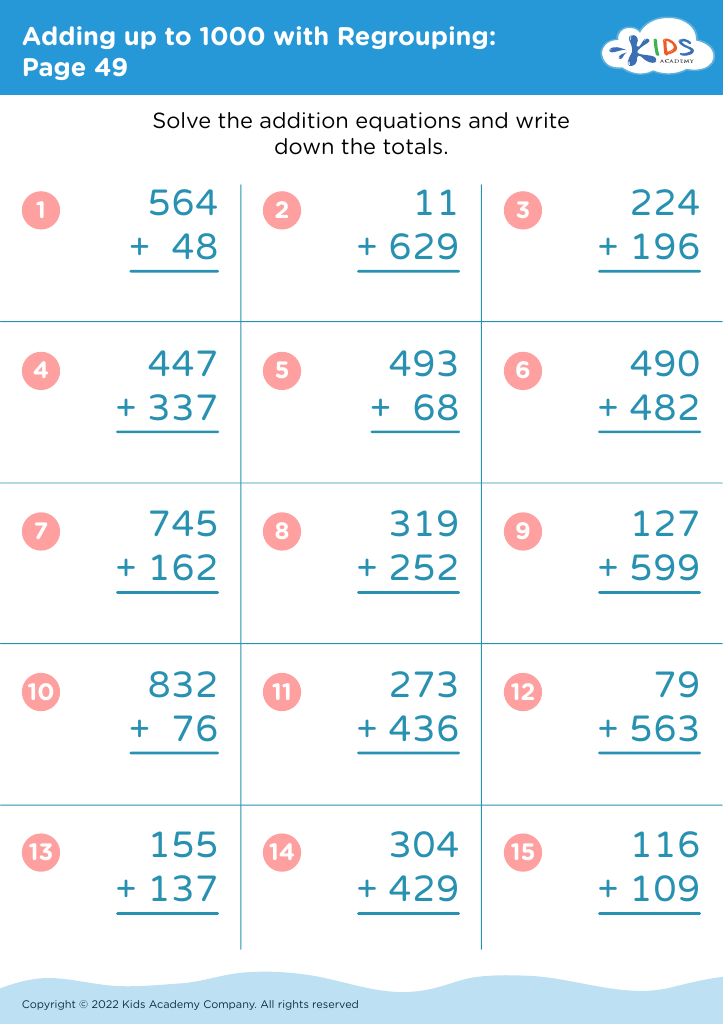
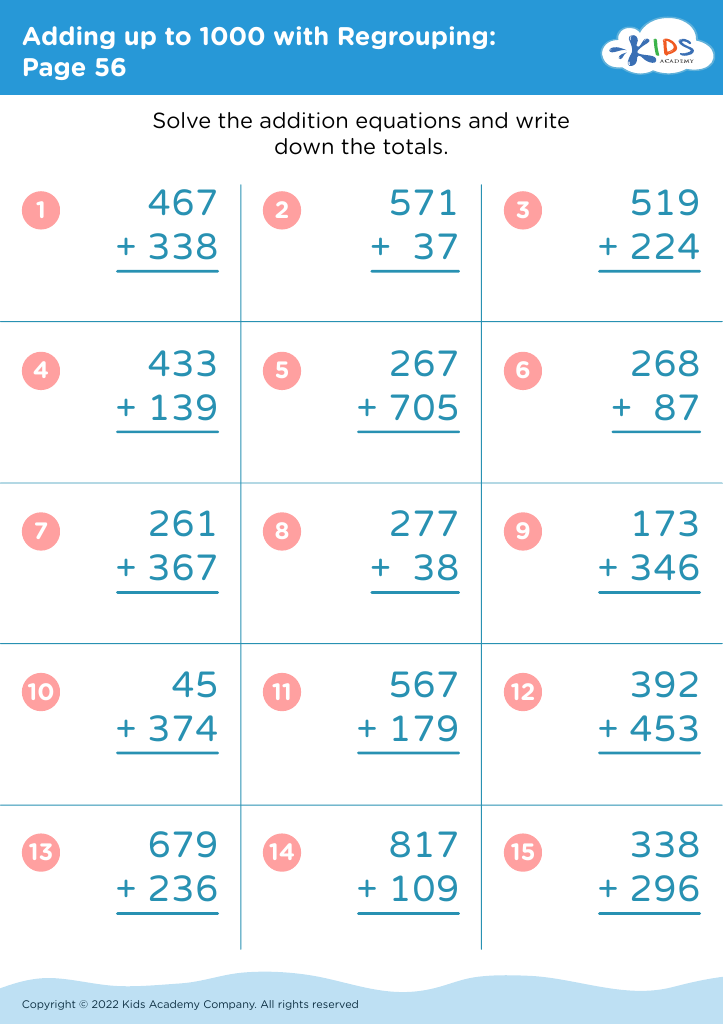
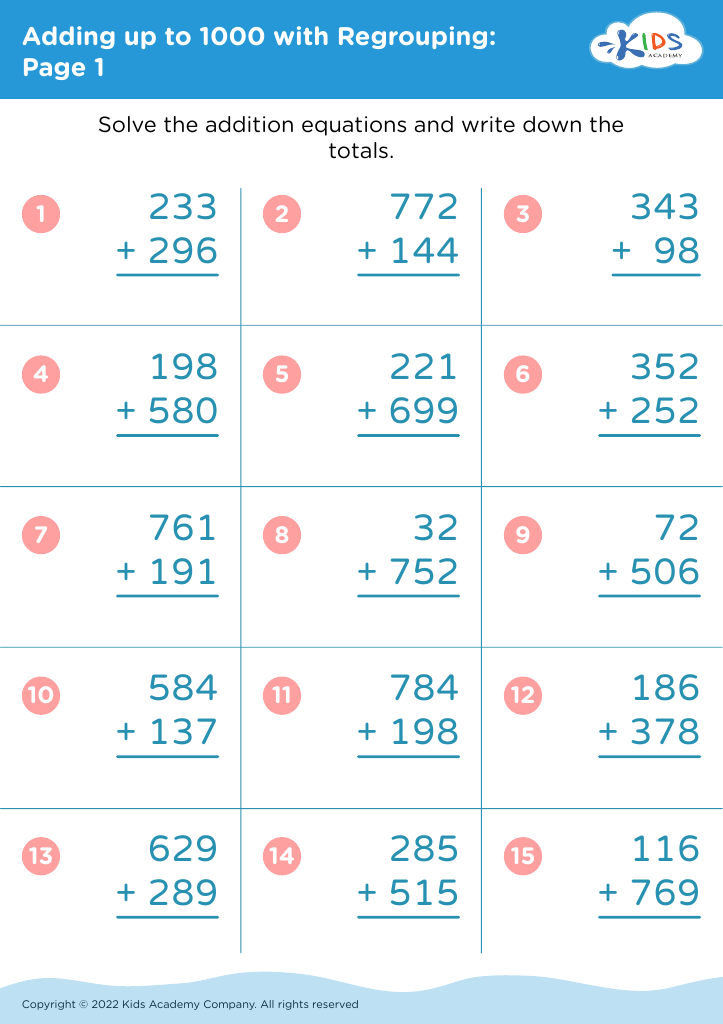
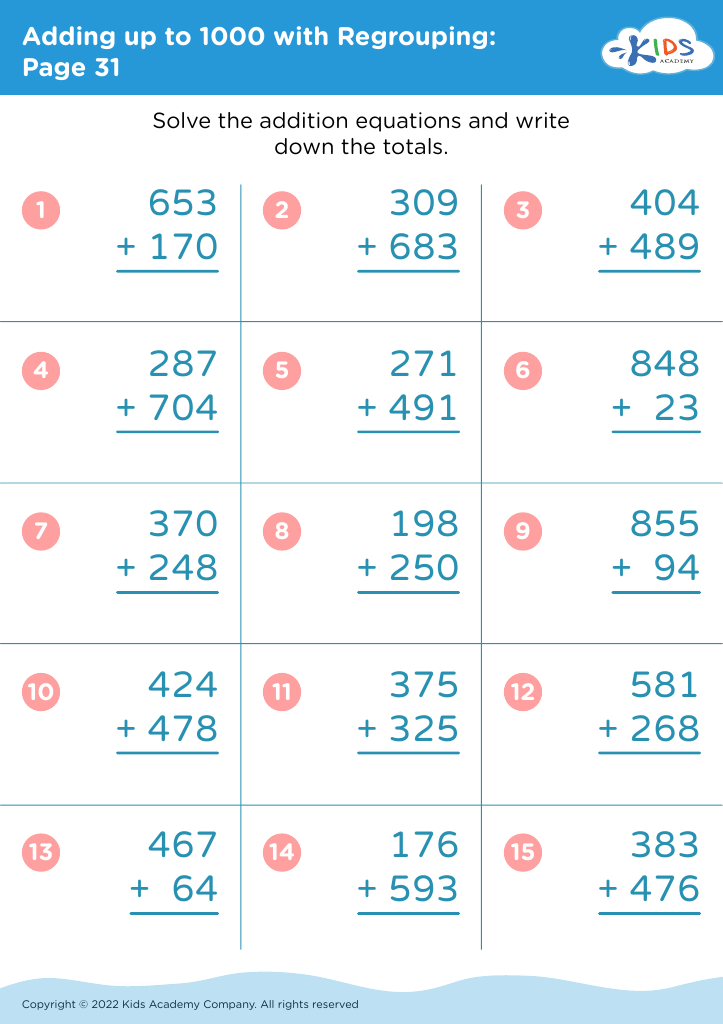
Welcome to our "Understanding Fractions Grade 3 Adding Up to 1000 with Regrouping" worksheets! These educational resources are designed to help third graders master the concepts of fractions and addition with regrouping. Through engaging exercises, students will enhance their understanding of fractional parts and learn to expertly add numbers up to 1000. Our worksheets provide a comprehensive approach with step-by-step guidance, ensuring that young learners develop strong foundational math skills. Ideal for classroom use or extra practice at home, these activities will boost your child’s confidence and proficiency in math. Join us and make learning fractions fun and effective!
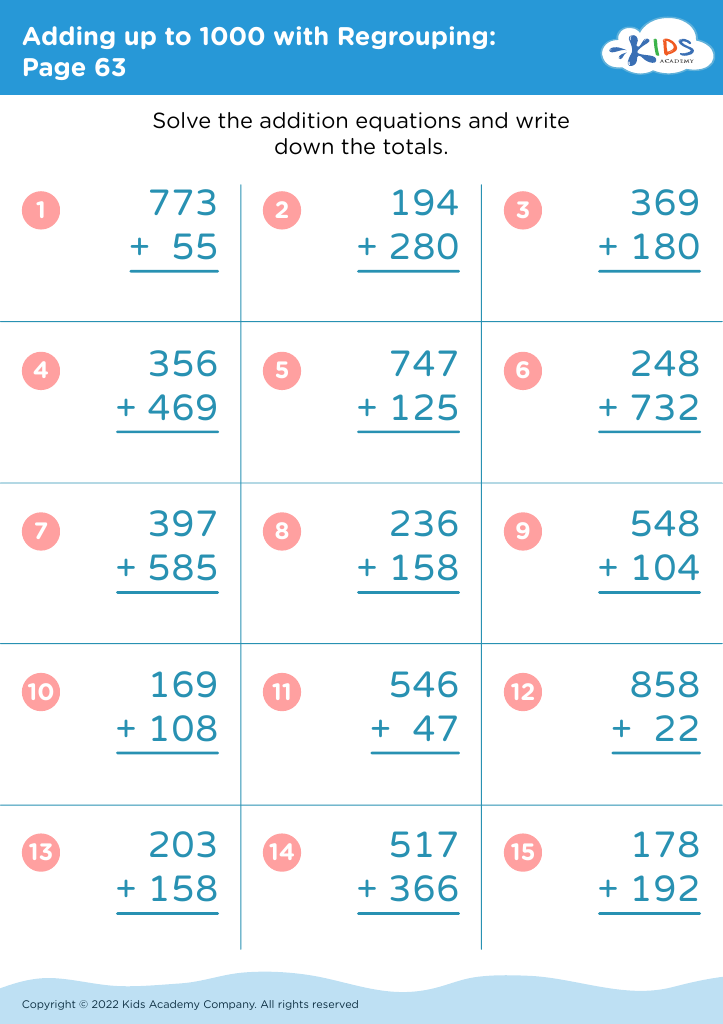
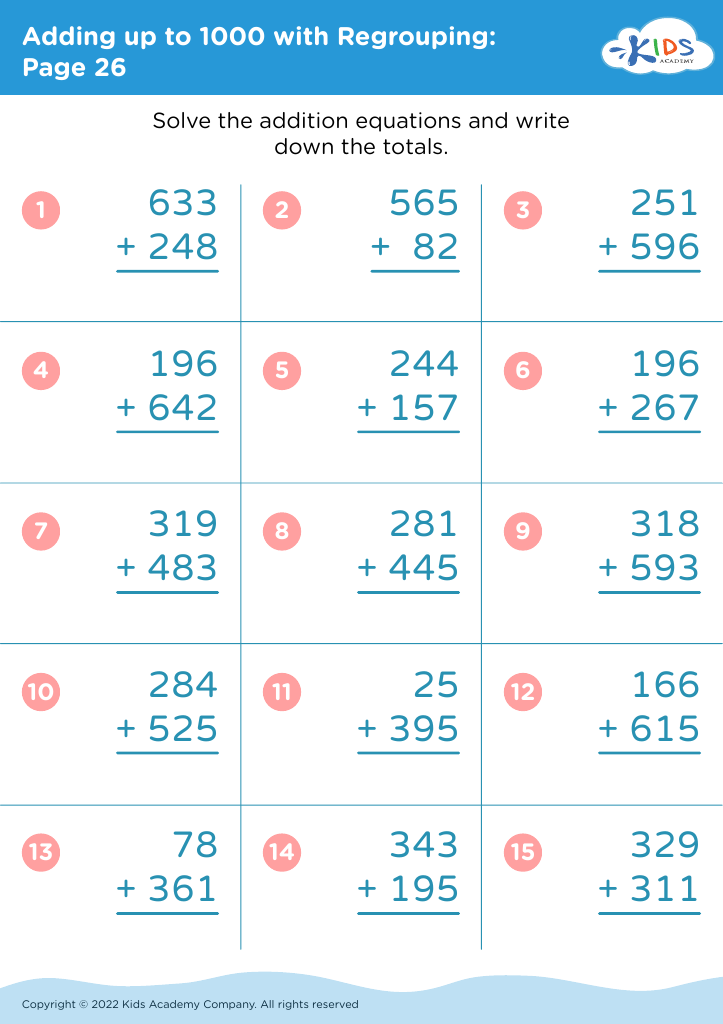
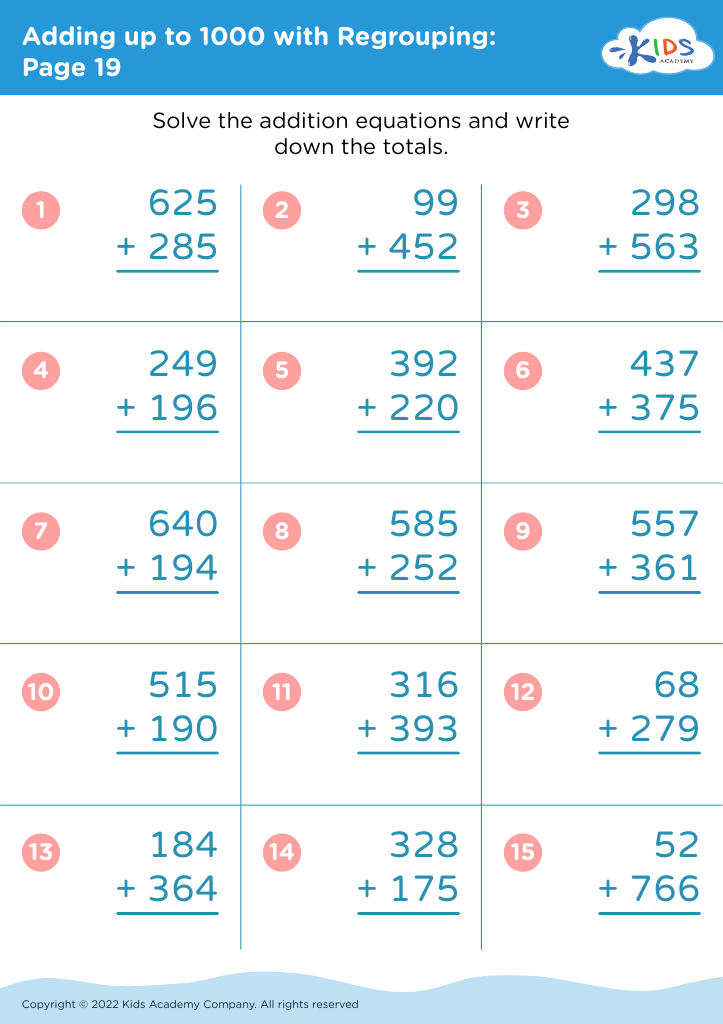
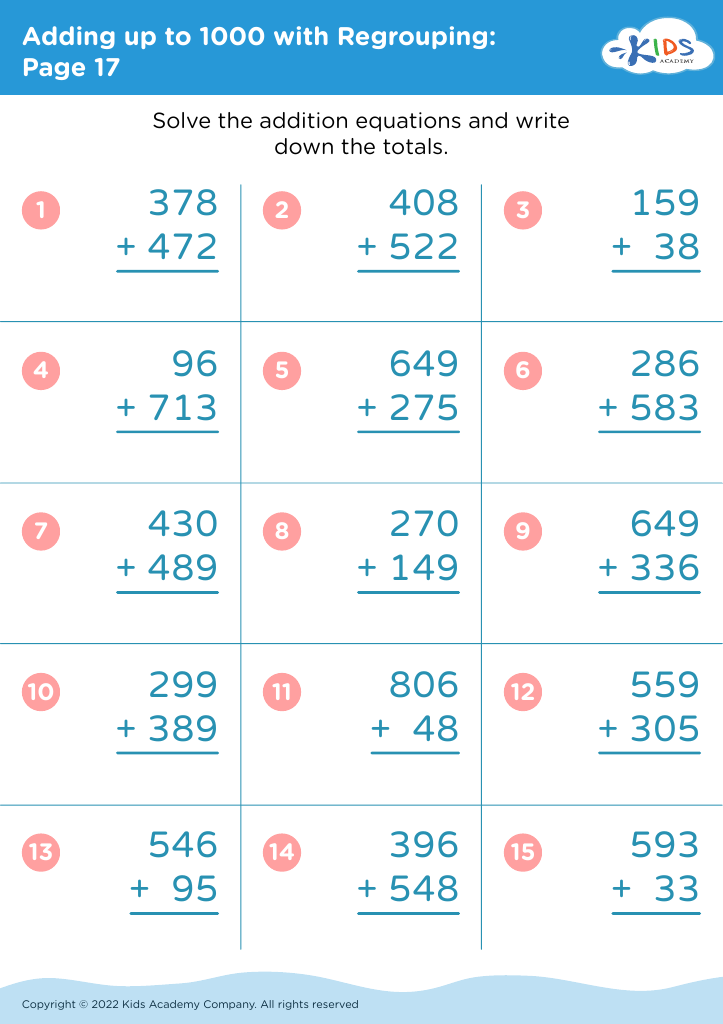
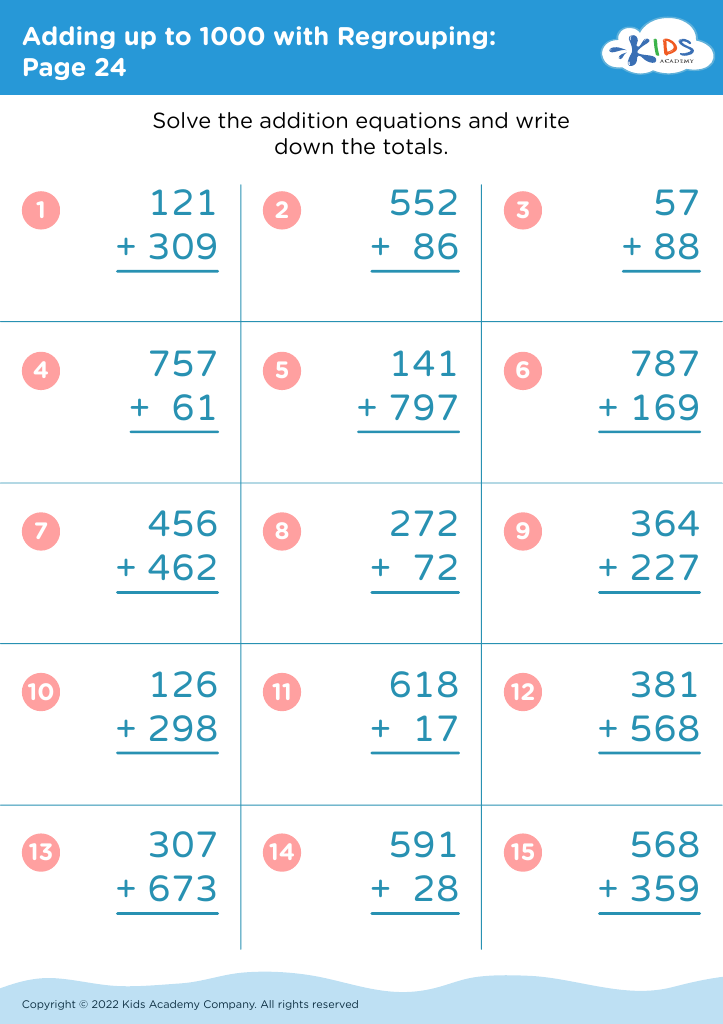
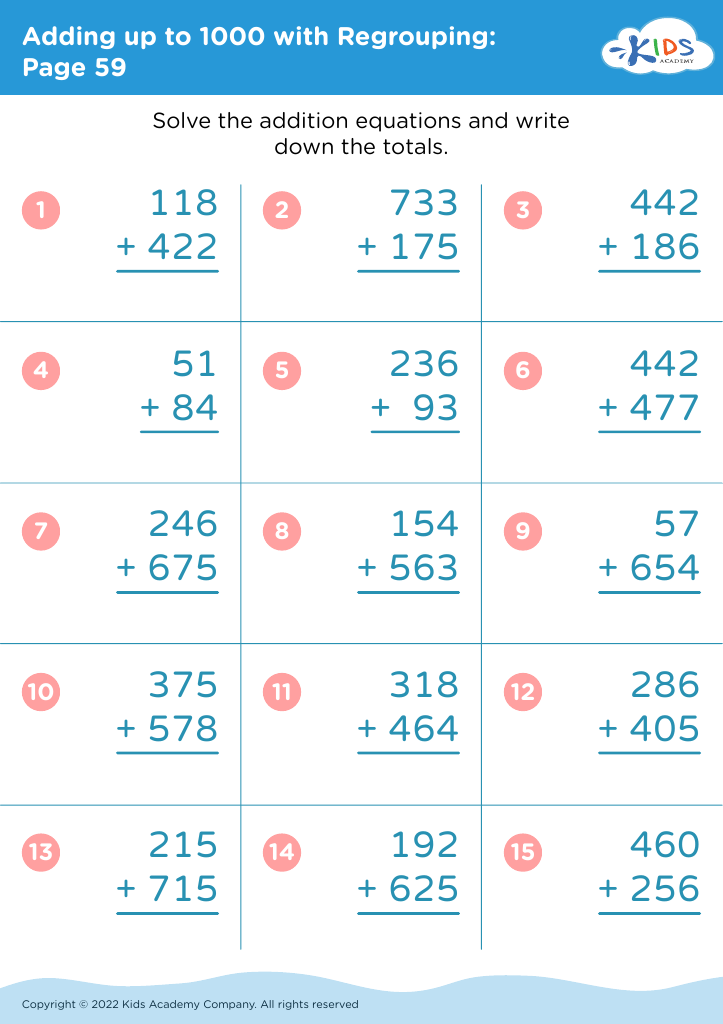
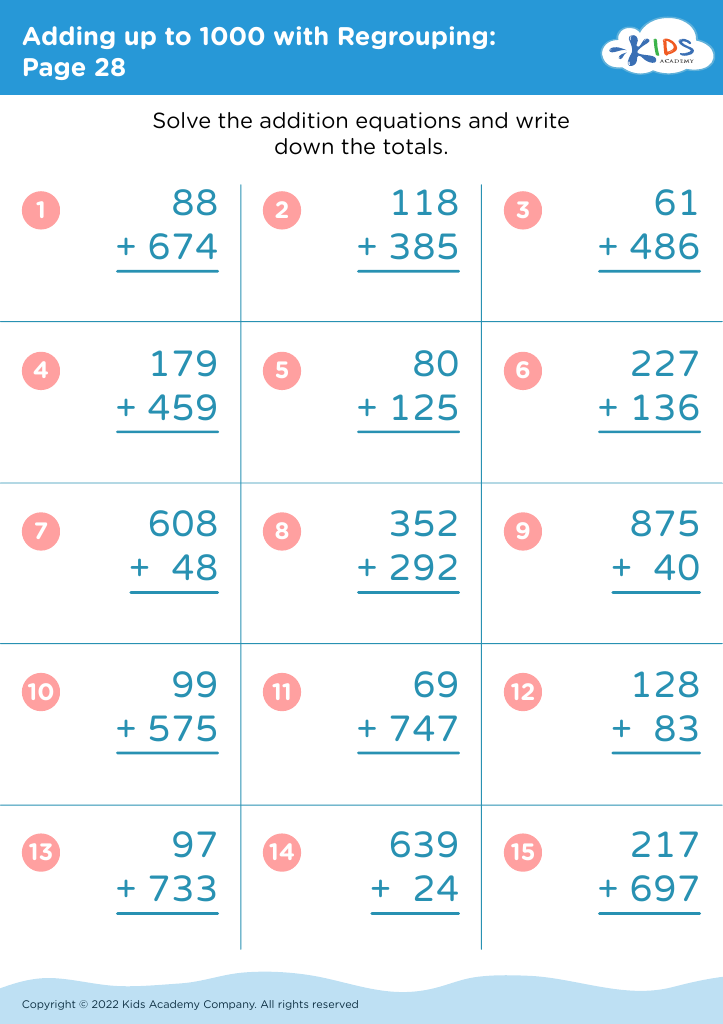
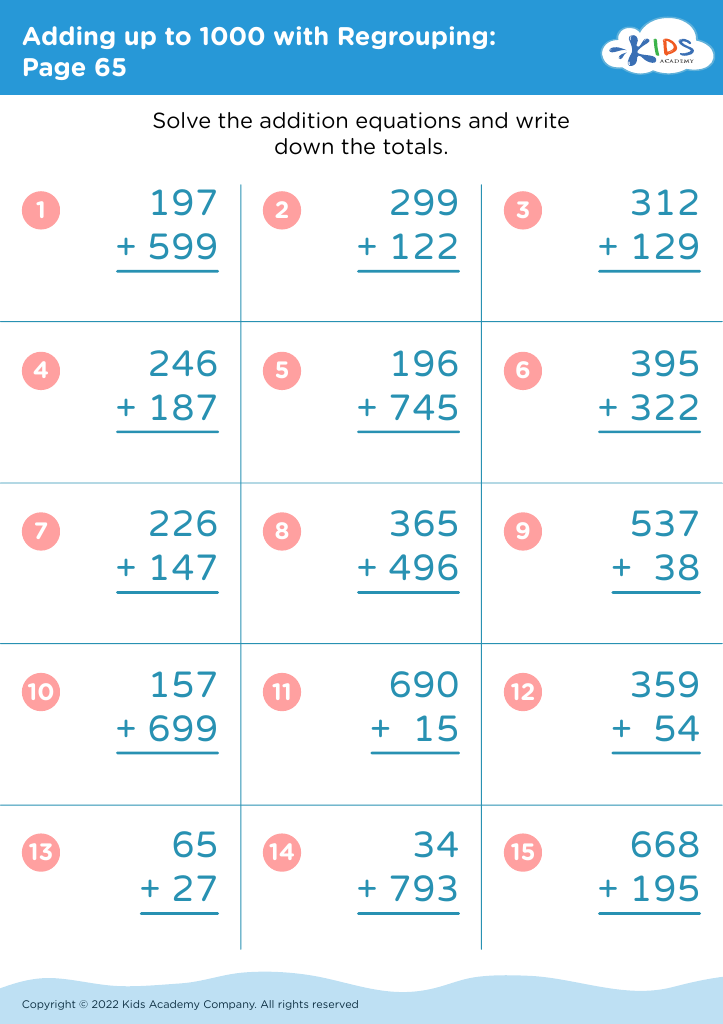
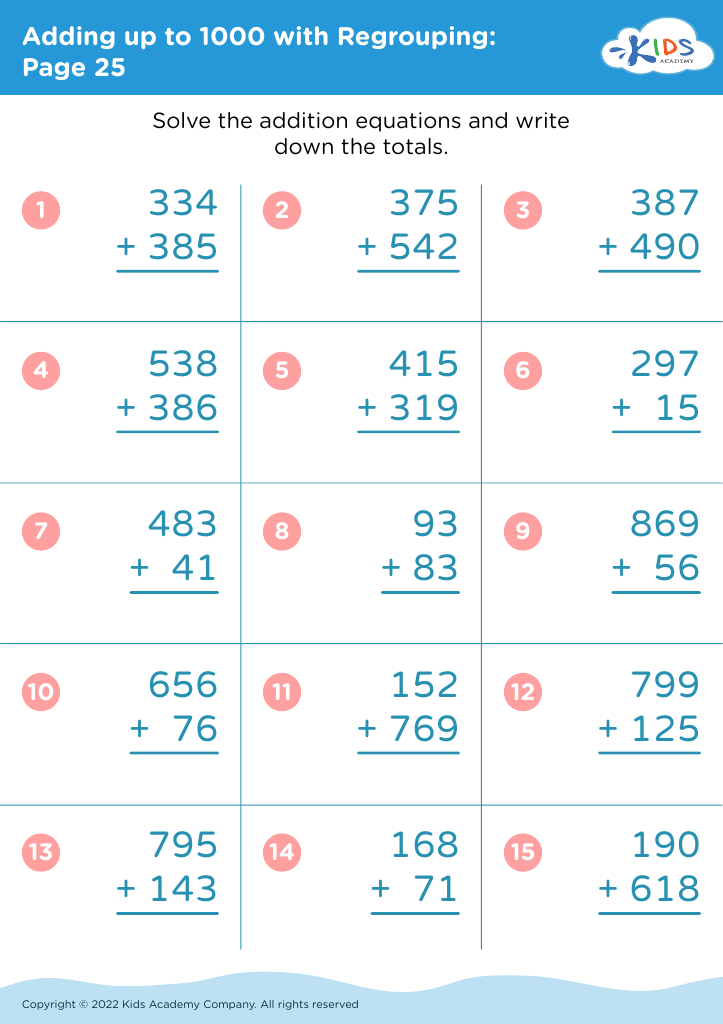
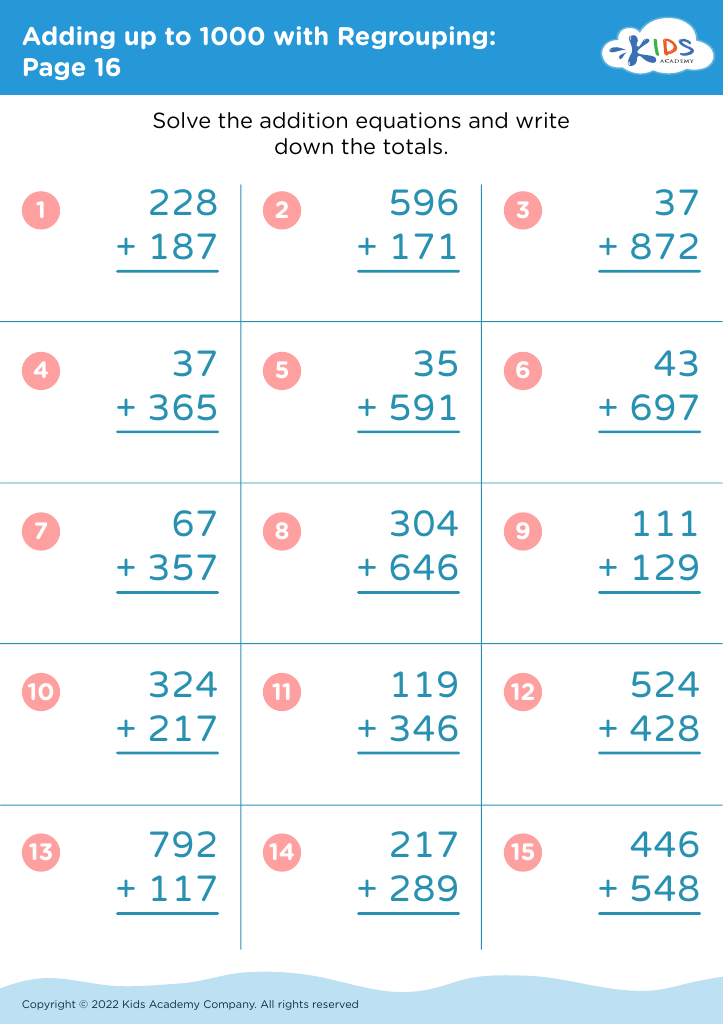


Understanding fractions and performing addition with regrouping are foundational skills in math, crucial for 3rd graders. For parents and teachers, supporting children in these areas ensures their overall academic development and future success in more complex mathematical concepts.
First, comprehending fractions is essential because fractions are everywhere in daily life—from cooking recipes to time management. Ensuring that children grasp fractions at an early age builds numerical literacy and lays the groundwork for advanced topics like division, ratios, and proportional reasoning, which are pivotal in higher education and many careers.
Similarly, mastery of adding numbers up to 1000 with regrouping is critical because it strengthens a child's understanding of place value and arithmetic operations. This skill is directly used in real life, from handling money to measuring ingredients. Effective regrouping techniques help students develop a sense of number efficiency, which includes solving problems accurately and swiftly.
Moreover, early proficiency in these skills fosters confidence. As students become more comfortable with fractions and large sums, they engage more eagerly in class and take on challenging problems without fear. Emotional resilience in learning math is vital for ongoing success in STEM fields.
In sum, prioritizing these learning areas empowers children with essential life skills and builds confidence, setting a strong foundation for academic and real-world problem-solving.