Understanding Sequences Grade 3 Adding up to 1000 with Regrouping Worksheets
4 filtered results
-
From - To
Welcome to our "Understanding Sequences Grade 3: Adding up to 1000 with Regrouping" worksheets! Designed to enhance your child’s mathematical skills, these engaging resources focus on helping students grasp the concept of number sequences while adding up to 1000. Through a series of structured exercises, kids will learn how to regroup numbers, strengthen their addition skills, and identify patterns in sequences. Ideal for classroom instruction or at-home practice, these worksheets encourage critical thinking and boost confidence in young learners. Let’s make math fun and enjoyable as students journey through numbers and sequences together! Discover our worksheets today!
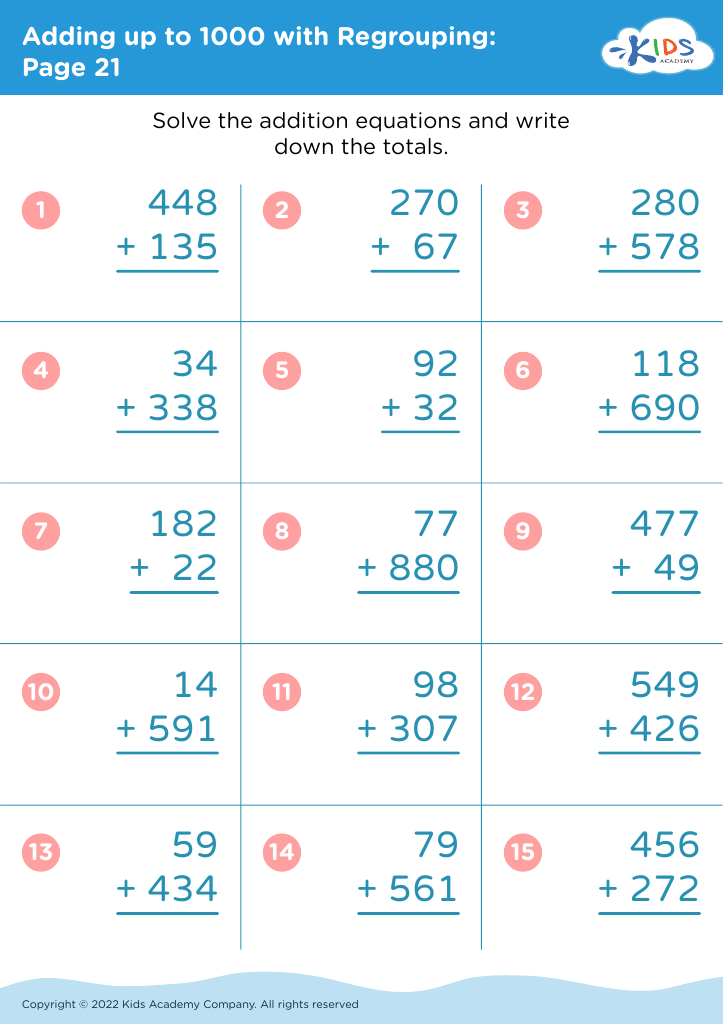
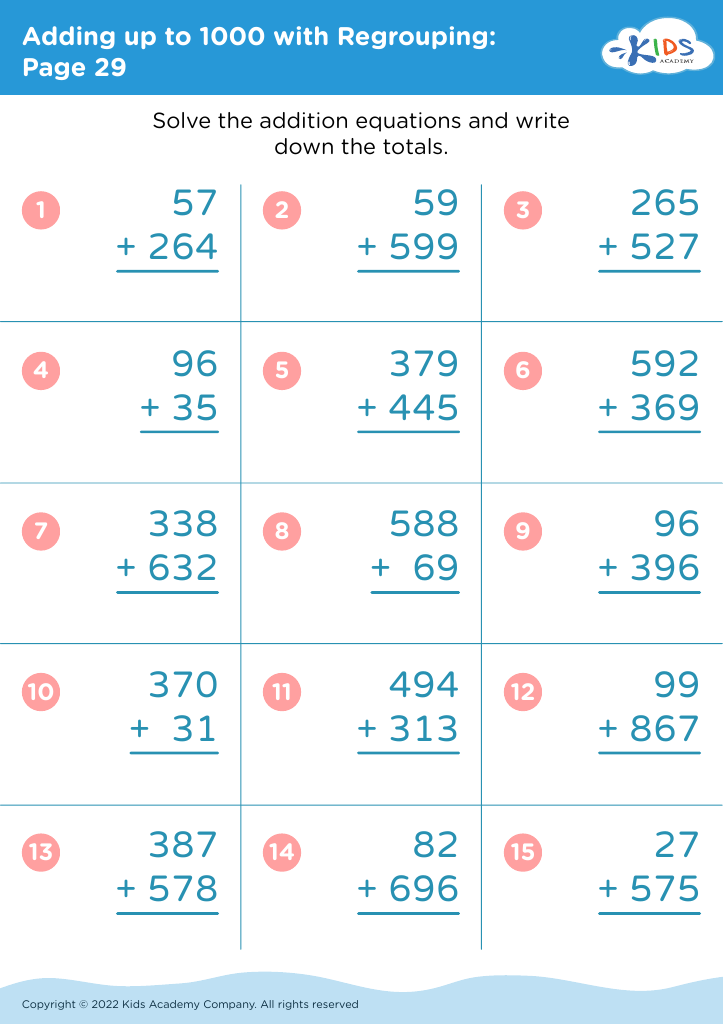
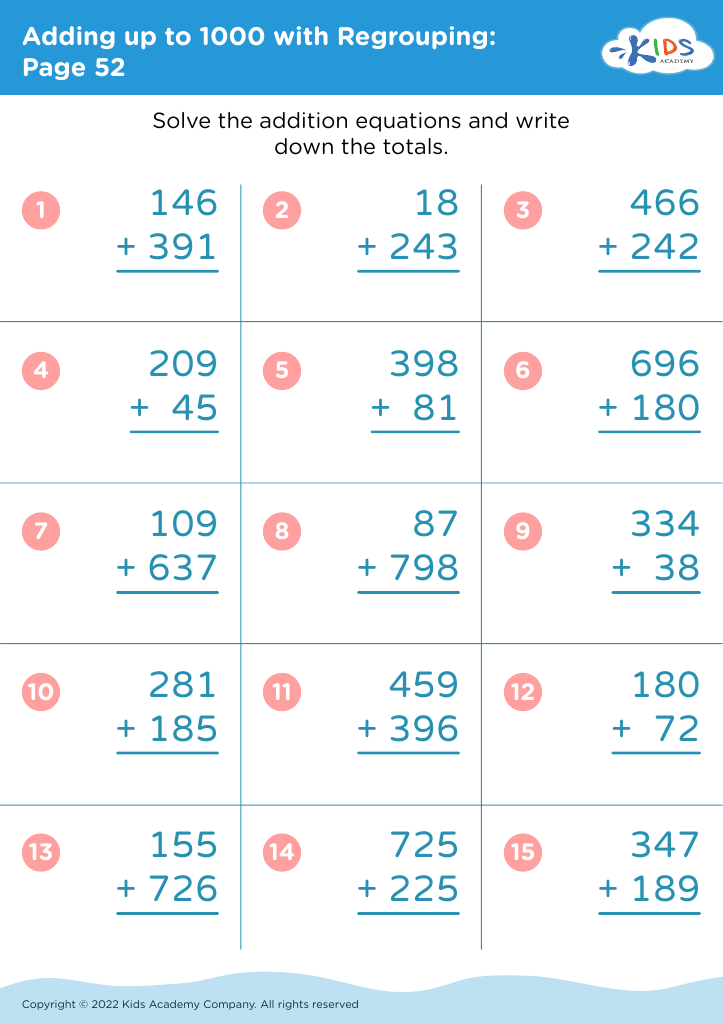
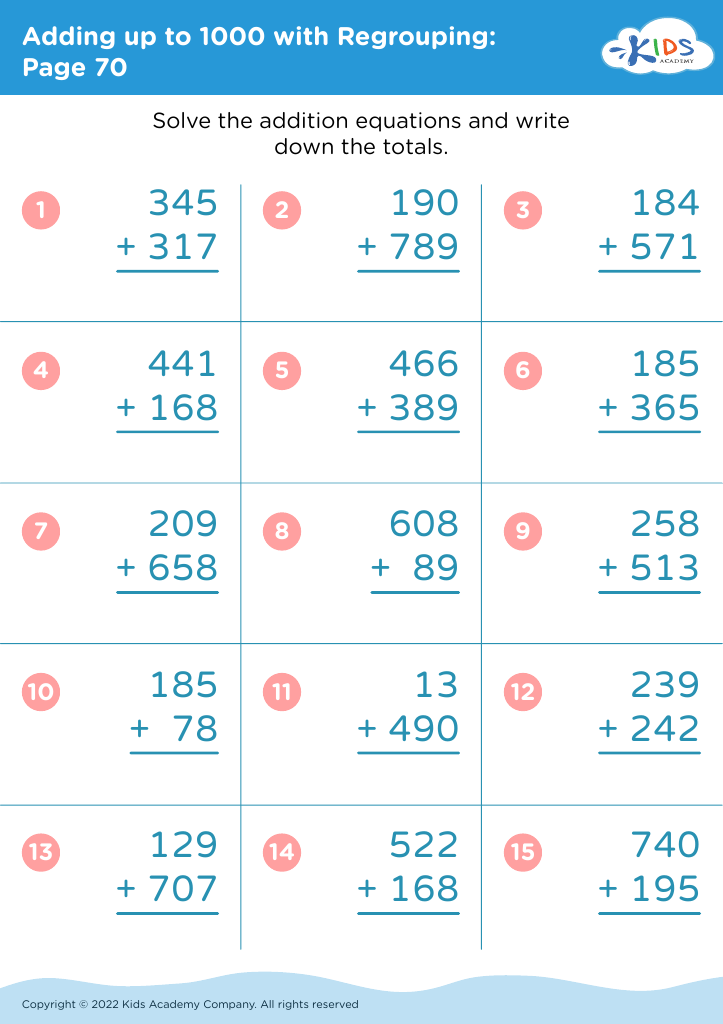


Understanding sequences and mastery of addition concepts, particularly when it comes to adding up to 1000 with regrouping, is essential for Grade 3 students. This foundational mathematical skill is not only pivotal for academic success in future math topics but also helps develop critical problem-solving abilities.
When parents and teachers emphasize these skills, children learn how to break down larger numbers into manageable parts through regrouping, which enhances their number sense and mental math fluency. It also prepares them for more complex operations like subtraction, multiplication, and division later on.
Moreover, comprehending sequences allows students to recognize patterns in numbers, strengthening their logical reasoning and cognitive abilities. This understanding is crucial as it connects mathematical concepts to real-world applications, such as budgeting or time management.
Supporting children in mastering these concepts fosters confidence and promotes a positive attitude toward learning. Encouraging exploration, discussion, and practice around these topics helps create a rich learning environment, where students can thrive academically. In turn, engaged parents and informed teachers play a key role in cultivating these essential skills, ensuring that students are well-equipped for future challenges in mathematics and beyond, paving a strong path for lifelong learning.