Fine Motor Skills Grade 3 Adding up to 1000 Without Regrouping Worksheets
3 filtered results
-
From - To
Enhance your third grader's fine motor skills with our engaging worksheets focused on adding up to 1000 without regrouping! Designed for young learners, these printable resources provide a hands-on approach to mastering addition while developing grip stability and control. As students solve various addition problems, they exercise coordination through writing and manipulation of numbers. Our worksheets offer fun visuals and relatable scenarios, making math enjoyable and approachable. Perfect for the classroom or home, these activities seamlessly integrate fine motor practice with essential math skills. Empower your child’s learning journey today with these delightful resources that promote both cognitive and physical development!
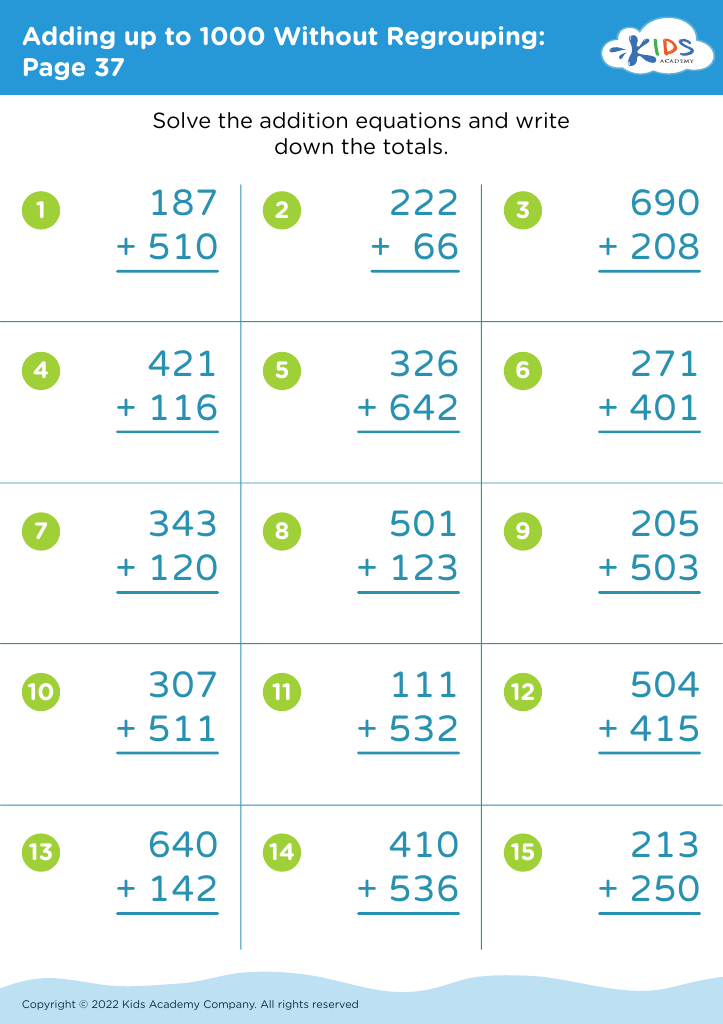
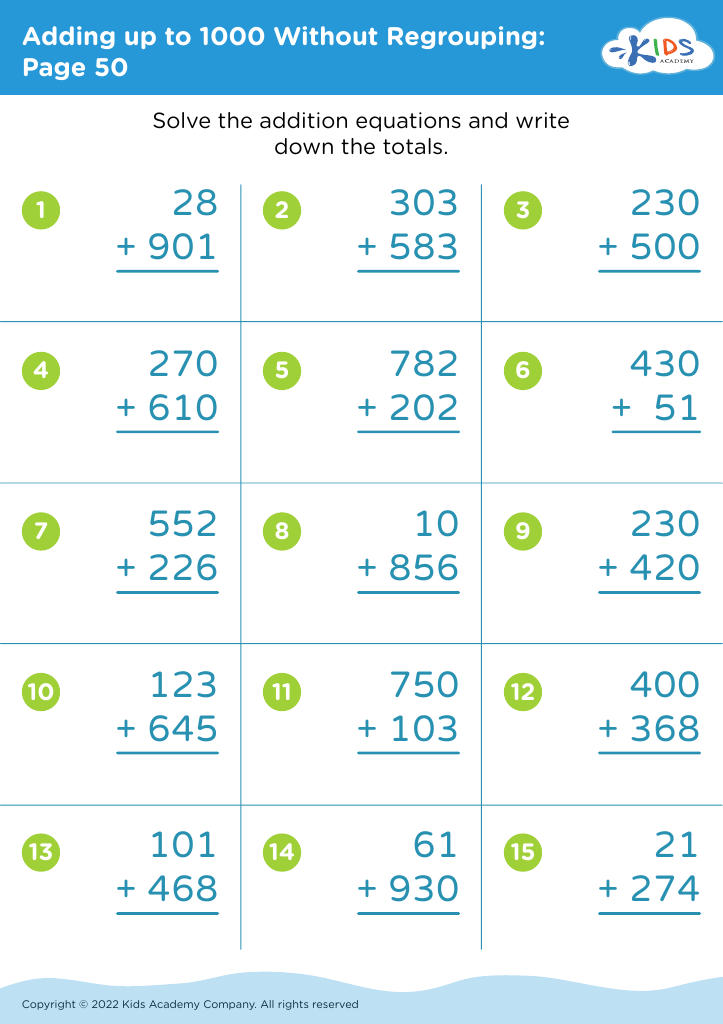
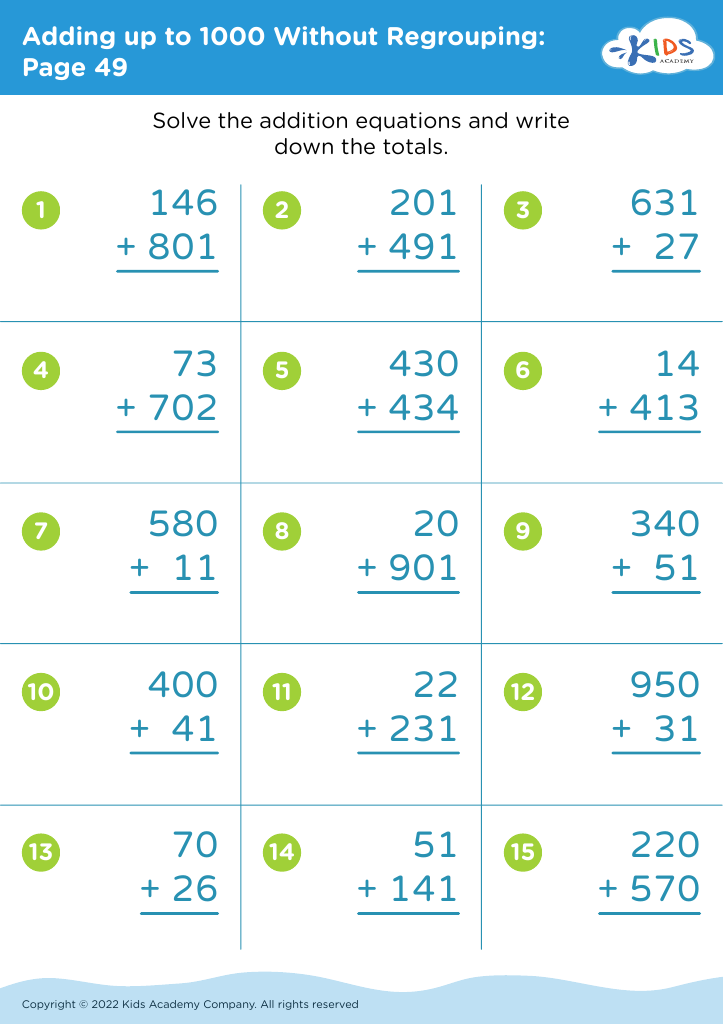


Fine motor skills are essential for children's development, particularly in Grade 3, where they begin engaging in more complex tasks that require precision and control. Parents and teachers should care about fine motor skills as they play a vital role in a child's ability to perform everyday activities, including writing neatly, using scissors, and participating in arts and crafts, which enhance their creativity and problem-solving abilities.
When it comes to math, fine motor skills are critical for tasks like adding numbers up to 1000 without regrouping. Holding a pencil properly, aligning numbers correctly, and accurately writing down answers requires good hand-eye coordination and dexterity. Proficiency in these skills can boost children's confidence and independence, allowing them to tackle math tasks more efficiently.
Moreover, strong fine motor skills are linked to overall academic success. Children who can manipulate tools effectively are likely to perform better in various subjects, including math. Teachers and parents can support the development of these skills through engaging activities, such as puzzles and building blocks. By fostering fine motor skills, they equip children with the foundations needed for both academic achievement and everyday life competencies.