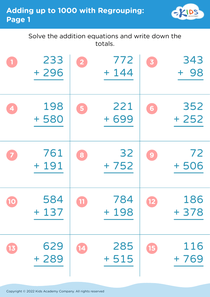
Fraction comparison Grade 3 Adding up to 1000 Without Regrouping Worksheets
4 filtered results
-
From - To
Explore our engaging "Fraction Comparison Grade 3: Adding up to 1000 Without Regrouping" worksheets, designed specifically for third graders. These printable resources provide an interactive approach to mastering fraction comparison while reinforcing addition skills. Each worksheet encourages students to compare fractions and understand their relationships, all while solving problems that sum to 1000 without regrouping. Perfect for classroom use or home learning, these worksheets support curriculum standards and enhance critical thinking. Help your child build confidence in math with fun, visual exercises that promote a deep understanding of fractions. Start transforming your child’s math learning experience today!
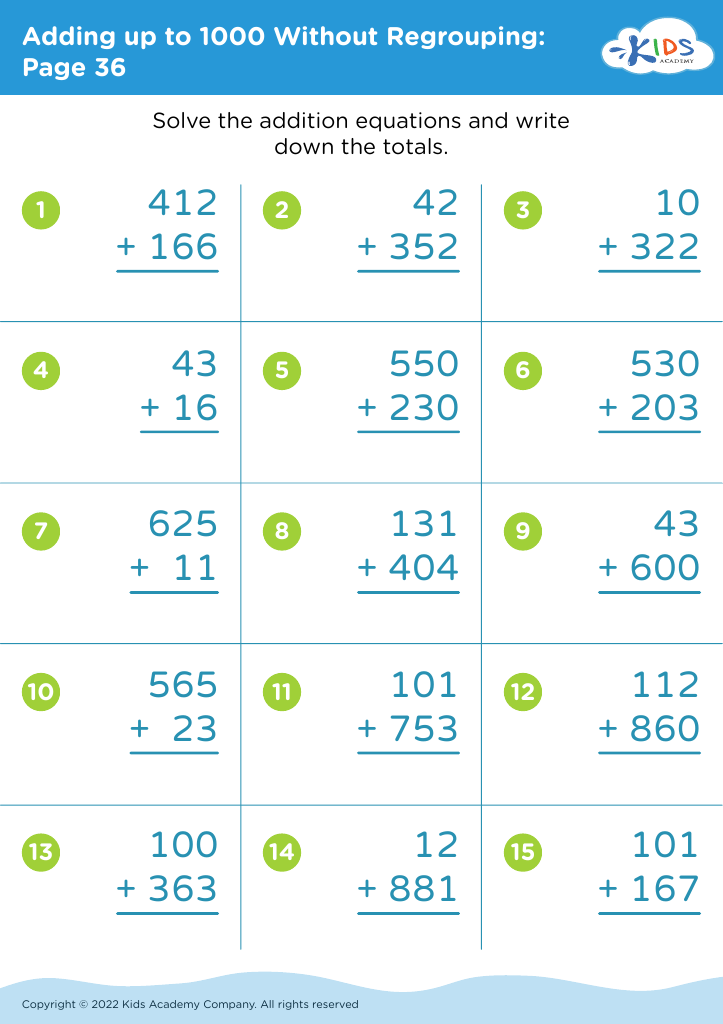
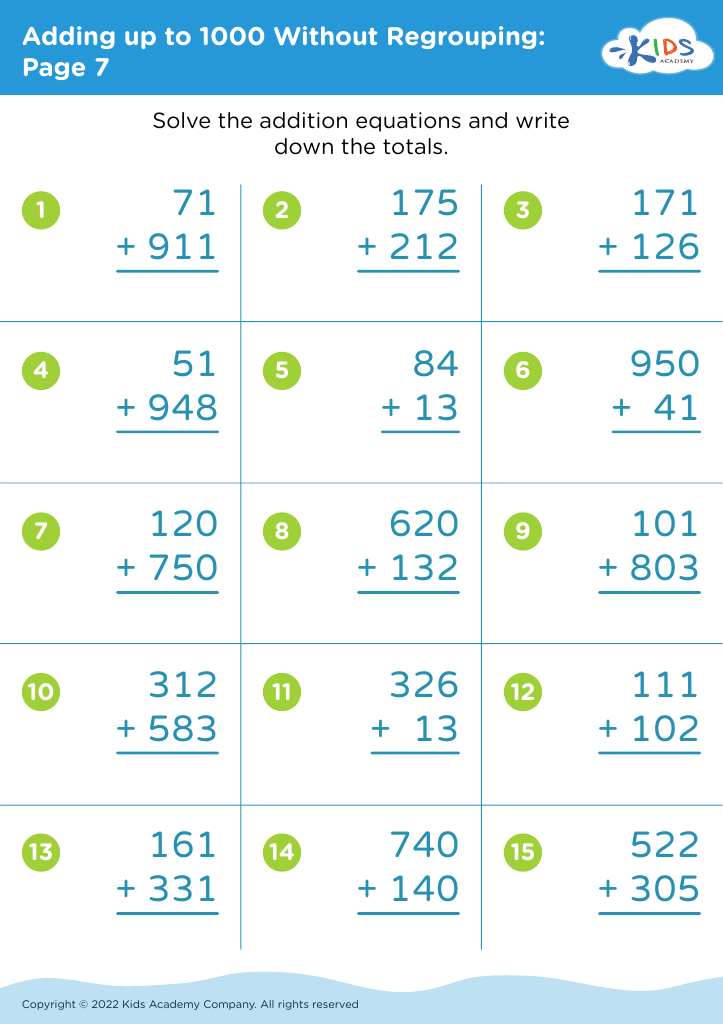
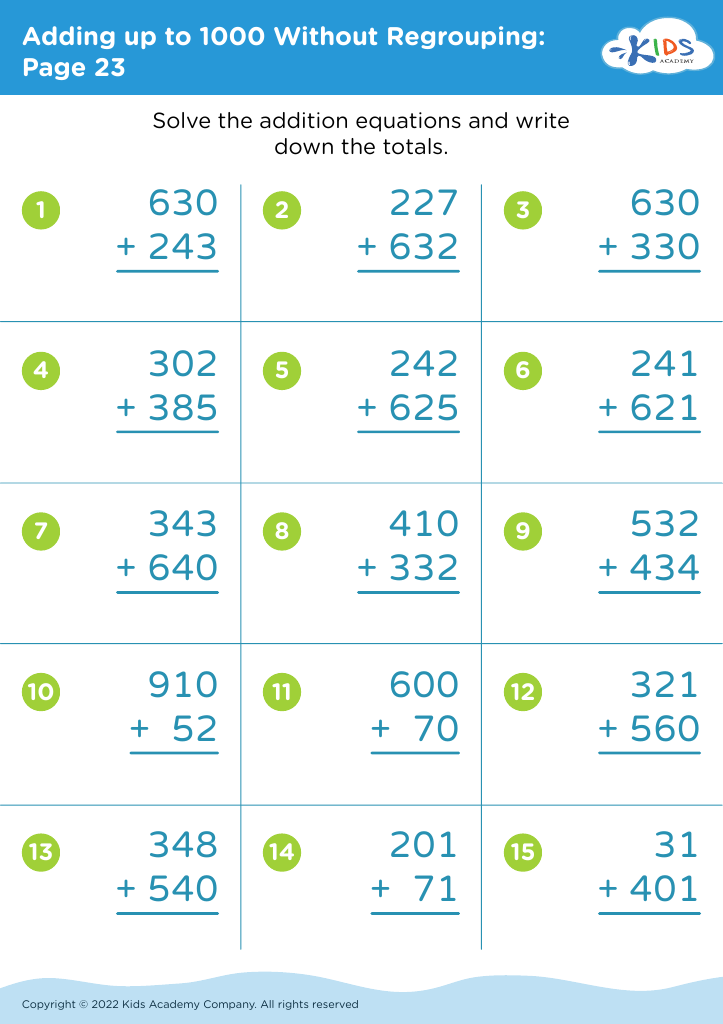


Understanding fraction comparison is fundamental for third graders, as it lays the groundwork for critical mathematical concepts they will encounter later. In Grade 3, students learn to compare fractions based on their numerators and denominators, which helps develop their number sense and fosters logical reasoning skills.
When students master comparing fractions, they enhance their ability to make sense of real-world problems, such as dividing pizza slices or sharing candy. These practical applications make learning engaging and relevant, increasing students' interest in math.
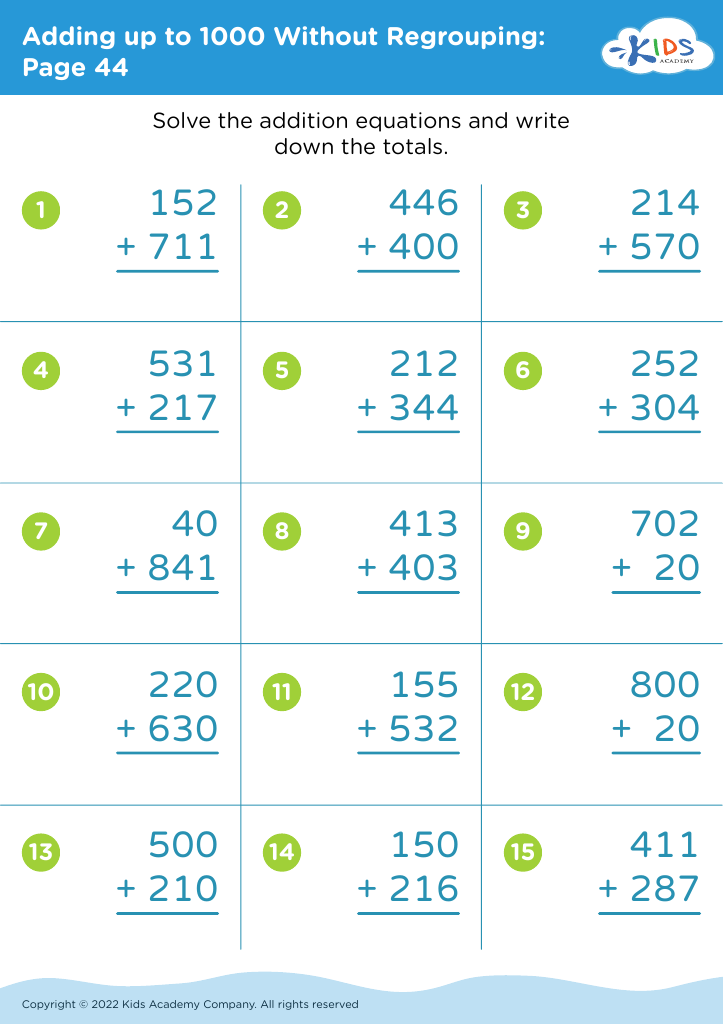
Adding up to 1,000 without regrouping further strengthens a child’s arithmetic skills, teaching them to manage larger numbers with confidence. It requires a solid understanding of place value and enhances their ability to perform basic calculations efficiently.
Additionally, parents and teachers should care because these foundational skills build a bridge to more complex math concepts, such as adding and subtracting fractions or working with mixed numbers in future grades. Strong understanding of fractions and addition without regrouping promotes success not just in math, but across various subjects, reinforcing critical thinking and problem-solving abilities that students will use throughout their education. Encouraging practice in these areas helps cultivate a positive learning environment and boosts students' confidence.