Basic Addition Skills Grade 3 Adding up to 1000 Worksheets
3 filtered results
-
From - To
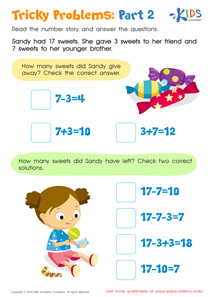
Boost your child's proficiency in addition with our comprehensive Basic Addition Skills Grade 3 worksheets, designed to seamlessly add up to 1000. These engaging and carefully crafted worksheets enhance arithmetic skills through a variety of fun and educational exercises. Perfectly suited for third graders, each worksheet combines practice problems, visual aids, and step-by-step solutions to build confidence and ensure a deeper understanding of basic addition. Ideal for classroom use or at-home practice, these resources support essential math foundations, aligning with educational standards while making learning enjoyable. Equip your young mathematician with the skills they need for long-term success!
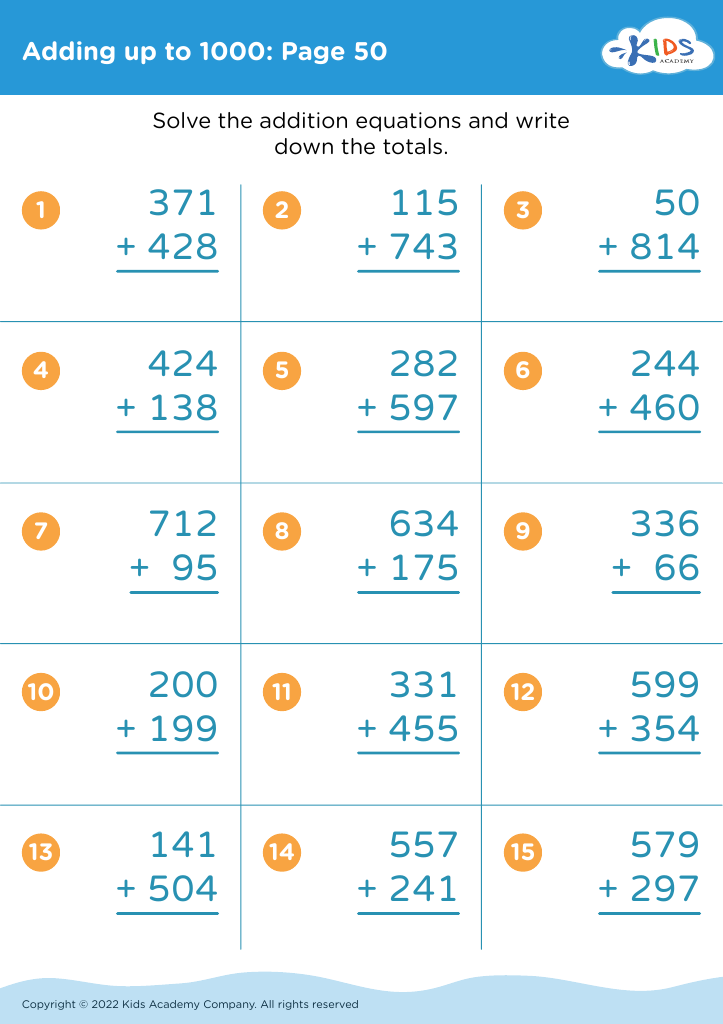
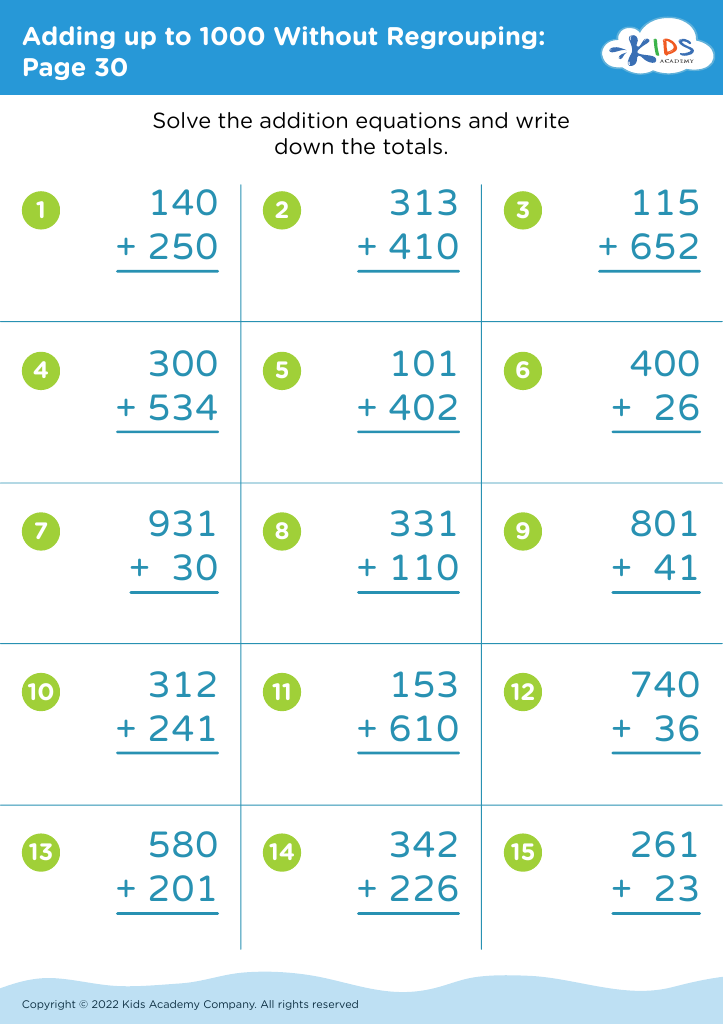
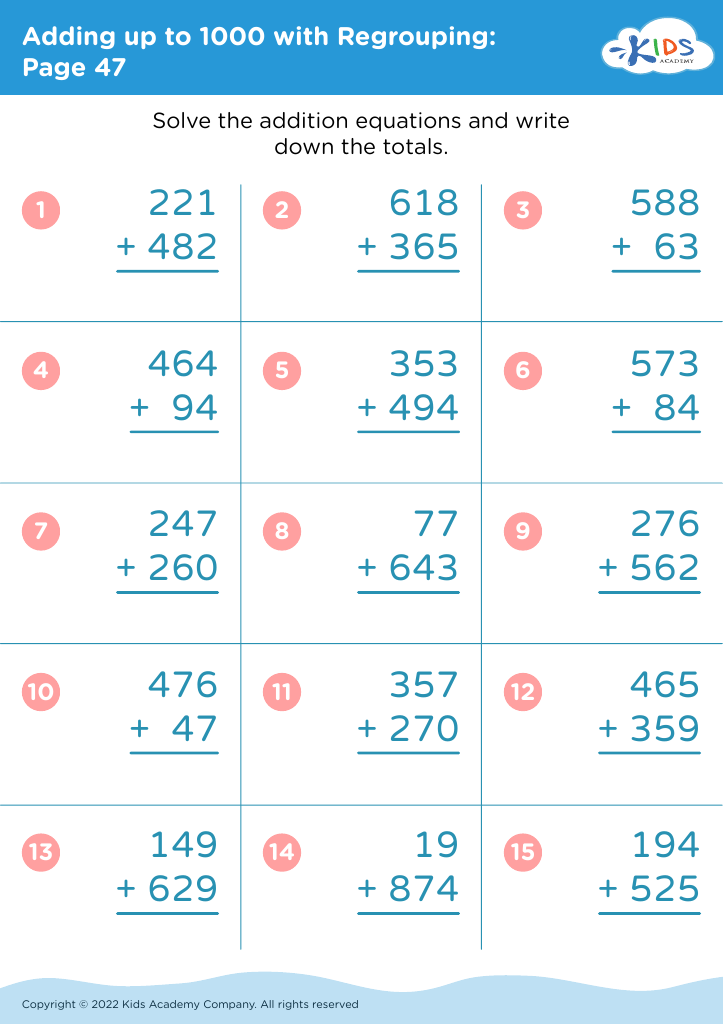


Parents and teachers play a crucial role in shaping the foundational education of children, and emphasis on basic addition skills in Grade 3, particularly adding up to 1000, is vital. First, basic addition forms the cornerstone of all future math concepts. If a child develops a strong understanding and proficiency in adding numbers up to 1000, it sets them on a path to excel in more complex areas like multiplication, division, and problem-solving.
Moreover, mathematics translates to other areas of life and academic pursuits. Possessing solid basic addition skills helps in everyday tasks such as budgeting, telling time, and comparing quantities, thus contributing to overall numeracy.
Teachers and parents should care about these skills because they promote logical thinking and cognitive development. When children practice addition, they enhance their memory, strategic thinking, and attention to detail, which are crucial abilities beyond mathematics alone.
Furthermore, proficiency in math can boost a child’s confidence and academic self-esteem, facilitating a positive attitude towards learning in general. By investing time and resources to ensure children master basic addition up to 1000, parents and teachers are laying a critical educational foundation, leading to success in higher education and everyday life skills. This helps create well-rounded, capable individuals prepared for varied future challenges.