Color recognition Grade 3 Adding up to 1000 Worksheets
3 filtered results
-
From - To
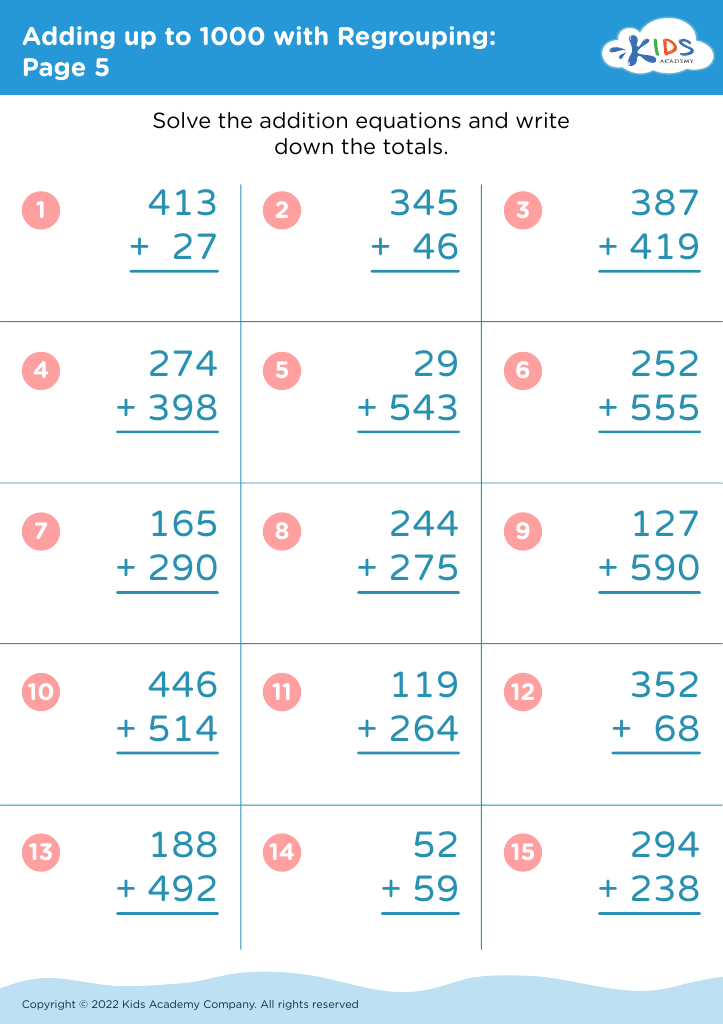
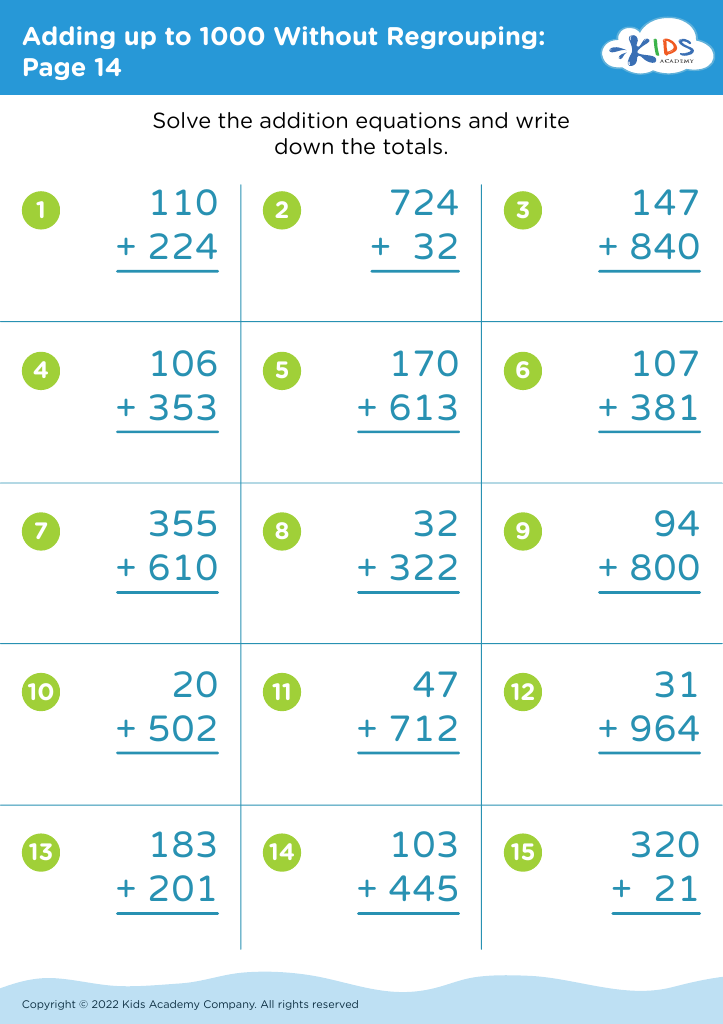
Enhance your third grader's learning experience with our "Color Recognition Grade 3 Adding Up to 1000 Worksheets"! Designed to blend mathematical skills with vibrant visuals, these worksheets make learning addition fun and engaging. Students will practice adding numbers up to 1000 while identifying and applying color recognition techniques. Enhanced by playful graphics and interactive exercises, these worksheets promote critical thinking and creativity in a supportive learning environment. Perfect for classroom use or at-home enrichment, our resources foster essential math skills and color awareness simultaneously. Engage your child today with these innovative worksheets and watch them flourish in both color and comprehension!
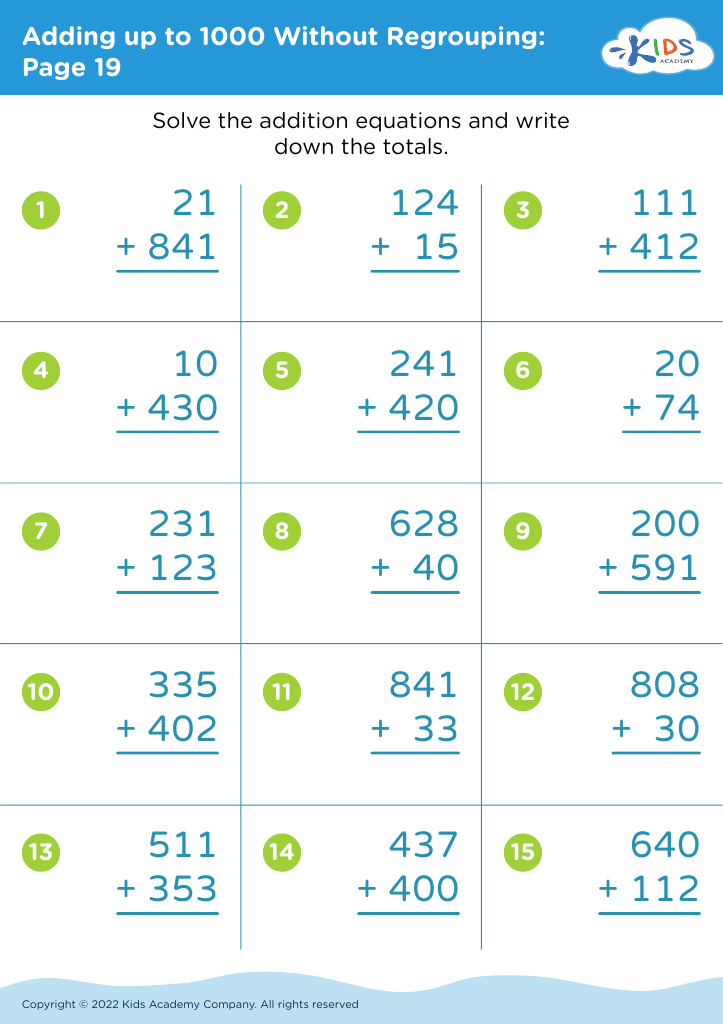


Color recognition and addition skills are essential for a child's cognitive and academic development, particularly by Grade 3. Understanding colors lays the foundation for visual differentiation, aiding in the identification of patterns, shapes, and even numbers. This ability enhances early mathematical skills, as children often associate colors with quantities, making abstract concepts more tangible.
For 3rd graders, adding up to 1000 requires strong foundational math skills, including place value, number sense, and the ability to engage in multi-step problems. Color recognition can be integrated into math activities, allowing for visual aids like colorful counters or colored number charts. This multisensory approach caters to various learning styles, making learning more engaging and effective.
Moreover, understanding color can improve attention and focus in a classroom setting. Teachers can use color-coded systems to organize information, facilitate group work, and manage classroom activities, improving overall classroom dynamics. For parents, encouraging color recognition at home can make math practice more fun and interactive, bridging school learning with everyday life. Overall, caring about color recognition means advocating for a rich learning environment where children can thrive academically and socially.