Comparing Fractions Grade 3 Adding up to 1000 Worksheets
16 filtered results
-
From - To
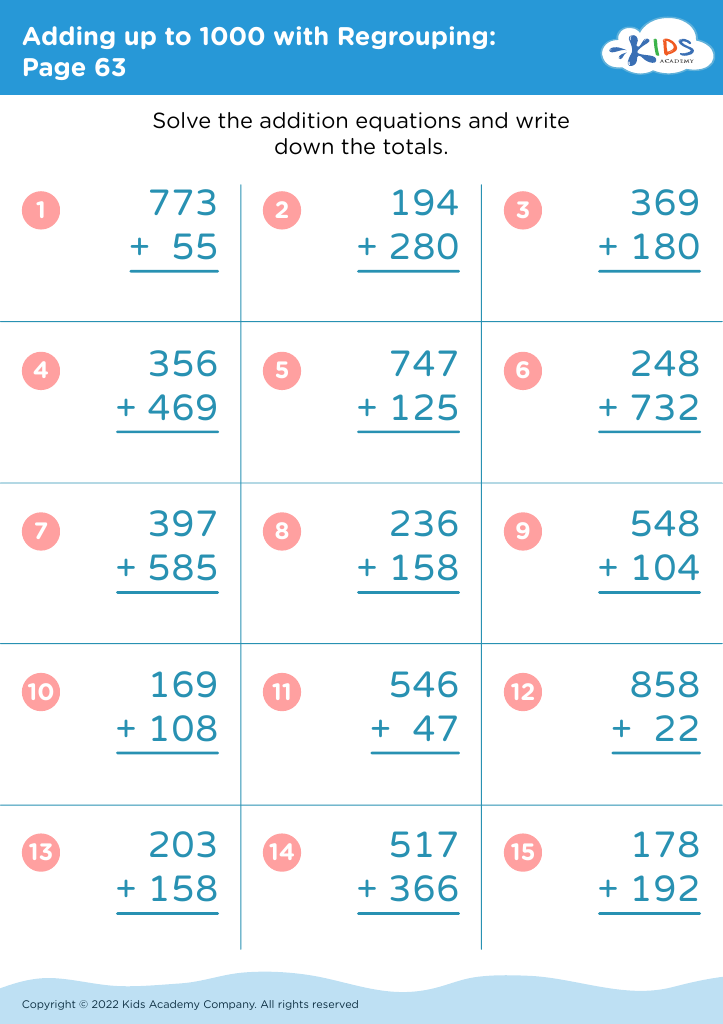
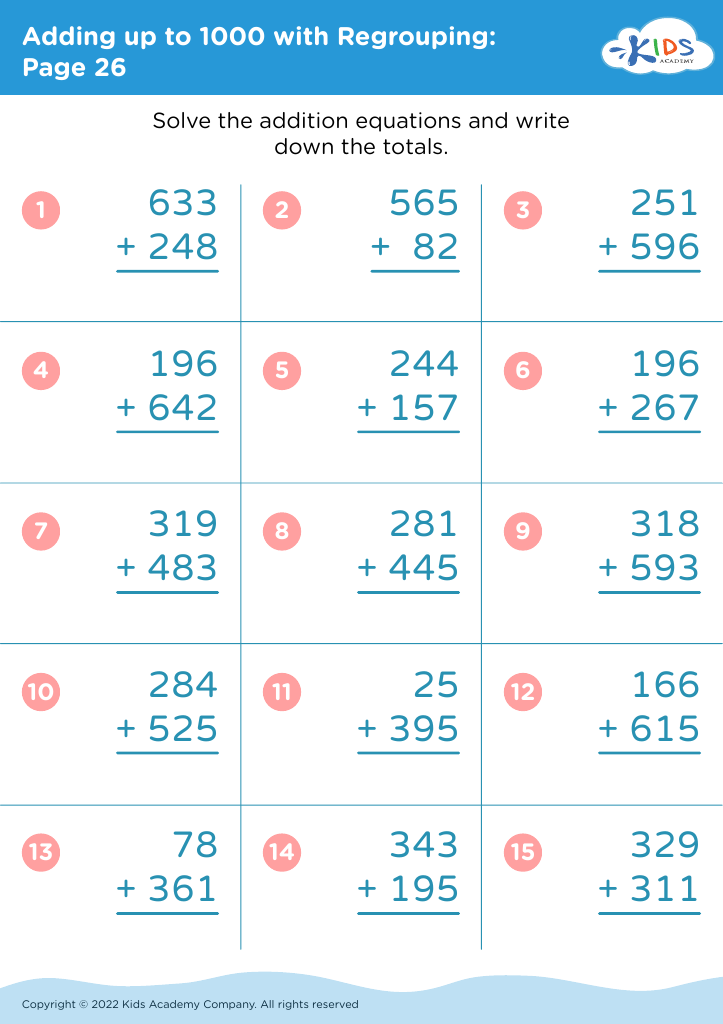
Discover a comprehensive collection of "Comparing Fractions Grade 3 Adding up to 1000 Worksheets" designed to enhance your child's math skills. Perfect for third graders, these worksheets blend fraction comparison and addition up to 1000, ensuring a well-rounded learning experience. Through engaging and interactive exercises, your child will master key concepts of fractions and improving their addition abilities. Each worksheet is crafted by educational professionals to align with grade-level standards, making learning fun and effective. Let your child build confidence and excel in math with these efficient resources. Explore now and take your child's math skills to the next level!
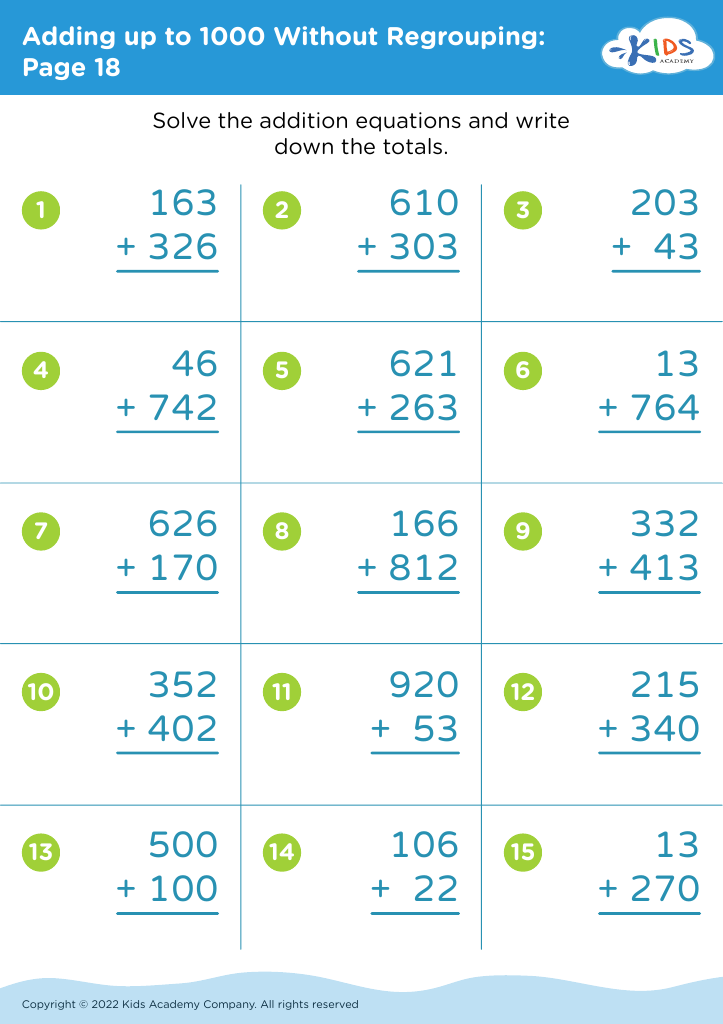
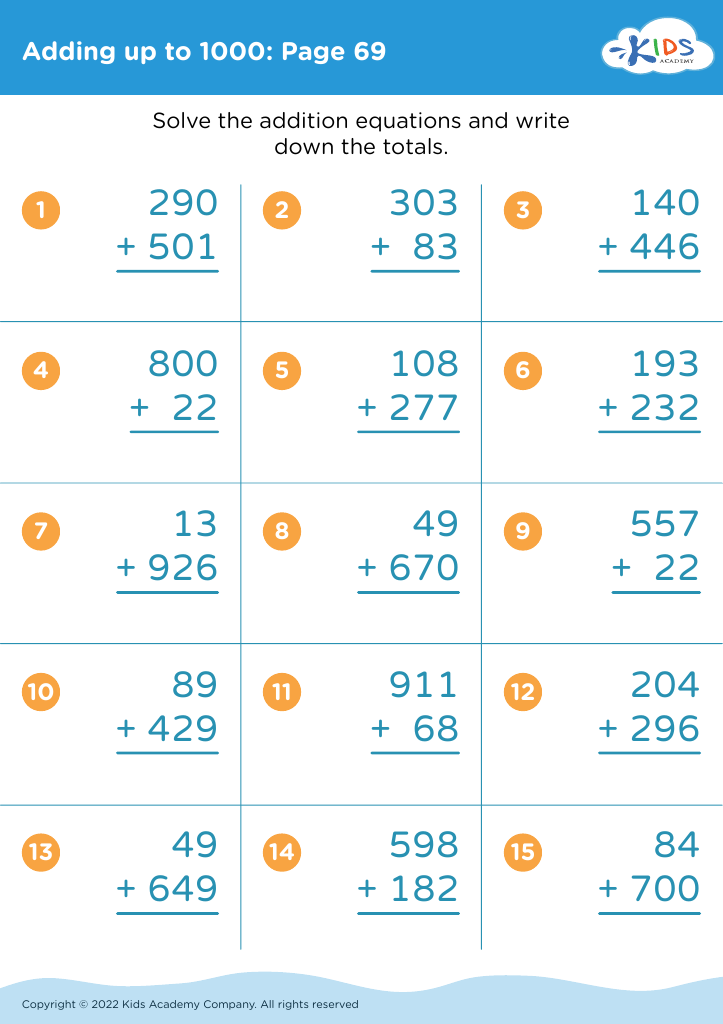
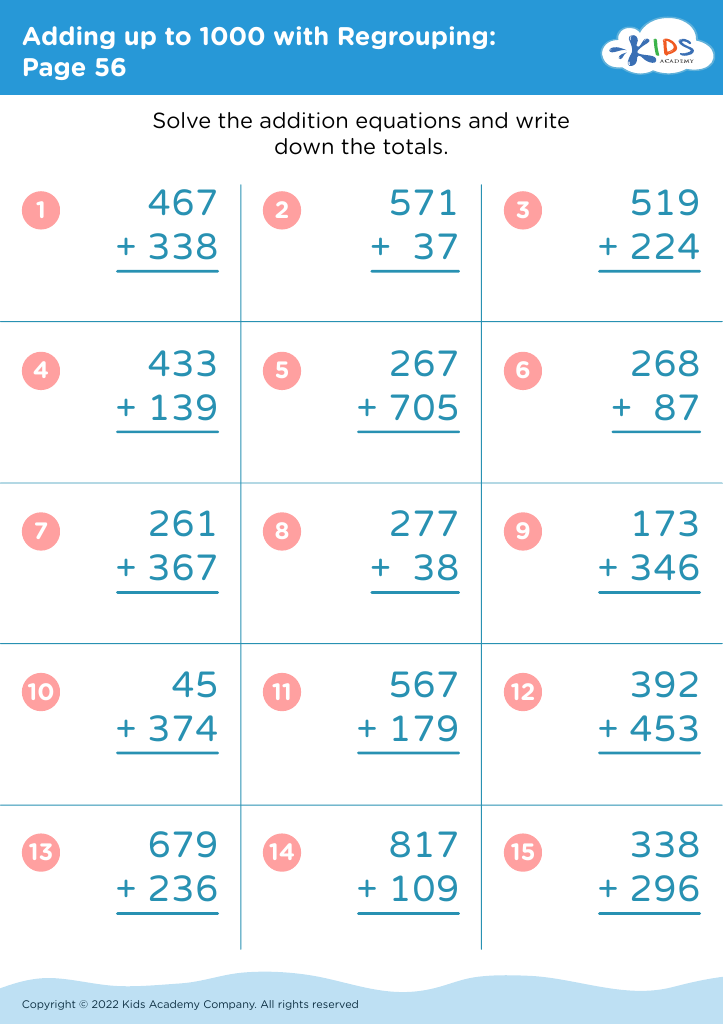
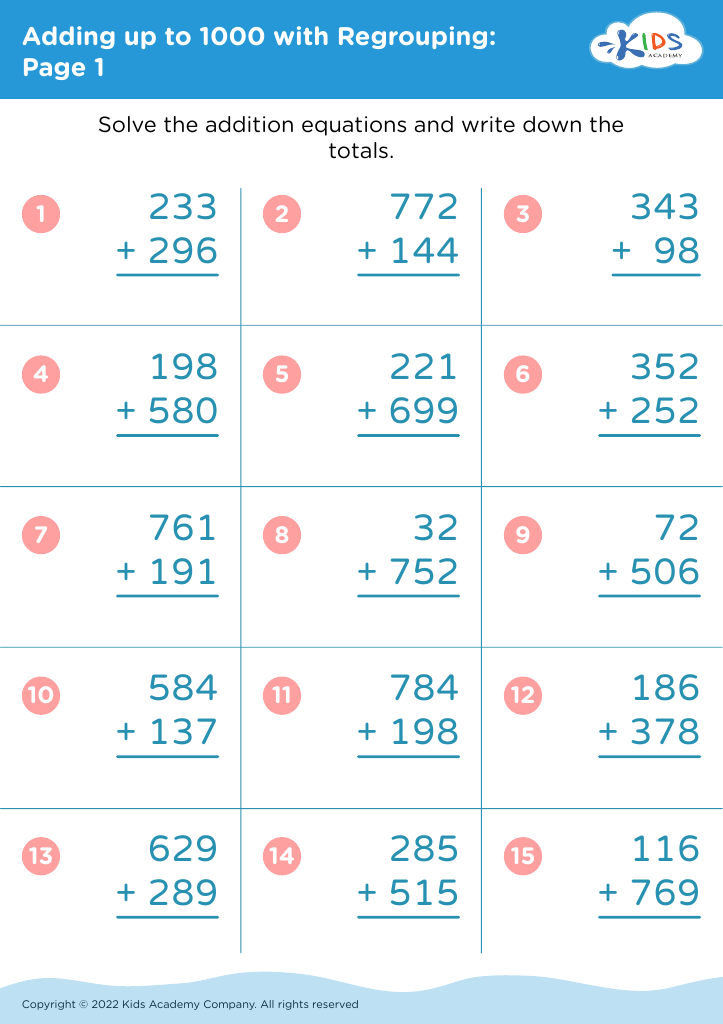


Comparing fractions in grade 3 is a foundational skill that plays a crucial role in a child's mathematical development. Firstly, it deepens students' understanding of numerical relationships and equivalency. By comparing fractions, students learn that fractions represent parts of a whole and can be compared by finding common denominators or by understanding the size of the parts relative to each other. This skill is fundamental as it extends to more advanced topics in mathematics like ratios, proportions, and decimal relationships.
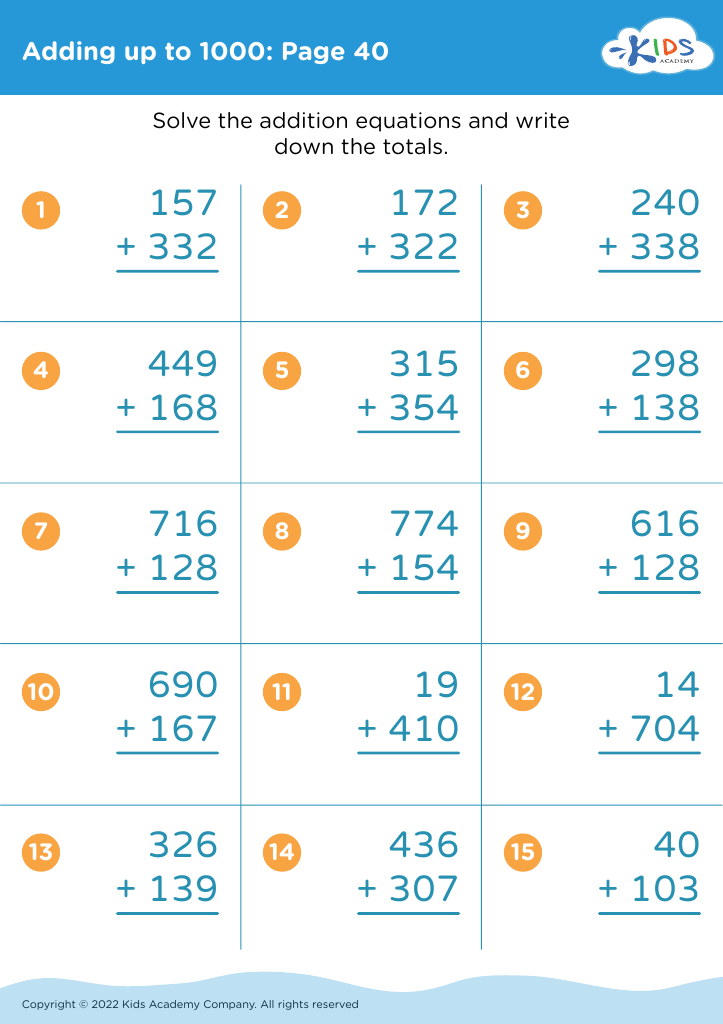
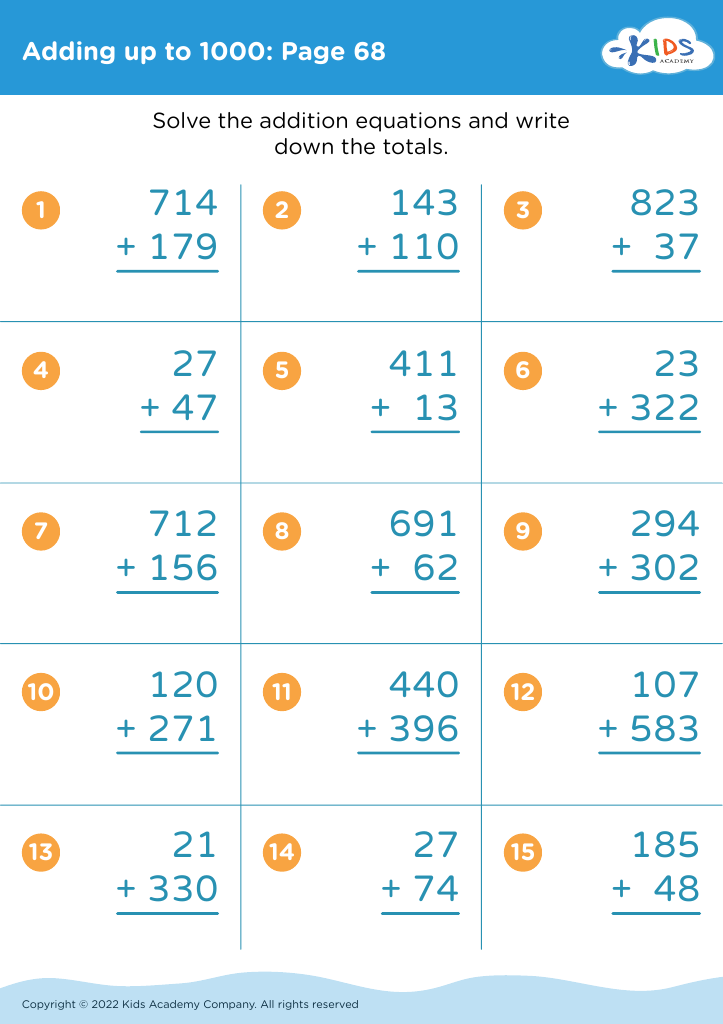
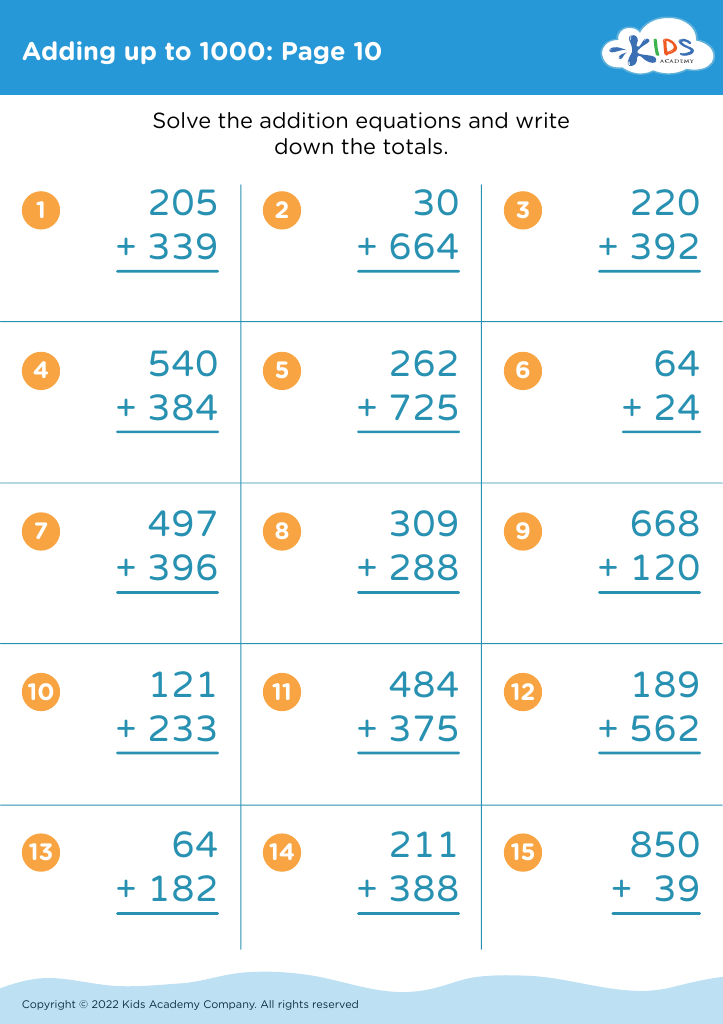
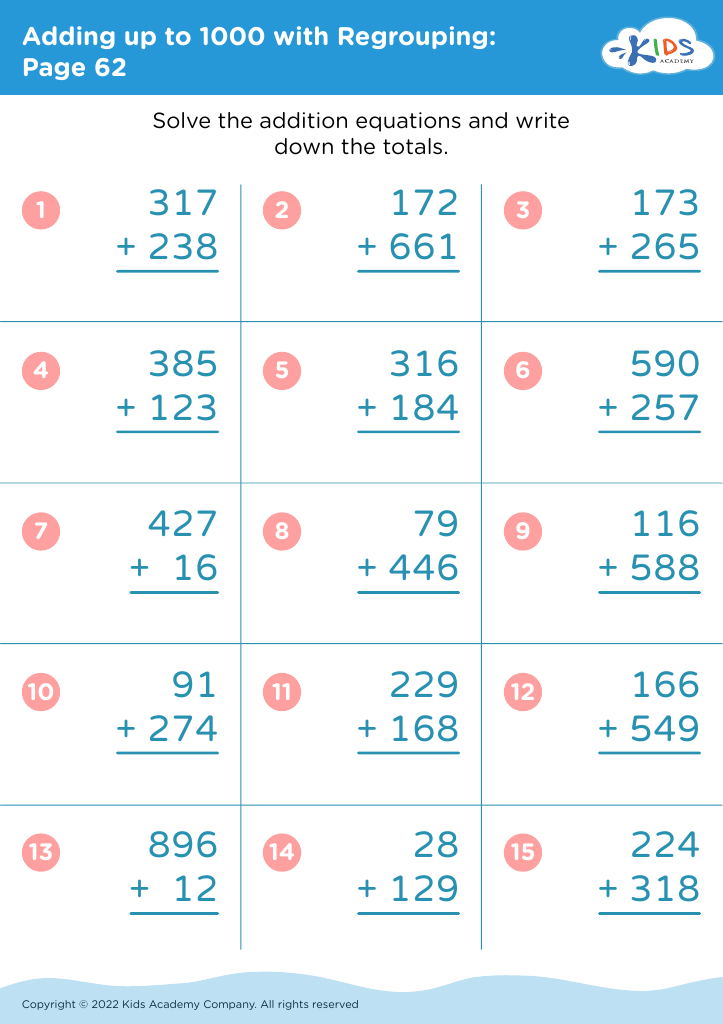
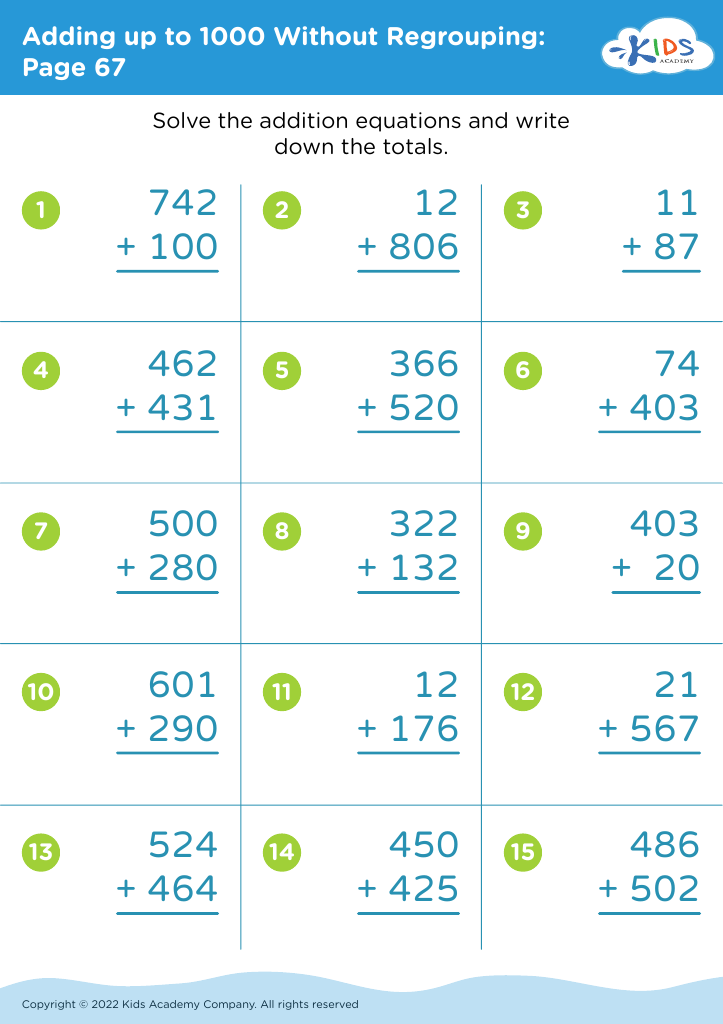
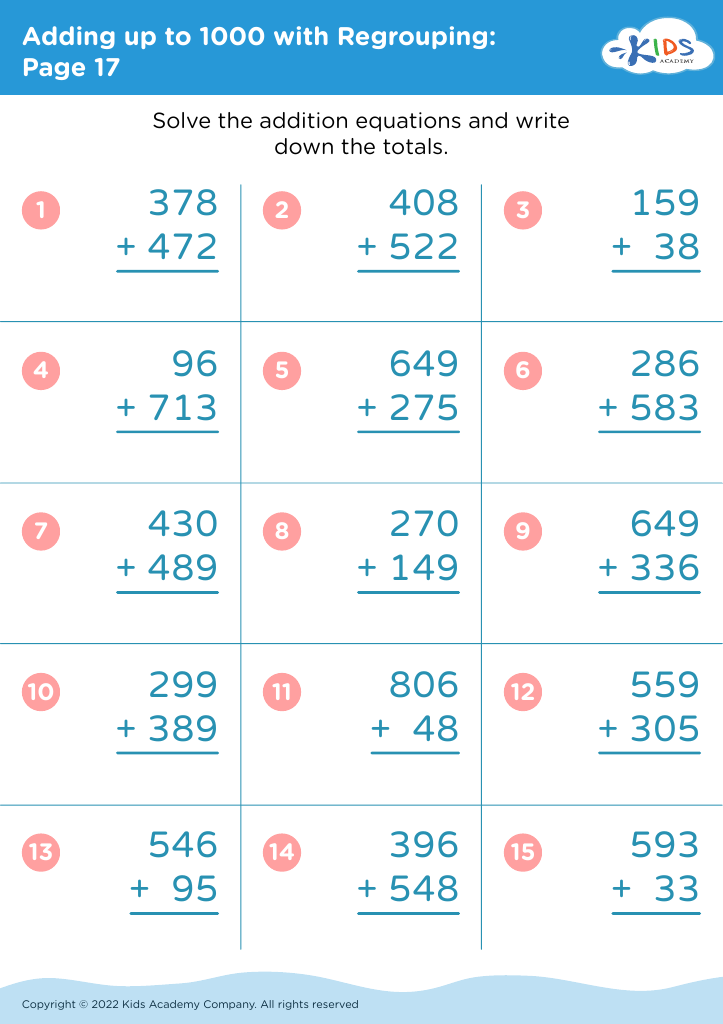
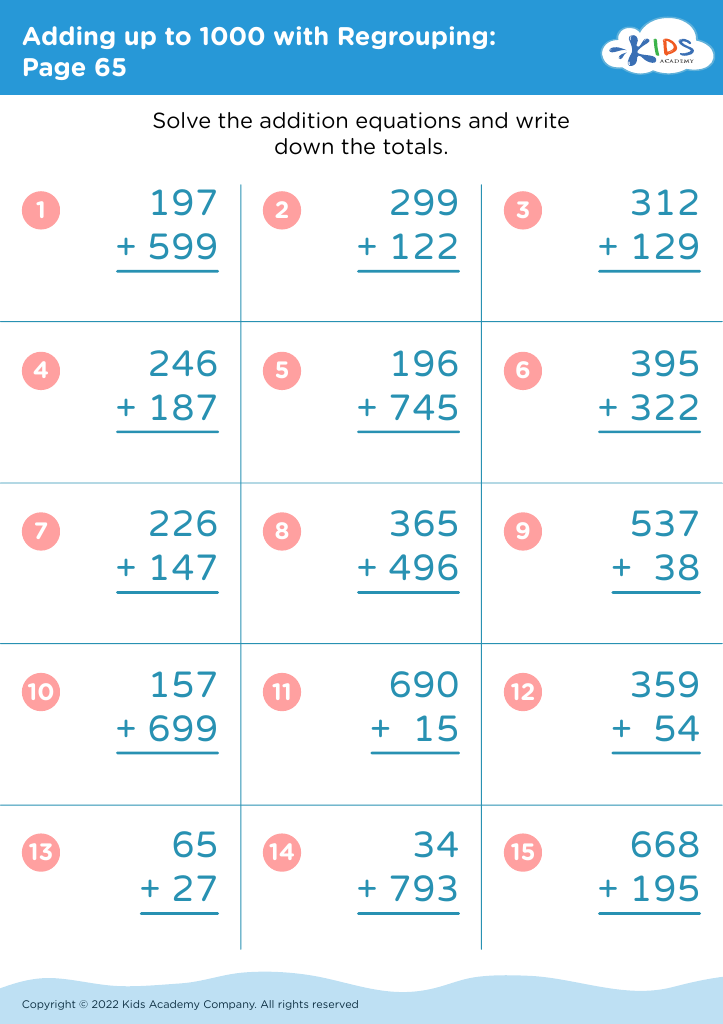
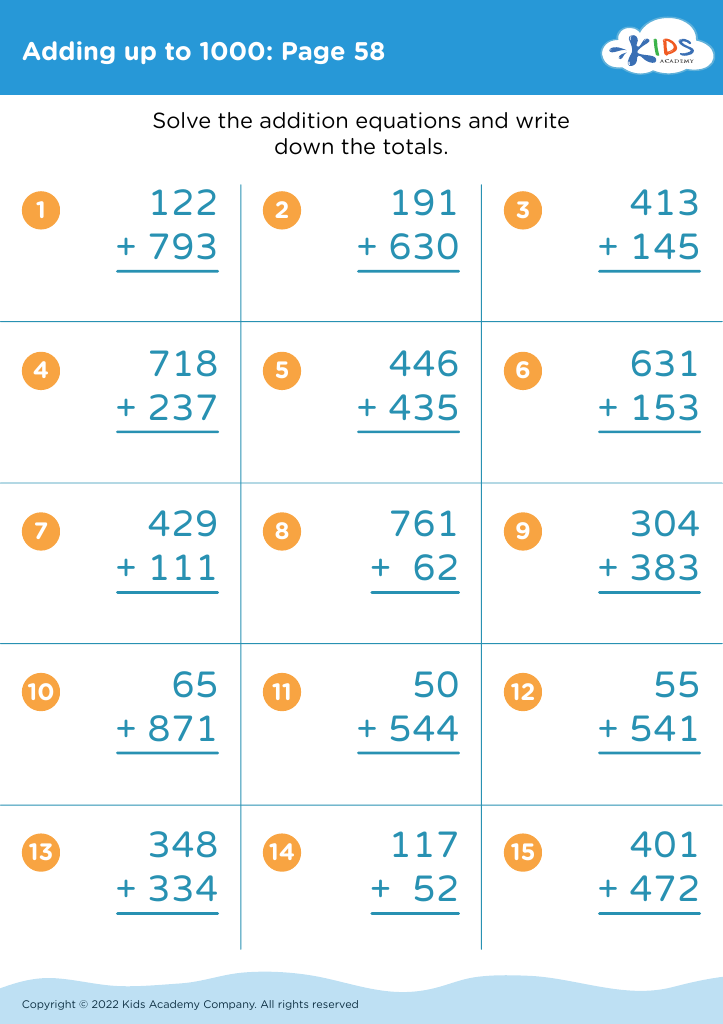
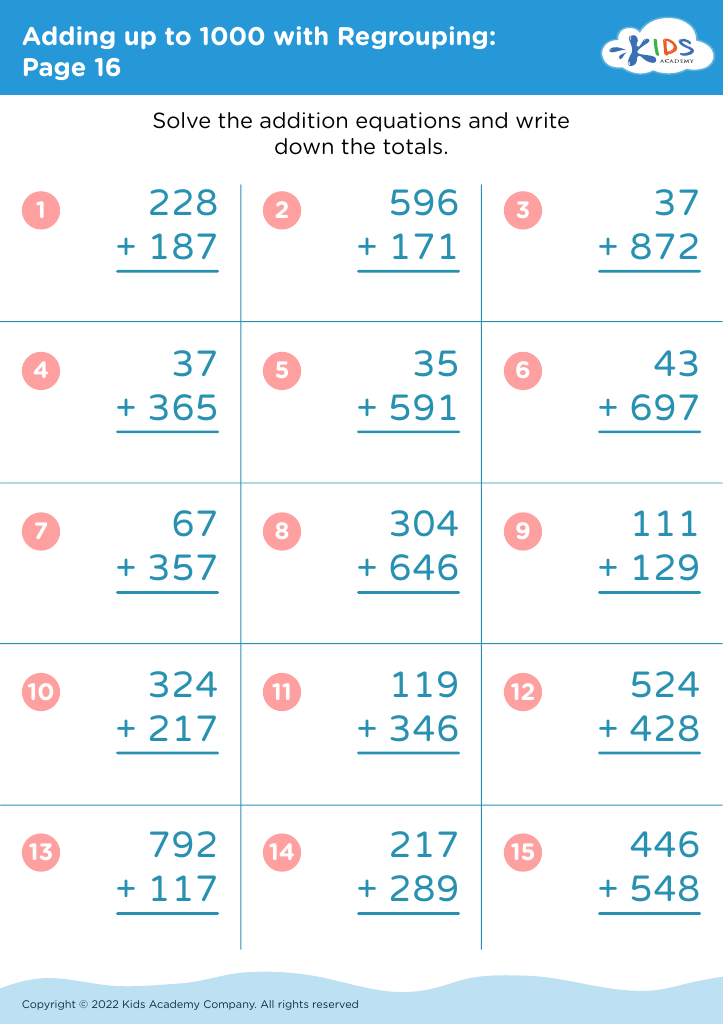
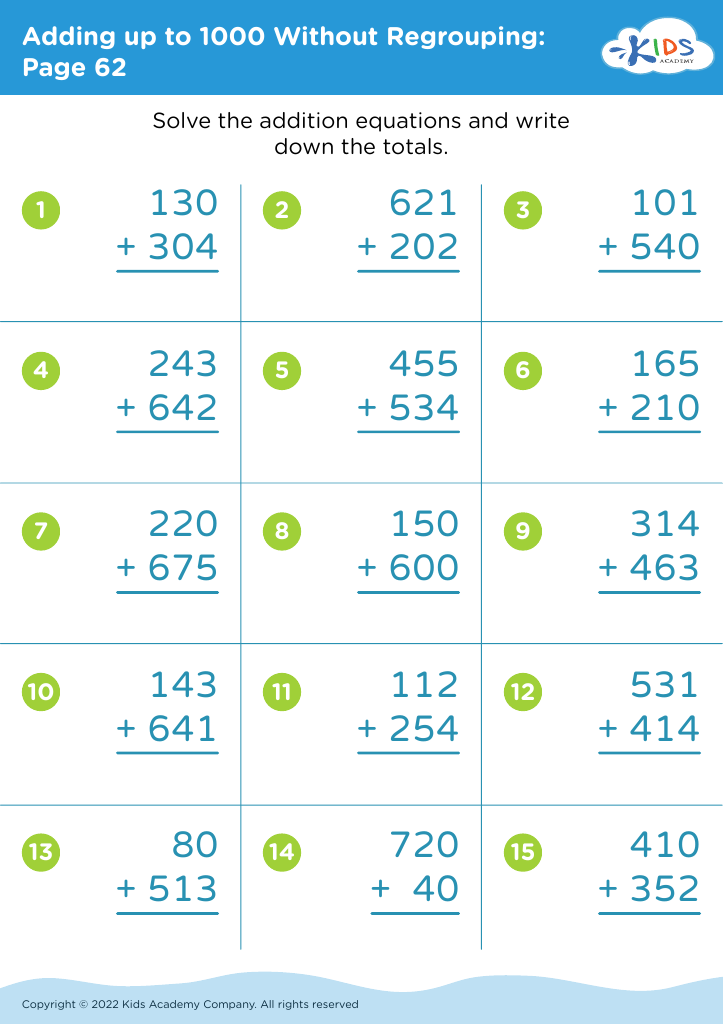
Additionally, adding numbers up to 1,000 is equally important. It enhances students' comfort and proficiency with larger numbers, solidifying their place value knowledge and their ability to perform operations with multidigit numbers. Understanding how to decompose numbers and use strategies such as rounding and benchmark numbers can significantly improve students' addition and subtraction skills.
Parents and teachers should care about these competencies because they build critical thinking and problem-solving abilities that go beyond math class. Competence in comparing fractions and adding large numbers fosters confidence in students, encouraging them to tackle progressively challenging problems. This nurtures a growth mindset and prepares children for future academic success in subjects such as science, engineering, and economics, where mathematical literacy is crucial. In essence, mastering these concepts at an early grade sets a strong foundation for lifelong learning and everyday numeracy.