Filters

19 filtered results

Clear all filters
Favorites
With answer key
Interactive

19 filtered results

Difficulty Level

Grade


Enhance your third grader's math skills with our Counting Practice Worksheets focused on adding up to 1000! These engaging, printable resources provide an array of exercises designed to improve number recognition, counting proficiency, and addition strategies. Specifically tailored for Grade 3 students, our worksheets foster a deeper understanding of place value and help develop essential math skills in a fun and interactive way. Ideal for both classroom and home use, these worksheets encourage independent practice and critical thinking. Let your child embark on a mathematical journey and build their confidence while mastering addition within 1000! Explore our collection today!
Check out this FREE Grade 3 Trial Lesson on Adding up to 1000!

Names of Squres and the Center

Favorites
With answer key
Interactive
  • Grade 3
  • Counting practice
  • Adding up to 1000
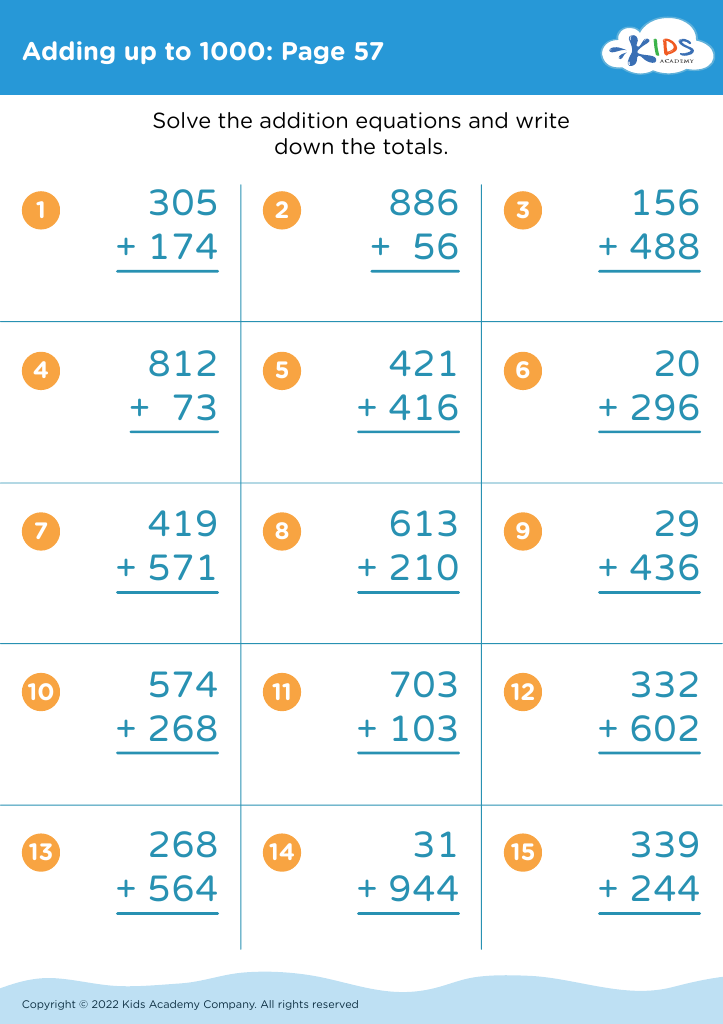
Adding up to 1000: Page 57

Adding up to 1000: Page 57

Adding up to 1000: Page 57
Worksheet
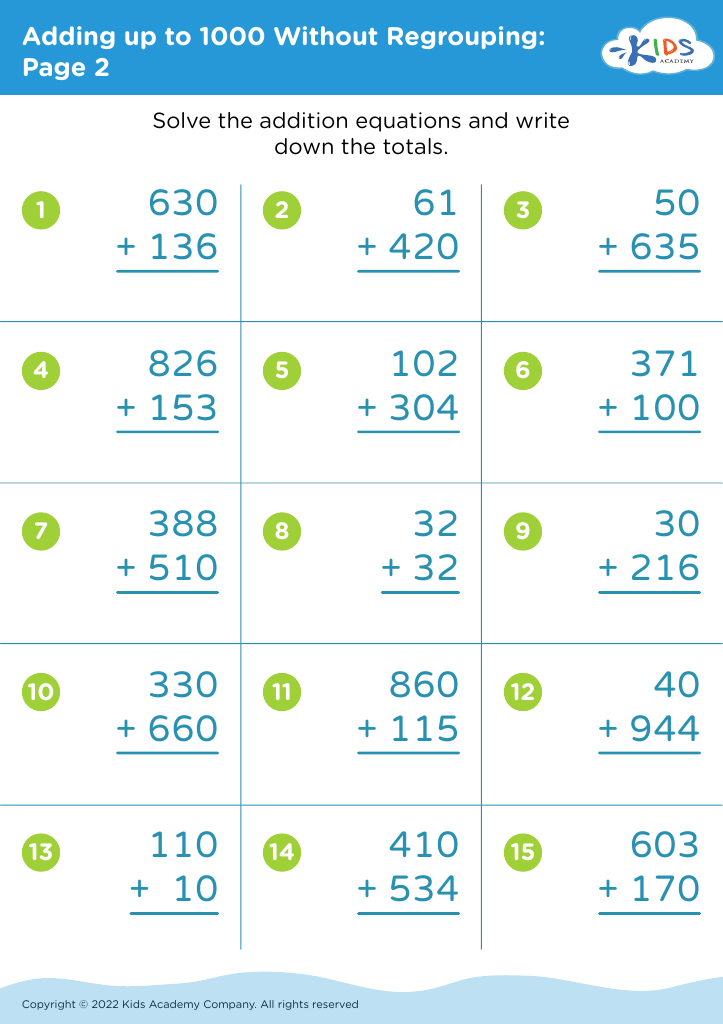
Adding up to 1000 Without Regrouping: Page 2
Worksheet
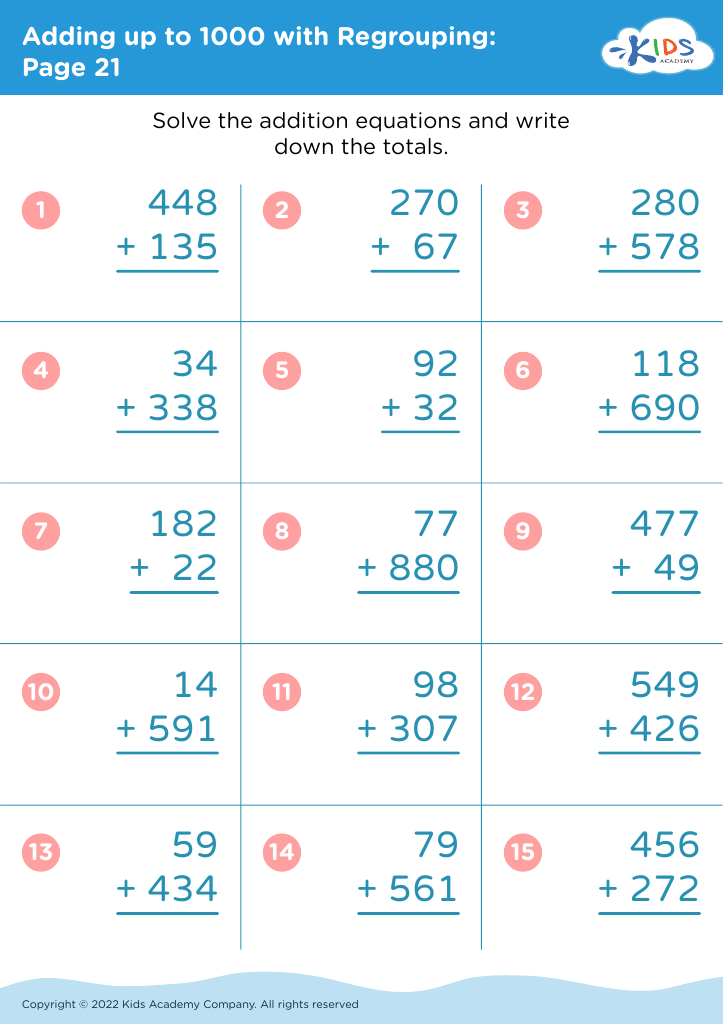
Adding up to 1000 with Regrouping: Page 21
Worksheet
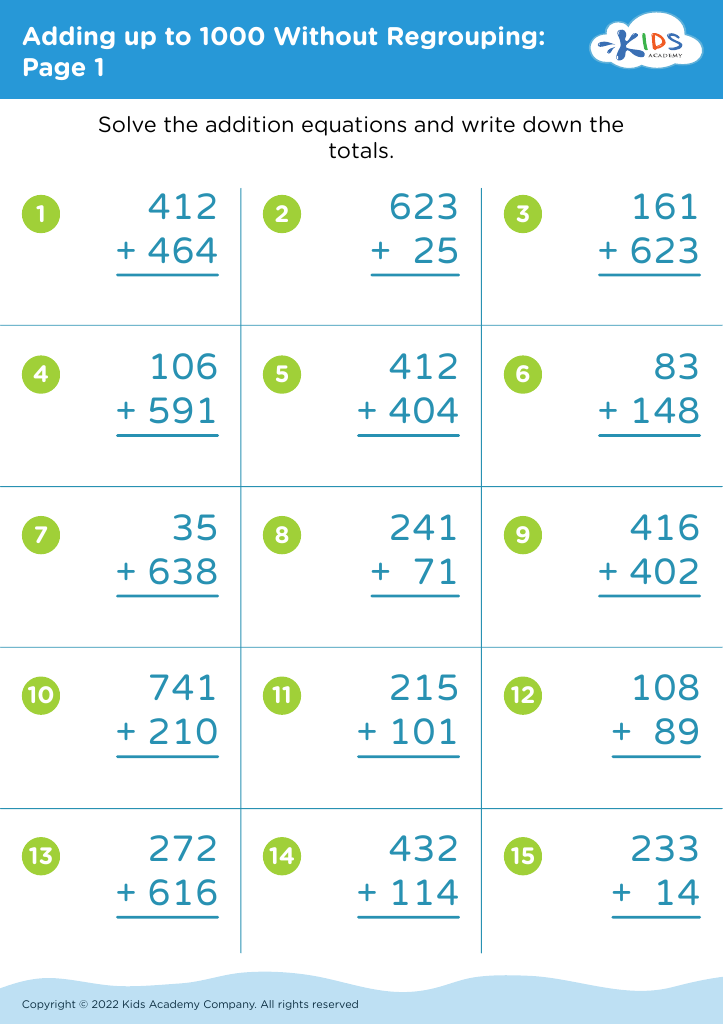
Adding up to 1000 Without Regrouping: Page 1
Worksheet
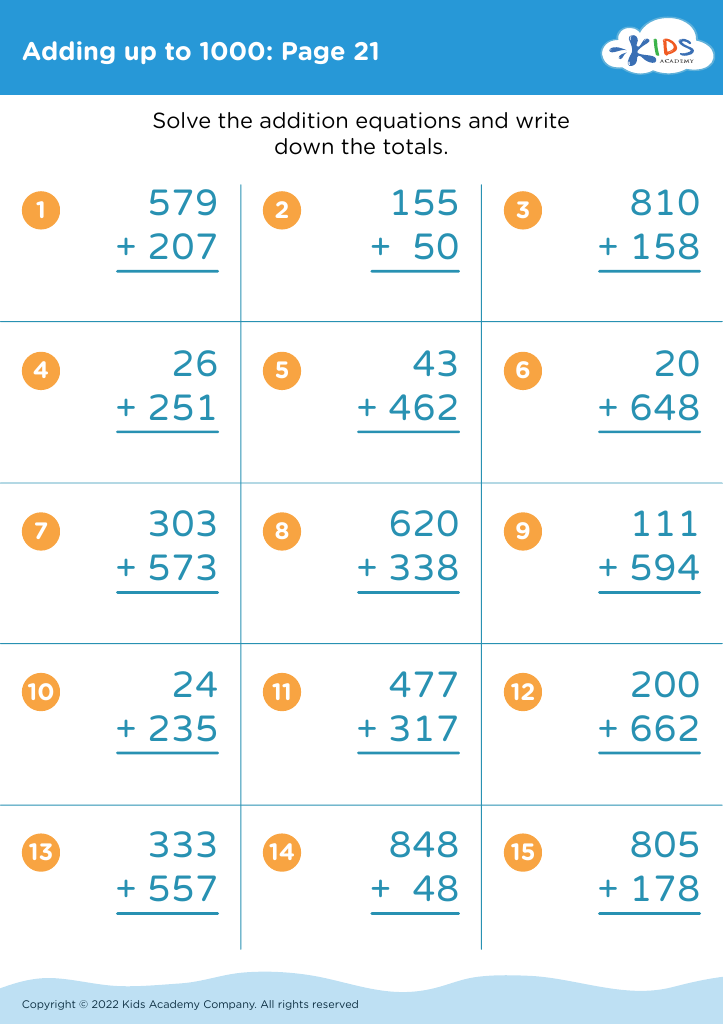
Adding up to 1000: Page 21

Adding up to 1000: Page 21

Adding up to 1000: Page 21
Worksheet
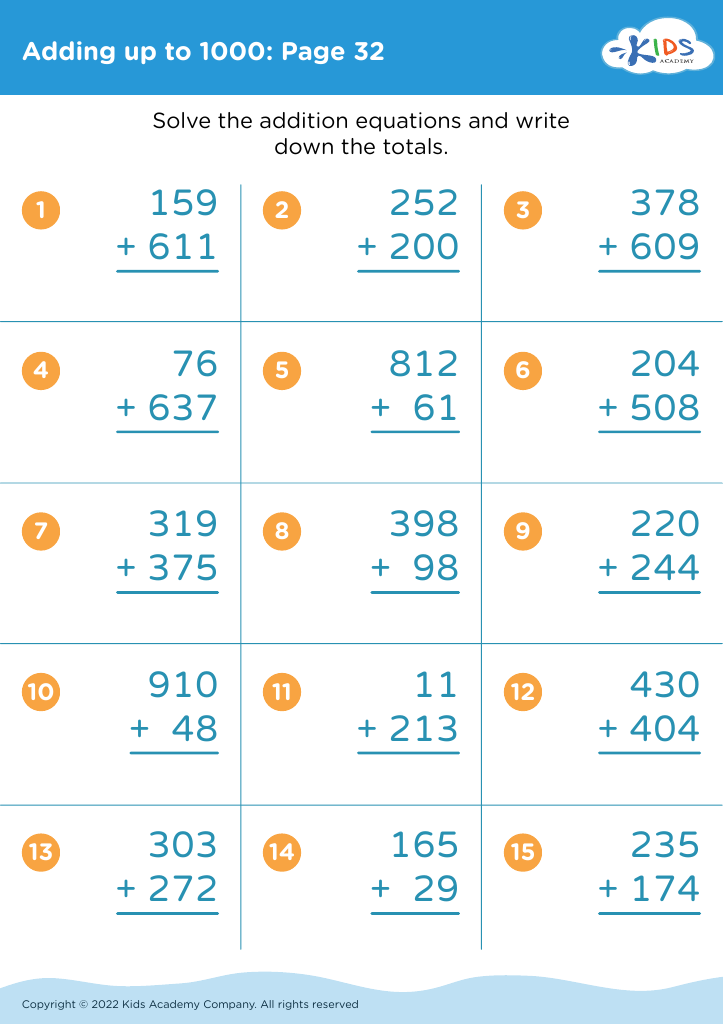
Adding up to 1000: Page 32

Adding up to 1000: Page 32

Adding up to 1000: Page 32
Worksheet
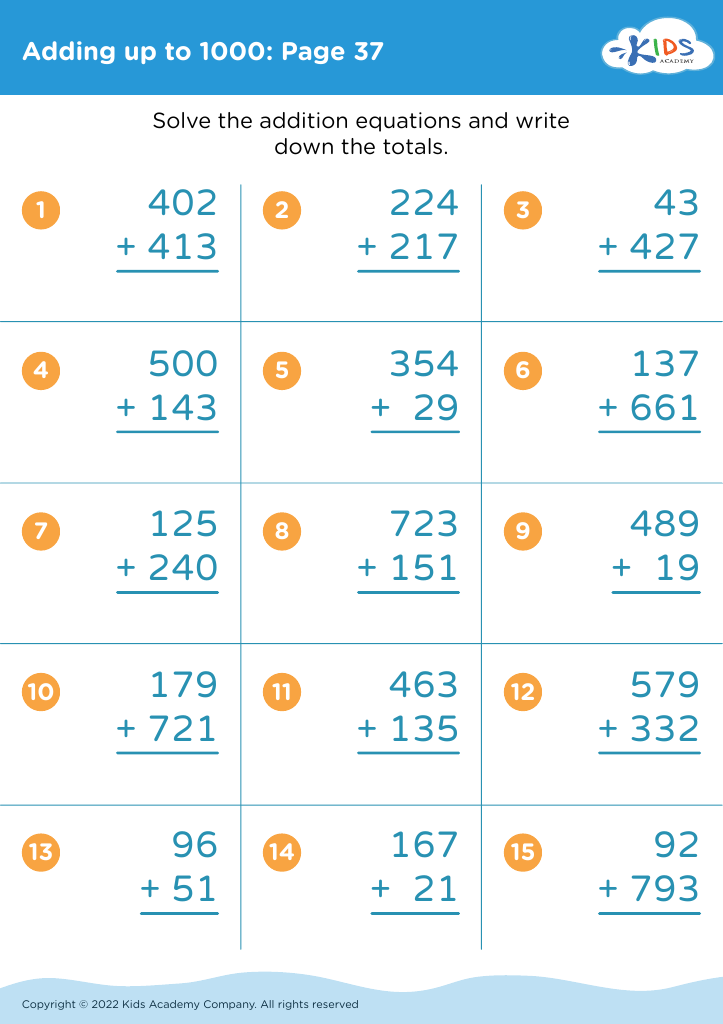
Adding up to 1000: Page 37

Adding up to 1000: Page 37

Adding up to 1000: Page 37
Worksheet
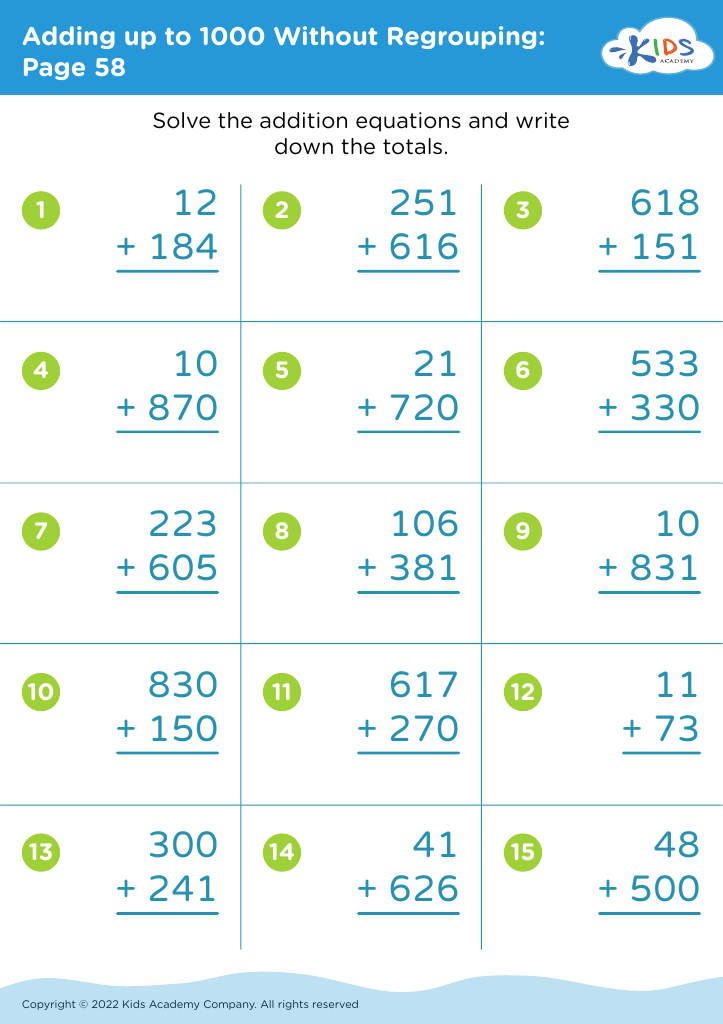
Adding up to 1000 Without Regrouping: Page 58
Worksheet
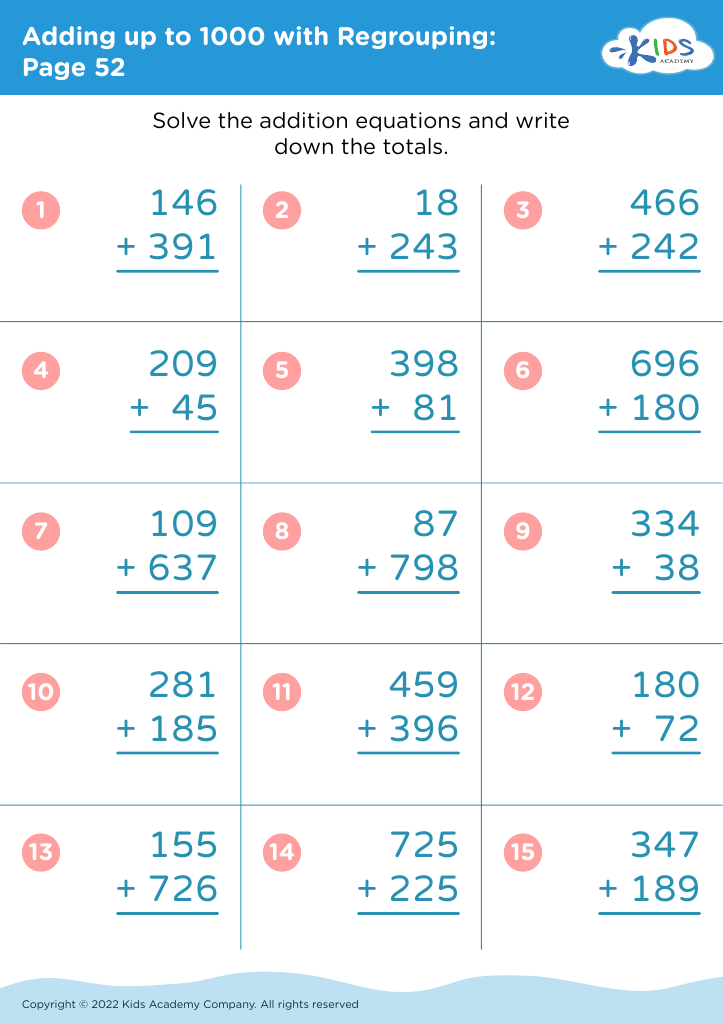
Adding up to 1000 with Regrouping: Page 52
Worksheet
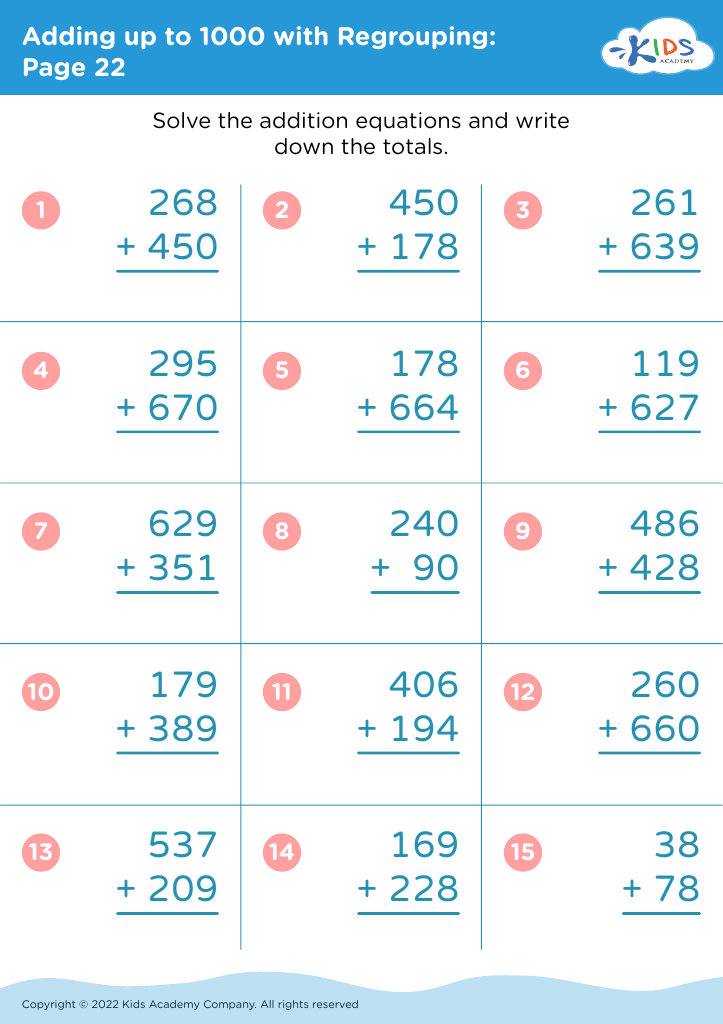
Adding up to 1000 with Regrouping: Page 22
Worksheet
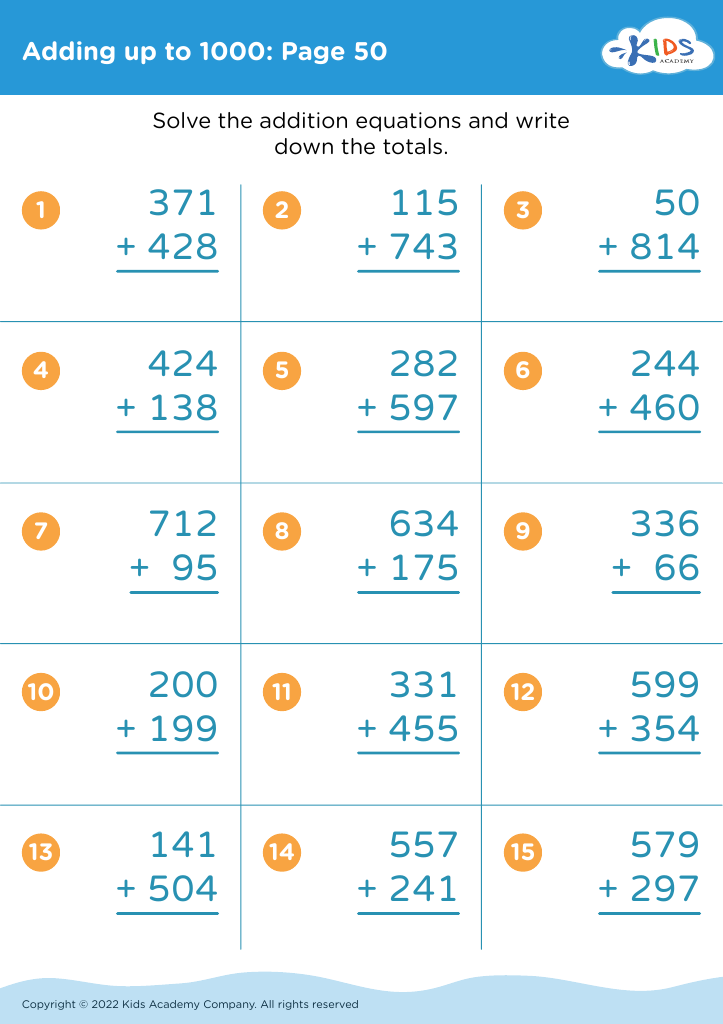
Adding up to 1000: Page 50

Adding up to 1000: Page 50

Adding up to 1000: Page 50
Worksheet
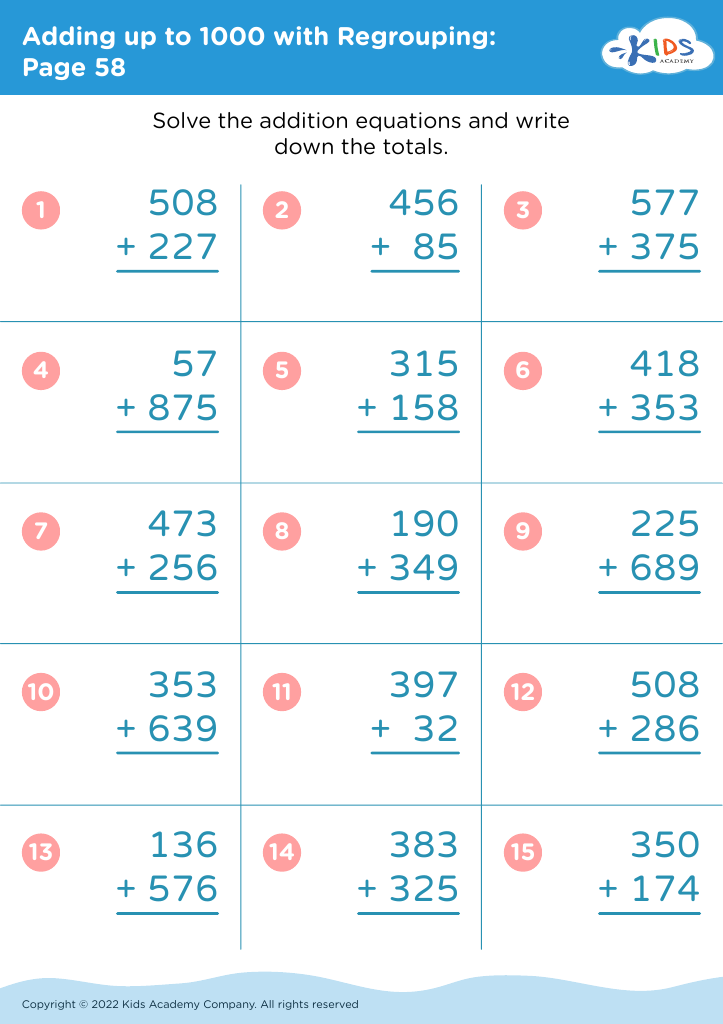
Adding up to 1000 with Regrouping: Page 58
Worksheet
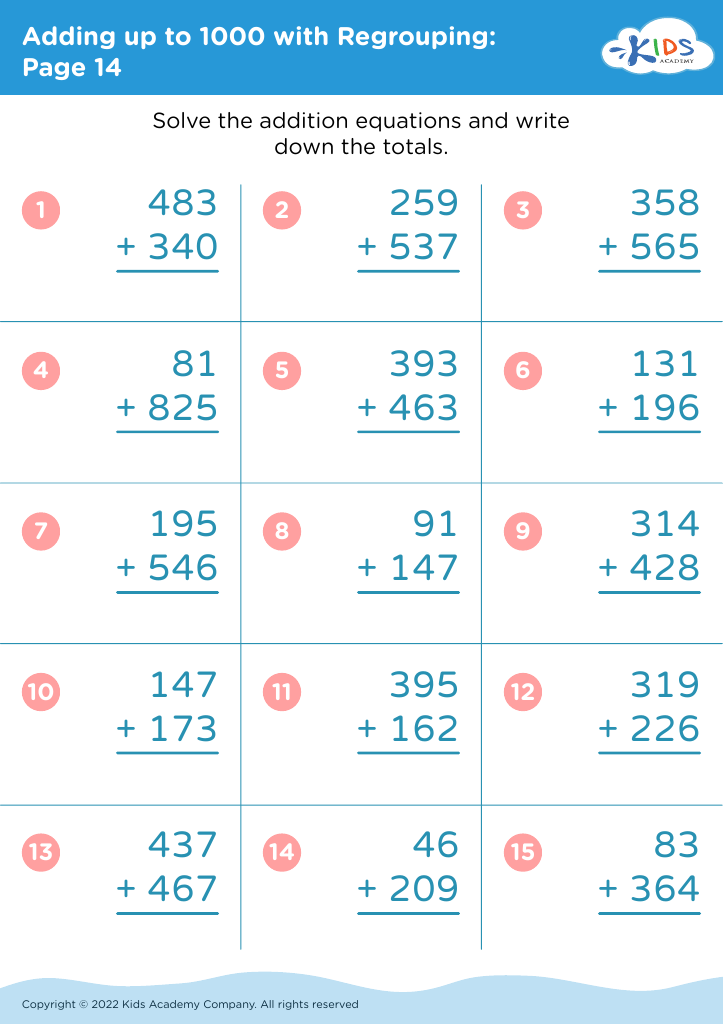
Adding up to 1000 with Regrouping: Page 14
Worksheet
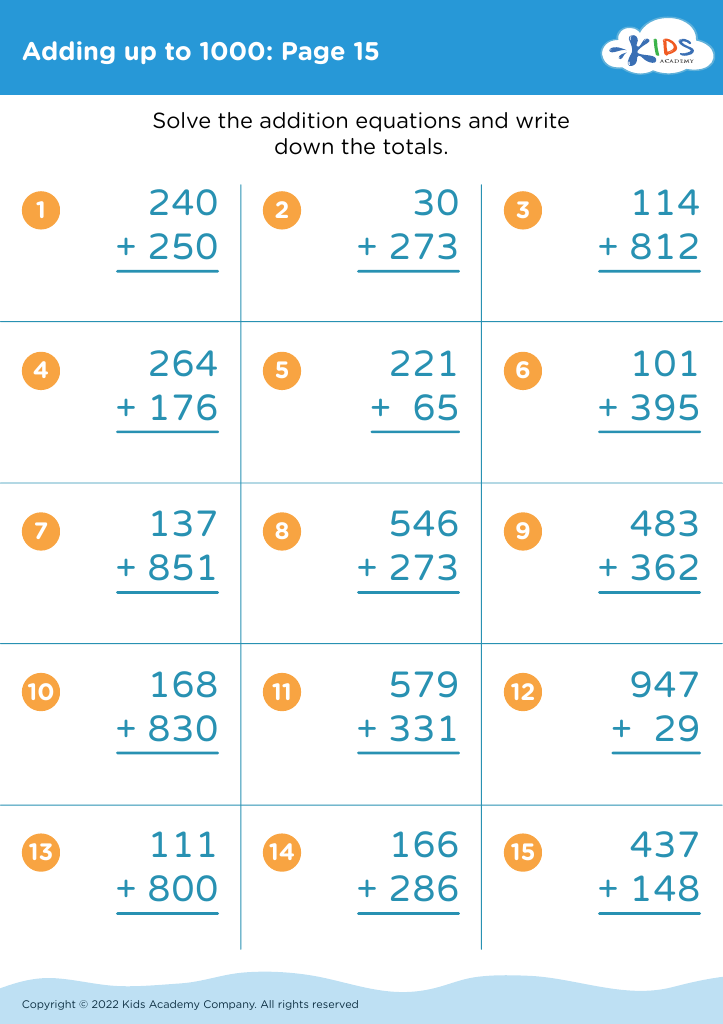
Adding up to 1000: Page 15

Adding up to 1000: Page 15

Adding up to 1000: Page 15
Worksheet
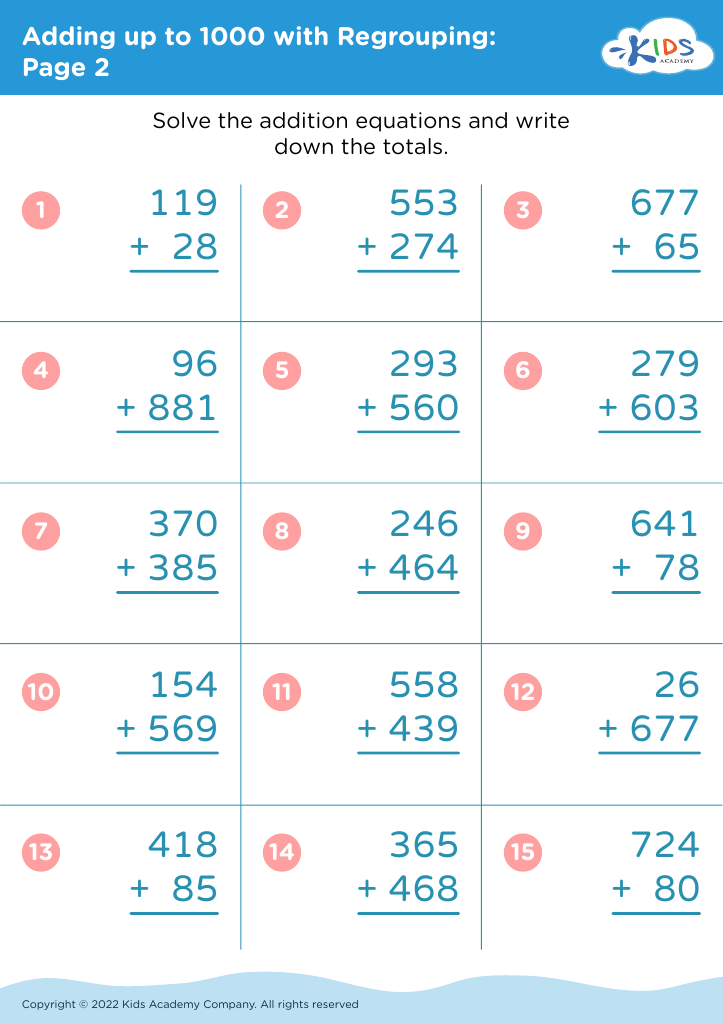
Adding up to 1000 with Regrouping: Page 2
Worksheet
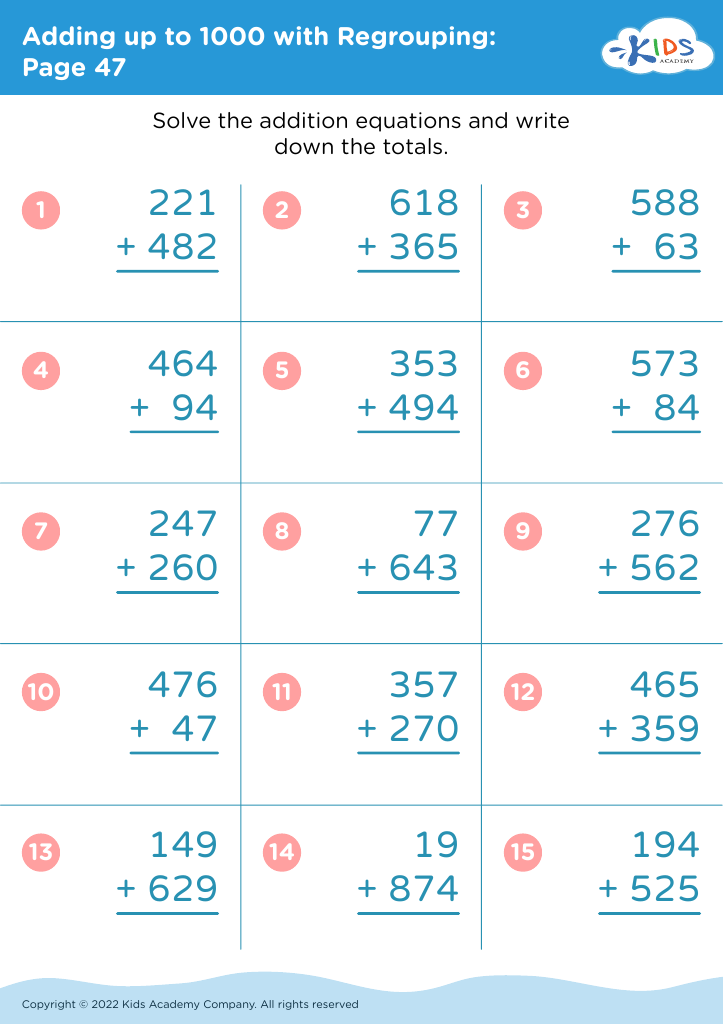
Adding up to 1000 with Regrouping: Page 47
Worksheet
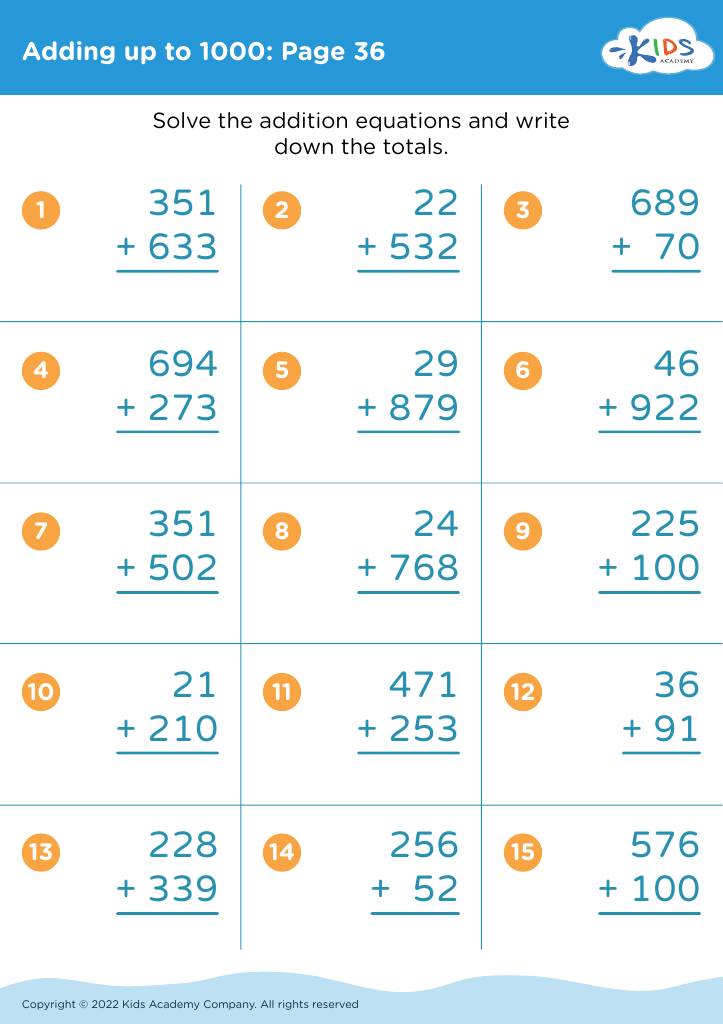
Adding up to 1000: Page 36

Adding up to 1000: Page 36

Adding up to 1000: Page 36
Worksheet
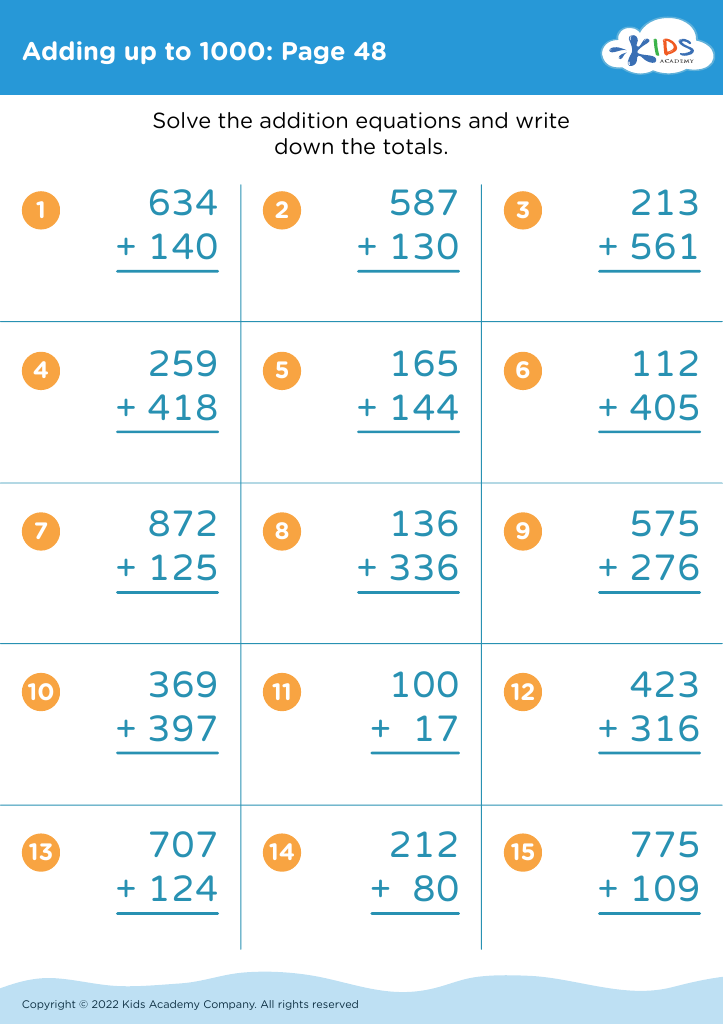
Adding up to 1000: Page 48

Adding up to 1000: Page 48

Adding up to 1000: Page 48
Worksheet
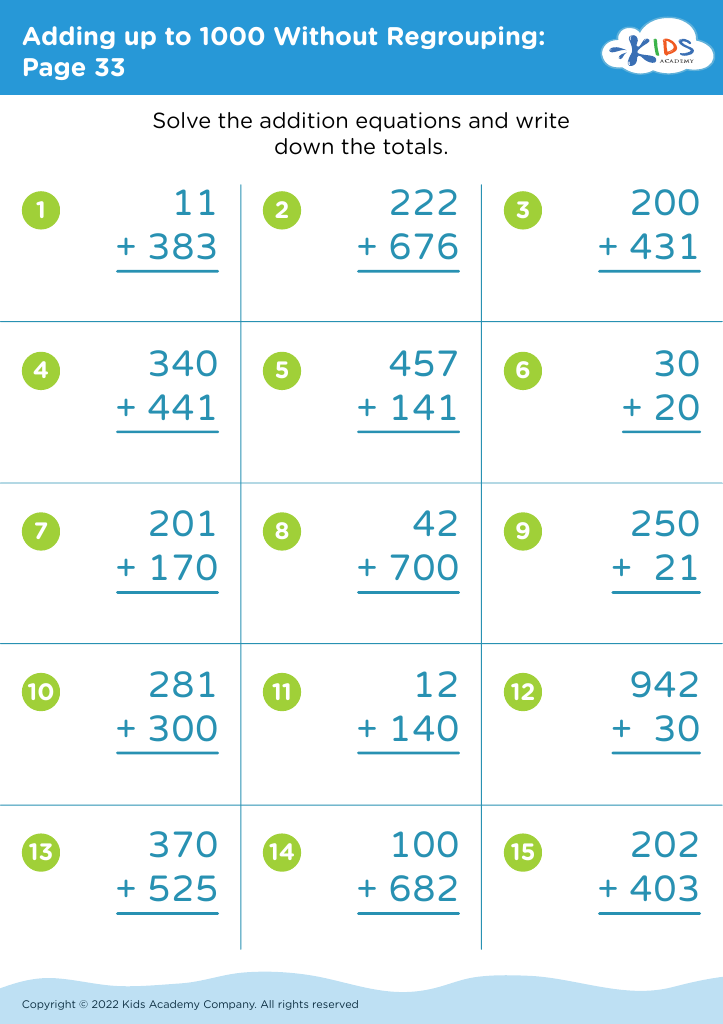
Adding up to 1000 Without Regrouping: Page 33
Worksheet


Counting practice, particularly for Grade 3 students adding up to 1000, is essential for several reasons. First, it lays a strong groundwork for advanced mathematical concepts. At this stage, students transition from basic arithmetic to more complex operations, and solidifying their addition skills fosters confidence in handling larger numbers.

Understanding addition to 1000 also enhances critical thinking and problem-solving abilities. Students learn to recognize patterns, develop estimation strategies, and understand the relationships between numbers. These skills are beneficial not only in math but in everyday life tasks, such as budgeting or measuring.

Furthermore, counting practice promotes language development as children articulate their processes, compare numbers, and explain their reasoning. This communicative aspect aids in reinforcing concepts and boosts engagement.

From a broader educational perspective, proficiency in basic math skills supports overall academic achievement, as mathematics is a foundational element in many subjects.

For parents and teachers, nurturing these skills means setting up students for success, encouraging positive attitudes toward math, and ultimately preparing them for future academic challenges. Investing time in counting practice today ensures students build the confidence and skills necessary to thrive tomorrow.