Critical Thinking Grade 3 Adding up to 1000 Worksheets
5 filtered results
-
From - To
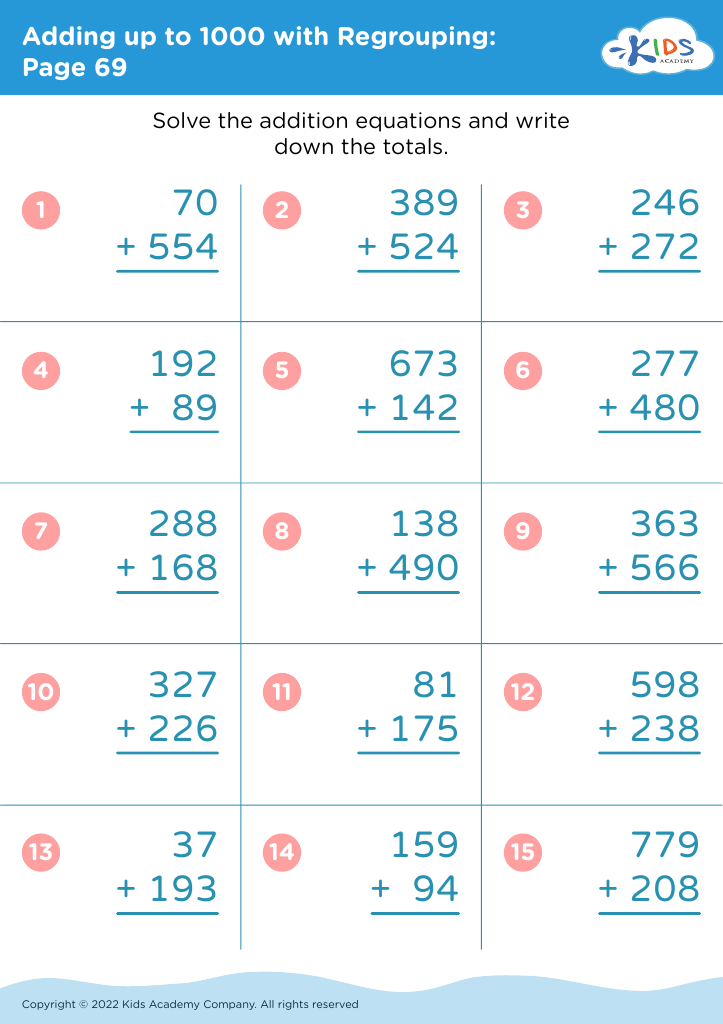
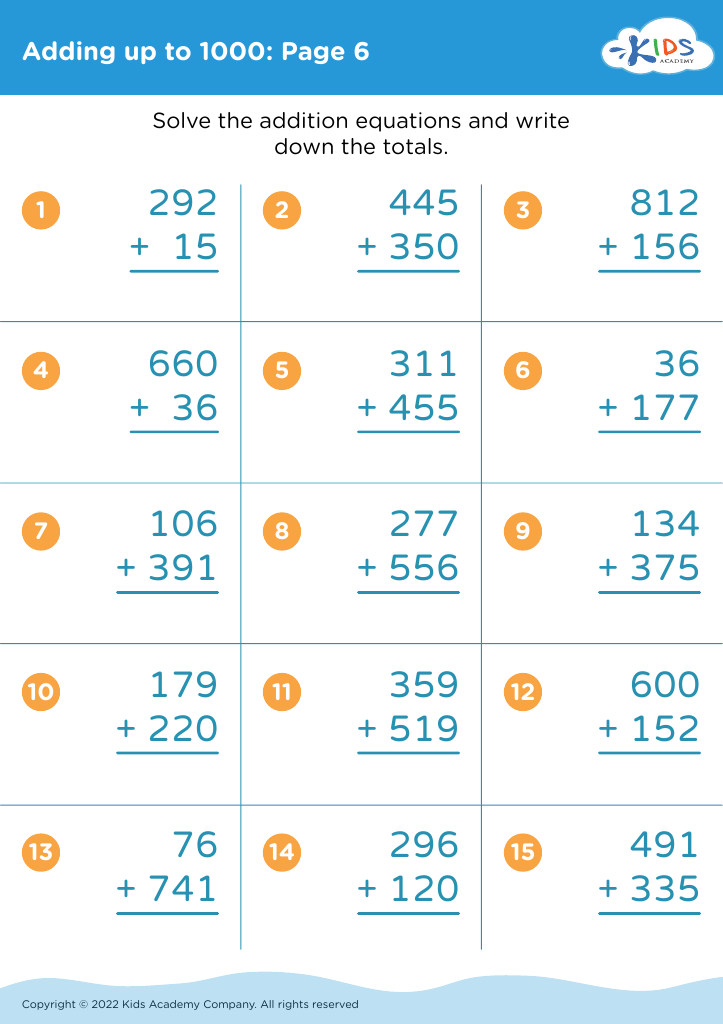
Unlock the potential of your third grader with our "Critical Thinking Grade 3 Adding up to 1000 Worksheets." These engaging and educating worksheets are designed to sharpen critical thinking by tackling addition problems that total up to 1000. Each worksheet offers a variety of challenging exercises, encouraging students to employ logic, strategic planning, and analytical skills essential for their mathematical growth. Ideal for supplementing classroom activities or homeschooling, these worksheets help in mastering complex addition concepts while boosting problem-solving abilities, ensuring your child is well-prepared for future academic success. Discover the path to enhanced numerical proficiency today!
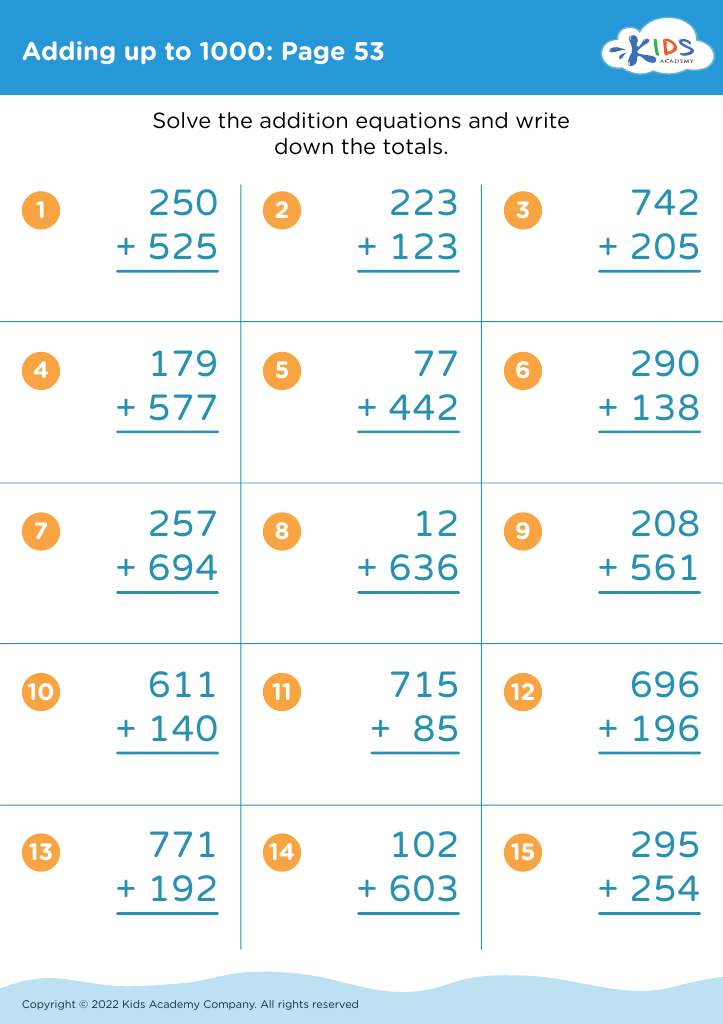
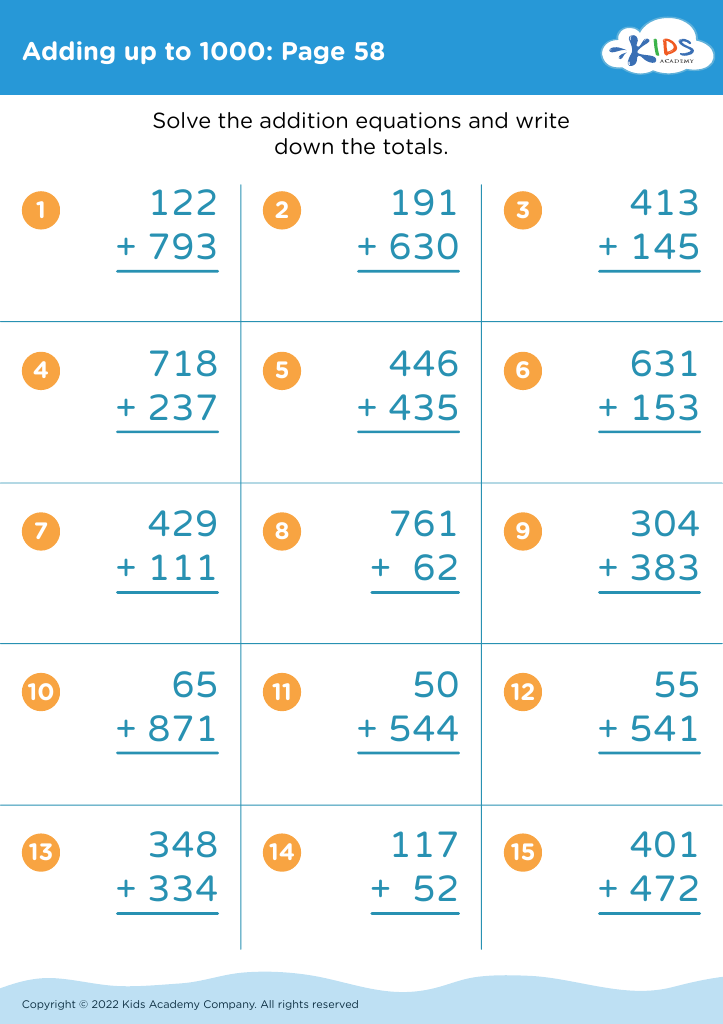
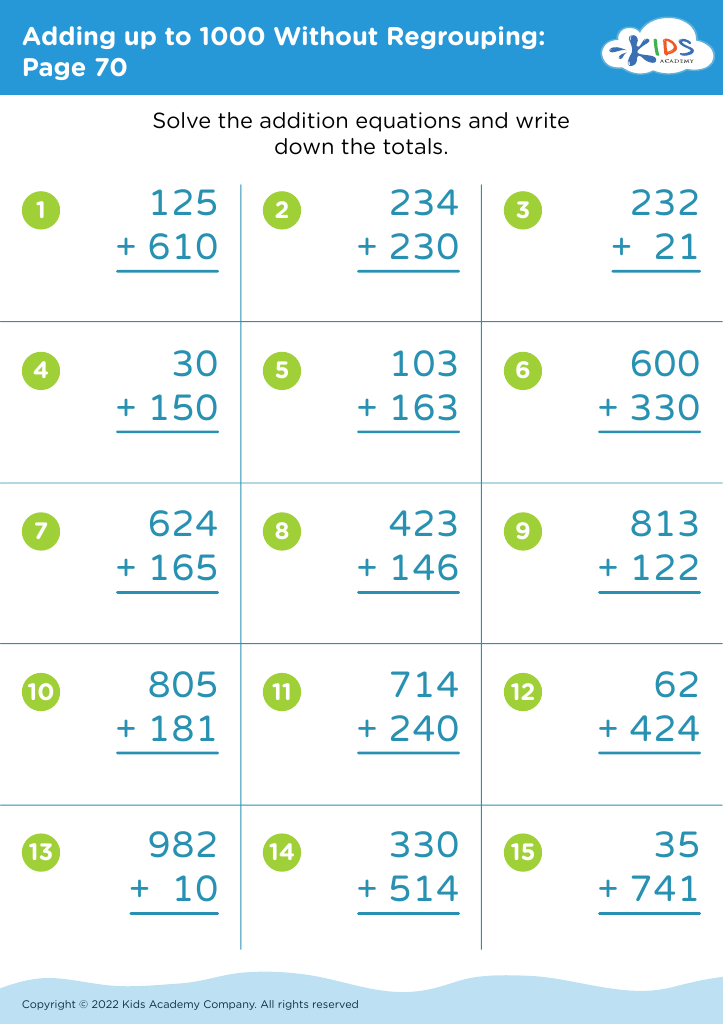


Critical thinking in Grade 3 math, particularly when focused on adding up to 1000, is crucial for several reasons. First, it lays down the mental framework students need for problem-solving. When children engage in adding large numbers, they're not only learning arithmetic but also developing skills like recognizing patterns, estimating, and choosing efficient strategies. These are foundational skills that translate to more advanced math and everyday decision-making contexts.
Including critical thinking at this stage fosters perseverance and resilience. Complex addition often involves multiple steps, where students must maintain focus and apply previous knowledge to succeed. This encourages them to tackle challenges methodically, promoting a growth mindset.
Moreover, nurturing these skills supports cognitive development. As children interpret and manipulate numbers, they're sharpening their logical reasoning abilities. This not only enhances their math competence but also positively affects overall academic performance. Research suggests that children who develop strong critical thinking skills in early grades are better prepared for the increasingly complex problems they encounter in higher education and professional settings.
Finally, instilling critical thinking early on builds confidence. Successfully navigating through challenging math problems boosts self-esteem and encourages a proactive approach to learning. When parents and teachers prioritize these skills, they prepare children for a future where they can think independently, critically, and creatively.