Fine Motor Skills Grade 3 Adding up to 1000 Worksheets
12 filtered results
-
From - To
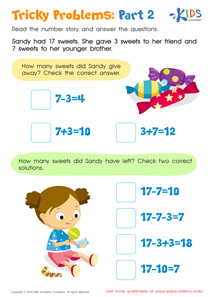
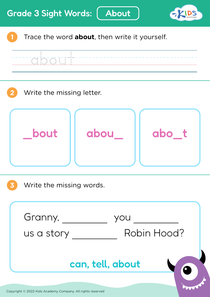
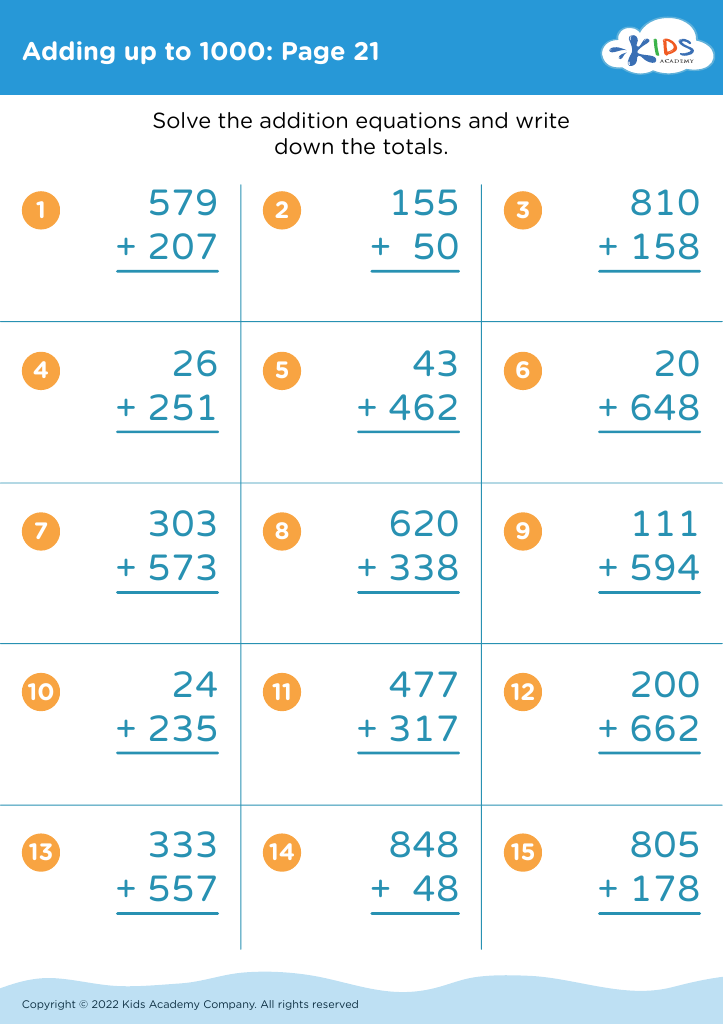
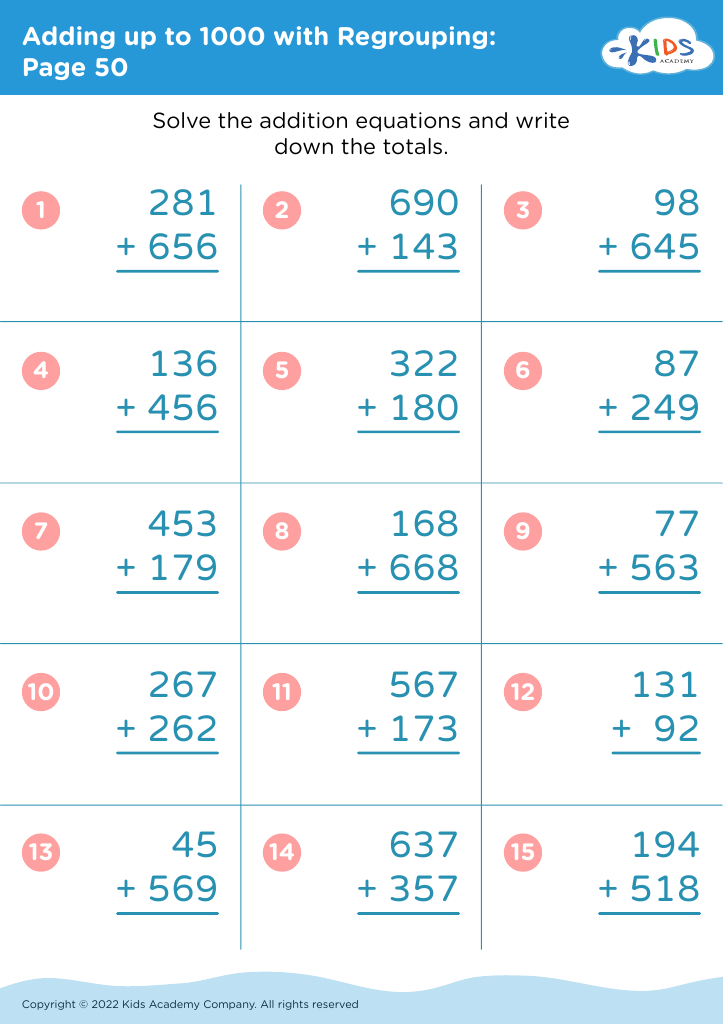
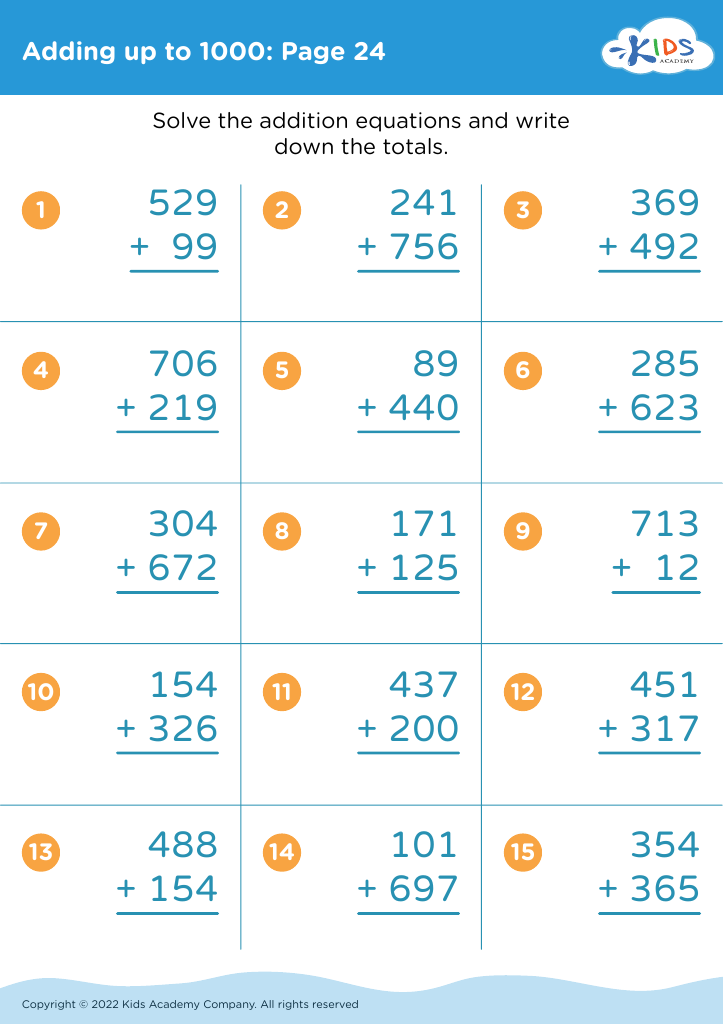
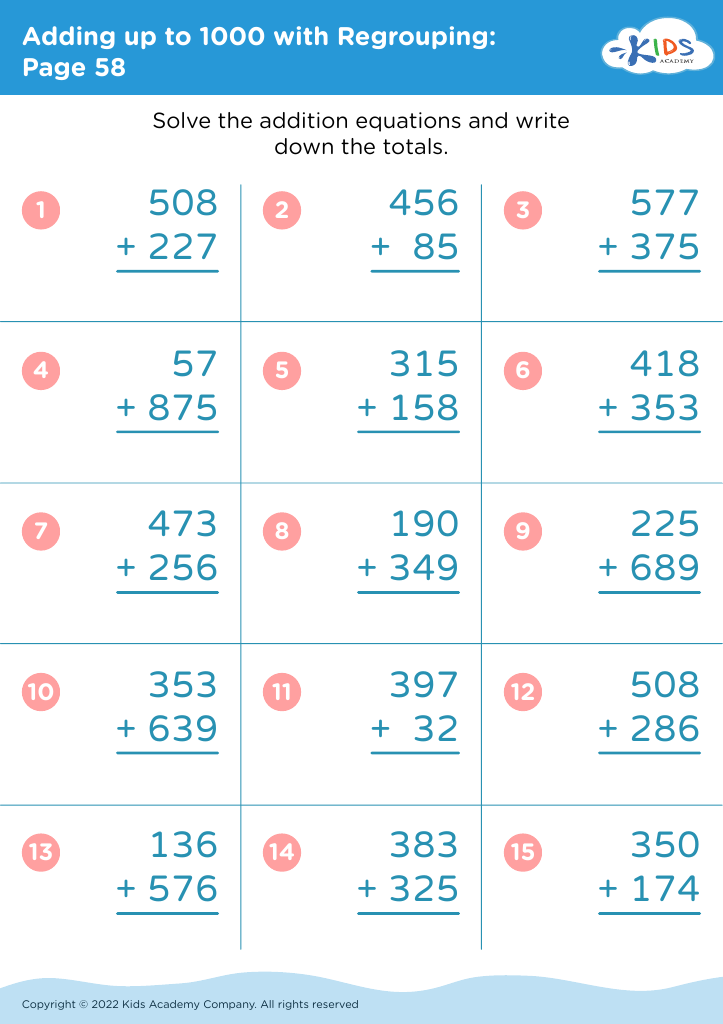
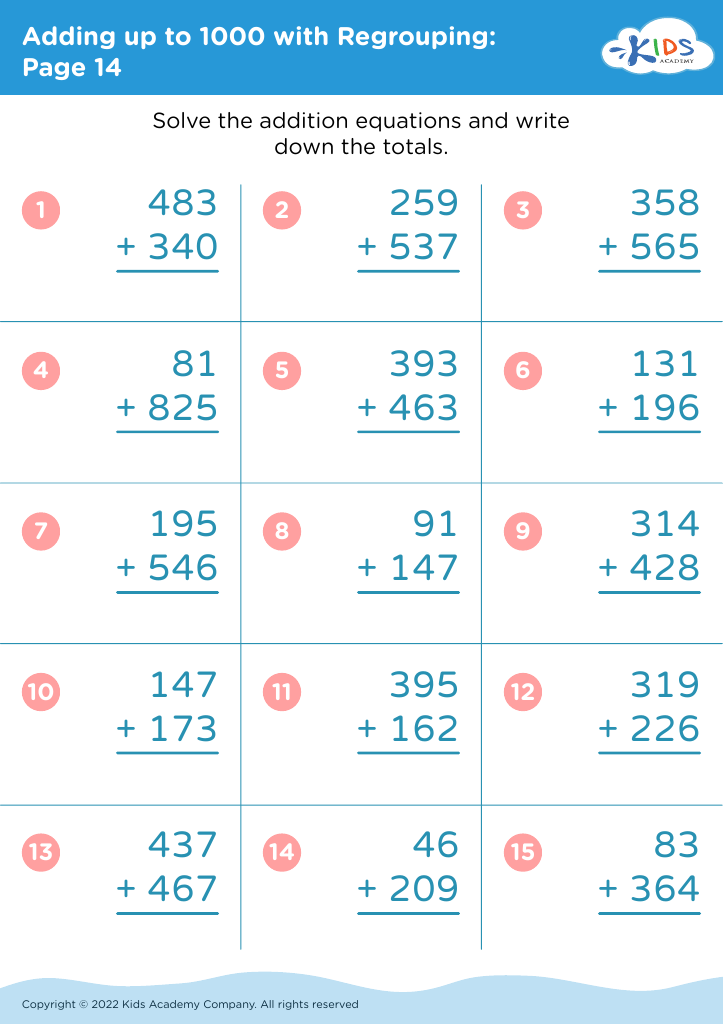
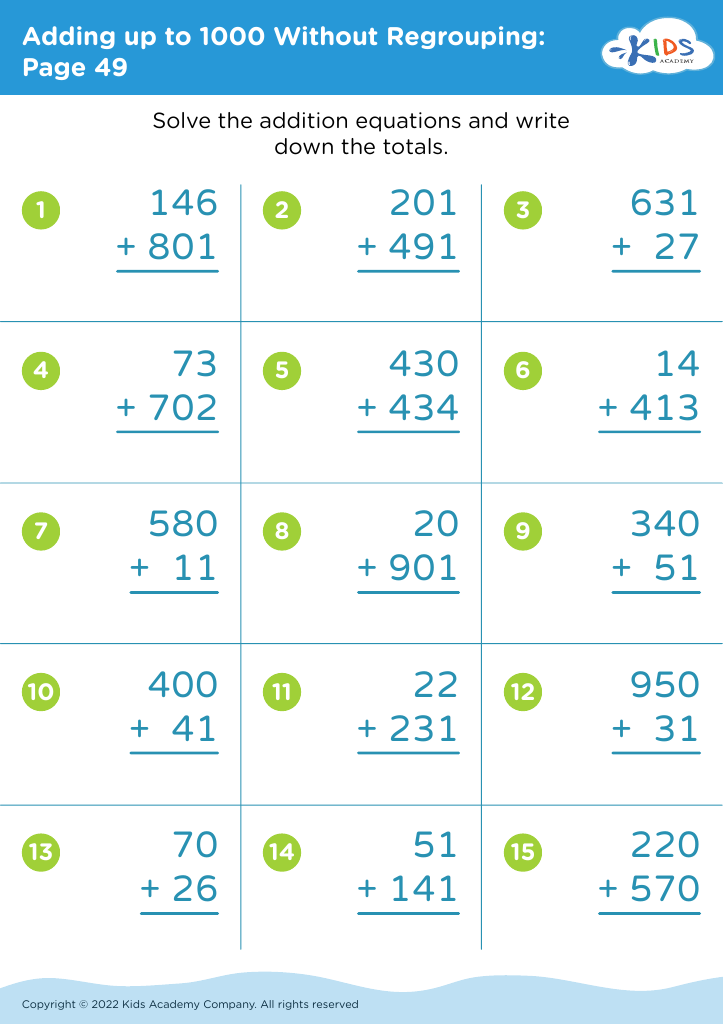
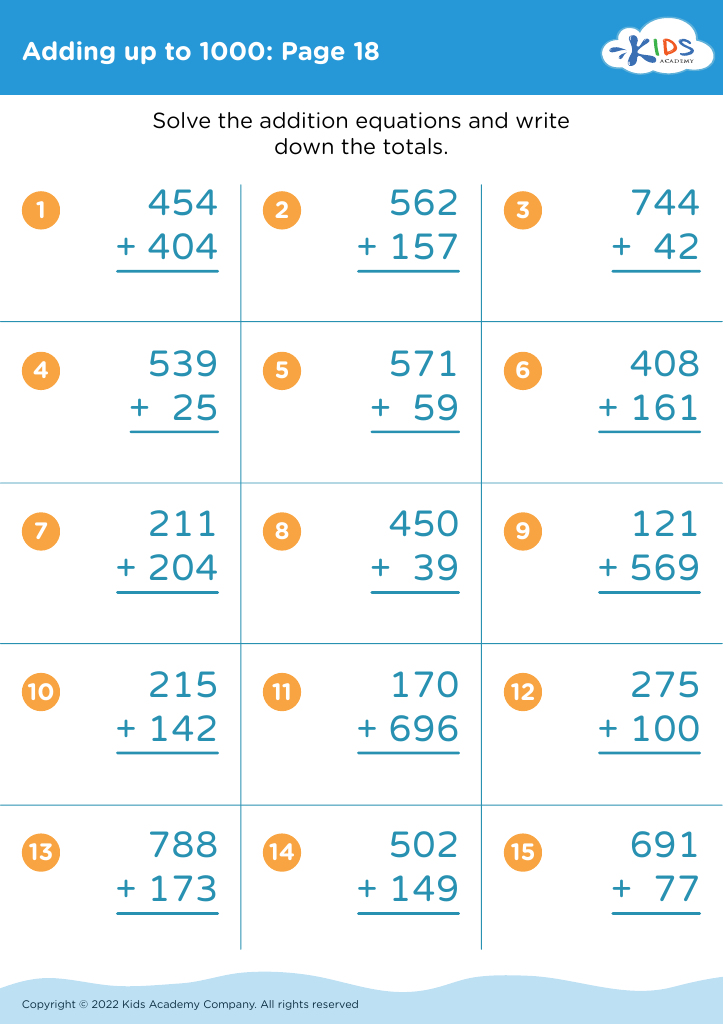
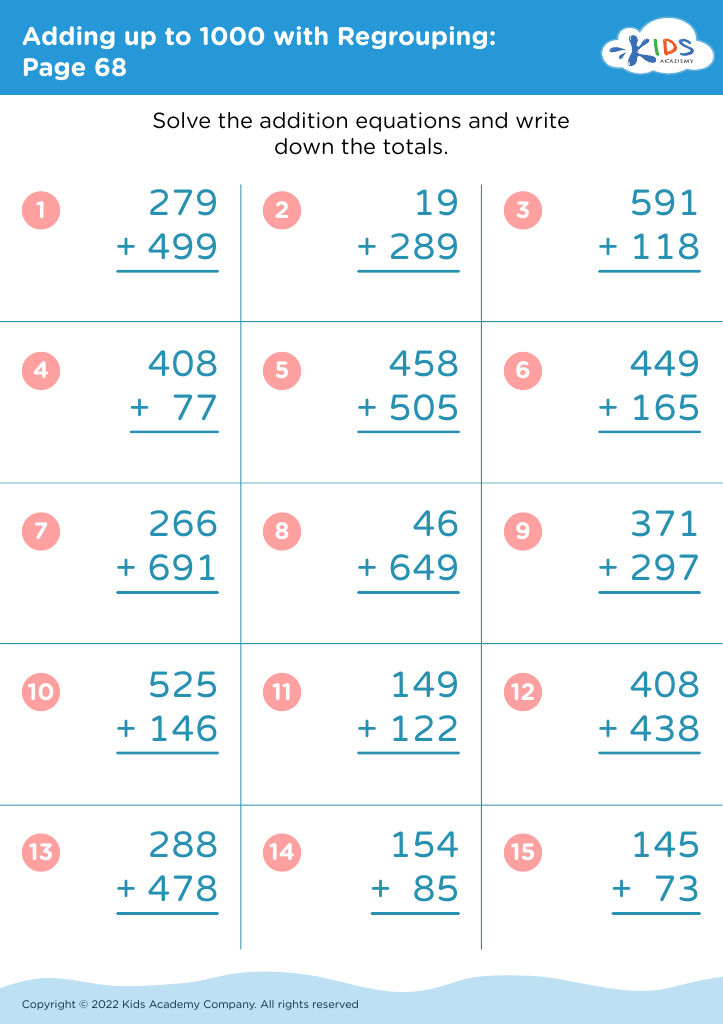
Enhance your third grader's fine motor skills with our engaging "Adding Up to 1000 Worksheets!" These worksheets are designed to combine fundamental math concepts with fun, hands-on activities that boost dexterity and hand-eye coordination. As students practice addition, they'll also engage in tracing, coloring, and cutting exercises that support their fine motor development. Our worksheets challenge students with colorful visuals and interactive problems that make learning enjoyable. Perfect for home or classroom use, these resources help children build numbers up to 1000 while refining their motor skills, preparing them for more complex math tasks ahead. Download and watch them excel today!
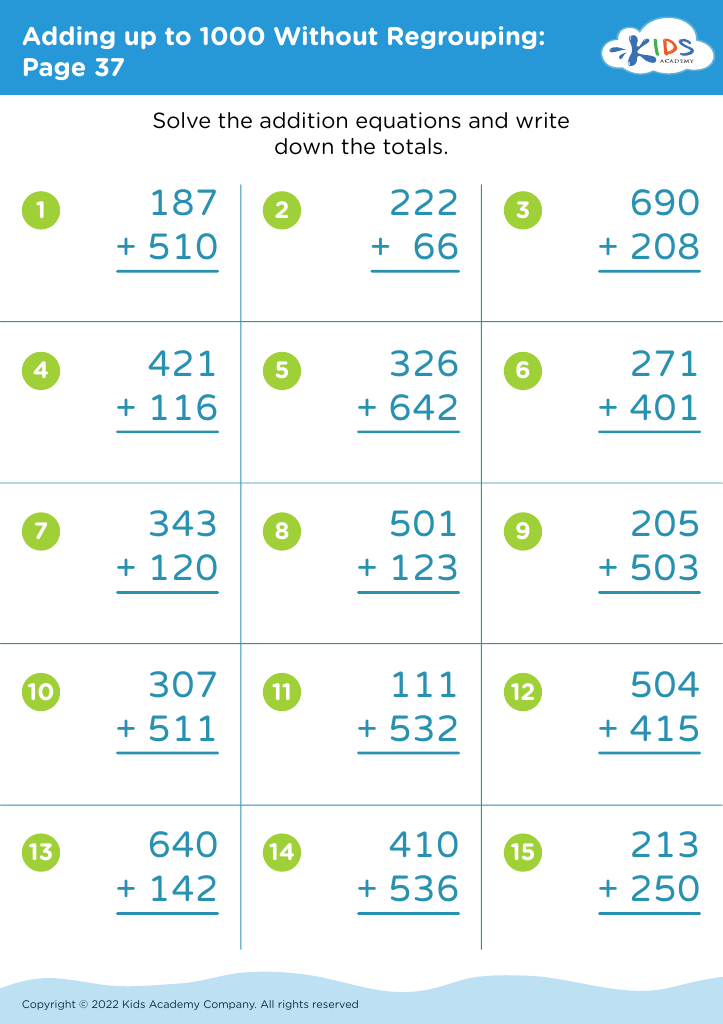
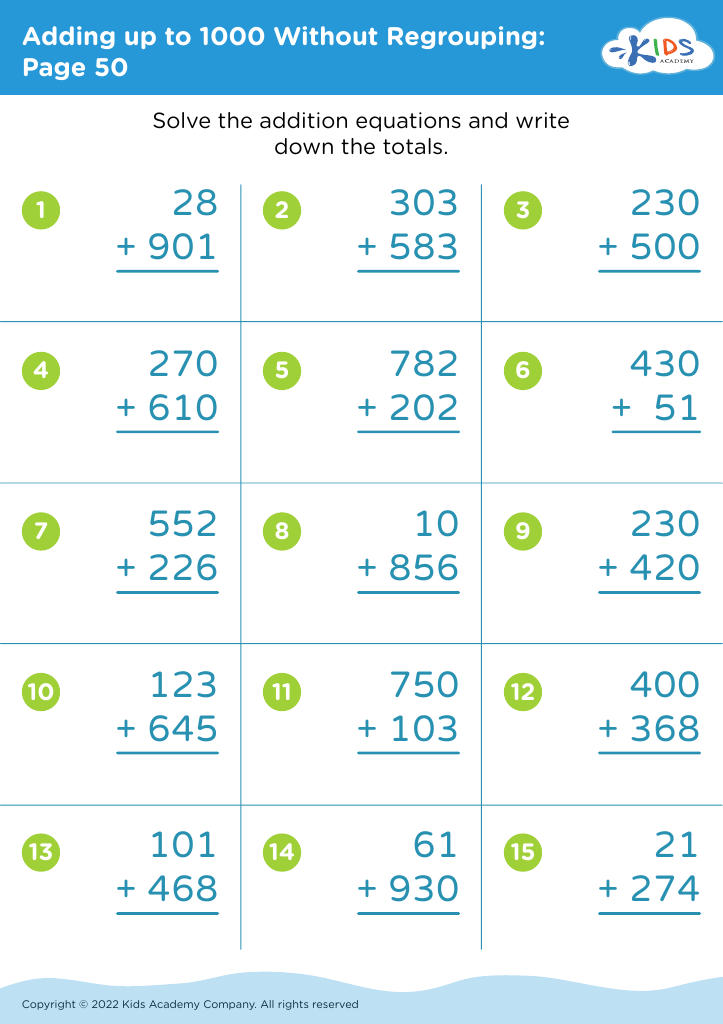
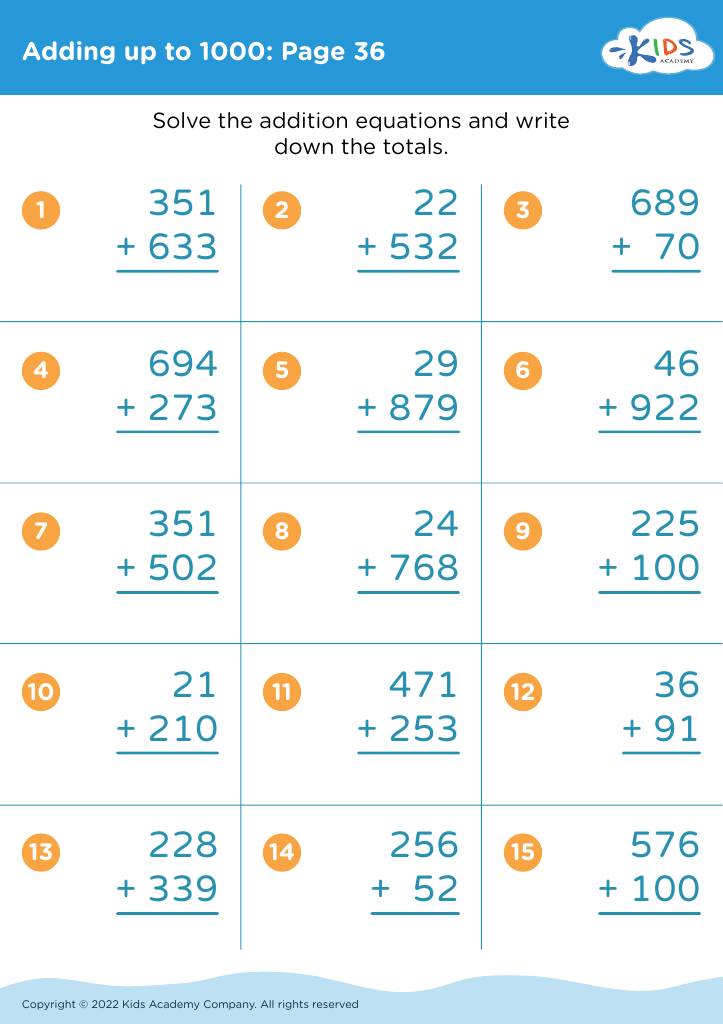
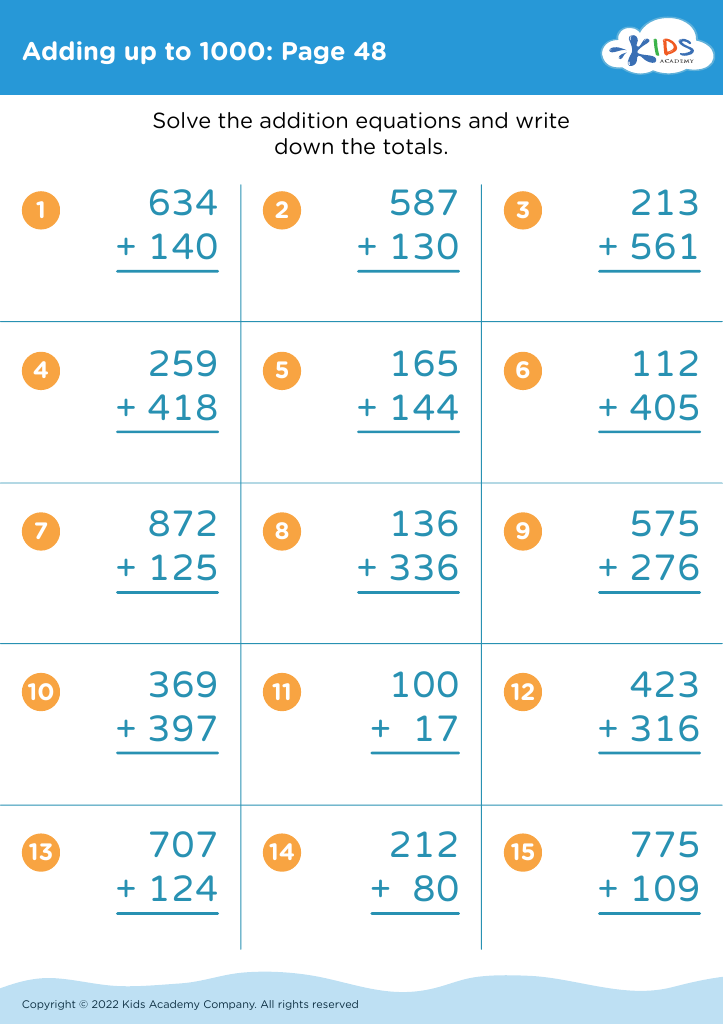


Fine motor skills, which involve the coordination of small muscles in the hands and fingers, are crucial for children, particularly in Grade 3, as they impact various areas of development. As students start to tackle more complex tasks, including math problems like adding up to 1000, the ability to manipulate tools such as pencils, calculators, and also papers can significantly influence their confidence and accuracy.
Developing fine motor skills enables children to perform tasks crucial for academic success and everyday life, such as writing neatly, cutting paper accurately, and even completing math exercises without frustration. In Grade 3, students are not only required to solve basic addition problems but also to organize their work properly. This is where fine motor skills come into play.
Parents and teachers should prioritize fine motor skill activities in their routines, integrating them into play, art, and other hands-on learning experiences. Engaging children in activities like drawing, crafting, or manipulating small objects fosters these skills while making learning enjoyable. Moreover, strong fine motor skills contribute to greater independence and self-esteem, allowing children to tackle math challenges like adding up to 1000 with greater ease and less anxiety, paving the way for their future learning success.